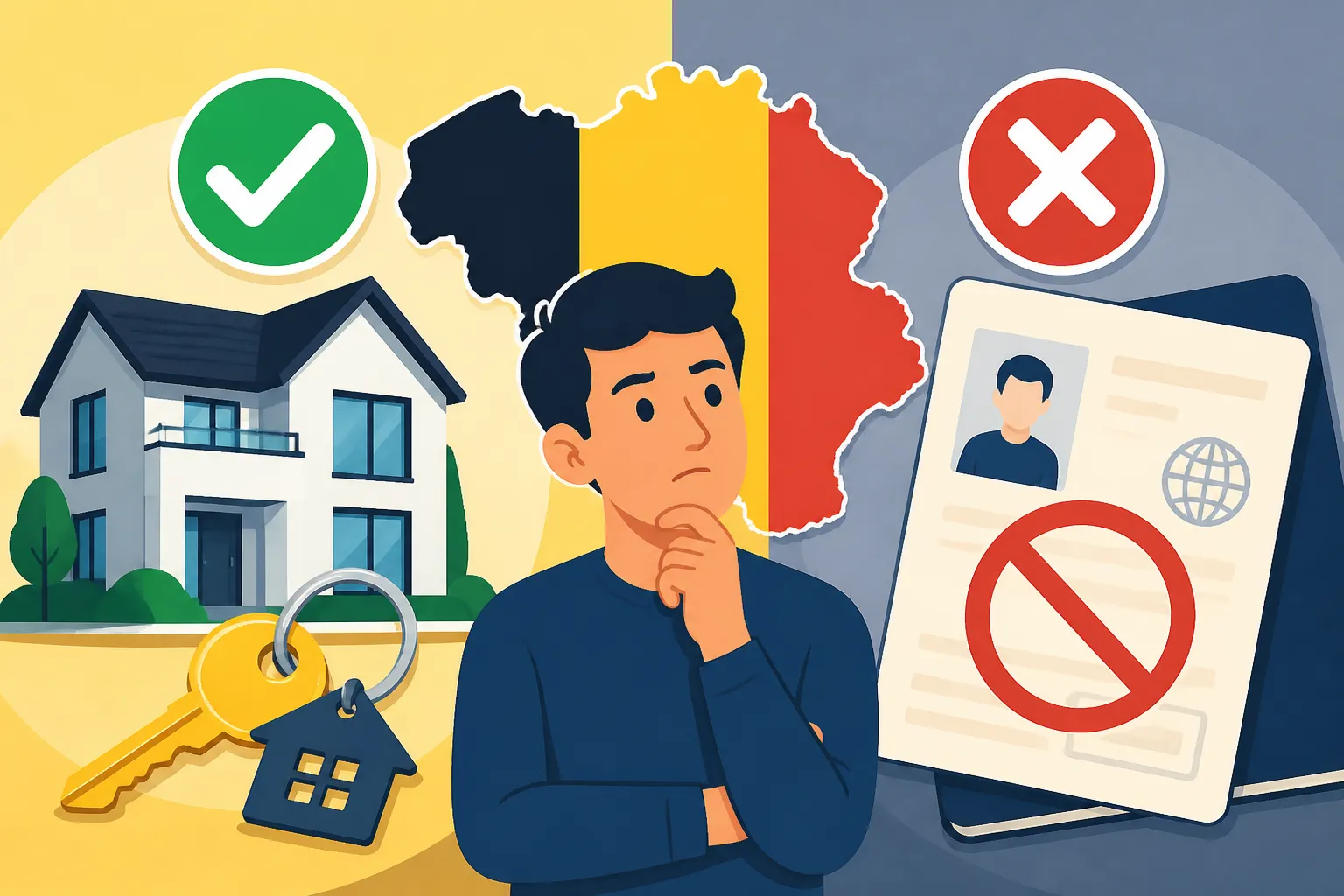
Does Owning Property in Belgium Get You a Visa? (Mythbusting)
One of the most common questions hitting my inbox lately comes from non-EU citizens who assume that purchasing a historic townhouse in Ixelles or a sleek apartment in Antwerp automatically opens the door to a residency permit. This guide meticulously dismantles the "Golden Visa" myth and explains exactly how property ownership interacts—or doesn't—with your legal right to live in Belgium.
The Golden Visa Myth: Why Buying Property Does Not Mean Residency
If you have been scouring the internet for "Golden Visas" in Europe, you have likely seen glowing advertisements for Portugal, Greece, or Spain. These countries have historically offered residency in exchange for significant real estate investment. However, Belgium operates on an entirely different legal philosophy. In the Belgian administrative system, there is a strict "Chinese wall" between the Ministry of Finance (which happily collects your property taxes) and the Immigration Office (the Office des Étrangers or Dienst Vreemdelingenzaken), which decides who gets to stay.
Owning a brick-and-mortar asset on Belgian soil is viewed as a private financial investment, not a social or economic contribution that warrants a residence permit. You can spend two million euros on a castle in the Ardennes, but without a separate valid visa, you are still bound by the standard 90/180-day Schengen rule. This means you can visit your castle for three months, but you must leave the territory afterward. For those wondering about the long-term implications, it is vital to check the latest Belgian Visas and Residence Permits: The Complete 2027 Guide to understand the distinction between visiting and residing.
This reality often comes as a shock to British expats who, prior to 2021, enjoyed seamless movement. Now, post-Brexit, a UK citizen buying a second home in Knokke faces the same hurdles as a Canadian or an Australian. The house provides you with a place to sleep, but it provides zero leverage at the commune when you ask for an eID card. If your goal is more than just a holiday home, you need to look at actual immigration pathways that require either professional activity, family ties, or demonstrated financial self-sufficiency.
Separating Investment from Immigration Status
To understand why this myth persists, we have to look at how the Belgian government categorizes foreigners. When you buy a property, the notary will register your purchase and you will receive a deed. This process is open to almost anyone in the world, regardless of their nationality or residency status. You do not even need a residence permit to buy a house; you simply need a Belgian bank account and a tax identification number.
However, the Immigration Office only cares about your "purpose of stay." Are you here to work? To study? To join a spouse? Property ownership is considered a "passive" activity. It doesn't create jobs, it doesn't pay social security contributions (ONSS), and it doesn't integrate you into the local labor market. If you are serious about moving here, you might find that Becoming a Belgian Citizen: Naturalization Rules and 2026 Updates requires years of actual residency and social integration that a simple property deed cannot bypass.
For many, the frustration lies in the "Police Check." Even if you own the house, when you apply for residency, a local police officer will physically visit your home to ensure you are actually living there. But—and this is the crucial part—they only perform this check after you have already been granted a temporary Annex or visa. You cannot trigger the police check simply because you bought the front door they are supposed to knock on.
The Non-EU Perspective and the Schengen Trap
For Americans, Indians, or South Africans, the "Schengen Trap" is a real concern. You might own a beautiful home in Ghent, but if you overstay your 90 days, you face fines, deportation, and a potential ban from the entire Schengen area. Owning property does not grant you a "get out of jail free" card with border agents at Zaventem airport.
Many expats try to circumvent this by applying for a Visa D (Long-Stay Visa) vs Residence Permit: What’s the Difference? through the "Rentier" route. This is a specific visa for people who have significant passive income and don't need to work. In this specific scenario, owning a home in Belgium can help your application because it proves you have "adequate housing"—a mandatory requirement for almost all long-stay visas—but the house itself is not the reason the visa is granted; your bank balance is.
| Pathway Aspect | Property Ownership Only | Valid Work/Family Visa |
|---|---|---|
| Right to Reside > 90 Days | No | Yes |
| Access to Healthcare | Private Only (e.g., Cigna Global) | Public (Mutuelle) |
| Path to Citizenship | No | Yes (after 5-10 years) |
| Mandatory Police Check | No | Yes |
| Work Rights | None | Depends on Permit |
| eID Card Issuance | No | Yes |
Real Pathways to Residency: If Not Property, Then What?
Since we have established that the house alone won't get you the sticker in your passport, we need to look at what actually works. Most successful expats use one of three main "hooks" to secure their residency. The most common is the Single Permit (Gecombineerde Vergunning) Process for Workers, where a Belgian employer sponsors your right to live and work here. In this case, owning a home is a nice luxury, but it’s your employment contract that does the heavy lifting.
Another route is the Professional Card, or Carte Professionnelle. This is for freelancers and entrepreneurs. If you are a real estate investor, you could theoretically apply for a Professional Card by arguing that you are starting a property management business that will bring "economic value" to Belgium. However, be warned: the threshold for "economic value" is high. Simply buying two apartments and renting them out is usually not enough. You would need to show a business plan that involves renovation, job creation, or specialized services.
During these applications, you will be required to submit a mountain of paperwork. Any foreign documents, like birth certificates or proof of funds from your home country, must be officially translated. I always recommend using a service like RushTranslate for this, as the Belgian authorities are notoriously picky about "sworn" translations that meet specific ISO standards. Using RushTranslate ensures that your documents aren't rejected at the first window of the commune, saving you weeks of bureaucratic back-and-forth.
The Rentier Route and Financial Self-Sufficiency
For those who are retired or have significant wealth, the "Statut de Rentier" is the closest thing Belgium has to an investment visa. To qualify, you must prove to the Belgian consulate in your home country that you have enough income to live in Belgium without ever touching the Belgian social security system.
Property ownership is a massive asset here because it eliminates your rental costs, making your "sufficient resources" look much more stable to the authorities. However, you will also need to prove you have comprehensive health insurance. Since you won't be working and paying into the public system immediately, a private provider like Cigna Global is often the gold standard for these applications. Cigna Global provides the specific "certificate of coverage" that consulates demand to ensure you won't become a financial burden on the Belgian state.
Financial and Legal Realities of Property Ownership for Non-Residents
If you decide to buy property despite it not granting a visa, you need to be prepared for the Belgian "welcome" in the form of taxes and fees. Belgium has some of the highest transaction costs in Europe. When you buy, you aren't just paying the seller; you are paying the state.
In the Brussels-Capital Region, for example, the registration duty (stamp duty) is generally 12.5% of the purchase price. In Flanders, this has recently been lowered for a "first and only" home, but as a non-resident, you will likely still be hit with higher rates. Furthermore, you cannot avoid the notary. In Belgium, the notary represents the state, not the buyer or seller. They ensure the Registering Your Lease (Enregistrement du Bail): Whose Responsibility? and title deeds are handled correctly, but their fees are non-negotiable.
Tax Implications for Non-Resident Owners
Once you own the property, you become a "non-resident taxpayer." You will be required to file an annual tax return in Belgium specifically for your "cadastral income" (revenu cadastral). This is a theoretical rental value assigned to your property by the government. Even if you don't rent the house out, you still pay a tax on this value.
If you do choose to rent it out, you should look into Freelancing and Self-Employment in Belgium: Legal Setup and Taxes because the way rental income is taxed can change significantly depending on whether you are renting to an individual for private use or to a company. Managing these finances from abroad is a headache, which is why many expats eventually realize that the Buying Property in Belgium as an Expat: Process and Taxes guide is essential reading before signing any compromis de vente.
Practical Logistics for Foreign Buyers
Beyond the taxes, there are the day-to-day hurdles. Opening a Belgian bank account as a "non-resident" from a "high-risk" country (which, in the eyes of some Belgian banks, includes almost anywhere outside the EU) can take months. You will need to provide proof of the source of your funds, often requiring more sworn translations from RushTranslate.
Additionally, you will need to manage utilities and insurance from afar. Most Belgian utility companies require a Belgian bank account for direct debits (domiciliation). Without a residence permit or an eID, even getting a high-speed internet connection can become a saga of epic proportions. It is a classic Belgian "chicken and egg" problem: you need the bank account for the house, but the bank wants your residence permit, which you can't get because the house doesn't give you one.
Using Property to Support Family Reunification
While the property doesn't get you a visa, it can be the key to bringing your family. If you already have a right to stay (for example, through a Single Permit Digital Transition 2026: The 'Working in Belgium' Portal application), one of the strictest requirements for "regroupement familial" is "adequate housing."
The Belgian government will not allow you to bring a spouse or children if you are living in a studio apartment. By owning a three-bedroom house, you completely satisfy the "adequate housing" requirement. The housing inspector will visit, measure the rooms, and check for safety standards. In this context, your property investment directly facilitates the Family Reunification Visas: Bringing Spouses and Children to Belgium process. It isn't the cause of the visa, but it is the enabler of the criteria.
In summary, do not buy property in Belgium if your only goal is to secure a residency permit. You will end up with a beautiful home that you are legally allowed to visit only 90 days at a time. Instead, focus on securing a Professional Card (Freelance Visa) or a work permit first. Use property as a way to settle down once your legal status is already on solid ground. Belgium is a wonderful place to own a home, provided you have the right colored ID card to match the keys.
Disclaimer
The information provided in this guide is for educational and informational purposes only and does not constitute legal, financial, or immigration advice. Belgian immigration laws and tax regulations are subject to frequent changes. Always consult with a qualified Belgian immigration lawyer or a certified tax professional before making significant financial investments or life decisions. Accuracy is not guaranteed, and the author is not liable for any actions taken based on this content.