Applying for a Duplicate eID Pin/Puk Code from the Commune
Losing the PIN and PUK codes for your Belgian eID usually happens at the most inconvenient moment—typically when you are trying to file your taxes, sign a digital lease, or access your medical records. This guide provides a detailed, empathetic roadmap for navigating the commune's bureaucracy to secure your duplicate codes and regain your digital sovereignty.
The Vital Role of PIN and PUK Codes in Belgian Daily Life
When you first receive your residence permit, whether it is an A card, B card, or an F card, you are handed a discreet white envelope containing your PIN (Personal Identification Number) and PUK (Personal Unblocking Key). In the flurry of moving and Registering at the Commune: The 8-Day Rule After Arrival, it is incredibly easy to misplace this slip of paper. As a veteran expat, I have seen many newcomers treat this envelope like junk mail, only to realize months later that without those codes, their physical card is essentially a plastic paperweight for digital tasks.
The PIN is your daily key. You need it to "handshake" with government portals like MyMinfin or MyHealth. The PUK, on the other hand, is your emergency backup. If you enter your PIN incorrectly three times, your card is blocked for security reasons. This is where the PUK comes in; it allows you to unblock the card and set a new PIN. If you have lost both, you cannot simply "reset" the card from home. You are now entering the territory of a formal administrative request for duplicates.
It is worth noting that the type of card you hold impacts how much you rely on these codes. For more information on the various versions of Belgian residency, you can read about The Belgian eID Card Types: A Card, B Card, F Card, and Others. Regardless of the card type, the security protocol remains the same. If you are an expat working for a multinational, your HR might have handled your initial Residence Registration: Annexes, Communes, and the eID Card, but when it comes to lost codes, the responsibility lies solely with you and your local commune.
Step-by-Step Guide to Requesting Your Duplicate Codes
If you find yourself staring at a "Card Blocked" screen or searching through empty moving boxes for that lost envelope, don't panic. The process is standardized, though the "flavor" of the experience depends on whether you live in a bustling Brussels borough like Ixelles or a quieter Flemish town like Leuven. There are two primary ways to initiate the request: online or in person at the "Maison Communale" or "Stadhuis."
Option One: The Online Request via the Federal Portal
The most efficient way to start is through the Federal Public Service (FPS) Interior website. You will need your National Register Number, which is the 11-digit number found on the back of your eID card (usually starting with your birth date in reverse). The online portal allows you to request that new codes be sent to your local commune. You cannot have them mailed directly to your home for security reasons; they must be verified by a commune official before being handed over to you.
Once you submit the request online, the central government generates the codes and sends them via secure mail to your registered commune. This usually takes between 10 and 15 working days. I always recommend setting a calendar reminder for two weeks from the date of your request. You won't always receive an automated email telling you they have arrived, so proactive follow-up is your best friend here.
Option Two: Visiting the Commune in Person
If the online system feels too impersonal or if you are having trouble with the website, you can go directly to your commune. Most major cities now require Booking an Appointment at the Commune (Stadhuis/Maison Communale) for any non-emergency service. In smaller villages, you might still find walk-in hours, but check their website first to avoid a wasted trip in the rain.
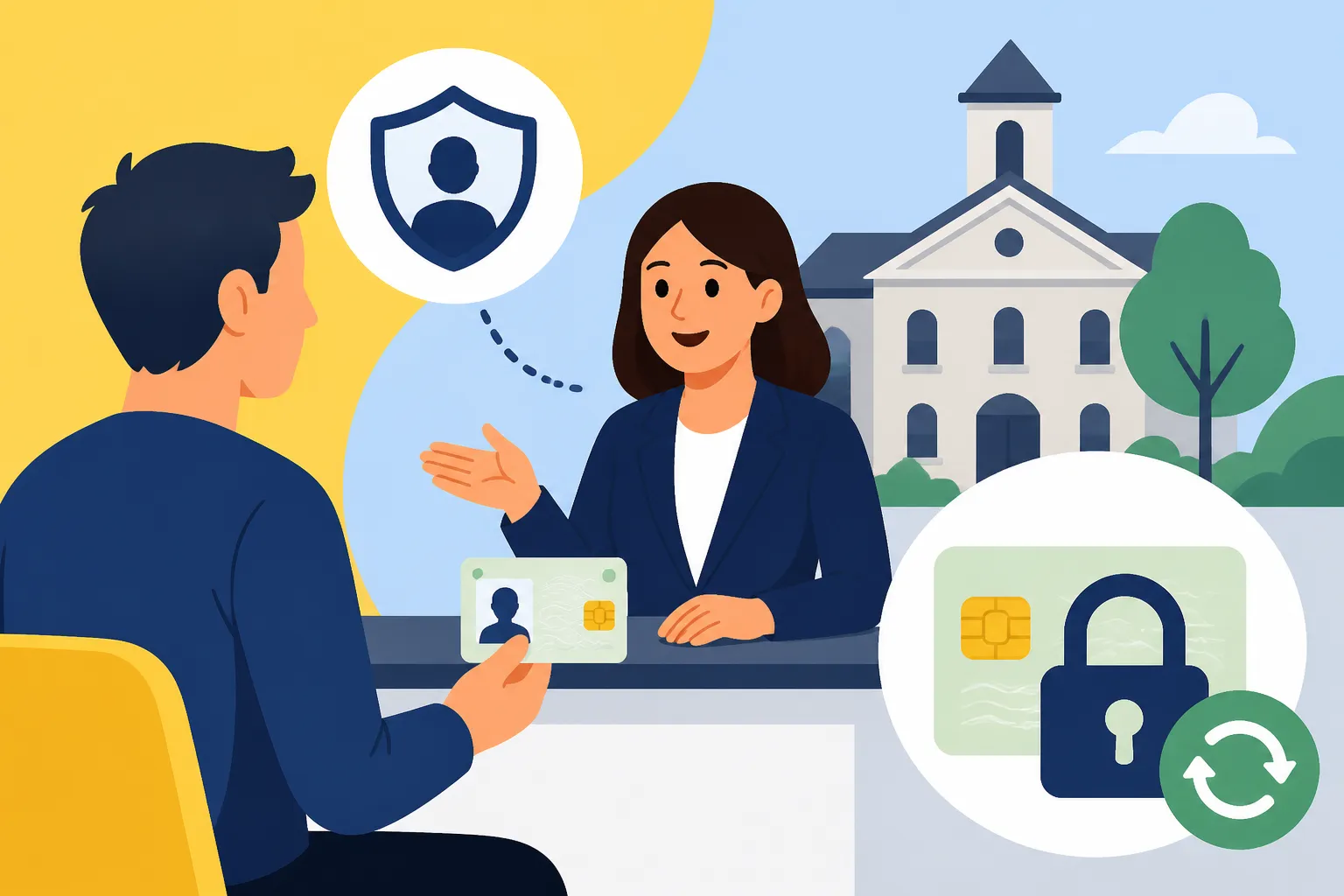
When you arrive at the desk, simply tell the officer, "I need to request a duplicate of my eID PIN and PUK codes." They will scan your physical card, confirm your identity, and initiate the request in the system. Make sure you bring your physical residence card and, ideally, a secondary form of ID like your passport. If your original card was lost or stolen, this is a different procedure entirely. You should immediately look into Replacing a Lost or Stolen Belgian Residence Card before worrying about the PIN codes.
What to Expect During the Appointment and Potential Costs
Belgium is a land of regional variations, and the administrative cost of duplicate codes is no exception. While the central government provides the service, the communes often add a small administrative fee. In my experience, this ranges from €5 to €15. Some communes are strictly "cashless," so ensure you have a Bancontact-compatible card or a mobile app like Payconiq ready.
Processing Times and Pickup Logistics
A common point of frustration for expats is the realization that you cannot get the codes on the same day you request them. Because the encryption keys are generated centrally by the Ministry of the Interior, the physical paper must be printed and mailed to your specific commune. This is a "wait and see" game. If you are in a rush to sign a document, this delay can be agonizing.
During the two-week waiting period, your card is still valid as a travel document and physical ID. You can still use it to show the police if stopped or to prove your age. However, its digital functions—the "smart" part of the card—will remain offline. If you find yourself in a medical emergency during this window, don't worry; hospitals have protocols for What to Do If You Lose Your Belgian eID Before a Doctor Visit. Your National Register Number is often enough to pull up your files while you wait for your digital access to be restored.
Finalizing the Activation at the Commune
Once the commune receives your codes, you must return to the office to activate the card. This is a quick process:
- You present your residence card to the officer.
- They insert the card into their terminal along with the paper containing your new PUK code.
- You will be asked to choose a new 4-digit PIN.
- The officer "burns" this new PIN into the card's chip.
After this, your card is fully operational again. I highly recommend testing it immediately on a government portal when you get home to ensure everything was synced correctly.
| Action | Online Request | In-Person Request | Final Activation |
|---|---|---|---|
| Duration | 5 Minutes | 15-30 Minutes | 10 Minutes |
| Location | Home/Office | Local Commune | Local Commune |
| Documents | National Register Number | Physical eID + Passport | Physical eID + New Code Letter |
| Outcome | Request initiated | Request initiated | Card fully functional |
Avoiding This Hassle in the Future: Digital Workarounds
While waiting for your duplicate codes, you might realize how much you depend on them. This is the perfect time to set up "Itsme," Belgium's digital ID app. Itsme acts as a bridge; once it is verified with your eID and PIN, you can use the app to log into almost every government and banking site without ever needing your physical card or a card reader again.
Setting Up Itsme as a Secondary Key
I tell every expat I meet that Itsme is the single most important app on their phone in Belgium. If you had set up Itsme before losing your PIN, you could have continued to access Logging into Tax-on-web using Itsme or an eID Card Reader without any interruption. However, to set up Itsme for the first time, you need a working PIN and a card reader.
Once your new codes arrive, make it your first priority to register for the app. It effectively makes your physical PIN codes a "Level 2" backup rather than your primary daily requirement. For those currently waiting for their first residence card, you can even look into Setting Up Itsme While Waiting for Your Physical eID Card using certain bank accounts (KBC, ING, BNP Paribas Fortis), though the eID method remains the most robust.
Proactive Document Management
If your residency application involved complex translations from your home country, you likely used services like RushTranslate to ensure your birth or marriage certificates were accepted. Keep those digital scans! Sometimes, if there is a discrepancy in the commune's database (like a misspelled name) that prevents your codes from being generated, having your original What Documents to Bring for Your First Commune Registration files handy can speed up the "correction" phase.
Lastly, be aware of the "Police Check." When you change addresses or first arrive, the commune won't finalize your ID until a local officer visits your home. If you have moved recently and are requesting new PIN codes, ensure your address is updated correctly in the system. You can learn more about how this works in our guide on The Police Address Check: What Happens if You Are Not Home?. If your address isn't confirmed, the codes might be sent to the wrong commune or returned to the central office.
Practical Considerations for English Speakers
Navigating the commune in English can be hit or miss. While many officials in Brussels or Antwerp are perfectly fluent, the "official" language of the administration will be French, Dutch, or German. If you are nervous about the language barrier, write down your request on a piece of paper:
- French: "Je voudrais commander des nouveaux codes PIN et PUK pour ma carte de séjour, s'il vous plaît."
- Dutch: "Ik zou graag nieuwe PIN- en PUK-codes aanvragen voor mijn verblijfskaart, alstublieft."
In my experience, showing effort in the local language opens doors and usually results in the officer switching to English to help you out. Remember, the staff at the commune are people too, often dealing with long queues and complex cases. A polite "Bonjour" or "Goeiedag" goes a long way in making your duplicate code request a smooth transaction.
If you are an expat with high-end private insurance like Cigna Global, you might feel removed from the local "public" system, but your eID is still the primary way you interact with the Belgian state. Don't let a lost PIN stop you from accessing the benefits of your residency. Secure those duplicates, set up Itsme, and keep a digital photo of your codes in a password-protected vault (like 1Password or LastPass) so you never have to stand in that commune queue for this specific reason ever again.
Disclaimer
This guide is for informational purposes only and reflects the general administrative procedures in Belgium as of early 2026. Local commune rules and fees are subject to change without notice. Always verify the specific requirements of your local "Maison Communale" or "Stadhuis" before visiting. We are not a government agency and cannot process visa or ID requests on your behalf.