Can I Keep My Belgian Health Insurance if I Move Abroad?
One day you are enjoying a waffle in Grand Place, and the next you are staring at a stack of boxes, realizing your Belgian Mutuelle card might become a useless piece of plastic the moment you cross the border. I remember the frantic calls to my mutuelle before my last move, terrified of being uninsured. This guide clarifies exactly when you lose coverage and how to protect your health during a transition.
The Residency Rule: Why Your Mutuelle is Tied to Belgium
In the Belgian system, health insurance is not a portable subscription like Netflix; it is an extension of your social security status, which is fundamentally rooted in your residency. Most expats are surprised to learn that the very moment they notify the commune of their departure, a digital domino effect begins. The Belgian healthcare system is world-class, but it is also strictly territorial.
The Role of the National Register
Everything in Belgium revolves around your National Register number. When you first arrived, you likely spent weeks waiting for that number to be activated. As explained in the Healthcare in Belgium for Expats: Complete System Overview (2027), your eligibility for public health insurance is contingent on being a registered resident or being employed by a Belgian entity that pays into the social security system.
When you move abroad, your entry in the National Register is updated to reflect that you are no longer a resident. The mutuelle (or ziekenfonds) receives this information automatically. If you are moving to a country where you no longer pay Belgian social security, your right to the Compulsory Coverage Basics: Who Must Enroll in Mutuelle/Ziekenfonds typically expires at the end of the quarter in which you leave, though the exact "grace period" can vary based on your specific contribution history.
The Importance of the Model 8 Certificate
Before you leave, you must visit your local town hall. This is often the final hurdle in the "commune crawl" we all know too well. You will need to follow the steps on How to Inform the Commune When You Permanently Leave Belgium to obtain a document known as the Model 8. This certificate is the official proof that you have de-registered.
You might think, "Why tell them at all? I’ll just keep paying my small monthly mutuelle fee and stay covered!" Unfortunately, that is a recipe for administrative disaster. If you claim reimbursements while no longer a legal resident, the mutuelle can (and will) demand that money back once they reconcile their data with the National Register. Plus, Getting a Model 8 (Modèle 8) De-registration Certificate for Taxes is essential for closing your fiscal chapter in Belgium properly.
Moving Within the European Union: The Coordination Rule
If your next adventure is in France, Germany, or any other EU/EEA country, the transition is significantly smoother thanks to European social security coordination. The principle is simple: you should only be insured in one country at a time, usually where you work.
Using the S1 Form for Continuity
If you are a retiree moving from Belgium to another EU country, or if you are a "detached worker" (posted abroad by your Belgian employer), you do not necessarily lose your Belgian rights. You can request an S1 form from your mutuelle. This form allows you to register with the public health system in your new country while Belgium remains responsible for the costs.
I have seen many expats fail to request this document until they are already abroad, leading to weeks of being "in limbo." Without it, you might find yourself paying full price for prescriptions that should be subsidized. While you wait for your new local insurance to kick in, you should ensure you have your European Health Insurance Card (EHIC). However, keep in mind the limits of EHIC and Temporary Cover: Using European Health Cards Before Mutuelle Setup; it is only for "unplanned" or "necessary" care, not for routine checkups in your new home.
Transitioning to a New Public System
If you are starting a new job in another EU country, you will stop paying into the Belgian ONSS. At this point, your Belgian insurance ends, and you must enroll in the local system of your new country. Most EU countries will ask for a document (often called the SED or a similar digital record) proving your previous periods of insurance in Belgium so that you don't have to face a "waiting period" for certain benefits.
| Scenario | Coverage Status | Action Required |
|---|---|---|
| Moving to EU for Work | Ends in Belgium | Register with local insurance in new country |
| Moving to EU as Retiree | Stays with Belgium | Request S1 Form from Mutuelle before leaving |
| Moving Outside EU (No Treaty) | Ends in Belgium | Purchase private insurance like Cigna Global |
| Moving Outside EU (With Treaty) | Varies by Treaty | Check BILAT agreement specifics |
Moving Outside the EU: Bilateral Agreements and Gaps
This is where things get complicated. If you are moving to the USA, Canada, Australia, or many parts of Asia, your Belgian mutuelle will generally not cover you. Belgium has "Bilateral Social Security Agreements" (often called BILAT) with about 25 countries outside the EU, including Canada, Morocco, Turkey, and Brazil.
How Bilateral Agreements Work
These agreements are designed to ensure that workers moving between the two countries don't lose their social security rights. However, many of these agreements focus heavily on pensions and disability, and only some include comprehensive health insurance. If you are moving to a BILAT country, you must contact your mutuelle’s international department at least a month before your move. They will tell you if there is a specific form (like a BE-USA 1 for the United States) that you need.
In most cases, even with an agreement, the Belgian mutuelle will stop paying for your daily care, but the agreement might help you skip the "waiting period" in your new country’s system. If you are a non-EU citizen returning to your home country, you should also look into Social Security Refunds for Non-EU Expats Leaving Belgium, although health contributions themselves are rarely refundable.
The Danger of the "Insurance Gap"
When I moved outside the EU for a short stint, I realized that the time it takes to get registered in a new country can leave you dangerously exposed. This is particularly true in countries like the USA, where medical costs are astronomical. For this transition, a standard mutuelle is not enough. Many expats choose to bridge this gap with international private medical insurance (IPMI). Providers like Cigna Global offer plans that cover you worldwide, ensuring that if you have an accident during your first month in a new country, you aren't stuck with a five-figure hospital bill.
Exceptions: When You CAN Keep Your Belgian Insurance
There are three main categories of people who can live abroad and still maintain their Belgian health insurance.
1. Seconded Workers (Detaché)
If your Belgian employer sends you to work in another country for a limited time (usually up to 2 years, sometimes extendable), you remain under the Belgian social security system. You and your employer continue to pay Social Security Contributions: How Employers Deduct Health Costs in Belgium. In this case, you are still fully covered by your mutuelle, though you will often need to pay for care abroad and seek Understanding the 75% Reimbursement System for Medical Consultations later, unless you are in the EU using an EHIC.
2. Cross-Border Workers (Frontaliers)
If you decide to live in a beautiful farmhouse in northern France or a sleek apartment in Maastricht, Netherlands, but you continue to work in Belgium, you are a "frontalier." In this specific case, you can keep your Belgian insurance. You will pay your contributions in Belgium (where you work) but register in your country of residence (where you live) using an S1 form. This actually gives you the "best of both worlds," allowing you to seek medical care in both countries.
3. Students Studying Abroad
If you are a student under the age of 25 and remain a dependent of your parents who live in Belgium, you can often remain covered by their mutuelle while studying abroad. This usually requires proof of enrollment from your foreign university. However, you should always check the specific rules of your mutuelle, as some require you to maintain your "legal cohabitation" address in Belgium.
Administrative Checklist: Closing Your Belgian Health Chapter
Leaving Belgium is a marathon of paperwork. To ensure your health insurance doesn't become a lingering headache, follow these steps meticulously:
- Notify the Mutuelle in Writing: Don't just stop paying. Send an email or a registered letter stating your departure date and your new address.
- Request an EHIC or S1: If moving within the EU, ensure these are in your pocket before the move.
- Submit Final Receipts: If you have a drawer full of "souches" (doctor's receipts), submit them now. Once your National Register status changes to "abroad," processing reimbursements becomes significantly more difficult.
- Check Your Hospitalization Insurance: If you have Private Health Insurance in Belgium: When Do Expats Really Need It? through your employer, ask HR if there is a "continuation" option. Sometimes you can convert a group plan into an individual plan that covers you internationally, though it is often cheaper to look at specialized expat providers like Cigna Global.
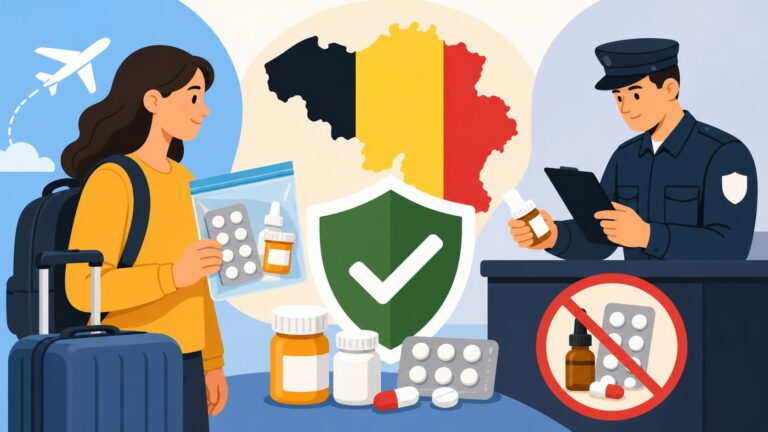
- Stock Up on Essentials: If you rely on specific supplements or over-the-counter wellness products that are easy to find in Belgium but hard elsewhere, do a final shop. I often use iHerb for international delivery of specific vitamins and wellness products when I'm in between systems, as they ship reliably to most corners of the globe.
Returning to Belgium: Re-activating Your Coverage
If your move abroad doesn't work out and you return to the land of chocolate and rain, you will need to restart the process. You will re-register at the commune, get your address verified by the police, and then re-enroll in a mutuelle.
If you were gone for a long time and didn't pay into an EU system, you might face a "stage d'attente" or waiting period of six months before the mutuelle starts reimbursing you for standard care. This is why many veteran expats suggest keeping a "basic" private policy active or ensuring you use the Using the European Health Insurance Card (EHIC) in Belgian Hospitals if you are returning from another EU state during that transitional period.
Managing your health is part of your self-care routine, and that shouldn't stop just because you're moving. Whether it's keeping your prescriptions organized or ordering your favorite wellness brands from iHerb during your first month in a new city, staying proactive is key. Moving is stressful enough; don't let a lack of insurance make it worse.
Disclaimer
This article is for informational purposes only and does not constitute legal or medical advice. Health insurance regulations in Belgium are subject to change and vary based on individual circumstances, such as nationality, employment status, and destination country. Always consult with your mutuelle (ziekenfonds) or a qualified immigration specialist before making final arrangements for your move abroad. Information regarding 2026 updates is based on current legislative trajectories and should be verified with official Belgian authorities.