Choosing Your First GP (General Practitioner) in Belgium
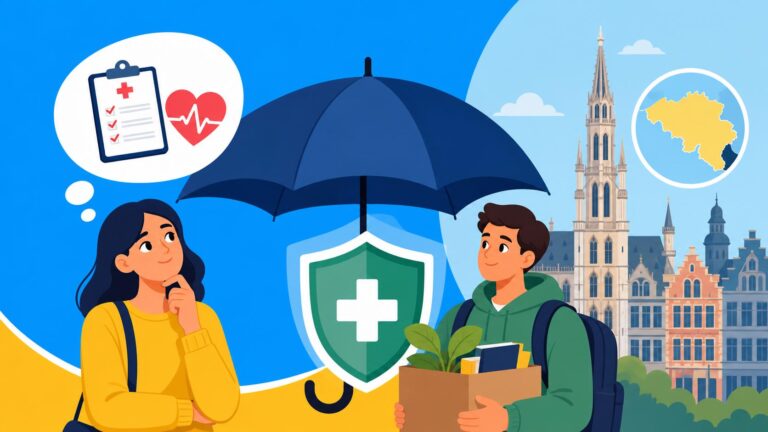
Finding yourself sick in a new country is a special kind of stress, especially when you are staring at a Dutch or French website trying to figure out who is allowed to treat you. I remember my first winter in Brussels, shivering with a fever and having no idea how to book a simple consultation. This guide solves that confusion by walking you through exactly how to choose your first GP in Belgium without the administrative headache.
Understanding the GP Landscape in Belgium
In your home country, you might be used to a system where you are strictly assigned to a local clinic based on your zip code. In Belgium, the system is refreshingly—yet sometimes confusingly—liberal. You have the right to choose any General Practitioner (GP), known as a Huisarts in Flanders or a Médecin Généraliste in Wallonia and Brussels. There is no formal "registration" in the sense that you are locked into one person forever, but there are significant financial and medical benefits to picking one "home" doctor and sticking with them.
The GP acts as the central hub of your healthcare journey. While you can technically book a specialist like a dermatologist or a cardiologist directly, it is rarely the smartest move. Your GP is the person who maintains your medical history, issues the mandatory sick notes for your employer, and provides the referrals that ensure you get the highest possible reimbursement from your insurance. If you try to navigate this alone, you will likely find yourself paying significantly more out-of-pocket than necessary.
For many expats, the first hurdle is simply understanding that the GP is your primary advocate in the Belgian bureaucracy. They are the ones who will help you navigate the Public Health Insurance Registration Guide and ensure that your medical data is correctly logged in the national system. If you are arriving with complex pre-existing conditions, you might also consider supplemental coverage like Cigna Global to bridge the gap while your local Belgian papers are being processed, as the waiting period for public funds can sometimes take a few months.
How to Find the Right GP for Your Needs
The search usually begins when you aren't feeling well, which is the worst time to start. Ideally, you should find your GP within your first month of arrival. The most common way to search today is through digital platforms. Two major players dominate the Belgian market: Doctena and Rosa. These platforms allow you to filter by location, specialty, and most importantly for us, language. You can specifically look for doctors who speak English, Spanish, or even Mandarin, which is a lifesaver when you are trying to explain a subtle symptom and your French is still at the "I would like a croissant" level.
Beyond apps, word of mouth remains king in the expat community. Join local Facebook groups for your commune (like "Expats in Ixelles" or "Living in Antwerp") and ask for recommendations. Belgians are generally very honest about their doctors, and you will quickly find out who has a "waitlist" and who is known for having a great bedside manner. Don't be surprised if some of the best doctors don't even have a website; in Belgium, a simple brass plaque on a townhouse door often hides a top-tier medical practice.
When you are Finding English-Speaking Doctors in Brussels, Antwerp, and Ghent, it is worth calling the office directly if the online calendar looks full. Sometimes, secretaries keep "emergency slots" open for new residents or acute cases that aren't visible on the Using the Doctena App to Book Doctor Appointments in Belgium interface. Be prepared to provide your national registry number (found on the back of your eID) as this is how they will create your file.
Practical Considerations: Location and Practice Models
In Belgium, you will encounter two main types of GP setups: the "Solo Practice" and the "Maison Médicale" (Medical House). A solo practice is a single doctor, often working out of a dedicated part of their own home. This offers a very personal, long-term relationship but can be tricky if the doctor goes on vacation or is overwhelmed with patients. You might find yourself calling After-Hours Medical Care: On-Call Doctors (Garde/Wacht) more often if your solo GP has limited hours.
The "Maison Médicale" or "Wijkgezondheidscentrum" is a group practice where multiple GPs, nurses, and sometimes physiotherapists work together. The massive advantage here is continuity of care. If your primary doctor is out, another doctor in the same building has instant access to your electronic records and can see you immediately. Some of these centers operate on a "flat-rate" system where you don't pay per visit, but instead, your insurance fund pays them a monthly fee. This is an incredible option for families on a budget, though these centers often have strict geographic catchments.
Another vital factor is the "Conventioned" status of the doctor. In Belgium, the government negotiates fixed fees with the medical unions. A "Conventioned" doctor agrees to charge exactly these state-mandated prices. A "Non-Conventioned" doctor can charge whatever they like, and you will only be reimbursed at the standard state rate, leaving you with a larger bill. Before booking, check Conventioned vs Non-Conventioned Doctors: How Out-of-Pocket Costs Differ to understand how this impacts your wallet.
| Feature | Solo Private Practice | Maison Médicale / Group Practice |
|---|---|---|
| Relationship | Highly personal, usually the same doctor every time. | May see different doctors, but records are shared. |
| Availability | Can be limited to specific consultation hours. | Often has longer hours and "walk-in" slots. |
| Cost | Usually pay-per-visit (Conventioned or not). | Can be pay-per-visit or a subscription-based model. |
| Services | Focuses on general medicine. | Often includes nursing, social work, or physio. |
| Language | Depends entirely on the individual doctor. | Higher chance of finding various language skills. |
The Administrative Must-Dos: DMG and GMD
Once you've had your first appointment and decided you like the doctor, you must ask them to open a "Global Medical Record" for you. In French, this is the Dossier Médical Global (DMG); in Dutch, it is the Globaal Medisch Dossier (GMD). This is essentially a digital folder that lives in the Belgian e-health cloud. It consolidates all your lab results, specialist reports, and prescription history in one place.
Opening a DMG is the single best thing you can do for your healthcare budget. Once it is linked to your GP, your "co-payment" (the amount you pay out of your own pocket) for every GP visit is reduced by about 30%. Furthermore, if you are over 75 or have a chronic condition, the benefits are even higher. The GP usually handles the registration electronically using your eID card, and the small fee for opening it is 100% reimbursed by your Mutuelle. You can read more about why this is essential in our guide on The Global Medical Record (DMG/GMD): Why You Need It for Better Refunds.
Having a DMG also makes life easier if you need to stock up on health essentials. While you'll go to the local pharmacy for prescriptions, many expats find that certain supplements or niche health products are cheaper or more readily available via iHerb. Your GP can advise you on which supplements are actually necessary for the Belgian climate—like the famous Vitamin D drops everyone takes here during the grey winter months. Just make sure to mention any vitamins you are taking so they can add them to your record to avoid drug interactions.
Understanding the Payment and Reimbursement System
The way you pay your doctor in Belgium might feel a bit old-school compared to other countries. Most GPs still expect you to pay the full amount immediately after the consultation. While many now have Bancontact terminals or allow you to pay via the Payconiq app, some older solo practices still prefer cash. You will then receive either a paper receipt (the "green slip") or, more commonly now, an electronic transmission called an eAttest.
If your doctor uses eAttest, the reimbursement is processed automatically. You pay the full amount, and a few days later, the 75% or higher refund magically appears in your bank account linked to your Mutuelle. If you receive a paper slip, you have to physically drop it into one of those little white or blue boxes belonging to your insurance provider. For a deep dive into the math, check out Understanding the 75% Reimbursement System for Medical Consultations.
In recent years, many doctors have started using the "Tiers Payant" (Third-Party Payer) system more widely, especially for those in lower-income brackets or with specific statuses. In this scenario, you only pay your "personal share" (usually between €1 and €6) at the doctor’s office, and the doctor bills the insurance company directly for the rest. This is a huge relief for those managing tight budgets. If you find the public reimbursements aren't enough for your specific needs, exploring Private Health Insurance in Belgium: When Do Expats Really Need It? might be a wise move, especially as companies like Cigna Global offer plans that cover things the state system might miss.
Your First Consultation: A Step-by-Step Tutorial
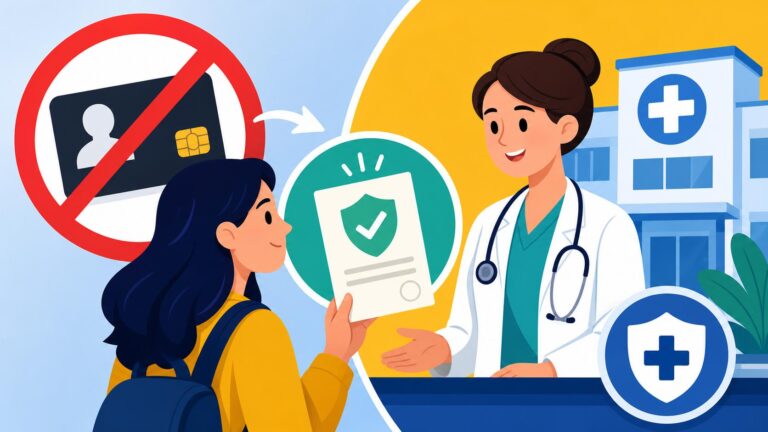
When you walk into a Belgian GP's office for the first time, don't expect a fancy reception desk. Many offices have a simple waiting room where you just take a seat and wait for the doctor to open their door and call your name. It’s a very low-key, professional environment. You should always bring your Belgian eID card; without it, the doctor cannot access the Using the Rosa App: Booking Medical Consultations Online systems or verify your insurance status.
During the first visit, the doctor will likely perform a general check-up and ask about your medical history. This is the time to mention any chronic medications you need refilling. Belgian doctors are generally conservative with prescriptions—don't expect antibiotics for a common cold. They follow strict guidelines, which you can learn more about in Pharmacies and Medication in Belgium: Prescriptions and OTC Rules. If you have medical records from your home country, it is very helpful to bring a digital copy or a translated summary.
If you are seeing the GP because you are too sick to work, make sure to ask for a certificat médical. This is a legal document that proves your inability to work. In Belgium, even a one-day absence usually requires this note to be sent to your employer within 48 hours. The GP will ask exactly how many days you think you need, but the final decision is theirs. For more on the rules regarding time off, see Sick Leave in Belgium: Medical Certificates and Informing Employers.
Specialized Care and Referrals
One of the most common questions expats ask is: "Can I just go to the hospital if I'm sick?" The answer is yes, but it’s a bad idea for anything non-emergency. Emergency rooms (Urgences/Spoedgevallen) are for life-threatening issues. For everything else, your GP is the filter. If you have a persistent skin rash, your GP will examine it first. If they can't treat it, they will give you a referral to a dermatologist.
This referral is crucial. In some insurance schemes, the reimbursement for a specialist is higher if you have been referred by your GP. It also ensures that the specialist sends a report back to your doctor, keeping your DMG up to date. If you're looking for high-quality health products to support a treatment plan, such as specialized probiotics or herbal teas, I often check iHerb for brands that might not be on the shelf at your local Apotheek.
Lastly, remember that the relationship with your GP is a two-way street. If you don't feel "heard" or if there is a language barrier that feels unsafe, you have the absolute right to change doctors. You don't need to notify the old one; you simply go to the new doctor, give them your eID, and they can request the transfer of your DMG electronically. Finding the right fit is essential for your long-term peace of mind in Belgium.
Health and Medical Disclaimer
The information provided in this article is for educational and informational purposes only and is not intended as medical advice. Always seek the advice of a qualified healthcare professional in Belgium regarding any medical condition or treatment. The Belgian healthcare system and its regulations are subject to change, and while we strive to provide the most current information, you should verify specific rules with your insurance provider or the local commune.