Compulsory Coverage Basics: Who Must Enroll in Mutuelle/Ziekenfonds
Landing in Brussels or Antwerp with your boxes and dreams is exhilarating, until you realize you are legally required to join a "mutuelle" and have no idea what that actually means. I remember sitting in a drafty commune office, clutching my passport and wondering why everyone was talking about stickers and reimbursement percentages while I just wanted to know if I could see a doctor. This guide clarifies exactly who must enroll in the Belgian health insurance system to ensure you stay legal and covered from day one.
Understanding the Legal Obligation: Is Health Insurance Mandatory?
The short answer is a resounding yes. In Belgium, health insurance is not a luxury or a choice; it is a fundamental pillar of the social security system. If you are residing in the country for more than three months, you generally fall under the mandate to be insured. This system is designed to be inclusive, ensuring that everyone from the CEO of a multinational to a student at KU Leuven has access to high-quality care without the threat of bankruptcy. For many of us coming from countries with either entirely private systems or entirely tax-funded national health services, the Belgian "middle ground" can feel confusing at first.
If you are wondering, Is Health Insurance Mandatory for Foreigners in Belgium?, the answer depends on your residency status and your professional activity. Once you register at your local town hall and receive your national register number, the clock starts ticking. The Belgian authorities view healthcare as a collective responsibility. By paying into a mutual insurance fund, you are contributing to a system that negotiates prices with doctors and hospitals to keep costs manageable for everyone. This "solidarity" principle is why the quality of care remains high across the board.
For non-EU citizens, the requirement is even more stringent because your residence permit is often tied to your insurance status. When you apply for your visa or your first residence card, you will frequently be asked for proof of "all-risk" insurance. While a private policy from a provider like Cigna Global is often used to cover the initial gap or provide enhanced international benefits, the Belgian government eventually expects you to integrate into the local social security framework once you are a tax-paying resident. Failing to enroll can lead to significant administrative headaches, including delays in renewing your residence permit or, worse, being hit with massive out-of-pocket bills for a simple emergency room visit.
The financial consequences of ignoring this mandate are real. Unlike some countries where you might just pay a small fine at the end of the year, in Belgium, the "fine" is the 100% cost of your medical care. A standard consultation that might cost you 6 Euros after reimbursement could cost you 30 or 40 Euros without insurance. A hospital stay for an appendectomy could easily run into the thousands. By enrolling, you gain peace of mind and legal compliance, ensuring that your life in Belgium starts on a secure footing.
Mutuelle vs. Ziekenfonds: Deciphering the Regional Names
One of the first things you will notice is that the name of this mandatory insurance changes depending on which street you are standing on. In the French-speaking parts of Wallonia and most of Brussels, everyone refers to it as a "Mutuelle." Cross the linguistic border into Flanders, and it becomes a "Ziekenfonds." Both terms refer to the same thing: a mutual insurance fund that acts as the intermediary between you and the Belgian social security system. I spent my first month in Ghent looking for a "Mutuelle" sign before realizing I needed to look for the "Christelijke Mutualiteit" or "Helan" buildings instead.
This linguistic divide is more than just a translation issue; it reflects the regional administration of Belgian life. While the core benefits of health insurance are regulated at the federal level—meaning the basic reimbursement for a broken arm is the same in Liege as it is in Bruges—the funds themselves are organized along political, religious, or neutral lines. You will find Christian funds, Socialist funds, Liberal funds, and Neutral funds. As an expat, you are free to choose whichever one you like. Most of us tend to pick the one with the nearest office or the best English-speaking staff.
When you begin Registering for Public Health Insurance: Step-by-Step at Your Commune, you will need to select one of these funds. Regardless of which fund you join, they all provide the same compulsory basic coverage. The differences usually lie in the "extra" benefits they offer, such as higher reimbursements for gym memberships, birth gifts, or travel vaccinations. These funds are private, non-profit organizations tasked with a public mission. They receive your social security contributions and use them to pay back your medical expenses.
It is also important to understand Social Security Contributions: How Employers Deduct Health Costs. If you are an employee, your contribution to the healthcare system is automatically deducted from your gross salary. Your employer pays a portion, and you pay a portion. This money is then funneled to the National Institute for Health and Disability Insurance (RIZIV/INAMI), which distributes it to the mutuelles. Even though the money is taken out of your paycheck automatically, you are still responsible for physically signing up with a fund to "activate" your right to those reimbursements.
Who Exactly Must Enroll? Breaking Down the Categories
The mandate to enroll in a mutuelle applies to almost everyone, but the way you join depends on your "status" in the eyes of the Belgian state. For the vast majority of expats, this starts with an employment contract. If you are here on a Single Permit, you are automatically part of the social security system. However, the system is not "plug and play." You must take your employment contract and your ID to the mutuelle office to prove you are working. Without this step, the fund won't know you exist, and your medical claims will be rejected.
Self-employed professionals and freelancers face a slightly different path. In Belgium, being "indépendant" means you are responsible for your own social security. You must join a social insurance fund (like Xerius or Acerta) and pay quarterly contributions. These contributions include your healthcare coverage. Once you are registered with a social insurance fund, you then link that status to a mutuelle of your choice. It sounds like double the work, and it is, but it ensures that you have the same healthcare rights as a salaried worker. I’ve seen many freelancers forget the mutuelle step, thinking the social insurance fund was enough—don't make that mistake.
Students and interns are another major category. If you are an international student from outside the EU, you are generally required to show proof of health insurance to get your visa. Once you are in Belgium, you can often join a mutuelle as a "resident" or "student" for a very low quarterly fee. This is highly recommended even if you have basic travel insurance, as it allows you to use the local "third-party payer" system at pharmacies and hospitals. For those who want the highest level of global protection, particularly for repatriation or private room options, keeping a policy with Cigna Global alongside your local mutuelle is a common strategy for peace of mind.
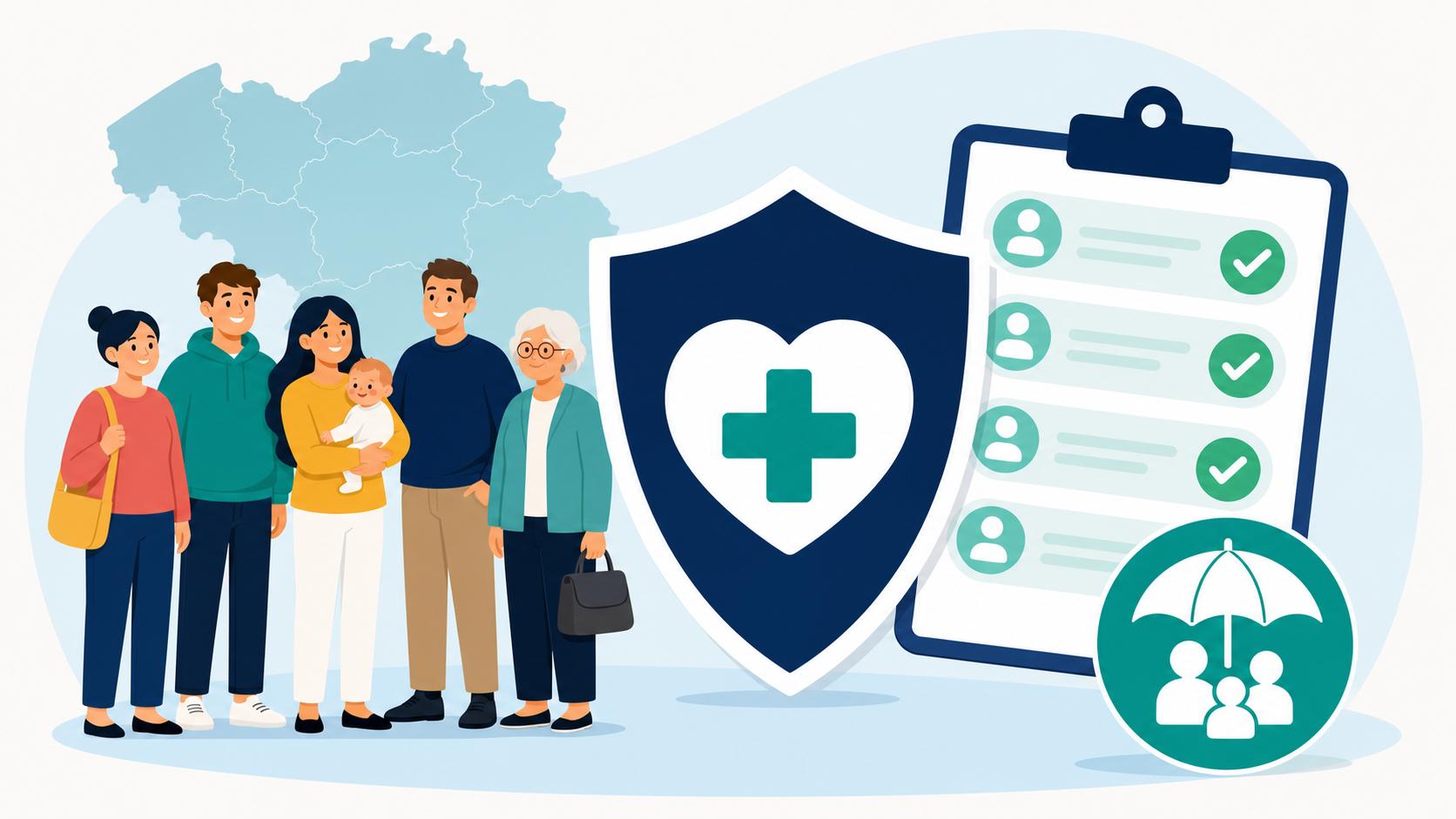
Finally, we have "dependents." In Belgium, the system allows for Adding Family Members: Enrolling Spouses and Children in Your Mutuelle. If one member of the household is working and paying social security, the non-working spouse and children can often be covered under their "umbrella" as dependents (personnes à charge). This is a lifesaver for families moving together. You will need to provide marriage and birth certificates (often sworn translations) to the mutuelle to prove the relationship. Once they are added, everyone in the family gets their own "ISI+ card" or eID activation for healthcare.
The Enrollment Process: From Commune to Coverage
The journey to being fully insured begins at the "Commune" or "Stadhuis." When you first arrive, you must register your address. The police will eventually visit to verify you actually live there, and then you receive your residence card or a temporary document (Annex 15). This document is your golden ticket. Without a national register number (the 11-digit number found on the back of your ID), most mutuelles cannot fully process your file. I remember the frustration of waiting for that police check, feeling "uncovered" in the meantime. During this gap, many expats rely on international insurance or their home country's EHIC card.
Once you have your ID or Annex 15, you visit the mutuelle. You will fill out an "Application for Membership" (Demande d'affiliation). They will ask for your bank account details (to send you money back) and your work status. If you are an employee, they will ask for a copy of your recent payslip or contract. If you are a newcomer from outside the EU, be prepared for the "Stage" or waiting period. In some cases, if you haven't contributed to a social security system in Europe recently, you might have to wait six months before you can claim reimbursements. This is a critical detail that catches many off guard.
During this "Stage" period, you are technically enrolled, but the mutuelle won't pay for your routine doctor visits yet. This is exactly when having private supplemental insurance or a global plan becomes vital. It bridges the gap so you aren't paying 100% of costs while you "earn" your right to the public system. Once the waiting period is over, you will receive your "vignettes"—those little yellow or blue stickers that seem to be a Belgian obsession. You will soon learn What Are Mutuelle Stickers Used For and Where to Put Them, as they are the key to getting your money back.
After enrollment, you should also take the time to set up your digital health presence. Belgium is moving fast toward a paperless system. You will want to download the "Itsme" app, which is the universal digital ID for Belgium. This allows you to log into portals like MyHealth.belgium.be. Check out the MyHealth.belgium.be Guide: Accessing Your Medical Records Online to see how you can track your prescriptions and reimbursements from your phone. It makes the administrative burden feel much lighter once you can see everything digitally.
Complementing Your Public Coverage: When Is It Not Enough?
While the mandatory Belgian coverage is excellent, it is important to have a reality check: it is not 100% coverage. Most people are surprised to learn about Understanding the 75% Reimbursement System for Medical Consultations. Typically, you pay the doctor upfront, and the mutuelle sends back about 75% of the "conventioned" price. This leaves you with a "personal share" (ticket modérateur). While 10 Euros here and there might not seem like much, if you have a chronic condition or a major accident, those costs can add up.
This "gap" is why many expats and locals alike look for more. Private Health Insurance in Belgium: When Do Expats Really Need It? is a common question. If you want a private room in a hospital, the mutuelle will usually not cover the significant surcharges that come with it. Doctors in private rooms can charge up to 200% or 300% of the standard rate. If you value privacy and want to avoid shared wards, a supplemental "hospitalization insurance" (either through your employer or a private provider like Cigna Global) is almost essential. These plans often cover the 25% that the mutuelle leaves behind, as well as outpatient costs before and after surgery.
Furthermore, there are many wellness and preventive items that the public system barely touches. This includes high-quality vitamins, specific supplements, or specialized skincare that you might find on sites like iHerb. While the mutuelle might give you a small annual "wellness" rebate (perhaps 25 Euros for sports), it won't pay for your daily multivitamin or your favorite organic protein powder. Many expats find that while the Belgian system handles the "big stuff" (surgeries, GP visits, prescriptions) very well, they still need to budget for self-care and supplemental products from iHerb to maintain their lifestyle.
Lastly, dental and vision care are notoriously under-covered by the basic mandatory plan. A standard cleaning is mostly reimbursed, but a crown or a pair of high-index glasses will leave you with a massive bill. Most mutuelles offer an "optional" dental plan for a few extra Euros a month. If you have children who might need braces, or if you have a history of dental issues, signing up for these "extra" modules during your initial enrollment is a very smart move. There is usually a waiting period of 6 to 12 months for these extra benefits, so you can't wait until your tooth hurts to join.
Practical Tips for Navigating the System
Navigating Belgian healthcare is as much about the "how" as it is about the "who." Once you are enrolled, your first task should be Choosing Your First GP (General Practitioner) in Belgium. In Belgium, your GP is the gatekeeper. While you can go directly to a specialist, it is much cheaper if you have a referral. More importantly, you should ask your GP to open a "Global Medical Record" (DMG/GMD). This is a digital file that stores all your history. By having a DMG, your reimbursement rate for GP visits actually increases, and your "out-of-pocket" maximum is lowered.
Another practical tip involves the "Tiers Payant" system. Historically, you paid the full price to the doctor and sent a paper slip to the mutuelle. Today, many doctors and almost all hospitals and pharmacies use the "third-party payer" system. This means you only pay your small share (the 25%) at the counter, and the mutuelle pays the doctor the rest directly. To make this work, always have your eID card or your ISI+ card ready. If a doctor still gives you a paper "attestation," don't panic. You can usually drop it in the white mailbox outside your mutuelle office or scan it via their mobile app.
| Feature | Mandatory Mutuelle Coverage | Private/Supplemental Insurance |
|---|---|---|
| GP Visits | ~75% Reimbursement | Often covers the remaining 25% |
| Hospital Stay | Ward/Shared Room focus | Private Room options & surcharges |
| Prescriptions | Subsidized (Category dependent) | May cover non-subsidized items |
| Dental Care | Basic (Cleaning, simple fillings) | Orthodontics, Crowns, Implants |
| Emergency | Full coverage (minus co-pay) | Global evacuation/repatriation |
| Optical | Very limited (Small rebate) | Frames and Lenses coverage |
Don't forget to keep your address updated! If you move to a new apartment, you must tell the commune, but you must also tell the mutuelle. They are not always linked perfectly. If the mutuelle sends your new "vignettes" to your old address, you could miss out on reimbursements. I always recommend keeping a small "health folder" in your desk containing your ISI+ cards, a few spare stickers, and copies of any specialized medical reports from your home country. Having these translated and ready will save you hours of explaining your history to a new Belgian specialist.
Finally, embrace the digital transition. Most mutuelles (like Partenamut, Christian Mutuality, or Helan) have excellent apps where you can track exactly when your money hits your bank account. If a reimbursement seems low, check if the doctor was "conventioned" (meaning they follow the official state prices). If they are "non-conventioned," they can charge whatever they want, and you will have to pay the difference. Learning to use the "Doctena" or "Rosa" apps to find "conventioned" doctors is the ultimate pro-tip for saving money while staying healthy in your new Belgian home.
Disclaimer
This guide is intended for informational purposes only and does not constitute legal, financial, or professional medical advice. Healthcare regulations and social security laws in Belgium are subject to change, particularly with the 2026 administrative updates. Always verify your specific requirements with your local commune, your employer, or your chosen mutual insurance fund. Enrollment in a mutuelle is a legal requirement for residents, and failure to comply may result in financial penalties or issues with your residency status. For international coverage gaps or enhanced benefits, consult a licensed insurance broker or private provider.