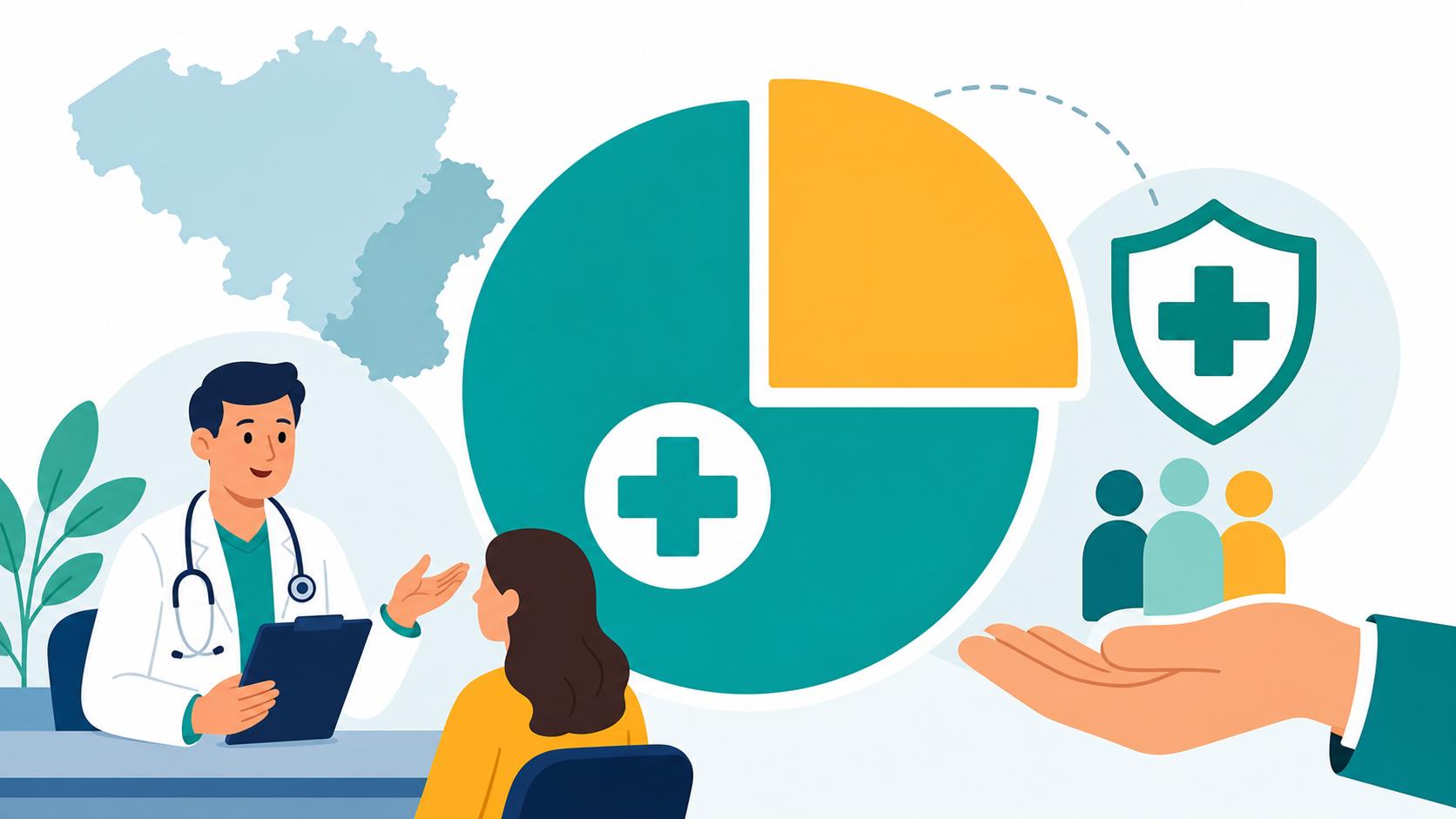
Understanding the 75% Reimbursement System for Medical Consultations
Walking out of a doctor's office in Brussels with a paper receipt for 30 Euros and no clue why the bank transfer later only shows 22 Euros is a rite of passage every expat undergoes. I’ll never forget the confusion of my first winter here, staring at those little blue stickers and wondering if I was doing it all wrong. This guide breaks down exactly how the 75% reimbursement system works so you can stop losing money to Belgian bureaucracy.
The Core Mechanics of the 75% Reimbursement Rule
In Belgium, the healthcare system is built on a "fee-for-service" model where you usually pay the provider upfront and then claim a portion back from your insurance fund. This fund is known as a Mutuelle in French or a Ziekenfonds in Dutch. If you are wondering Is Health Insurance Mandatory for Foreigners in Belgium?, the answer is a resounding yes, as this registration is what triggers your right to these refunds. The "75% rule" is the baseline for most standard consultations with a General Practitioner (GP) or a specialist, but the math behind it is often more complex than a simple percentage of what you paid.
The Government Nomenclature and Official Rates
The Belgian government sets an official "nomenclature" price for every single medical act, from a simple blood draw to a complex neurosurgery. This price is the "conventioned" rate. For a standard GP consultation in 2026, this might be set at approximately 30 Euros. When we talk about 75% reimbursement, the Mutuelle is calculating 75% of that official rate, not necessarily 75% of what your doctor charged you. If your doctor follows the official rates, the math is straightforward. If they charge a surplus, your "out-of-pocket" cost increases significantly.
I remember my first visit to a specialist in Louise, where I paid 80 Euros for a 15-minute chat. I expected 60 Euros back. When I received 18 Euros, I realized I hadn't checked if the doctor was "conventioned." Understanding these official rates is the first step to budgeting your life here. You aren't just paying for the visit; you are paying into a social system that guarantees a set return based on national agreements, regardless of the "luxury" of the clinic you choose.
The Role of the Ticket Modérateur
The portion of the medical bill that you are responsible for paying—the part that is not reimbursed—is called the "ticket modérateur" or "remgeld." Under the 75% system, your ticket modérateur is generally the remaining 25%. However, this percentage can fluctuate. For example, if you have a specific social status or if you are seeking care for a chronic illness, your personal share might drop to 10% or even zero.
The ticket modérateur is designed to discourage "over-consumption" of medical services. By making the patient pay a small portion, the state ensures that people don't visit the ER for a stubbed toe. As an expat, this can feel like a hidden tax, especially if you come from a country with "free" at-the-point-of-use healthcare like the UK. It is essential to factor these small, frequent costs into your monthly budget, especially during the cold Belgian winters when flu season hits hard.
Conventioned vs. Non-Conventioned Providers
This is perhaps the most important distinction for your wallet. A "conventioned" doctor (conventionné/geconventioneerd) agrees to charge exactly the government-mandated price. A "non-conventioned" doctor is free to set their own fees. When you see a non-conventioned provider, the Mutuelle still only pays you 75% of the official rate. Anything the doctor charges above that rate comes entirely out of your pocket.
You can check a doctor's status on platforms like Doctena or Rosa, or by looking them up on the INAMI/RIZIV website. If you are Choosing Your First GP (General Practitioner) in Belgium, always ask "Êtes-vous conventionné?" or "Bent u geconventioneerd?". It can be the difference between a 7 Euro out-of-pocket cost and a 40 Euro one. If you prefer the flexibility of seeing any specialist regardless of their rates, this is where having a supplemental plan like Cigna Global becomes invaluable, as it can bridge the gap that the public system leaves behind.
Navigating the Reimbursement Process Step by Step
The Belgian administration is famous for its love of paper, though we are finally seeing a digital shift. To get your 75% back, you have to follow a specific "paper trail" that has existed for decades. While it seems archaic at first, it is actually quite reliable once you know the steps. If you are new to the country, you should first read the Mutuelle and Ziekenfonds: Public Health Insurance Registration Guide to ensure your membership is active.
The Importance of the Vignette Stickers
When you join a Mutuelle, they will mail you a sheet of small, white-and-blue (or pink) stickers called "vignettes." These contain your national registry number and your insurance code. For years, the only way to get a refund was to take the paper "attestation" given to you by the doctor, lick a sticker, place it in the designated box on the form, and drop it into a physical mailbox at your Mutuelle’s local branch.
Even today, you should always keep a few vignettes in your wallet. If a doctor’s digital system is down, or if you are visiting a specialist who hasn't upgraded their tech, they will hand you a green (for GPs) or brown (for specialists) piece of paper. Without that sticker, your refund will be delayed or rejected. It’s a quirky, very Belgian habit, but failing to do it means you are essentially giving away 75% of your money to the state.
Moving Toward eAttest and Digital Refunds
The good news for modern expats is the rollout of "eAttest." Most tech-savvy GPs now use this system, where the reimbursement claim is sent digitally the moment you pay. You still pay the full amount at the desk (unless the "tiers payant" system applies), but you don't have to deal with stickers or mailboxes. The 75% refund simply appears in your bank account a few days later.
When the doctor uses eAttest Explained: How Doctors Automatically Claim Your Refund, they will give you a small receipt that says "justificatif" or "bewijsstuk." Do not throw this away until you see the money in your account. If there is a glitch in the digital transmission, this receipt is your only proof that the consultation happened. If you are tech-inclined, you can also track these digital claims through the "MyHealth" portal or your Mutuelle's smartphone app.
Timelines for Payouts and Common Delays
Typically, once the Mutuelle receives your claim—whether via a physical mailbox or eAttest—the refund is processed within 3 to 10 working days. If you find yourself waiting longer than two weeks, something is usually wrong. Common culprits include your bank account details not being updated in the Mutuelle's system or your residency permit (eID) having expired.
If you are still waiting for your physical ID card, you might be using an "Annex" document. In this case, you should read How to Submit Medical Receipts for Reimbursement in Belgium to understand the alternative workflows. I once waited two months for a refund because I hadn't realized my Mutuelle membership needed a manual "reactivation" after I changed employers. Always stay proactive and check your online member portal regularly.
How the DMG/GMD Increases Your Reimbursement
The most effective way to "hack" the Belgian system and get more than 75% back is by opening a Global Medical Record, known as a Dossier Médical Global (DMG) in French or Globaal Medisch Dossier (GMD) in Dutch. This is a digital file managed by your chosen GP that centralizes all your medical history, including specialist reports and lab results.
Boosting Your Refund Percentage
By simply asking your doctor to open a DMG for you, your reimbursement rate for GP visits typically jumps from 75% to around 90%. This means your out-of-pocket cost for a standard consultation drops significantly. The logic from the Belgian state is simple: they want to reward patients for having a "home base" GP who coordinates their care, as this reduces redundant testing and improves long-term health outcomes.
When you have a DMG, you also get a reduction in the "ticket modérateur" for home visits and certain evening consultations. You can learn more about this in The Global Medical Record (DMG/GMD): Why You Need It for Better Refunds. The administrative fee for opening a DMG (usually around 35 Euros) is 100% reimbursed by your Mutuelle, meaning there is absolutely no financial downside to doing this during your very first doctor's visit.
Centralized Care and Specialist Referrals
Beyond the financial benefit, the DMG is essential for quality of care. When you see a cardiologist or a dermatologist, they can send their report directly to your GP's digital file. In a country where medical data can be fragmented across different regions (Brussels, Flanders, and Wallonia), having one GP who holds the "master key" to your health history is vital.
Additionally, some specialist consultations offer a higher reimbursement rate if you have a referral from the GP who holds your DMG. This prevents people from "specialist hopping" without a medical necessity. If you are managing chronic conditions and find yourself needing frequent check-ups, the savings from a DMG can add up to hundreds of Euros per year.
Managing Your DMG When You Move
If you move from Antwerp to Ghent or switch neighborhoods in Brussels, you can transfer your DMG to a new doctor. You don't need to pay for a new one; you simply inform your new GP, and they will request the digital transfer from your previous provider. It’s a seamless process that ensures your health history follows you.
For expats who travel frequently or move between countries, this level of continuity is rare. However, if you are also using international vitamins or niche health products not found in Belgian pharmacies, you might supplement your care with items from iHerb, which delivers a wide range of supplements that the Belgian nomenclature doesn't cover. Just remember that while iHerb products are great for wellness, they are never part of the 75% reimbursement system.
Exceptions: When You Get More (or Less) Back
The 75% rule is a general baseline, but the Belgian system is designed with "social solidarity" in mind. This means there are several scenarios where the reimbursement is much higher to protect vulnerable populations or those with high medical needs.
Status BIM and Increased Intervention
If you have a low income, are a retiree with a modest pension, or have a recognized disability, you may be entitled to "Status BIM" (Bénéficiaire de l'Intervention Majorée). People with this status receive a much higher reimbursement rate—often 90% to 100%—for almost all medical consultations and prescriptions. This is an automatic right for some, but others must apply through their Mutuelle.
This status also unlocks other benefits, such as cheaper public transport and reduced heating bills. If you find yourself in a difficult financial situation while living in Belgium, your Mutuelle is your first point of contact to check if you qualify. It is a safety net that ensures healthcare remains a right rather than a privilege, even for foreign residents.
Maximum Billing (MAF) and Safety Nets
For families or individuals with chronic illnesses, medical costs can become overwhelming even with 75% reimbursement. This is where the Maximum Billing System (MAF): Capping Out-of-Pocket Health Costs comes into play. Once your total "ticket modérateur" payments reach a certain ceiling in a calendar year (the ceiling depends on your household income), the Mutuelle begins to reimburse 100% of the official rate for the rest of the year.
The MAF system is calculated automatically by the Mutuelle. You don't need to submit extra paperwork; they track your "remgeld" across all consultations and pharmacy purchases. It is a fantastic protection for those who have a "bad health year" and find themselves hitting the doctor's office every week. It essentially puts a hard cap on how much a Belgian resident can spend on essential healthcare in a year.
The Impact of Private Insurance Supplements
While the public system is robust, many expats choose to add a layer of private protection. Companies like Cigna Global offer plans that cover the "remaining 25%" that the Mutuelle leaves behind. This is particularly popular among those who prefer non-conventioned specialists in high-end Brussels clinics where the fees can be double the official nomenclature.
In addition to the 75% public reimbursement, having private insurance can cover "comfort" items like private hospital rooms, which are not covered by the public fund. If you are weighing your options, reading Private Health Insurance in Belgium: When Do Expats Really Need It? can help you decide if the public 75% is enough for your lifestyle or if you need the 100% security of a private policy.
| Service Type | Official Rate (Est.) | Mutuelle Refund (75%) | Out-of-Pocket (No DMG) | Out-of-Pocket (With DMG) |
|---|---|---|---|---|
| GP Consultation | €30.00 | €22.50 | €7.50 | ~€4.00 |
| GP Home Visit | €45.00 | €33.75 | €11.25 | ~€6.00 |
| Specialist (e.g. Derm) | €50.00 | €37.50 | €12.50 | €12.50 |
| Dentist (Check-up) | €65.00 | €48.75 | €16.25 | €16.25 |
Managing Specialized Care and Prescription Costs
Reimbursement isn't limited to just talking to a doctor; it extends to laboratory tests, physical therapy, and medicines. However, the percentages in these categories can vary wildly from the standard 75% model.
Lab Tests and the Post-Visit Invoice
One of the most confusing things for new residents is getting a bill in the mail three months after a blood test. When your GP takes a sample, they send it to an external lab. The lab then bills you separately. Usually, the lab will apply the "tiers payant" system where they bill the Mutuelle directly for the 75% and only send you an invoice for the remaining 25%.
If you are confused by these letters, don't ignore them. Belgian "huissiers" (debt collectors) are very efficient. If you want to understand what you can buy over the counter without a prescription vs. what requires a doctor's note for reimbursement, refer to Pharmacies and Medication in Belgium: Prescriptions and OTC Rules. Remember, items like sunscreen or basic paracetamol are rarely reimbursed unless they are part of a specific medical treatment plan.
Physiotherapy and Referral Requirements
If you need "Kine" (Kinesitherapy/Physiotherapy), the 75% rule still applies, but only if you have a written prescription from a GP or specialist. If you simply walk into a physio studio because your back hurts, you will likely pay the full price with zero refund. The number of sessions you are allowed per year at the 75% rate is also capped based on your diagnosis.
For those who rely on regular wellness supplements or specialized skincare that isn't sold in a typical "Pharmacie/Apotheek," I often recommend checking iHerb. They often have brands like Thorne or Now Foods that are difficult to find here, and while you won't get a Mutuelle refund, the lower base prices often make it cheaper than buying non-reimbursable equivalents at a Belgian chemist.
Dental Care and the Annual Check-up
Dentistry in Belgium follows a "prevention" model. If you go for your annual check-up, the reimbursement is very high (often close to 100% for the basic cleaning). However, if you haven't seen a dentist in the previous calendar year, your reimbursement for a cavity or a more complex procedure will drop significantly—often below the 75% mark.
This is the state's way of forcing you to stay on top of your dental health. For many expats, this is a surprise. I always tell newcomers: even if your teeth feel fine, book that "contrôle annuel" the moment you get your eID. It "unlocks" your higher reimbursement rates for the following year. It is a small administrative chore that saves you hundreds of Euros if you ever need a root canal or a crown down the line.
Practical Tips for Expat Financial Health
Living in a new country is expensive, and healthcare shouldn't be the thing that breaks your bank. By staying organized and understanding the 75% system, you can treat medical costs as a predictable utility rather than a series of financial emergencies.
Keep an Organized Health Folder
Whether it's a physical folder or a digital one on your phone, keep track of every "attestation de soins." If you are using the paper system, don't wait months to mail them in. I make it a habit to drop my receipts in the little white Mutuelle mailbox every Friday. It keeps the cash flow steady and ensures I don't lose the papers behind the sofa.
If you have kids, ensure their "ISI+" cards are always in your bag. Children under 18 often get higher than 75% reimbursement, and having their data ready at the pharmacy or doctor's office ensures the "tiers payant" is applied correctly. You can find more details on children's health in our guide on Family Health in Belgium: Pregnancy, Birth, and Pediatric Care.
Use the Apps (Rosa, Doctena, and Mutuelle Apps)
There is no reason to be flying blind. Use the Rosa app to specifically filter for "conventioned" doctors. Use your Mutuelle’s app (like the Partenamut or Helan apps) to see exactly when your 75% has been deposited. This transparency helps you spot errors immediately.
If you are an international worker and your employer provides "Assurance Hospitalisation," make sure you understand the difference between that and your Mutuelle. The Mutuelle handles the 75% for daily visits, while the hospitalization insurance handles the massive bills from surgeries or stays. Combining these with a supplement like Cigna Global creates a "bulletproof" health strategy that allows you to focus on your recovery rather than your bank balance.
Don't Fear the Bureaucracy
The Belgian system can be intimidating with its stamps, stickers, and Dutch/French terminology. But once you realize that the 75% system is a reliable, math-based machine, the anxiety fades. It is a system that rewards those who play by the rules—opening a DMG, seeing conventioned doctors, and going for annual check-ups.
Validation of your frustration is important: yes, the paper stickers are silly. Yes, paying 80 Euros upfront for a specialist feels steep. But the high quality of care and the eventual 75% (or 90%) return make Belgium one of the best places in the world to be if you actually get sick. Stay proactive, keep your vignettes handy, and you will navigate the system like a local in no time.
Disclaimer
This article is for informational purposes only and does not constitute professional medical or financial advice. Healthcare regulations and reimbursement rates in Belgium are subject to change and vary based on individual circumstances. Always consult with your Mutuelle/Ziekenfonds or a qualified professional for the most up-to-date information regarding your specific situation.