How to Set Up Direct Debits (Domiciliation) for Utility Bills
Waking up to a red-bordered "Rappel" notice in your Belgian mailbox is a rite of passage every expat fears, usually because a paper bill got buried under a stack of local flyers. I spent my first six months in Brussels manually typing long structured communication codes into my banking app, terrified I’d miss a digit and my electricity would be cut off. This guide solves that administrative headache by walking you through the seamless world of Domiciliation to automate your life.
Understanding the Belgian Domiciliation System
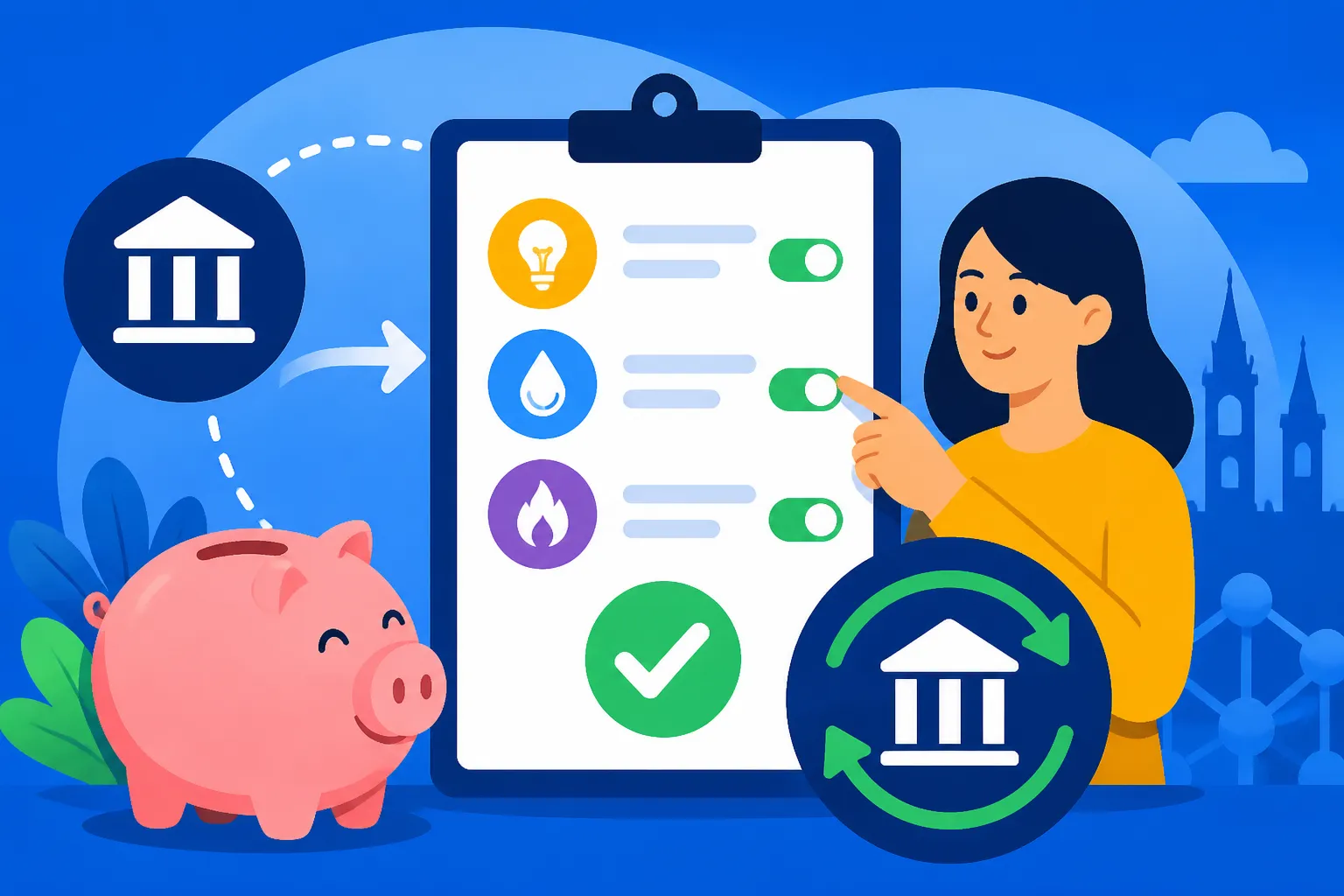
When you move into your first apartment, perhaps after finally navigating the hurdles of Opening a Belgian Bank Account: Documents Needed and Roadblocks, you will quickly realize that the Belgian utility system loves its paperwork. Most companies, from energy giants like Engie to water providers like Vivaqua, prefer a system called Domiciliation. In international terms, this is a SEPA Direct Debit. It allows the service provider to "pull" the exact amount of your monthly or quarterly bill directly from your account.
Unlike a standing order (Ordre Permanent), where you send a fixed amount every month, a domiciliation is flexible. If your water usage spikes in July, the company adjusts the pull accordingly. This is particularly useful for Budgeting for Utilities: Average Electricity and Gas Bills in 2026, as utility costs in Belgium can fluctuate significantly based on the "indexation" of energy prices. For a veteran expat, the peace of mind knowing that the Wi-Fi bill is paid while you are vacationing in the Ardennes is worth the five minutes it takes to set this up.
The system is underpinned by the SEPA (Single Euro Payments Area) framework. This means you aren't strictly limited to traditional Belgian banks like KBC or BNP Paribas. If you are using modern solutions like Wise, you can often set up these mandates just as easily, provided the provider accepts a non-BE IBAN, which is legally required under SEPA anti-discrimination laws but occasionally requires a bit of polite persistence with the provider's customer service.
How to Set Up Your Direct Debit Mandate
Setting up a domiciliation usually involves a "Mandate." This is a legal authorization you give to a company to take money from your account. In the old days, this involved signing a piece of paper and mailing it to a physical office in Namur or Ghent. The process has become significantly more digital, often integrated with Itsme Authentication: How to Set Up Belgium's Vital Digital ID, which has become the "skeleton key" for Belgian administration.
Step 1: Obtain the Mandate Reference
When you sign your contract for electricity, gas, or water, the provider will usually send you a "Mandate Form" or a digital link. This form contains a unique Mandate Reference Number and the company’s Creditor Identifier. You cannot set up a domiciliation without these two pieces of data. If you’ve just moved in and are still waiting for your physical ID card, you might find that some providers are hesitant. However, you can often use temporary documents or a Wise account to show proof of a European IBAN to get the process started.
Step 2: Choose Your Method of Authorization
There are two ways this usually goes down in Belgium. The first is "Creditor-Driven." You sign the form (digitally or on paper) and send it back to the utility company. They then notify your bank. The second is "Debtor-Driven," where you take the info the company gave you and manually enter it into your banking app. Most major Belgian banks have a dedicated "Direct Debits" or "Domiciliations" section in their mobile interface.
Step 3: Confirmation and First Payment
It usually takes one full billing cycle for the automation to kick in. I always tell newcomers to keep a close eye on their first few bills. If the invoice says "Virement à effectuer" (Transfer to be made), the direct debit isn't active yet. If it says "Sera prélevé de votre compte" (Will be debited from your account), you are good to go. While waiting for these to settle, some expats keep their liquid savings in a Trade Republic account to earn interest on their bill money until the very day it needs to be transferred to their primary spending account.
Navigating Utility Providers and Their Specific Quirks
Every utility provider in Belgium has its own personality when it comes to payments. For example, water providers like Vivaqua (Brussels) or De Watergroep (Flanders) often bill quarterly. This can be a shock to the system if you aren't prepared for a larger-than-normal hit to your balance. Using a direct debit helps here because they often offer "acompte" (installment) plans where you pay a smaller amount monthly, and then a "regularisation" bill once a year after the meter reading.
When you are Renting in Belgium: Apartments, Contracts, and Tenant Rights (2026, you are responsible for setting up these accounts in your own name. Do not let a landlord keep the utilities in their name and ask for "lump sums" unless it is explicitly written in a shared-housing (co-location) agreement. Having the domiciliation in your name provides you with "proof of residence" documents, which are golden when you eventually apply for residency extensions or even citizenship.
Telecom providers like Proximus, Telenet, and Orange are the most aggressive about pushing for domiciliation. They often offer a small discount (usually €1 or €2) if you choose automated payments over paper invoices. Over a year, that’s a few free rounds of Belgian frites. If you are managing a high-net-worth portfolio or perhaps holding assets on Binance, it is still best to keep your "utility" money in a standard SEPA-compliant account to ensure these automated pulls never fail, as the penalties for a returned debit can be upwards of €10 per instance.
Comparing Payment Options for Belgian Utilities
| Payment Method | Automation Level | Risk of Late Fees | Flexibility | Best For |
|---|---|---|---|---|
| Domiciliation | High | Very Low | Low (Company decides amount) | Fixed monthly bills (Electricity, Water, Internet) |
| Standing Order | High | Low | High (You decide amount) | Fixed rent payments to a private landlord |
| Manual Transfer | None | High | Total | One-off repairs or irregular invoices |
| Zoomit | Medium | Medium | High | People who want to "approve" every bill before it pays |
Managing, Modifying, and Canceling Domiciliations
Life in Belgium is rarely static. You might decide to move from a studio in Ixelles to a house in Tervuren, or perhaps you’ve found a better energy deal. Managing your active mandates is a critical skill. Most expats don't realize that they have the right to request a refund for any authorized direct debit for up to eight weeks after the amount was taken, no questions asked. This is a powerful consumer protection tool if a company accidentally overcharges you.
If you find yourself needing to stop a payment, you should learn How to Cancel a Domiciliation (Direct Debit) Through Your Bank App. Simply stopping the payment at the bank level is not enough, though; you must also notify the company. If you don't, they will consider you in default. This can lead to your file being passed to a "Huissier de Justice" (Bailiff), which is an incredibly stressful experience. I’ve seen expats ignore a €15 internet bill only to have it balloon into a €150 legal nightmare because they canceled the bank mandate but didn't close the service contract.
When preparing for a move, part of your checklist should be the "Transfer of Consumption" form. You and the new tenant (or the landlord) sign a document stating the meter readings on your last day. Your utility provider will then issue a "Facture de clôture" (Final Bill). This is usually the last time the domiciliation will trigger. Once that final payment is cleared, you can safely remove the mandate from your banking app. This is an essential step in Cost of Living in Belgium 2026: Budgeting for Cities and Families to ensure you aren't paying for the next tenant’s long showers.
What Happens When a Domiciliation Fails
The most common reason for a failed direct debit is "solde insuffisant" (insufficient funds). Belgian banks are generally quite strict. If the money isn't there on the day the company tries to pull it, they usually won't try again the next day. Instead, they will send you a reminder (Rappel) via email or post.
The first reminder is often free, but the second one will almost certainly include a late fee of €7 to €15. If this happens, you must pay the bill manually via a standard bank transfer, using the structured communication (the numbers with slashes, e.g., +++000/1234/56789+++) provided on the reminder. Do not wait for the next month's direct debit to "catch up," as it rarely works that way.
If you are struggling with a sudden surge in costs, it is better to contact the company and ask for a "plan de paiement" (payment plan). They are legally required to be somewhat flexible, especially if you are a vulnerable resident. Ignoring the problem is the only way to end up Handling Debt Collection Agencies (Huissier de Justice) in Belgium. The Belgian system is bureaucratic and slow, but its "reminders" are relentless. Staying on top of your automated payments is the single best way to keep your "resident record" clean for future administrative needs.
Technical Considerations for International Expats
For those using "Neobanks" or international accounts, be aware of "IBAN Discrimination." While it is illegal in the EU for a Belgian company to refuse a German (DE), French (FR), or Irish (IE) IBAN from Wise, their automated systems sometimes reject them. If the online portal doesn't accept your non-BE IBAN, you will need to email their customer support with a copy of your mandate and a "RIB" (Relevé d'Identité Bancaire) from your bank.
Additionally, always ensure your bank account name exactly matches the name on your utility contract. If you are Registering Your Lease (Enregistrement du Bail): Whose Responsibility?, make sure the name on the lease is the one you use for the electricity. A mismatch between the "Contract Holder" and the "Bank Account Holder" can sometimes trigger fraud alerts in the SEPA system, causing the domiciliation to be rejected before it even reaches your bank. It’s a small detail, but one that saved me a lot of frustration during my second move in Antwerp.
Important Disclaimer
This guide is intended for informational purposes only and does not constitute legal or financial advice. Banking regulations, utility company policies, and Belgian administrative laws (including SEPA rules) can change frequently. While we strive to provide the most up-to-date information, always verify specific payment requirements with your bank and your service providers. We are not responsible for any fees, service disconnections, or legal issues arising from the use of this information.