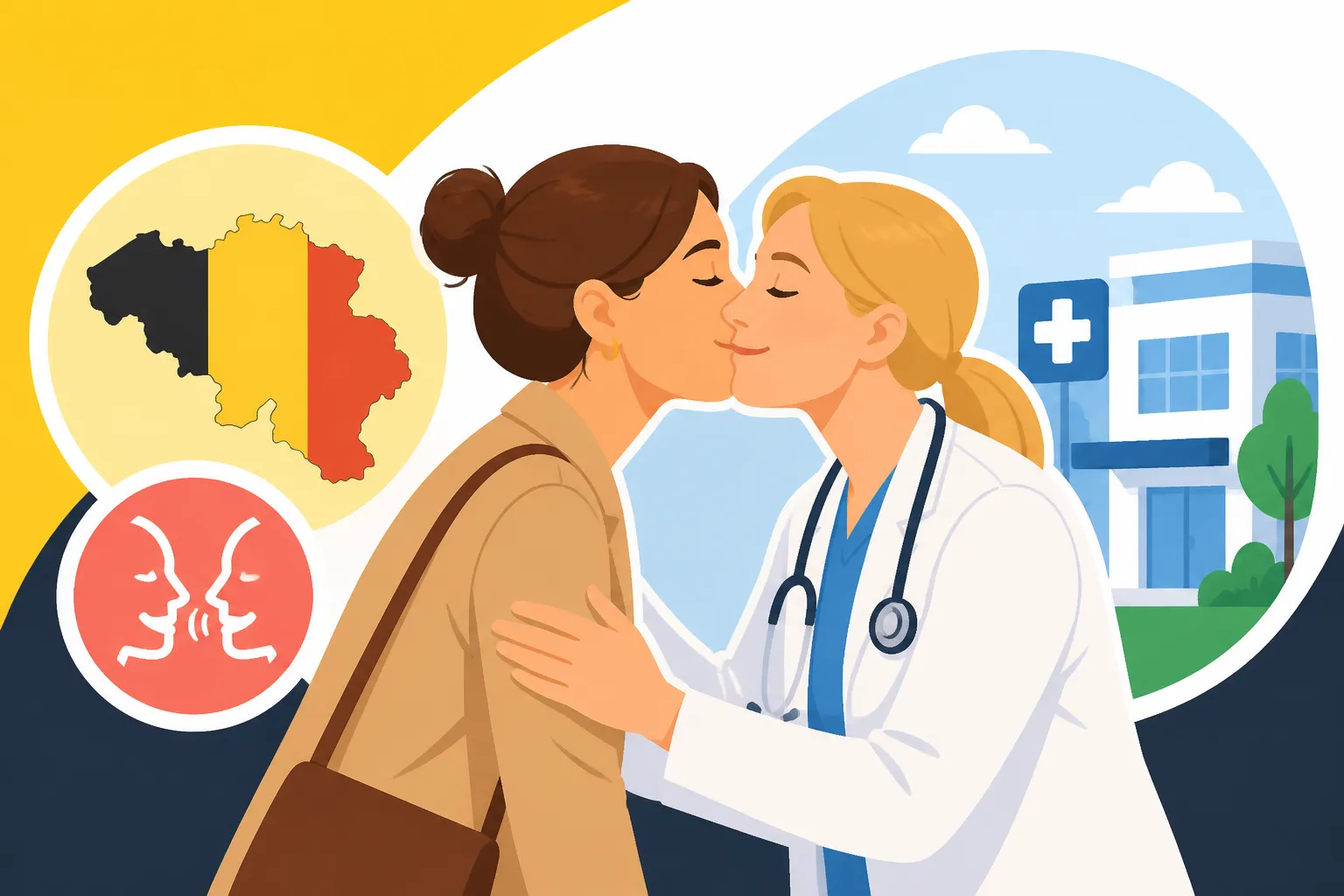
Navigating the Belgian Healthcare ‘Bise’ Greeting System
Ah, the infamous "bise"! If you've ever found yourself standing awkwardly in a Belgian doctor's waiting room, unsure whether to extend a hand, offer a cheek, or simply nod vigorously, you are absolutely not alone. I remember my first few months here, feeling like a cultural anthropologist just trying to decipher the unwritten rules of social interaction, especially when it came to something as seemingly simple as saying hello in a professional setting. This guide is here to unravel the mysteries of the Belgian greeting system, particularly as it pertains to healthcare, so you can walk into your next appointment with a little more confidence and a lot less internal panic.
The Enigmatic Belgian 'Bise': A Cultural Primer
Let’s be honest, the 'bise' – that delightful French term for a kiss on the cheek – is one of those quintessentially European customs that can send shivers down an expat’s spine. It's not just a kiss; it's a carefully choreographed social dance with unwritten rules that vary wildly from country to country, region to region, and even person to person. Belgium, being the wonderfully complex place it is, adds its own unique flavour to this tradition.
Culturally, the 'bise' is primarily prevalent in French-speaking Belgium, Wallonia, and to some extent, Brussels. Here, it’s a common greeting among friends, family, and even acquaintances. The number of kisses is a crucial detail that often baffles newcomers. Unlike France, where two or four kisses are common, in most of Wallonia, it's typically one bise. Yes, just one. This single kiss is usually delivered on the right cheek (your right, facing them). However, in some pockets, or depending on familial habits, you might encounter two. In Flanders, the Dutch-speaking region, the 'bise' is far less common in general social interactions. A firm handshake is the standard, even among friends, though very close family members might exchange a hug or a brief cheek kiss. This regional divide is your first major hurdle, and it’s why just "being in Belgium" doesn't give you a universal answer. It’s all part of the charming, bewildering tapestry of Belgian life.
To Kiss or Not to Kiss? Healthcare Edition
Now, let's zero in on the specific environment that often causes the most anxiety: a healthcare setting. When you're feeling vulnerable or stressed, the last thing you need is a social faux pas. In my experience, and after observing countless interactions, the rule of thumb in Belgian healthcare leans heavily towards professionalism and hygiene, which generally means no 'bise'.
Doctors and Specialists
For general practitioners (GPs) and specialists in Belgium, regardless of whether you are in Wallonia or Flanders, a handshake is almost universally the expected form of greeting. This is especially true for your first few appointments. Doctors here maintain a professional distance, and the clinic or hospital environment isn't typically where personal greetings like a 'bise' are exchanged. When you walk into your doctor's office, a simple "Bonjour Docteur" or "Goeiedag Dokter" accompanied by a handshake is appropriate. If you're seeing a new doctor, they will usually initiate the handshake. If they don't, a polite verbal greeting is perfectly sufficient. The focus is on the medical consultation, not social pleasantries of the physical kind. You wouldn't want to accidentally get too close if your doctor is rushing between patients or just finished examining someone with a contagious cough, right? Finding a good GP is important, and you can learn more about choosing your first GP (General Practitioner) in Belgium in another post. For specialists, the formality is often even more pronounced. This applies whether you are seeing a general practitioner, a gynecologist, or a physiotherapist.
Nurses, Receptionists, and Administrative Staff
The same professional decorum extends to other healthcare professionals. Nurses and medical assistants will typically greet you verbally, sometimes with a handshake if the situation (like a first meeting for ongoing care) warrants it, but never with a 'bise'. This is practical and hygienic. Imagine the number of people they interact with in a day! Similarly, the receptionists at your local medical centre or hospital administrative staff are there for practical, transactional purposes. A polite "Bonjour/Goeiedag" and a clear statement of your purpose (e.g., "I have an appointment with Dr. Jansen") is all that's required. There's no expectation of a physical greeting. It’s important to remember that these individuals are often the first point of contact and their efficiency is key to the smooth running of the clinic. Getting acquainted with the overall Healthcare in Belgium for Expats: Complete System Overview (2027) will help you understand these roles better.
Pharmacists
Your local pharmacy (or apotheek in Dutch, pharmacie in French) is another key part of the Belgian healthcare system. Here, too, the 'bise' is definitely not a thing. Pharmacists provide a professional service, advising on medication, filling prescriptions, and offering over-the-counter remedies. A verbal greeting, a polite query about your needs, and a thank you are the standard. They are busy dispensing medication and ensuring public health, so a quick, efficient, and respectful interaction is always appreciated. You can read more about Pharmacies and Medication in Belgium: Prescriptions and OTC Rules to get a full picture of their role.
Navigating the Awkwardness: Practical Strategies for Expats
So, you're at the doctor's, and the moment of truth arrives. How do you avoid the cringe-worthy half-lunge, half-retreat that many expats (myself included!) have mastered? Here are some tried and tested strategies.
Observe and Follow
The golden rule of expat life: observe first, act second. When you enter a waiting room or are called into a consultation, take a quick glance at how others are interacting, though this is less useful in one-on-one medical settings. More importantly, let the healthcare professional initiate. If your doctor extends their hand, reciprocate with a firm but not bone-crushing handshake. If they simply offer a verbal greeting, return it warmly and proceed with your reason for being there. Most Belgian professionals are aware that not everyone shares the same greeting customs, especially in diverse cities like Brussels or Antwerp.
The Safe Bet: Handshake or Verbal Greeting
When in doubt, a handshake (if initiated) or a clear, polite verbal greeting in the local language (or English, if that's what you've established) is always your safest bet in a healthcare context. In Flanders, a handshake is standard across almost all professional settings. In Wallonia, while a 'bise' is common socially, it is usually reserved for non-professional, more intimate interactions. In a doctor's office, the "professional" override kicks in. Don't feel rude for not offering a cheek; you're actually showing respect for the professional setting. If you've been living here for a while and have mastered the basics, you might even consider getting an Airalo eSIM to stay connected and look up quick cultural tips on the fly if you're venturing to a new region or appointment.
Language is Your Friend
Using the appropriate language for your greeting can also implicitly set the tone. "Bonjour" in French-speaking areas and "Goeiedag" or "Dag" in Dutch-speaking areas are always welcome. If you know your doctor speaks English, a simple "Hello, Doctor" works just fine. Many expats find English-speaking doctors particularly helpful for clarity on medical issues, and you can find guides on Finding English-Speaking Doctors in Brussels, Antwerp, and Ghent. Being polite and clear with your words often negates the need for any physical greeting uncertainty.
Here's a quick summary table to help you keep things straight:
| Situation / Relationship | French-speaking Belgium (Wallonia/Brussels) | Dutch-speaking Belgium (Flanders) | Healthcare Setting (All Regions) |
|---|---|---|---|
| Close Friends/Family | 1-2 Bises (typically 1) or Hug | Handshake or Hug | Verbal/Handshake (outside clinic) |
| Acquaintances | 1 Bise (less common in Flanders) | Handshake | Verbal/Handshake (outside clinic) |
| New Acquaintances | Handshake or 1 Bise (if introduced) | Handshake | Handshake/Verbal |
| Professional (Colleagues) | Handshake | Handshake | Handshake/Verbal |
| Healthcare Providers | Handshake or Verbal ONLY | Handshake or Verbal ONLY | Handshake or Verbal ONLY |
| Children | Kiss (parents), 1 bise (relatives/friends) | Hug/Handshake (parents), Handshake (others) | Verbal/Handshake (with parents) |
This table generally reflects common practices. Remember, cultural nuances are fluid, but in healthcare, professionalism usually takes precedence.
Beyond Greetings: General Etiquette in Belgian Healthcare
While the 'bise' might be the greeting elephant in the room, there are other aspects of Belgian healthcare etiquette that are worth noting. Understanding these broader norms can make your entire experience smoother, from registration to reimbursement. After all, once you've sorted out your housing through platforms like HousingAnywhere, and picked up some essentials from Amazon Belgium, it's time to master daily life.
Punctuality is Paramount
Belgians value punctuality, and this is especially true in medical settings. Showing up on time for your appointment is expected. If you anticipate being late, it's always polite to call ahead and inform the receptionist. This shows respect for the doctor's time and for other patients who also have appointments. Long wait times for specialists can be frustrating, as discussed in Dealing with Long Wait Times for Specialist Appointments in Belgium, but your punctuality helps keep the system moving.
Bring Your eID and Mutuelle Details
Always have your Belgian eID card and your mutuelle (health insurance fund) stickers or card ready. These are essential for registration and ensuring your medical costs are correctly processed for reimbursement. You'll need them at virtually every appointment. For a full understanding of the system, refer to Mutuelle and Ziekenfonds: Public Health Insurance Registration Guide. Some doctors use the eAttest system, which digitally submits your claims, but having your physical card is still crucial.
Be Direct, But Polite
Belgian communication can often be quite direct, particularly in professional contexts. Don't shy away from clearly stating your symptoms or asking questions about your treatment plan. Doctors appreciate clear, concise information. However, this directness is always paired with politeness. Use "s'il vous plaît" / "alstublieft" (please) and "merci" / "dank u wel" (thank you) generously. If you require medical translation services, it is best to arrange this in advance to ensure clarity.
Language in the Consultation
While many healthcare professionals, especially in Brussels, speak English, it's always a good idea to try and communicate in the local language if you can, even if it's just a few phrases. This is appreciated and can help build rapport. If you're struggling, don't hesitate to ask if they speak English or if a medical translator is available. Understanding the 75% reimbursement system for medical consultations is key, and clear communication helps ensure everything is correctly billed. You can even check your medical records online using the MyHealth.belgium.be Guide: Accessing Your Medical Records Online.
Navigating the Belgian healthcare system, with its unique blend of efficiency and cultural nuances, can feel like a marathon at times. But by understanding these subtle social codes, from the seemingly small detail of a greeting to the larger expectations of professionalism, you'll find yourself much more at ease. So, take a deep breath, offer a confident handshake (or a polite verbal greeting), and focus on getting the care you need.
Disclaimer
The information provided in this guide is intended for general informational purposes only and does not constitute professional medical, legal, or immigration advice. While we strive to ensure accuracy, regulations and practices in Belgium can change frequently. Always consult with qualified professionals for advice tailored to your specific situation.