MyHealth.belgium.be Guide: Accessing Your Medical Records Online
Trying to track every prescription, blood test result, and specialist note in Belgium can feel like an Olympic sport in paper-shuffling. I remember the first time a doctor asked for my previous history and I just stared blankly, realizing my "file" was a chaotic drawer of loose receipts. This guide solves that administrative nightmare by walking you through MyHealth.belgium.be to master your digital medical records.
Understanding the MyHealth.belgium.be Ecosystem
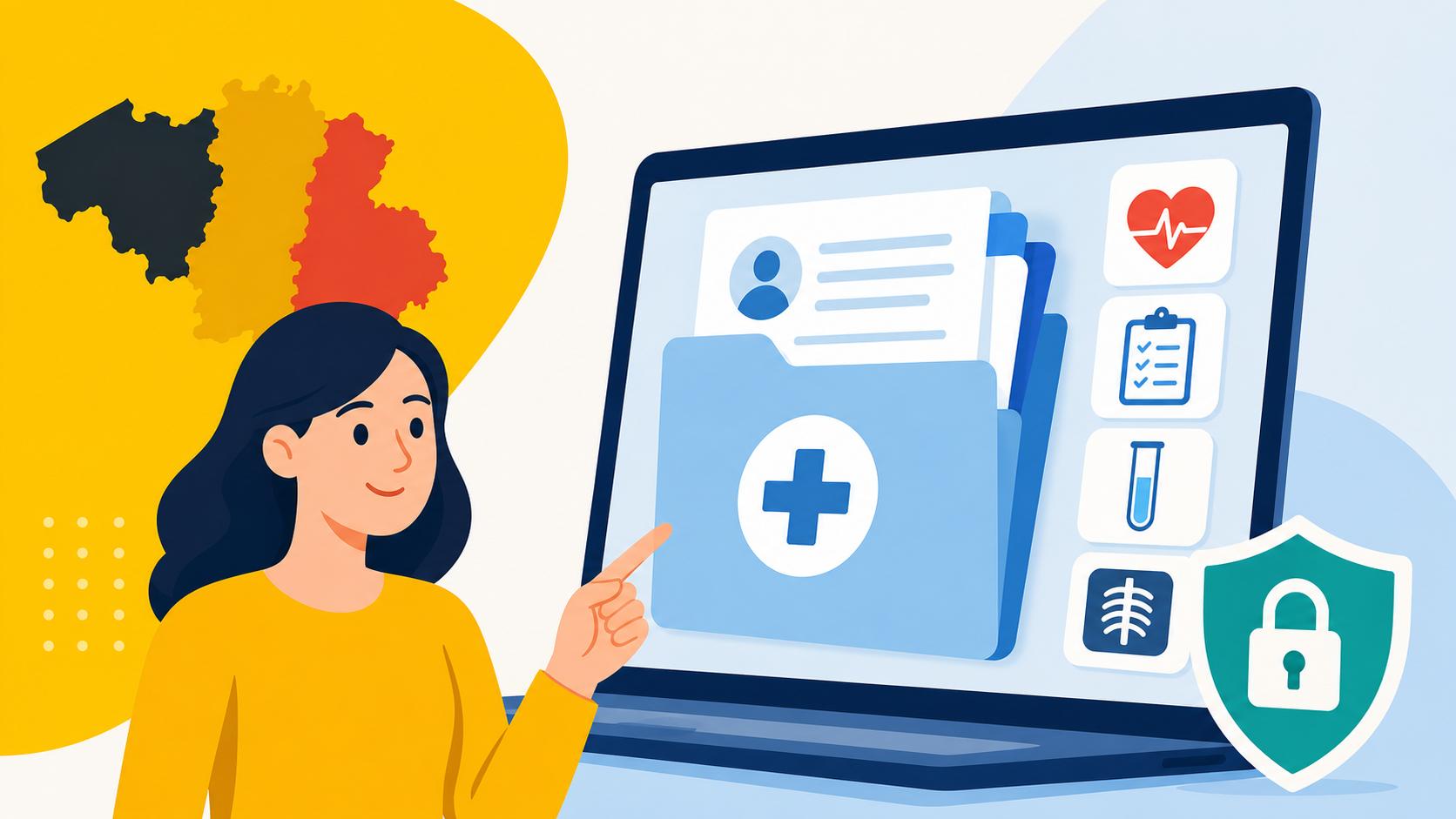
The Belgian healthcare system is notoriously high-quality but often feels like it is stuck between two worlds: the hyper-efficient digital future and the "everything must be stamped by a clerk" past. MyHealth.belgium.be is the federal government’s attempt to bridge that gap. It acts as a centralized portal—a window, really—into the various databases where your medical information lives. It doesn't actually store the data itself; instead, it pulls records from hospitals, your GP’s private software, and the mutual insurance funds (mutuelles) to give you a single view.
When you first log in, you might be overwhelmed by the "My Health" dashboard. For an expat, this is a revolutionary tool because it bypasses the need to constantly call clinics for copies of your results. I’ve spent hours in the past trying to get a PDF of a blood panel for an insurance claim, only to find out it had been sitting in my digital portal for weeks. Navigating this system is a core part of managing your Healthcare in Belgium for Expats: Complete System Overview (2027) because it puts the power back in your hands.
The portal is available in French, Dutch, German, and English, which is a rare and welcome concession for the international community. However, be aware that while the interface is translated, the actual medical reports written by your doctor will likely remain in the language of the region where they were treated. If you had a scan in Antwerp, your report will be in Dutch; if you saw a dermatologist in Ixelles, expect French. This is where tools for Translating Medical Records from Your Home Country to French/Dutch become relevant in reverse if you ever need to take these Belgian records back to your home country.
The Role of Regional Vaults
One of the most confusing aspects for newcomers is that Belgium has several "regional vaults" that feed into the national portal. In Flanders, you have CoZo (Collaboratief Zorgplatform); in Brussels, it is Abrumet; and in Wallonia, it is the Réseau de Santé Wallon (RSW). While MyHealth.belgium.be tries to aggregate these, you might sometimes find more detailed information by logging directly into the regional vault associated with your place of residence.
I personally found that while my basic prescriptions showed up on the federal site, my detailed radiology images from a clinic in Ghent were much easier to view via the CoZo link. It’s worth checking which network your specific hospital belongs to. Most major hospitals are connected, but some smaller private clinics might have a slight delay in syncing. If you are still in the process of Finding Medical Care in Belgium: GPs, Specialists, and Hospitals, it is a good idea to ask your provider if they automatically upload to the federal health portal.
Why Every Expat Needs to Check Their Portal Regularly
Living abroad means you often lack the lifelong relationship with a family doctor that locals enjoy. Your medical history is fragmented across different countries. By using MyHealth.belgium.be, you can start building a cohesive Belgian medical identity. This is particularly useful for those who travel frequently or use supplemental international insurance like Cigna Global, as you can quickly download and share your official Belgian records with international providers without waiting for a secretary to mail them to you.
It also serves as a vital check on your administrative status. If you don't see your records, it might mean your Mutuelle and Ziekenfonds: Public Health Insurance Registration Guide was not completed correctly, or your eID is not linked to your medical file. Seeing your data appear is the ultimate confirmation that you are "in the system."
Getting Started: Authentication and Security Protocols
Security is taken very seriously in Belgium, especially when it involves sensitive medical data. You cannot simply create a username and password with an email address to access your medical records. You must use a "digital key" recognized by the Belgian government. For most of us, this means using either your physical eID card or the Itsme app.
Using Itsme for Instant Access
If you haven't set up Itsme yet, make it your priority. It is the gold standard for digital life in Belgium. I resisted it for months, thinking I didn't need another app, but once I had it, I realized it was the only way to avoid the frustration of card readers. Itsme connects your Belgian phone number and your bank account or eID to create a verified digital identity.
To log into MyHealth, you simply select the "Itsme" option on the CSAM (the government’s secure login gateway) screen, enter your phone number, and confirm the login on your phone. It’s fast, secure, and works even when you are outside Belgium. This is essential for expats who might need to check a prescription or a test result while visiting family back home. You can find more details on this in our guide to Itsme Authentication: How to Set Up Belgium's Vital Digital ID.
The eID Card Reader Method
The "old school" way involves a USB card reader and your Belgian residence card (the A, B, or F card). While it feels clunky, it is the most reliable backup if Itsme is acting up. You will need your PIN code—the one you received by mail when you first registered at the commune. If you’ve lost that PIN, you’ll have to head back to the town hall to request a new one, which is a bureaucratic hurdle you definitely want to avoid.
When using the eID reader, ensure you have the "eID viewer" software installed on your computer. Sometimes, browser extensions can block the connection, so if you are getting "Authentication Failed" errors, try switching from Chrome to Firefox or vice-versa. Once you are in, you’ll have full access to the portal, including the ability to manage your Registering for Public Health Insurance: Step-by-Step at Your Commune details if they are linked to your profile.
Troubleshooting Your National Register Number
Your access to MyHealth is tied to your National Register Number (the 11-digit number on the back of your eID). If you are a new arrival and only have an Annex 15 or a temporary document, you might not be able to log in yet. In these cases, you often have to wait until your physical card is issued and the police have verified your address.
If you are struggling with access during this transition period, see our advice on Accessing Belgian Healthcare Without an eID: Temporary Certificates. It’s a stressful "limbo" period, but once that number is active, the portal becomes your best friend.
| Feature | MyHealth Portal | Regional Vaults (CoZo/RSW) | Itsme App |
|---|---|---|---|
| Primary Use | National Health Overview | Detailed Specialist Reports | Authentication/Login |
| English Support | Yes (High) | Variable | Yes |
| Prescription List | Yes | Yes | No |
| Vaccination Data | Yes | Yes | No |
| Lab Results | Summary | Full Detail | No |
| Accessibility | Web Browser | Web Browser | Mobile Only |
Navigating the Dashboard: Features and Data
Once you’ve successfully logged in, the MyHealth dashboard presents several categories. For an expat, the most useful sections are "My Medicines," "My Summaries," and "My Results." Let's break down exactly what you can find in each and how to use them effectively.
Viewing Lab Results and Specialist Reports
This is where the magic happens. After you go for a blood test or an MRI, the results are sent to the requesting doctor. In the past, you’d have to wait for a follow-up appointment to see them. Now, these results usually appear in your portal within 24 to 48 hours. I’ve found this incredibly helpful for tracking chronic issues or just getting peace of mind after a check-up.
Under "My Results," you can find PDF downloads of lab reports. If you see something you don't understand, don't panic. Belgian lab reports often use Dutch or French medical shorthand. It is always better to wait for your Choosing Your First GP (General Practitioner) in Belgium to explain them. However, having the digital copy means you can upload it to health tracking apps or keep it for your personal records.
Checking Your Vaccination History
Belgium is very strict about vaccination records, especially for school-aged children. The portal pulls data from "Vaccinet," the national database. If you received your COVID-19 shots in Belgium, they will be here. If you had the flu shot or a tetanus booster at your local pharmacy, those should also appear.
For expats, the challenge is often that your childhood vaccinations from your home country are missing. You can ask your Belgian GP to manually enter these into the system if you provide proof of your old paper records. This is vital if you are planning to apply for citizenship later, as proving "social integration" can sometimes involve showing you follow Belgian health protocols. For parents, this section is a lifesaver when filling out school forms; see our guide on School Medical Exams in Belgium: Requirements and Records for more on this.
Managing Your Digital Prescriptions
Belgium has moved almost entirely to "e-prescriptions." When a doctor prescribes something, they don't give you a paper note; they link it to your eID. When you go to the pharmacy, you just show your ID card. But what if you forget what you were prescribed or how many refills you have left?
The "My Medicines" section shows every active prescription currently linked to your name. It tells you the dosage, the date it was issued, and if it has already been "picked up." This is also where you can see historical data of what you’ve taken in the past. If you’re a fan of ordering supplements or OTC items from iHerb to complement your prescribed treatments, having this list helps ensure you aren't accidentally doubling up on ingredients or choosing something that might have a contraindication.
Practical Benefits for Expats
Using a digital health portal isn't just about convenience; it’s about navigating the unique hurdles of being a foreigner in a complex medical system. There are specific scenarios where MyHealth.belgium.be will save you time, money, and significant stress.
Reducing Redundancy in Testing
One of the biggest frustrations in the Belgian system is the lack of communication between different hospitals or specialists. I once had a specialist in Brussels order a blood test that I had just done a week prior in Leuven. Because I could log into MyHealth on my phone during the consultation, I showed him the results from the Leuven lab immediately.
He was able to use those results instead of making me go for a second draw. This didn't just save me a needle prick; it saved me the out-of-pocket "copay" and saved my mutuelle the cost of the test. Keeping your costs down is a major part of Healthcare Budgeting: Copays, DMG/GMD, and Reimbursements, and the portal is a key tool for that.
Sharing Information with Foreign Doctors
If you are an expat, you likely still see doctors in your home country occasionally. Or perhaps you move frequently for work. The ability to download your "Sumehr" (Summarized Electronic Health Record) from MyHealth.belgium.be is invaluable. A Sumehr is a condensed version of your medical history, including allergies, current medications, and major diagnoses.
When I moved, I simply downloaded my Sumehr as a PDF and emailed it to my new doctor. It gave them an instant, professional overview of my "Belgian years" without me having to remember every medication name in French. This portability is one of the reasons many expats choose to maintain a Private Health Insurance in Belgium: When Do Expats Really Need It? policy alongside the public system—it makes international transitions much smoother.
Tracking Children’s Medical Data
If you have children registered as dependents on your mutuelle, you can often view their records through your own portal login. This is essential for tracking growth charts, pediatric visits, and mandatory vaccinations like Polio (the only legally required vaccine in Belgium).
I found that having a digital record of my child's visits to the pediatrician made it much easier to coordinate care when we had to visit the emergency room over a weekend. Instead of trying to remember the name of an antibiotic she was prescribed, I just pulled up the portal. For new parents, this integration with the Kind en Gezin Registration Process for New Expat Parents or the ONE system in Wallonia is a massive help during those sleep-deprived first months.
Privacy, Consent, and Patient Rights
A common concern among the expat community is: "Who can see my data?" Belgium has a robust legal framework regarding medical privacy, and the MyHealth portal allows you to manage these permissions directly.
Managing Health Data Permissions
When you first log in, you will be asked to give your "informed consent" for the sharing of your health data. If you refuse, your doctors won't be able to see each other's notes, which can lead to the "redundancy" issues mentioned earlier. However, you have the right to be selective. You can see exactly which healthcare providers have accessed your file in the last six months.
If you see an entry from a doctor you don't recognize, you have the right to investigate. Generally, only doctors with whom you have a "therapeutic relationship" (meaning you have seen them for a consultation) are allowed to access your data. You can also "hide" specific documents if you wish to keep them private from everyone except your primary GP. Understanding these rights is a big part of Dealing with Medical Negligence or Complaints in Belgium.
The Role of the Global Medical Record (DMG/GMD)
To get the most out of the portal, you need to have a designated "Dossier Médical Global" (DMG) or "Globaal Medisch Dossier" (GMD). This is a file managed by your chosen GP. When you have a GMD, your GP acts as the "gatekeeper" and coordinator of all your data.
Most importantly, having a GMD gives you higher reimbursements for your doctor visits. In the portal, you can check if your GMD is active and which doctor holds it. If you move to a different city, you’ll need to "transfer" this, which usually involves a simple request to your new doctor. For more on this, check out The Global Medical Record (DMG/GMD): Why You Need It for Better Refunds.
What to Do if Information is Missing
Sometimes, you’ll log in and find a gaping hole where a hospital visit should be. This usually happens for one of three reasons:
- The hospital hasn't uploaded the data yet (some take weeks).
- The doctor hasn't linked the report to your National Register Number correctly.
- The clinic is private and doesn't participate in the federal exchange.
If something is missing, your first step should be to contact the "Ombudsman" or the medical records department of the hospital where you were treated. You can also ask your GP to "fetch" the results manually if they have the specific reference number. It's a bit of work, but ensuring your record is complete is vital for long-term care, especially for Managing Chronic Conditions: Diabetes and Asthma Care in Belgium.
Integration with the Broader Health System
MyHealth.belgium.be doesn't exist in a vacuum; it is the center of a web that includes your insurer, the pharmacy, and the social security office. Understanding how these pieces fit together will make your life in Belgium much easier.
How Mutuelles Connect to MyHealth
Your mutuelle (like Partenamut, CM, or Helan) uses the data from your medical visits to calculate your reimbursements. While MyHealth shows you the medical side (diagnoses and results), your mutuelle’s own app or portal will show you the financial side (how much was paid and how much you got back).
I often use the two in tandem. I check MyHealth to see if a lab result is in, and then I check my mutuelle app a few days later to see if the refund has hit my bank account. This is the best way to keep track of Social Security Contributions: How Employers Deduct Health Costs and ensure you aren't being overcharged. If you are still choosing a provider, our comparison of Solidaris vs Helan: Comparing Ziekenfonds Options for Expats might help you decide which digital interface suits you better.
Future-Proofing Your Belgian Healthcare
The Belgian government is constantly adding new features to the portal. In the coming years, we expect to see better integration for mental health records, physiotherapy tracking, and even direct communication tools with specialists. By getting comfortable with the portal now, you are setting yourself up for an easier time as the system evolves.
For those of us who plan to stay in Belgium long-term—perhaps even aiming for citizenship—having a clean, well-documented digital health history is a quiet but powerful way to feel more settled. It’s one less thing to worry about in a country that can sometimes feel like a whirlwind of paperwork. Whether you are using Cigna Global for international backup or relying 100% on the Belgian state, the MyHealth portal is your most valuable administrative tool.
Disclaimer
This guide is for informational purposes only and is based on personal expat experiences and publicly available information regarding the Belgian healthcare system as of 2026. Medical regulations and portal interfaces can change frequently. Always consult with your General Practitioner (GP) or your mutual insurance provider for specific medical or administrative advice. We are not a government agency or a medical provider.