Preparing Medical Certificates for a Belgian Visa Application
The journey of moving to a new country often feels like navigating a labyrinth, and when it comes to visa applications for Belgium, the medical certificate is one of those crucial pieces of paperwork that can trip you up if you’re not prepared. It’s not just a formality; it’s a specific requirement designed to ensure public health and safety, and getting it wrong can lead to frustrating delays. This guide is here to demystify the process, walking you through everything you need to know to secure your medical certificate for your Belgian visa application smoothly.
Why Medical Certificates are a Must-Have for Your Belgian Visa
When you’re dreaming of Belgian waffles, beautiful architecture, or a bustling career in Brussels, the thought of a medical exam can feel like an unwelcome bureaucratic hurdle. But for Belgium, like many countries, the requirement for a medical certificate for long-stay (Type D) visas is a foundational step in their immigration process. It’s all about maintaining public health and ensuring that newcomers aren't inadvertently bringing in communicable diseases that could pose a risk to the local population.
From the Belgian government’s perspective, these certificates are a preventive measure. They want to ensure that individuals seeking to reside in Belgium for an extended period are in good health and won't immediately require extensive public health resources due to an untreated or undisclosed condition, particularly those that are contagious. It's not about discriminating against people with health issues, but about having a clear understanding of the health status of future residents. Many expats, myself included, have felt the anxiety of proving their health on paper, especially when you're already stressed with so many other relocation tasks. Rest assured, it's a standard procedure, but one that demands careful attention to detail.
What Exactly Does a Belgian Medical Certificate Entail?
So, what are you actually signing up for when you need a medical certificate for your Belgian visa application? It’s more specific than just a general check-up. The Belgian authorities have a very particular process, and deviating from it can cause significant headaches and delays.
The Official Template and Designated Doctors
This is perhaps the most critical point: you must use the official medical certificate template provided by the Belgian Embassy or Consulate in your country of residence. Seriously, don't try to use a generic health certificate from your family doctor, no matter how comprehensive it might seem. They will reject it. The template is often available for download on their website, so make sure you grab the correct version.
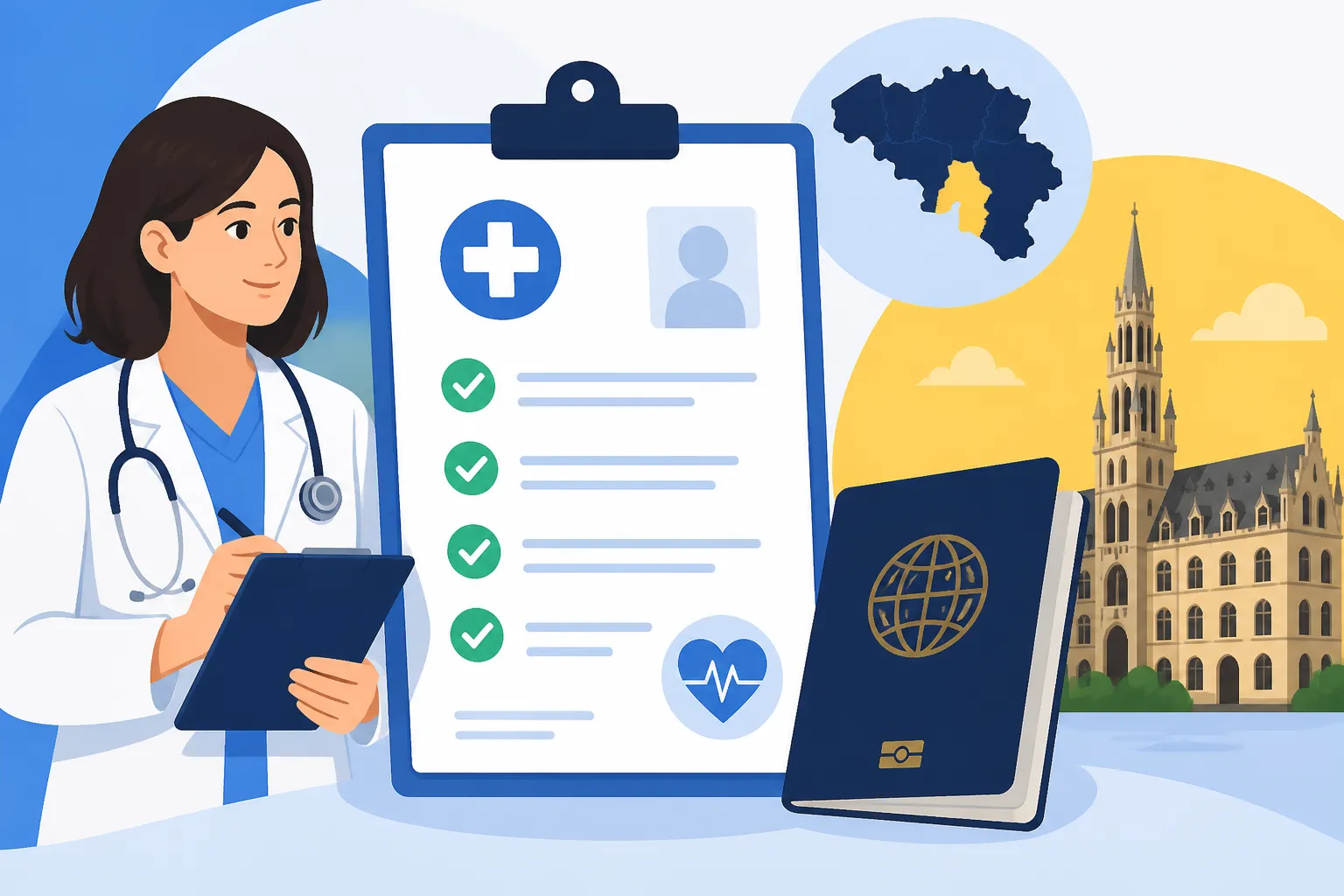
Beyond the specific form, the certificate generally needs to be completed by a doctor who is designated or accredited by the Belgian diplomatic mission in your country. This isn't just any physician. These designated doctors have specific instructions and understand the nuances of what the Belgian authorities are looking for. They act as a trusted point of contact, ensuring consistency and reliability in the medical assessment. Finding one can sometimes be a challenge, especially if you live in a remote area without easy access to a major city where an embassy-approved doctor might practice. You might find yourself needing to travel a fair distance just for this appointment, which can add to the cost and complexity of the process.
What Medical Checks are Performed?
The medical examination for a Belgian visa is generally a comprehensive physical assessment, though the exact battery of tests can vary slightly depending on your country of origin and specific visa type. Typically, the designated doctor will conduct a general physical examination, checking your vital signs, listening to your heart and lungs, and performing a basic neurological assessment.
One of the most common and crucial components is a chest X-ray. This is primarily to screen for tuberculosis (TB), a communicable respiratory disease. If any abnormalities are detected, further tests might be required. In some cases, though less common for general long-stay visas, blood tests might be requested to screen for certain infectious diseases like HIV or hepatitis. It’s always best to ask the specific embassy or consulate for their most current requirements or check the form itself, as these can be updated. The doctor’s main goal is to confirm that you do not suffer from any conditions that could pose a public health risk or necessitate significant medical intervention immediately upon your arrival in Belgium. It’s all about ensuring a smooth transition into the Belgian healthcare system, which itself can be a maze to navigate for new arrivals. Our guide on Healthcare in Belgium for Expats: Complete System Overview (2027) delves deeper into what to expect once you’re registered.
Required Documents for Your Medical Exam
To ensure your medical examination goes smoothly, arrive prepared. Typically, you'll need to bring:
- Your valid passport: Essential for identification.
- The visa application form: Sometimes the doctor will need to refer to information within it.
- The official Belgian medical certificate template: Pre-filled with your personal details, if possible.
- Any existing medical records: While not always strictly required, having a summary of your medical history, especially if you have a chronic condition, can be helpful for the doctor.
Make sure to confirm these requirements directly with the designated doctor's office or the Belgian embassy when you book your appointment.
Step-by-Step Guide to Getting Your Medical Certificate
Let's break down the process into manageable steps. This isn't always straightforward, but with a clear plan, you can tackle it efficiently.
Step 1: Locating an Approved Doctor
Your first mission is to find that elusive list of accredited doctors. This list is almost exclusively found on the website of the Belgian Embassy or Consulate in the country where you are applying for your visa. Do a specific search for "Belgian Embassy [Your Country] designated doctors" or "Medical certificate Belgian visa [Your Country]". Once you have the list, start calling them. Don’t assume they all offer the same services or have immediate availability.
When you contact them, be very clear that you need a medical examination for a Belgian long-stay (Type D) visa and that you have the official Belgian medical certificate template. Confirm their fees, what tests are included, and how long it typically takes to get the results. Sometimes, particularly in countries with less diplomatic presence, the list might be short, and you may need to travel to a larger city to complete this step. This travel time and cost should be factored into your visa application budget and timeline. This is a vital first step, much like understanding the Compulsory Coverage Basics: Who Must Enroll in Mutuelle/Ziekenfonds for your health insurance once you arrive.
Step 2: The Medical Examination Process
On the day of your appointment, arrive punctually with all your required documents. The designated doctor and their staff are usually well-versed in the Belgian visa requirements, so they should guide you through the process. The examination will involve the physical check-up and likely the chest X-ray.
The X-ray results and the doctor's assessment will then be recorded on the official medical certificate form. It's not uncommon for the results to take a few days, sometimes up to a week, especially if the X-ray needs to be sent to a specialist for reading. Once the form is fully completed and signed by the doctor, it will be returned to you, usually in a sealed envelope or directly handed over with instructions. Always double-check that all sections are filled out, signed, and stamped correctly before you leave the clinic. An incomplete form is as good as no form at all.
Step 3: Translation and Legalization (Apostille/Legalization)
This is where things can get a bit tricky and often cause delays for unsuspecting applicants. The medical certificate, unless it was originally issued in French, Dutch, or German, must be translated into one of Belgium's national languages. And it's not just any translation; it has to be a certified translation, often by a sworn translator recognized by the Belgian authorities or courts. Services like RushTranslate can be invaluable here, as they specialize in certified translations that meet strict legal requirements for official documents. They understand the nuances of what is needed for immigration purposes.
After translation, the document often needs to be legalized. The method of legalization depends on whether your home country is a signatory to the Hague Apostille Convention.
- If your country is part of the Hague Apostille Convention: Your translated medical certificate will need an "Apostille" stamp from the designated authority in your home country (often the Ministry of Foreign Affairs). This single stamp verifies the authenticity of the signature on the document.
- If your country is NOT part of the Hague Apostille Convention: The process is more involved. Your translated document will first need to be legalized by your country's Ministry of Foreign Affairs, and then it will need to be further legalized by the Belgian Embassy or Consulate in your country. This multi-step process can add significant time and cost.
This entire legalization step is crucial. The Belgian Immigration Office will not accept a document that has not gone through the proper authentication process. For more on authenticating documents, our guide on Apostille vs Legalization: Authenticating Documents for Belgium is a useful resource.
Common Pitfalls and How to Avoid Them
It’s easy to make mistakes during such a detail-oriented process. Knowing the common traps can help you steer clear of them.
The 'Non-Designated Doctor' Trap
This is probably the most common error. Many expats, thinking they're being efficient, will get a medical certificate from their trusted local GP, only to have it rejected by the Belgian consulate. The rules are strict: only a doctor from the official list can complete the form. There's no workaround for this. If you use a non-designated doctor, you'll simply have to go through the entire process again, losing time and money. Don't fall into this trap! Always verify the doctor's accreditation before booking your appointment.
Expired Certificates
Medical certificates for visa applications typically have a limited validity period, often between three and six months from the date of issue. This means you need to time your medical examination carefully. If you get your certificate too early and then face delays with other parts of your visa application, your medical certificate might expire before you submit everything. An expired certificate will necessitate a brand-new examination, meaning more expense and more waiting. Aim to get your medical exam done reasonably close to when you plan to submit your complete visa application, perhaps a month or two before. This ensures freshness without undue pressure. Just as you'd check validity for your EHIC and Temporary Cover: Using European Health Cards Before Mutuelle Setup, check the validity of your medical certificate carefully.
Missing Legalization or Poor Translation
As detailed above, the requirements for translation and legalization are stringent. A direct translation by a non-certified translator or a document lacking the proper Apostille or consular legalization will almost certainly be rejected. Imagine submitting a document translated by your friend who's "pretty good at French" – it won't fly. This is where professional services, like those offered by RushTranslate for certified translation, become essential. They ensure your documents meet the specific legal and linguistic standards required by the Belgian authorities, saving you from having to restart the entire process. Investing in proper legalization and translation upfront saves immense stress down the line.
When Might You Need Additional Medical Information or Specific Waivers?
While the standard medical certificate covers most cases, there are situations where you might need to provide more information or address specific concerns.
Pre-existing Conditions
Having a pre-existing medical condition doesn't automatically disqualify you from obtaining a Belgian visa. However, it might prompt the authorities to request additional documentation or clarification. The primary concern is if the condition is communicable and poses a public health risk, or if it's a severe, chronic condition that would immediately place a heavy burden on the public healthcare system without prior arrangements.
If you have a pre-existing condition, it's always best to be transparent. The designated doctor will assess this. In some cases, you might be asked to provide letters from your treating physicians outlining your treatment plan, prognosis, and how your condition is managed. Crucially, demonstrating that you have adequate health insurance coverage – whether through an employer's plan or a private international health insurance policy like those offered by Cigna Global – can alleviate concerns about potential costs to the Belgian system. Our guide on Private Health Insurance in Belgium: When Do Expats Really Need It? can help you understand these options.
Specific Visa Categories with Enhanced Medical Requirements
While most long-stay visas follow the general medical certificate protocol, certain professional categories might have more rigorous health checks. For instance, individuals applying for visas to work in healthcare, childcare, or other fields involving close contact with vulnerable populations might undergo more detailed screenings. This is an additional layer of protection to ensure that those in care-giving roles do not pose any health risks to the people they serve. If you're applying for such a visa, confirm any supplementary medical requirements with the Belgian embassy or your prospective employer well in advance.
Navigating the medical certificate process can be one of the more anxiety-inducing parts of your Belgian visa application, but with accurate information and careful execution, you can sail through it. Remember, preparation and attention to detail are your best friends here!
Key Steps and Documents Summary
To help you keep track, here's a quick overview of the crucial elements for your medical certificate.
| Step | Key Action | Important Notes |
|---|---|---|
| 1. Obtain Official Template | Download the specific form from the Belgian Embassy/Consulate website. | Crucial: Do NOT use generic medical forms. Ensure it's the correct, latest version. |
| 2. Find Designated Doctor | Locate an accredited doctor via the embassy/consulate list. | Call for appointments, confirm fees, and mention Belgian visa. Be prepared to travel. |
| 3. Undergo Medical Examination | Attend your appointment with passport, visa form, and template. | Expect a general physical and chest X-ray (TB screening). Results may take a few days. |
| 4. Check Certificate Validity | Ensure the signed certificate is valid for 3-6 months from issue date. | Time your exam close to your visa application submission. |
| 5. Translation (if needed) | Get a certified translation (French, Dutch, or German) if original is not in these languages. | Use a sworn translator, RushTranslate is a good option. Inaccurate translations will be rejected. |
| 6. Legalization (if needed) | Obtain an Apostille or undergo consular legalization. | Apostille for Hague Convention countries, consular legalization for others. This authenticates the document for Belgium. |
| 7. Submit with Visa Application | Include the original, completed, translated, and legalized certificate. | Ensure all parts are signed, stamped, and dated. Keep copies for your records. |
By following these steps diligently, you’ll significantly increase your chances of a smooth visa application process. Remember, the Belgian authorities are looking for accuracy and adherence to their specific procedures. Good luck with your application!
Disclaimer
The information provided in this guide is intended for general informational purposes only and does not constitute legal or medical advice. Visa requirements, regulations, and medical guidelines are subject to change by the Belgian authorities. Always consult the official website of the Belgian Embassy or Consulate in your country of residence, or a qualified immigration lawyer, for the most up-to-date and specific information pertaining to your individual situation.