The Police Check (Contrôle de Quartier) for Address Verification
Alright, let's talk about the dreaded Contrôle de Quartier. If you’ve recently arrived in Belgium and are navigating the maze of municipal registration, you've likely heard whispers or outright panicked shouts about the police coming to your door. It feels invasive, a bit unsettling, and frankly, a uniquely Belgian bureaucratic hurdle that can leave you feeling like you're under surveillance. But trust me, as someone who’s been through it and helped countless others, it's a standard, albeit sometimes frustrating, part of confirming your residency. This guide will walk you through exactly what to expect, how to prepare, and what to do if you miss the visit, ensuring you can sail through this step towards officially making Belgium your home.
What Exactly is the Contrôle de Quartier? And Why It Feels So Mysterious
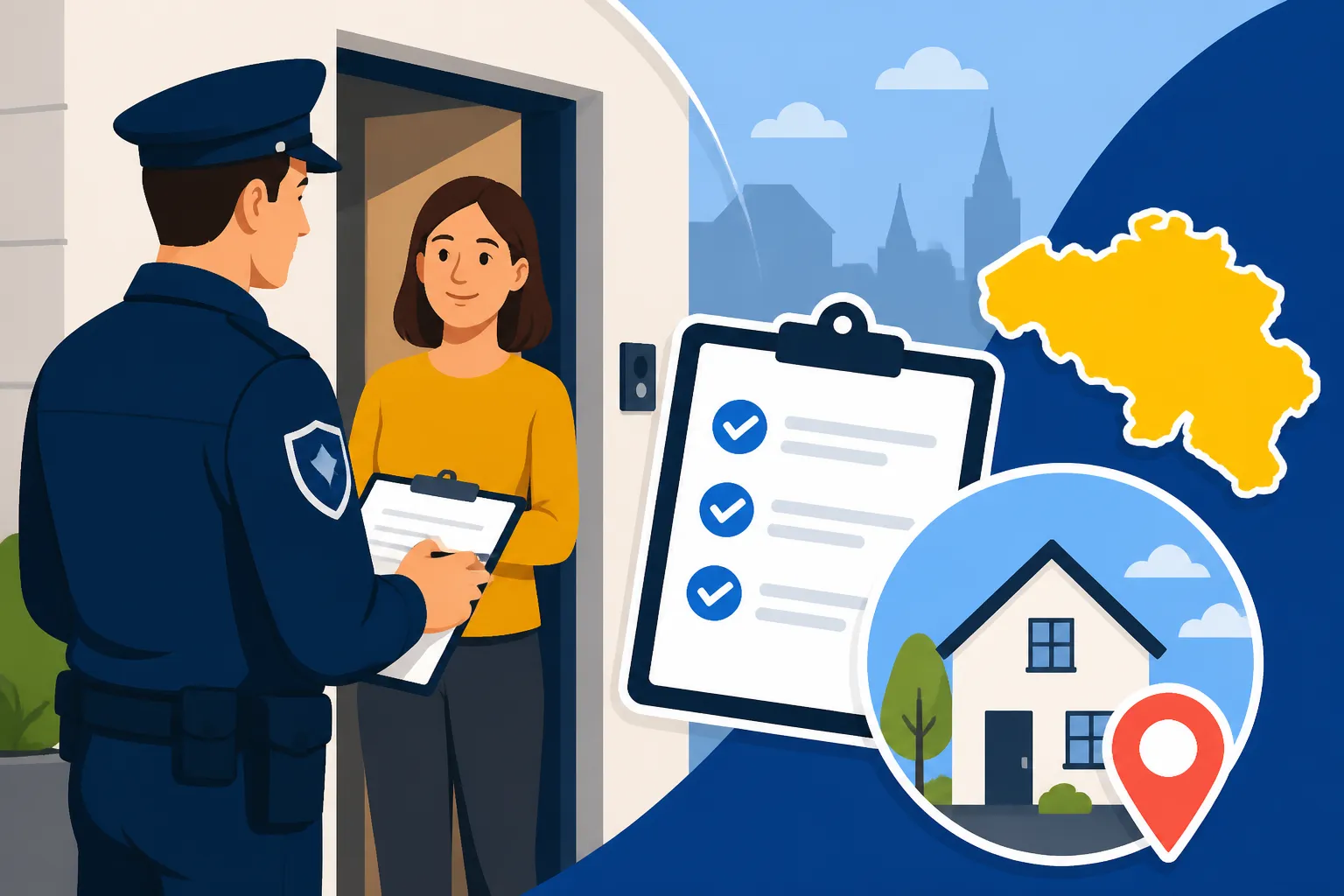
The Contrôle de Quartier, often referred to as the "neighborhood police check," is essentially Belgium's way of verifying that you actually live at the address you’ve declared to the local commune. Think of it as a physical verification of your administrative existence. You've gone to the commune, filled out forms, presented your passport, and now they want to make sure you're not just using a random address. It’s a crucial step in your journey to obtaining your official Belgian residence card, your eID. Without a successful contrôle, your registration process grinds to a halt, leaving you in a state of administrative limbo that no expat enjoys.
This process can feel quite opaque, especially because there's no fixed appointment time. You're left guessing when someone might show up, adding to the general stress of settling into a new country. It’s often one of the first truly "Belgian" bureaucratic experiences you'll encounter, highlighting the country’s meticulous, if somewhat antiquated, approach to administration. But once you understand the logic behind it, and what they're actually looking for, it becomes far less daunting.
The Purpose Behind the Visit: More Than Just a Knock on the Door
At its core, the Contrôle de Quartier serves several purposes for the Belgian authorities. Firstly, it verifies your physical presence at the registered address. This isn't just about ensuring you're not lying; it's fundamental to establishing your legal residence. Your official address in Belgium dictates everything from where you pay taxes to which public services you can access. It's the anchor of your administrative life here. If you’ve registered at the commune and declared your intention to reside in a specific municipality, the police need to confirm that this is indeed where you are living.
Secondly, it's a measure to prevent identity fraud and ensure the accuracy of the national register. Belgium takes its population records very seriously. Every resident, both Belgian and foreign, is entered into the National Register (RN / Rijksregister), and this database is incredibly important for everything from social security to elections. The police check acts as a safeguard to ensure that the information being entered into this critical system is legitimate and up-to-date. Without this verification, anyone could claim residency anywhere, which would obviously create chaos in the system.
Finally, it helps to maintain public order and safety. Knowing who lives where allows local authorities to have a clearer picture of their neighborhoods. While it might feel intrusive, from a communal perspective, it’s about knowing the local population and addressing any potential discrepancies that might arise, ensuring a stable and secure environment for all residents. It's less about spying on you and more about confirming your place within the local community's administrative framework.
Who Conducts These Checks and When to Expect Them
The Contrôle de Quartier is typically carried out by a local police officer (a wijkagent in Dutch or an agent de quartier in French) from the neighborhood where you've declared your residence. These aren't necessarily the same officers you'd call in an emergency; they are specifically assigned to local community policing and administrative tasks. They are very much part of the fabric of the local commune, often responsible for a specific block or area, and they know their patch well. Their job is to verify residential status, not to interrogate you about your life choices.
Timing is the tricky part. There's no set schedule, and that's often where the expat anxiety kicks in. The check usually happens within a few weeks, or sometimes even a few months, after your initial registration at the commune. It can occur at any time of day, including evenings or weekends, which is specifically designed to catch people when they're likely to be home from work. I've known friends who had their visit within a week, while others waited for over two months, anxiously checking their mail and jumping at every knock. It's a waiting game, and unfortunately, you can't really speed it up. The police officer will typically make one or two attempts to find you at home. If they don't find you, they usually leave a note in your mailbox asking you to contact them to arrange a visit. Missing this note is a common pitfall, so keep a close eye on your post!
Preparing for Your Police Visit: Don't Get Caught Off Guard
When you're waiting for the Contrôle de Quartier, the uncertainty can be nerve-wracking. The key to reducing stress is preparation. This isn't a surprise pop quiz on Belgian history, nor is it an inspection of your housekeeping skills. It's purely an administrative check. Knowing what they're looking for and having your documents ready can make the entire process swift and painless. Remember, the officer is just doing their job, and a cooperative attitude goes a long way. This is your chance to show you're a legitimate resident, so try to make it as easy as possible for them to confirm that.
It's tempting to overthink it, wondering if your apartment is tidy enough or if your explanation for being here is compelling. Release those worries. They just need to see that you actually live there.
Documentation to Have on Hand
While the police officer's primary goal is to visually confirm your presence at the address, having certain documents readily available can streamline the process significantly. It shows you're prepared and serious about your residency.
Here’s a small checklist of what you should ideally have handy when the doorbell rings:
- Your Passport or National ID Card: This is crucial for verifying your identity. The officer will need to see the original document you used for your initial registration at the commune.
- Your Lease Agreement (Contrat de Bail/Huurcontract): This is perhaps the most important document for proving your residency. It demonstrates you have a legal right to reside at the address. The officer will want to see your name on the contract and confirm the address. Even if they don't explicitly ask, having it ready is a good idea.
- Proof of Initial Commune Registration: This usually comes in the form of an "Annex 8" (for EU citizens) or an "Annex 15" (for non-EU citizens), which is the temporary residence certificate you received after your initial visit to the commune. This document links your presence to the ongoing registration process. It signifies that you are indeed in the process of becoming a registered resident.
- Utility Bills or Mail Addressed to You: While not always required, having a piece of mail or a utility bill in your name addressed to your Belgian residence can be an extra layer of proof. This is particularly useful if your name isn't on the mailbox or if there's any ambiguity.
- Proof of Sufficient Funds (for certain visas): For some visa types, particularly those for students or those on family reunification, you might need to prove you have sufficient means of support. While less common for the contrôle de quartier specifically, it's always wise to have it accessible, especially if your visa category has such requirements.
It’s always a good idea to keep these documents organized in a folder near your front door during the waiting period. That way, you won't be scrambling if the officer shows up unexpectedly. If any of your documents, like your birth certificate or marriage certificate (for family reunification), were in a foreign language and required translation for your commune registration, you would have used a certified service like RushTranslate to get them translated. While not directly needed for the police check itself, it underscores the importance of proper documentation throughout your immigration journey.
Your Address: The Cornerstone of Belgian Bureaucracy
Your declared address isn't just a place you sleep; it's the very foundation of your administrative life in Belgium. The Contrôle de Quartier exists precisely to verify this foundation. When the officer comes, they're looking to confirm that you have genuine ties to that address. This means your name should ideally be on the mailbox and doorbell, even if it's a shared apartment. If you've just moved in and haven't had a chance to update these, explain it to the officer. It's a common scenario for new arrivals.
Ensure that the number of people listed as residing at your address with the commune matches the reality. If you're living in a shared flat and everyone is properly registered, that's perfectly fine. What the police want to avoid are situations where an address is being used as a mail drop without genuine residency, or where more people are supposedly living there than the space realistically allows (which can raise red flags about illegal housing). The goal is consistency between what you declared and what they observe.
If you have undergone a recent address change within Belgium, a new contrôle de quartier is often triggered. It's a crucial step in formalizing your new residence, echoing the initial process. Keeping your address details up-to-date with the commune is not just good practice; it's a legal obligation and essential for everything from receiving your mail to ensuring your social security records are correct. The process of Address Changes (Changement d'Adresse): Updating the Commune When Moving follows a similar pattern to your initial registration, often including another police visit.
The Day of the Visit: What Happens and How to Handle It
The day the Contrôle de Quartier actually happens can often be anti-climactic after all the anticipation. But knowing what to expect can help you feel more confident and less like you're under scrutiny. The entire interaction is usually quite brief and straightforward if everything is in order. Remember, the officer isn't looking to trick you or make your life difficult; they're simply performing a routine check.
It's a moment that defines your entry into the official Belgian resident pool. Being prepared, polite, and clear will make it a smooth sail towards getting your Belgian eID.
The Knock: What to Expect When the Police Arrive
When the police officer knocks on your door, they will typically identify themselves and state the purpose of their visit – the contrôle de quartier. They will usually ask for you by name. It's helpful if you or whoever answers the door can confirm your identity and that you live there.
The interaction will often involve these key steps:
- Identity Verification: They will ask to see your passport or national ID and your Annex 8 or Annex 15. This is where having your documents ready, as mentioned earlier, becomes incredibly useful.
- Confirmation of Residency: They'll usually ask simple questions to confirm you live there. "Do you live here?" "How long have you lived here?" "Are you the person who registered at the commune at this address?" These are not trick questions; they are just seeking confirmation.
- Brief Visual Check: The officer might ask to step inside briefly to confirm it's a residential space, or simply observe that your name is on the doorbell and mailbox. They are not conducting a full inspection of your home or your belongings. They are merely confirming that the address is indeed a place of residence and that you are present there. This might feel a bit odd, but it's part of the routine.
- Signature: In some cases, they might ask you to sign a document confirming their visit.
The whole process usually takes no more than 5-10 minutes. Be polite, answer truthfully, and provide the requested documents. If you have any questions, this is a good opportunity to ask, but keep them concise and related to their visit.
Language Barriers and How to Navigate Them
Belgium is a trilingual country, and this can present a significant hurdle during administrative interactions. Depending on whether you're in Brussels (officially bilingual French/Dutch, but heavily French-speaking), Flanders (Dutch-speaking), or Wallonia (French-speaking), the police officer will likely address you in the dominant local language. This is where many expats feel a surge of anxiety. What if you don't speak French or Dutch proficiently yet?
Here’s how to navigate potential language barriers:
- Be Honest: If you don't understand, politely state that you don't speak French/Dutch ("Je ne parle pas français" or "Ik spreek geen Nederlands"). Many officers in expat-dense areas, especially Brussels, will have some English.
- Request English: You can ask, "Do you speak English?" ("Parlez-vous anglais?" or "Spreekt u Engels?"). Often, they will be able to communicate basic information.
- Bring a Friend/Colleague (if possible): If you know someone who speaks the local language and can be present at the time, this can be incredibly helpful. However, since the visit is unannounced, this isn't always feasible.
- Use a Translation App: Have a translation app ready on your phone as a last resort for very simple phrases.
- Focus on Key Information: The core information they need is your identity and confirmation of your address. Point to your documents if words fail you.
While the expectation is generally that you are integrating into the local language, for this specific, brief administrative check, a basic level of communication is often sufficient. Don't panic; most officers are used to dealing with international residents and understand the challenges. The goal isn't to test your language skills, but to confirm your residency.
What Happens if You're Not Home? The Dreaded Second Attempt
This is perhaps the most common source of worry for new arrivals: what if you’re out when the officer comes knocking? It happens to almost everyone at some point. The police officer generally makes at least one attempt to find you.
If you're not home, they will typically leave a written notice in your mailbox. This notice, often a small card or slip of paper, will state that they visited, that you weren't home, and will usually provide a phone number or email address for you to contact them to schedule a new appointment. This is your cue to act quickly!
Here's what to do:
- Check Your Mailbox Religiously: Seriously, this is not the time to slack on checking your physical mail. These notes are small and easily missed.
- Contact Them Immediately: As soon as you find a note, call or email the provided contact details. Don't delay. The longer you wait, the longer your residence permit process will be stalled.
- Be Proactive: Explain that you missed their visit and would like to arrange a new appointment. Be flexible with your availability.
- What if I didn't get a note? This is a rarer but equally frustrating scenario. Sometimes, for various reasons (the note blew away, was delivered to the wrong box, etc.), you might not receive one. If you've been waiting an unusually long time (say, over a month) and suspect they might have tried to visit, you can try contacting your local commune directly. Ask for the "service étrangers" (foreigners' service) or "dienst vreemdelingen" and inquire about the status of your contrôle de quartier. Provide your national register number (if you have one) or your initial registration number.
Missing the contrôle isn't the end of the world, but it does mean extra steps and potentially delays in getting your eID. Being proactive and responsive is key. For more details on the initial registration itself, you might find our guide on Registering at the Commune: The 8-Day Rule After Arrival helpful, as it sets the stage for this police check.
After the Check: The Road to Your eID
Once the Contrôle de Quartier is done, whether you were home for the first visit or had to reschedule, you're on the final stretch towards officially obtaining your Belgian residence card. This phase involves a bit more waiting, but with the hardest part—the physical verification—out of the way, you can breathe a sigh of relief. The outcome of this check directly impacts the next steps in your immigration journey, dictating how quickly you can get your hands on that precious eID.
The Favorable Report: What It Means
If the police officer is satisfied that you genuinely reside at the declared address, they will submit a "favorable report" (or avis favorable) back to your commune's foreign affairs department. This is the green light you've been waiting for!
Once the commune receives this favorable report, they will then proceed with the final steps of your registration. This usually involves:
- Invitation to Collect Your eID: You will typically receive an official letter (by post, naturally) inviting you to return to the commune to order your eID card. This letter will outline the documents you need to bring (usually your passport, the Annex 8/15, and sometimes passport photos that meet Belgian standards) and the fee you’ll need to pay.
- Ordering the Card: At this appointment, you'll formalize the order for your eID, provide your fingerprints, and pay the fee. You might also be given a temporary document, like an Annex 49, which confirms that your eID is being processed.
- PIN/PUK Codes: A few weeks later, you'll receive a letter containing your PIN and PUK codes, which are essential for activating and using your eID.
- Collection: Finally, you'll be invited to return to the commune to collect your actual eID card. Make sure to bring your PIN/PUK letter and your temporary documents.
This entire process, from the favorable report to holding your eID, can still take several weeks. So, patience remains a virtue in Belgian bureaucracy. The eID is more than just an ID; it's your key to accessing many digital services in Belgium, including your medical records online and even setting up essential banking features. Our guide on The Belgian eID Card Types: A Card, B Card, F Card, and Others explains the different cards and their functionalities in detail.
The Unfavorable Report or No-Show: What Then?
While most Contrôle de Quartier checks result in a favorable outcome, it's important to understand what happens if things don't go as smoothly. An "unfavorable report" or a situation where the police cannot verify your residency can unfortunately occur, and it throws a wrench into your plans.
Reasons for an unfavorable report could include:
- Inability to locate you: Despite multiple attempts, the police couldn't find you or establish contact. This is often the case if you missed their notes and didn't follow up.
- Discrepancies: The officer found significant inconsistencies between your declared information and the reality (e.g., your name wasn't on the mailbox, and neighbors didn't recognize you, or the living situation didn't match the declaration).
- Suspicion of non-residency: In rare cases, if the officer suspects you're not genuinely residing at the address, they might submit an unfavorable report.
If an unfavorable report is submitted, or if too much time passes without a successful check, the commune might initiate a procedure to remove you from the national register or refuse your registration entirely. This can lead to serious consequences, including:
- Refusal of your residence permit: Your visa application or renewal might be denied.
- Loss of temporary status: If you're currently on an Annex 8 or 15, its validity might not be extended.
- Legal action: In extreme cases of suspected fraud, further legal steps could be taken.
If you find yourself in this situation, do not panic, but act decisively. Your first step should be to immediately contact your commune's foreign affairs department to understand the specific reasons for the unfavorable report or refusal. You have the right to appeal these decisions. This is where getting professional advice might become crucial; you might need to consider Hiring an Immigration Lawyer: When Do You Need Professional Help? to navigate the appeal process. They can help you present your case, provide additional evidence, and understand your rights. Remember, there are always avenues to pursue if you believe there's been a misunderstanding or an error.
Regional Nuances: Does it Vary Across Belgium?
Belgium's federal structure means that while the core purpose of the Contrôle de Quartier remains the same across the country, there can be subtle differences in implementation and speed depending on the region and even the specific commune. This can be confusing for expats who might hear different stories from friends living just a few kilometers away. Understanding these nuances can help manage expectations.
Brussels vs. Flanders vs. Wallonia: Slight Differences, Same Goal
While the legal framework for the Contrôle de Quartier is national, its practical application can show regional variations:
- Brussels Capital Region: As the most international and densely populated region, Brussels communes often process a high volume of foreign registrations. The police checks here can sometimes take longer due to the sheer number of arrivals. However, officers in Brussels are generally very accustomed to dealing with non-Dutch/French speakers. The multilingual environment means there's a higher chance of encountering an officer who speaks English. Communes like Ixelles or Etterbeek, known for their large expat populations, might have slightly more streamlined processes for dealing with this check due to constant practice.
- Flanders (e.g., Antwerp, Ghent, Leuven): In Flemish communes, the process is typically conducted in Dutch. While many police officers, especially in university cities like Leuven or larger cities like Antwerp and Ghent, will have some English, it's less of a given than in Brussels. The speed of the check can also vary, but generally, Flemish communes are known for being quite efficient once the process is initiated. The emphasis on administrative correctness is high here.
- Wallonia (e.g., Liège, Charleroi): In Walloon communes, the process will be in French. Similar to Flanders, while English might be spoken, it's not guaranteed. The pace can also vary by commune. Smaller, more rural communes might have a more personal approach, while larger cities operate with higher volumes.
Despite these regional differences, the ultimate goal remains the same: to confirm that you are genuinely residing at the address you’ve provided. The police officers across Belgium are following the same national guidelines, even if their local implementation looks slightly different.
The Role of the Commune in the Process
The commune (municipality) plays a central role throughout your entire registration and residency journey, and the Contrôle de Quartier is no exception. It's the commune that initiates the police check, receives the report, and ultimately makes the decision regarding your registration and the issuance of your eID.
Here’s how the commune interacts with the Contrôle de Quartier:
- Initiation: After your initial registration appointment, the commune forwards your declared address to the local police services for the contrôle de quartier.
- Communication Hub: Any questions or issues regarding the check often circle back to the commune. If you miss the officer's visit and don't receive a note, or if you have concerns about delays, the commune's foreign affairs department is usually your first point of contact.
- Decision-Making: The commune's foreign affairs department is responsible for interpreting the police report and making the final decision on your residency registration. They are the ones who will send you the invitation to order your eID or, in unfortunate cases, send you a letter of refusal.
- Address Management: Any changes to your address or other personal details must be registered with your commune. This is why it's so important to update them promptly, as an outdated address can lead to issues with official correspondence, including those related to your police check and eID.
Essentially, the commune is the administrative gatekeeper. Building a polite and persistent relationship with their services can really help, as they are the ones who can often provide updates or clarify next steps. For more on navigating this initial step, our comprehensive guide on What Documents to Bring for Your First Commune Registration details what to prepare before you even get to the police check stage.
Common Expat Worries and Myth Busting
The Contrôle de Quartier generates a lot of chatter and anxiety among the expat community, leading to various myths and misunderstandings. Let's tackle some of the most common worries head-on to help you approach this process with clarity and confidence.
"Will They Check My Lease Agreement?"
Yes, it's highly probable, and you should absolutely have your lease agreement ready. While the primary goal of the officer is to visually confirm your presence at the address, the lease agreement (or contrat de bail in French, huurcontract in Dutch) is the strongest piece of evidence you have that you are legally entitled to reside at that address. It proves your long-term intention to live there.
The officer will typically look for:
- Your Name: Ensure your name is clearly listed as a tenant.
- The Address: Verify that the address on the contract matches the address you registered with the commune.
- Start Date: They might check the start date of your lease to see if it aligns with your arrival and registration.
Having your lease readily available shows preparedness and legitimizes your claim of residence. If for some reason your lease isn't fully in your name (e.g., you're living with a partner and only one name is on the lease, but you're a registered cohabitant), be prepared to explain the situation clearly and have any relevant cohabitation certificates or official declarations handy. Transparency is always the best policy.
"What if I Live in a Shared House or Sublet?"
This is a very common scenario for many expats, especially students or young professionals. Living in a shared house (colocation in French, cohousing in English, gemeenschapswoning in Dutch) or subletting are generally acceptable in Belgium, provided they are done legally and transparently.
- Shared House with Individual Leases: If everyone in the house has their own individual lease agreement for their room, but share common areas, the officer will expect to see your specific lease. Your name should be on the doorbell and mailbox, possibly with the number of your apartment or floor if it's a larger building.
- Shared House with a Single Master Lease: If one person holds the master lease and you are a sub-tenant, you need to ensure your sub-lease agreement is legally sound and registered (if required by law or your commune). Crucially, the main tenant must also have informed the landlord (and sometimes the commune) that others are residing there. The police officer will be looking to ensure that your residency is legitimate and recognized by the primary tenant and, ideally, the landlord.
- Subletting: If you are officially subletting, your sublease agreement is critical. It must clearly state your name, the address, and the terms of your occupancy. Again, ensure that the original tenant has the right to sublet and that all necessary administrative steps have been taken.
In all shared living situations, ensure your name is clearly visible on the mailbox and doorbell, even if it means adding a temporary label. This helps the officer easily identify that you reside there. For more specific details, especially on shorter-term arrangements, you might want to look into Subletting (Sous-location) in Belgium: Is It Legal for Expats? to ensure your situation is compliant.
"I travel a lot. How can I ensure I don't miss them?"
This is a valid concern for frequent travelers or those who commute cross-border. Given the unpredictable nature of the Contrôle de Quartier, missing the visit is a real possibility. While you can't guarantee being home, you can certainly minimize the risk and respond effectively if you do miss it.
Here are some strategies:
- Inform Your Neighbors: If you have trusted neighbors, let them know you're expecting a police visit for administrative purposes. Ask them to keep an eye out for any notes in your mailbox if you're away.
- Regular Mailbox Checks: If you're traveling, arrange for someone (a friend, housemate) to check your physical mailbox regularly. As discussed, the note from the police is your lifeline.
- Provide Contact Information (if asked): Sometimes, during your initial commune registration, they might ask for your phone number. While they don't always call, it's worth ensuring they have it.
- Be Proactive with the Commune: If you know you'll be traveling extensively immediately after registering, you might politely inform the commune during your initial visit that you will be away for certain periods. While they won't typically schedule around your travel, it might manage their expectations or prompt them to leave a note more readily.
- Respond Immediately: The most crucial thing, if you miss the visit, is to respond to the police note as soon as you find it. Delaying will only prolong your waiting period for the eID.
Ultimately, the onus is on you to be available for this check. While Belgium offers incredible opportunities for travel, remember that establishing your legal residency here requires your physical presence to be verified. Being mindful of this during the initial weeks and months after registration is paramount. And if you’re traveling within the Schengen area while waiting for your permanent eID, be aware of the rules around Can I Travel Within the Schengen Area with an Expired eID and Annex 8? It’s a common trap many expats fall into!
Here's a quick summary table of what to do if you miss the police check:
| Scenario | Action to Take | Contact Point | Estimated Impact on Process |
|---|---|---|---|
| Police left a note | Call/Email police number on note immediately to reschedule. | Police service on the note | Slight delay (1-3 weeks) |
| No note, long wait | Contact Commune's Foreigners' Service/Dienst Vreemdelingen. | Your local commune | Moderate delay (3-6 weeks) |
| Missed multiple visits | Contact Commune ASAP; explain situation, possibly provide proof of efforts to be present. | Your local commune | Significant delay, potential refusal if no communication. |
| Moving during waiting period | Inform Commune of new address before police visit; process will restart. | Your local commune |
Disclaimer
This article is for general informational purposes only and does not constitute professional advice. Laws, prices and regulations vary by location and change over time. Consult a qualified professional for guidance on your specific situation.