The Global Medical Record (DMG/GMD): Why You Need It for Better Refunds
Navigating the Belgian healthcare system often feels like trying to solve a Rubik’s cube while blindfolded. I remember my first visit to a local doctor in Ixelles; I paid the full fee, received a paper receipt, and waited weeks for a refund that was smaller than I expected. This guide explains the Global Medical Record (DMG/GMD), a simple administrative step that solves your refund frustrations and centralizes your medical history.
What Exactly is the DMG/GMD and Why Does It Exist
When you first arrive in Belgium, you’ll hear two acronyms tossed around constantly: the DMG (Dossier Médical Global) in French-speaking areas and the GMD (Globaal Medisch Dossier) in Flanders. At its core, this is a digitalized centralized file managed by your chosen General Practitioner (GP). Before this system existed, patients often bounced between specialists, leaving their medical history scattered across various clinics. The Belgian government introduced the DMG/GMD to ensure that one primary doctor has the "big picture" of your health.
Centralizing your health data isn't just about administrative convenience; it’s a matter of medical safety. When you open a DMG/GMD, your GP records your allergies, chronic conditions, surgical history, and current medications. If you end up in an emergency room in another city, the doctors there can—with your permission—access the essential summaries of this file via the e-health platform. For an expat who might have a complex medical history from their home country, having a Belgian doctor "anchor" all that information is invaluable. This is a foundational part of the Healthcare in Belgium for Expats: Complete System Overview (2027) that every newcomer should prioritize within their first month.
The linguistic divide between the DMG and GMD can be confusing, but the rules are identical across the country. Whether you are in the heart of Brussels, the port of Antwerp, or a village in the Ardennes, the system functions the same way. The primary goal is to prevent "medical shopping," where patients visit multiple doctors for the same problem, leading to redundant tests and wasted social security funds. By incentivizing you to stick with one "titular" GP, the state can offer you better financial terms. If you are still in the process of setting up your basic coverage, make sure to read the Mutuelle and Ziekenfonds: Public Health Insurance Registration Guide to understand how your insurance provider interacts with this medical record.
Financial Benefits: Maximizing Your Mutuelle Reimbursements
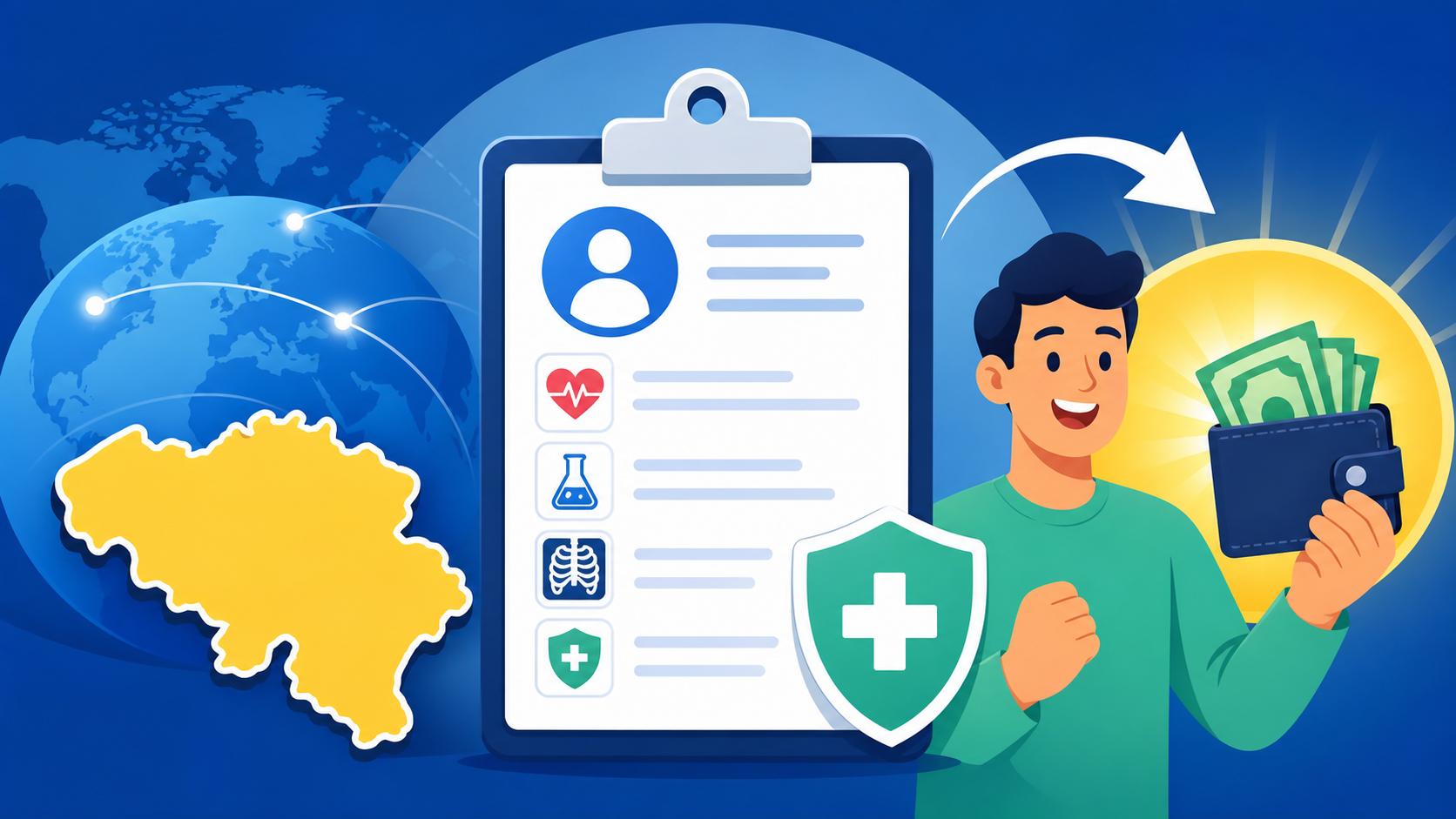
The most immediate reason to open a DMG/GMD is purely financial. In Belgium, the healthcare system operates on a "fee-for-service" basis where you often pay upfront and get reimbursed later. However, the amount you get back depends heavily on whether you have a registered medical record. Without a DMG/GMD, your "out-of-pocket" cost—known as the ticket modérateur—is significantly higher. For a standard consultation, having a record typically reduces your personal share of the cost by 30% or more. This is a crucial element of Healthcare Budgeting: Copays, DMG/GMD, and Reimbursements that many foreigners overlook until they see their bank balance dip.
The reduction in the ticket modérateur applies not just to regular office visits, but also to home visits and certain specialized consultations. When your GP is the "manager" of your file, the social security system views your medical journey as organized and efficient, thus rewarding you with higher refund percentages. If you are used to a system where everything is free at the point of use, the Belgian way can be a shock. However, once the DMG/GMD is active, a consultation that costs 30 Euros might only cost you 4 Euros effectively after the refund. Understanding this is key to Understanding the 75% Reimbursement System for Medical Consultations and ensuring you aren't leaving money on the table.
Beyond the standard GP visit, the DMG/GMD unlocks lower rates for certain specialists if you are referred by your GP. It also plays a role in the "Maximum Billing" (MAF) system, which caps the total amount of medical co-pays a household has to pay per year. Once you hit a certain threshold of spending, the mutuelle covers everything else at 100%. Having a DMG/GMD is often a prerequisite for your expenses to be tracked accurately toward this cap. For those who want an extra layer of protection, especially when dealing with non-conventioned doctors who charge higher fees, looking into Private Health Insurance in Belgium: When Do Expats Really Need It? is a smart move. Companies like Cigna Global can offer supplemental coverage that picks up where the Belgian state leaves off.
| Service Type | Cost Without DMG/GMD | Cost With DMG/GMD | Benefit Summary |
|---|---|---|---|
| Standard GP Consultation | Higher Co-pay (~€6-€10) | Lower Co-pay (~€1-€4) | Immediate 30%+ savings |
| Evening/Night Home Visit | Reduced Reimbursement | Max Reimbursement | Essential for families |
| Referral to Specialists | Standard Rate | Potential Reductions | Better continuity of care |
| Chronic Care Management | Limited Access | Full Access | Centralized monitoring |
| Annual Admin Fee | €0 (But higher per visit) | ~€32 (Fully Reimbursed) | Effectively free to open |
How to Open and Maintain Your Global Medical Record
The process of opening your record is deceptively simple, yet it requires a physical visit to your doctor. You cannot usually do this over the phone or via an app like Rosa or Doctena for the first time. During your first consultation, you simply tell the doctor, "I would like to open a DMG" (or GMD). The doctor will then read your Belgian eID card or your ISI+ card for children. This link connects your national registry number to that specific medical practice. If you are still waiting for your ID, check Accessing Belgian Healthcare Without an eID: Temporary Certificates for workarounds.
There is an administrative fee associated with opening the file, which currently sits around 32 Euros. Here is the trick that confuses everyone: you pay this fee to the doctor, but your mutuelle (health fund) reimburses it to you at 100%. Effectively, the DMG/GMD is free. The doctor is paid this amount by the state to cover the administrative time required to keep your records updated and to communicate with other healthcare providers. I remember being annoyed paying that extra fee during my first visit, only to see the full amount pop back into my bank account three days later. It’s a "wash" transaction designed to formalize the relationship.
Maintenance of the record is largely automated now, but it used to be a manual yearly struggle. Currently, once the record is opened, it is valid until the end of the second calendar year following the year it was opened. For example, if you open it in 2026, it is valid until the end of 2028. However, most GPs now use a "tacit renewal" system. Every time you visit your GP once a year, the electronic system automatically pings the mutuelle to renew your DMG/GMD status. If you don't visit your GP for a whole year, you might need to explicitly ask to renew it next time you go. This is a vital part of Finding Medical Care in Belgium: GPs, Specialists, and Hospitals because your choice of doctor becomes your long-term administrative partner.
Specialized Situations: When the DMG/GMD Covers More
The Global Medical Record isn't just for healthy adults; it is a lifeline for those with chronic illnesses or specific age-related needs. For patients suffering from diabetes or chronic kidney failure, the DMG/GMD is the gateway to "care pathways" (trajets de soins / zorgtrajecten). These pathways provide even higher reimbursements for specific specialist visits, dietician consultations, and even specialized equipment. Without a centralized record managed by a GP, accessing these subsidized pathways is nearly impossible.
For parents, the DMG/GMD is essential for tracking childhood vaccinations and developmental milestones. While many parents use the state-run Kind en Gezin or ONE for initial checkups, having a GP with a GMD for your child ensures that if they get sick at night or on weekends, there is a record of their history that any on-call doctor can reference. If you are managing your family's health, you might also find yourself ordering high-quality vitamins or supplements to support their immunity; using a reliable source like iHerb is a common expat hack to find brands that aren't always on the shelves of a local Belgian pharmacie.
Seniors also benefit immensely from the DMG/GMD through the "Medication Review." If you are over 75 or taking multiple medications, your GP uses the record to perform an annual review of your prescriptions to ensure there are no dangerous drug interactions. This proactive care is highly subsidized by the Belgian health system, but only if the GP is the designated manager of your file. This level of oversight provides peace of mind that is hard to quantify. For more on localized care, see the Brussels Healthcare Guide for Expats: Clinics, Hospitals, and Care which details how the city's large hospitals interact with private GP records.
Navigating the System as an Expat
One of the biggest hurdles for expats is finding a GP who is "conventioned." In Belgium, doctors can choose to follow the official state price list (conventioned) or charge whatever they like (non-conventioned). If you open a DMG/GMD with a non-conventioned doctor, you still get a better refund than if you didn't have one, but you will still be paying a significant "supplement" that the mutuelle does not cover. I always recommend newcomers look for a conventioned GP to keep costs predictable. You can find this information on the Conventioned vs Non-Conventioned Doctors: How Out-of-Pocket Costs Differ guide.
If you move from one city to another—say, moving from a flat in Saint-Gilles to a house in Antwerp—you don't "lose" your medical history, but you do need to transfer your DMG/GMD. You simply find a new doctor in your new neighborhood and ask them to open a record for you. They will then request the electronic transfer of your files from your previous GP. This is a seamless process, thanks to the digitalization of the Belgian health network. It’s one less thing to worry about during a stressful move, provided you know which questions to ask.
Finding a doctor who speaks your language is the other half of the battle. While many Belgian doctors are trilingual (French, Dutch, and English), it isn't a guarantee. When you are opening a file as important as the GMD, you want to be sure you can explain your history accurately. Use resources like the Finding English-Speaking Doctors in Brussels, Antwerp, and Ghent list to narrow down your options. Being able to communicate your past surgeries or chronic issues clearly ensures that your DMG/GMD is actually useful and not just a digital folder of misunderstandings.
Integrating Private Coverage and International Care
While the Belgian public system is excellent, many expats choose to maintain a "hybrid" approach to their health. This often involves the compulsory mutuelle (with a GMD) for everyday needs, and a private international policy for major issues or repatriation. Cigna Global is a frequent choice here because they understand the mobile lifestyle. They can provide coverage that fills the gaps when you are traveling outside of Belgium or when you want to bypass wait times for certain elective procedures. Even with a private policy, having a Belgian GMD is still vital because it manages your local prescriptions and primary care referrals.
Self-care also plays a massive role in the expat experience. The grey Belgian winters can take a toll on your Vitamin D levels and overall mood. Many of us supplement our health routines with products that are harder to find in the local "Apotheek." I often turn to iHerb for my specific probiotics and herbals that my GP recommends as part of my holistic health plan. When your GP knows you are taking these supplements because they've recorded it in your GMD, they can better advise you on your overall health strategy.
Finally, remember that the GMD is your property. You have the right to access the data within it via portals like MyHealth.belgium.be. This transparency is a hallmark of the modern Belgian system. It allows you to see your vaccination history, your prescriptions, and even your lab results in one place. If you ever decide to leave Belgium, you can request a summary of your GMD to take with you to your next destination. It acts as a bridge between your life in Belgium and whatever comes next, ensuring that your health journey remains continuous and well-documented.
Disclaimer
This guide is intended for informational purposes only and does not constitute medical, legal, or financial advice. Belgian healthcare laws and reimbursement rates are subject to annual indexation and change. Always consult with your GP (General Practitioner) or your Mutuelle/Ziekenfonds representative to confirm the most current rules and individual eligibility for the DMG/GMD system. The mentions of private insurance and supplement providers are based on expat community trends and should be researched independently to ensure they meet your specific needs.