Updating Your Name on the Residence Card After Marriage
Moving to a new country is already a marathon of paperwork, but deciding to change your name after marriage while living in Belgium adds a complex hurdle to the race. Many expats find themselves stuck between their home country's traditions and the strict administrative rules of the Belgian commune. This guide provides a clear roadmap for updating your residence card to reflect your new legal identity smoothly.
The Administrative Reality of Name Changes in Belgium
If you come from a country like the United States, the UK, or even parts of Eastern Europe, the process of changing your surname after marriage feels like a rite of passage. You get the certificate, you tell the social security office, and you get a new passport. However, when you bring that desire to Belgium, you might hit a metaphorical brick wall. Belgium has very specific laws regarding surnames—historically, Belgian citizens do not legally change their names upon marriage; they simply use their spouse's name "in usage" while their legal identity remains their birth name.
Understanding the Belgian Approach to Surnames
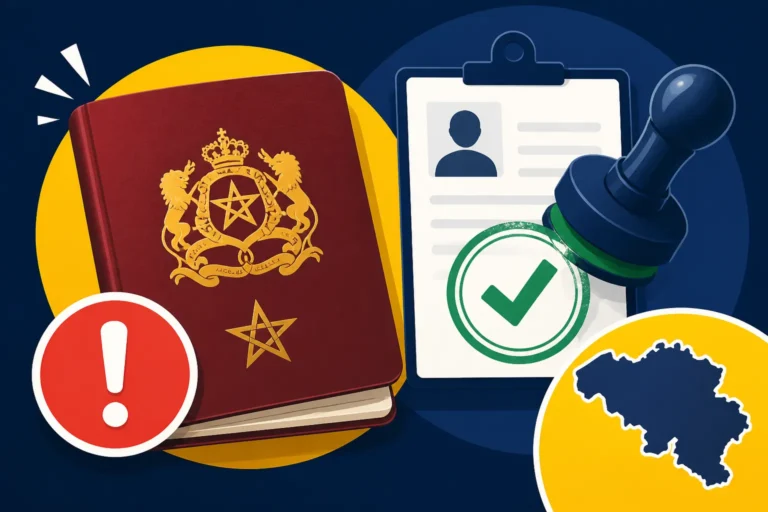
For an expat, this creates a confusing disconnect. Your commune (the Maison Communale or Stadhuis) sees your identity primarily through the lens of your birth certificate and your national passport. If you want your Belgian residence card to show your married name, you cannot simply show up with a marriage certificate and ask for an update. The Belgian authorities generally follow the principle that your name on their records must match the name in your national passport.
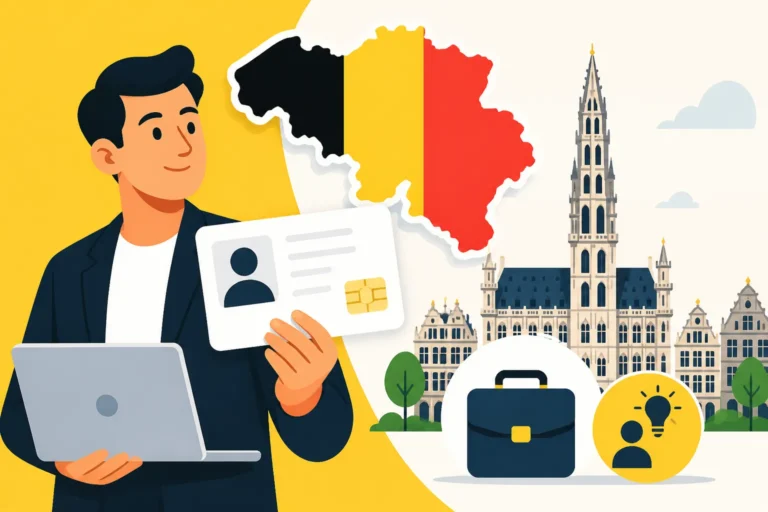
This often leads to a "chicken and egg" situation. You feel like your residence card should be updated because you are married, but the commune will insist that until your home country issues a new passport with the new name, they cannot touch your file. It is vital to understand that the Belgian eID Card Types: A Card, B Card, F Card, and Others all function as an extension of your primary international identity. If those two things are out of sync, you will face significant issues at border control, banks, and even when picking up a package at the post office.
Why Your Residence Card Needs to Match Your Passport
Consistency is your best friend when dealing with Belgian bureaucracy. Imagine you are traveling back from a trip outside the Schengen zone. You present a passport with your new married name, but your residence card—which proves your right to be in Belgium—still bears your maiden name. This discrepancy can lead to hours of questioning at the airport. Furthermore, the Belgian "National Register" number is linked to your identity. If your name changes legally in your home country, but Belgium still has you registered under your old name, your tax records, social security contributions, and even your Gross vs Net Salary in Belgium: Why the Difference is So Big calculations could eventually face data mismatches.
I have seen expats ignore this for years, only to find out they cannot buy a house or get a mortgage because the notary finds two different names in the system. It is a headache you want to avoid. The goal is to ensure that your digital footprint in Belgium, which is largely managed through the "Itsme" application and your physical chip-card, is perfectly aligned with your current legal status.
Step-by-Step Process for Updating Your Belgian eID
The process is not necessarily difficult, but it is sequential. You cannot skip steps, and you certainly cannot rush the commune. Every municipality in Belgium operates with a degree of autonomy, so while the general rules are federal, the "vibe" and efficiency of the office in Ixelles might differ wildly from the one in Antwerp or a small village in the Ardennes.
The First Step: Updating Your National Passport
Before you even think about Booking an Appointment at the Commune (Stadhuis/Maison Communale), you must have your new passport in hand. Your home country’s embassy or consulate in Brussels will be your first stop. You will need to follow their specific procedures for a name change, which usually involves submitting an original marriage certificate (often apostilled) and your old passport.
Once that new passport arrives, check every letter of your name. If there is even a minor typo, the Belgian commune will catch it and refuse to process your residence card update. Once you have the physical document, you are ready to face the Belgian administration. Remember that until you have this new passport, the commune will not acknowledge your name change, regardless of how many marriage certificates you show them.
Dealing with Your Commune and the Appointment
After you have your new passport, you need to book an appointment for a "change of information" or "renewal of residence permit due to name change." Do not just walk in; most communes in major cities like Brussels or Ghent require appointments weeks in advance. When you arrive, be prepared for the fact that you are essentially applying for a new card. This means you will likely have to pay a fee (usually between 20 and 30 EUR) and provide new passport-sized photos that meet the strict Belgian "ICAO" standards.
During this appointment, the administrative officer will update your profile in the National Register. They will take your old card, or more likely, they will let you keep it but give you an Annex 15 (Annexe 15/Bijlage 15) and Can You Work With It? as a temporary proof of identity. This document is crucial because it bridges the gap while your new card is being printed at the federal facility in Brussels.
Essential Documents and Translation Requirements
The most common reason for rejection at the commune counter is improper documentation. If your marriage took place outside of Belgium, your marriage certificate must be "legalized" or "apostilled" to be recognized. Furthermore, Belgium is a country of strict linguistic rules. If your certificate is in English, Spanish, or any language other than French, Dutch, or German, you will almost certainly need a sworn translation.
Using a service like RushTranslate is often the most efficient way to ensure your documents meet the "sworn" requirement. The commune will not accept a translation you did yourself or one from a friend. It must be stamped by a translator recognized by the Belgian courts. I highly recommend checking our guide on Translating Birth and Marriage Certificates via Sworn Translators to make sure you don’t waste a trip to the commune. Additionally, if the marriage happened in a country not part of the Hague Convention, you might need to go through the multi-step Apostille vs Legalization: Authenticating Documents for Belgium process, which involves both your home country’s foreign office and the Belgian embassy there.
| Document Needed | Requirement | Notes |
|---|---|---|
| New National Passport | Must show the new married name | Ensure it is signed and valid. |
| Marriage Certificate | Must be Original + Apostilled | Essential if married abroad. |
| Sworn Translation | Must be in the language of the commune | Check if your commune is French or Dutch speaking. |
| Passport Photos | Must be recent (less than 6 months) | Avoid smiling; neutral expression required. |
| Current Residence Card | Must be handed over or updated | You will receive a temporary document. |
| Payment Method | Bancontact or Credit Card | Most communes are now cashless. |
Practical Considerations Beyond the Residence Card
Updating your residence card is the "master key," but it doesn't automatically update everything else in your Belgian life. You are essentially entering a second phase of administrative cleanup that involves your employer, your bank, and your health insurance providers.
Notifying Banks and Insurers
Once your new eID is in your hand, your first stop should be your bank. Belgian banks are required by "Know Your Customer" (KYC) laws to have up-to-date ID information. If you try to use your old card to log into your banking app, or if you present a new card that doesn't match their records, your account could be temporarily flagged or frozen.
Similarly, your insurance providers need to know. If you have a private policy with a provider like Cigna Global, you must send them a copy of your new ID. This ensures that any claims you file in the future are not rejected due to a name mismatch. This is especially important for Private Health Insurance in Belgium: When Do Expats Really Need It? because those policies are often used to supplement the public system, and the records must be identical across both.
Handling the Mutuelle and Work Documents
Your health insurance "mutuelle" is another vital entity. Because the mutuelle is linked to your National Register number, they might see the name change eventually, but it is much safer to notify them yourself. This ensures your "vignettes" (those little yellow stickers) and your Registering for Public Health Insurance: Step-by-Step at Your Commune records are correct. If you are currently undergoing medical treatment, a name discrepancy can cause issues with How to Submit Medical Receipts for Reimbursement in Belgium.
On the professional side, your employer's HR department needs your new card to update your Dimona (the social security declaration). If they continue to pay you under your old name while your National Register profile has changed, it can create a mess for your annual tax return. Give them a scanned copy of both sides of the new card as soon as you receive it.
Common Pitfalls and Veteran Advice
After living here for years, I have seen where the "traps" are. One of the biggest mistakes expats make is forgetting about The Police Check (Contrôle de Quartier) for Address Verification. While a name change usually doesn't trigger a new police visit, if you happen to move houses at the same time you are changing your name, the police will be looking for the name on your old card or the name on the door. Ensure your name is clearly marked on your doorbell as soon as the process starts.
Another digital hurdle is Itsme. When you get a new residence card, it has a new "card number," even if your National Register number stays the same. This means your current Itsme account will stop working. You will need to delete your old Itsme profile and create a new one using your new card and a card reader (or via your bank app if they have updated your name already). See our guide on Setting Up Itsme While Waiting for Your Physical eID Card to navigate that transition without losing access to your government portals.
Finally, be patient with the timing. From the moment you apply for the new card at the commune, it usually takes 2 to 3 weeks for the PIN and PUK codes to arrive at your home. Only after those codes arrive can you go back to the commune to "activate" the card. If you lose those codes, you'll have to pay for a Applying for a Duplicate eID Pin/Puk Code from the Commune, which adds even more delay to the process.
Disclaimer
The information provided in this guide is for informational purposes only and does not constitute legal or administrative advice. Belgian immigration and civil laws are subject to change, and requirements may vary significantly between different communes and regions (Flanders, Wallonia, and Brussels). Always consult with your local municipal office or a qualified immigration lawyer for the most up-to-date and personalized guidance regarding your specific situation.