Cost of Living in Belgium 2026: Singles, Couples, and Families
Walking into a Belgian apartment for the first time and realizing you are expected to provide your own lightbulbs, curtain rods, and sometimes even the kitchen cabinets is a quintessential expat rite of passage. I remember sitting on my suitcase in a chilly Ixelles studio, staring at a bare ceiling wire and wondering where my "high European salary" was actually going. This guide breaks down the true cost of living in Belgium in 2026, so you don't have to learn the hard way.
The Core of the Expense: Housing and Renting
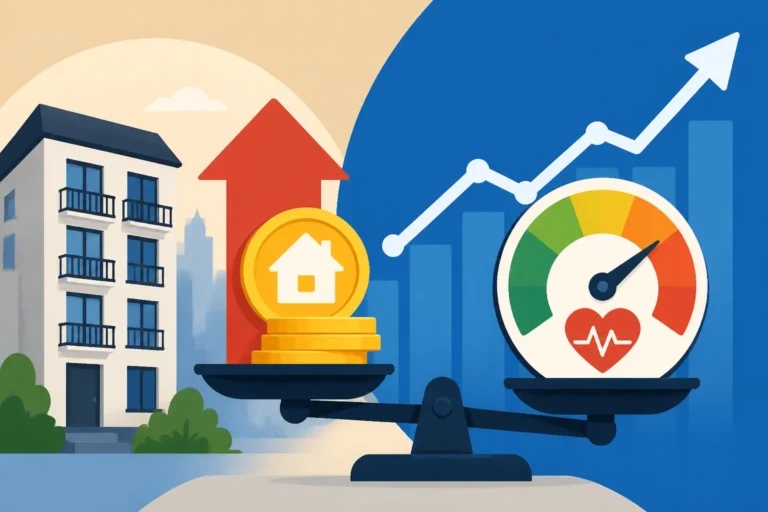
Housing remains the single largest line item in any Belgian budget, and the market has shifted significantly toward energy-efficient properties. If you are looking at Brussels, Antwerp, or Ghent, you need to be prepared for a competitive landscape where energy ratings (PEB/EPC) now dictate price almost as much as square footage. For those just arriving, Renting in Belgium: Apartments, Contracts, and Tenant Rights (2027) is essential reading to avoid the common pitfalls of the "3-6-9" lease system.
The True Cost of Rent Across Major Cities
In Brussels, the "European Quarter" and trendy areas like Saint-Gilles or Ixelles continue to command premiums. A standard one-bedroom apartment in a decent commune will likely set you back between €950 and €1,200 per month, excluding charges. If you move toward the periphery or into cities like Liege or Mons, those prices can drop by 20% to 30%, but you must factor in the increased commuting costs.
For many expats, the search begins before they even land. Using platforms like HousingAnywhere can be a lifesaver for securing mid-term furnished housing while you scout for a permanent, unfurnished nest. Be wary of "too good to be true" listings on social media; the rental market is professionalized, and if a two-bedroom in Sablon is listed for €800, it is almost certainly a scam.
Understanding Common Charges and the Rent Guarantee
Beyond the base rent, you will encounter "charges communes." These are monthly fees for building maintenance, elevator electricity, and sometimes water or heating for the entire block. In 2026, expect these to range from €80 for a small studio to €250 for a large family apartment.
Then there is the "rent guarantee" (garantie locative). This is typically two to three months of base rent held in a blocked account. I always recommend using the e-DEPO system via the federal government’s portal, as it’s free and secure. Never, under any circumstances, transfer a deposit directly to a landlord’s personal bank account; it is notoriously difficult to get back without a legal fight.
The Hidden Costs of Setting Up House
Because many Belgian rentals are "unfurnished" in the truest sense—meaning no light fixtures or appliances—your first month will involve a significant capital outlay. You will likely spend your first weekends at IKEA or browsing Amazon Belgium for everything from washing machines to basic cutlery. Budget at least €2,000 for these "move-in" essentials if you are starting from scratch. It is a one-time hit, but it often catches newcomers off guard when they are already reeling from the deposit and the first month's rent.
Powering Your Life: Utilities, Energy, and Global Connectivity
The energy crisis of the early 2020s has left a permanent mark on how Belgians consume power. Smart meters are the norm, and "peak shaving" (adjusting usage to avoid high-demand periods) is a national pastime. Understanding Utilities and Home Setup: Electricity, Water, Gas, and Internet is crucial for keeping your monthly outgoings predictable.
Energy Bills and the Green Transition
In 2026, a typical household (couple) should budget around €150 to €200 per month for gas and electricity. However, this varies wildly based on your EPC rating. If you live in an old "Maison de Maître" with high ceilings and single-paned windows, that bill could easily double in the winter months. Many providers like Engie or Luminus offer fixed and variable contracts; for expats who prefer stability, fixed-rate contracts are still the "gold standard" even if they carry a slight premium.
Water is another utility that surprises people. It is managed regionally (Vivaqua in Brussels, De Watergroep in Flanders). Expect to pay around €300 to €400 annually for a two-person household, usually billed in quarterly installments. It is a "hidden" cost because it often doesn't appear on your monthly radar until the "regularization" bill arrives once a year.
Connectivity and Keeping in Touch
For internet and TV, the market is dominated by Proximus and Telenet. A high-speed fiber package in 2026 costs roughly €60 to €80 per month. If you are a digital nomad or work from home, don't skimp here; the older copper lines in certain parts of Brussels can be frustratingly slow.
Mobile phone plans are relatively affordable, with unlimited data plans hovering around €30. However, when you first arrive, you might not have a Belgian ID yet, which makes signing a contract difficult. Using an eSim from Airalo is a brilliant "bridge" solution. It allows you to have data the moment you step off the plane at Zaventem without hunting for a physical SIM card shop or waiting for your commune registration to be processed.
The Digital Identity Requirement
You cannot exist in Belgium without "Itsme," the national digital ID app. It is how you access your bank, your taxes, and your medical records. While the app itself is free, the "cost" is the administrative hurdle of setting it up. You will need your Belgian eID card and a card reader, or a bank account with a major Belgian bank. This digital integration is a massive time-saver once it’s running, but the initial setup is a common source of expat frustration.
Getting Around: The Logistics of Belgian Transport
Belgium is a small country with an incredibly dense transport network. Whether you choose the train, the tram, or a bicycle, your choice will dictate a significant portion of your monthly "lifestyle" budget. To understand the full scope of the rail network, check out Transportation in Belgium: SNCB Trains, Trams, and Mobib Cards.
The Public Transport Budget
For most city dwellers, the STIB/MIVB (Brussels) or De Lijn (Flanders) networks are the primary mode of travel. A monthly unlimited pass in Brussels costs about €49, which is a bargain compared to London or Paris. If you are under 25 or a student, the price drops significantly.
The national rail (SNCB/NMBS) is excellent for inter-city travel. A "Standard Multi" (formerly the Rail Pass) gives you 10 trips between any two Belgian stations for roughly €99. If you commute to a different city for work, your employer is legally required to subsidize a large portion of your train pass. This is one of the "hidden perks" of the Gross vs Net Salary in Belgium: Why the Difference is So Big calculation—your net might look lower, but these benefits add up.
Car Ownership and the Low Emission Zones
Owning a car in a Belgian city is increasingly expensive and, frankly, often unnecessary. Between the "Circulation Tax," high insurance premiums, and the strict Low Emission Zones (LEZ) in Brussels, Antwerp, and Ghent, you can expect a car to cost you at least €400 per month including fuel and maintenance.
Parking is another nightmare. A private parking spot in a Brussels apartment building can rent for €100 to €150 per month. If you must have a car, look into car-sharing services like Cambio or Poppy, which allow you to pay only for what you use without the overhead of ownership.
The Biking Revolution
Belgium, especially Flanders, is a cyclist’s paradise. In 2026, more employers are offering "bike allowances," where you are paid a certain amount per kilometer to cycle to work. Investing €1,500 in a good quality e-bike might seem steep, but when you factor in the health benefits and the potential "bicycle allowance" income, it often pays for itself within 18 months. Plus, it’s the only way to truly beat the Brussels traffic.
Groceries and Gastronomy: The Cost of Eating Well
Food in Belgium is high quality, but it is not cheap. The "inflation shocks" of recent years have stabilized, but the baseline has shifted. Whether you are a "Colruyt regular" or a "Delhaize devotee," your grocery strategy will make or break your monthly budget.
Supermarket Tiers and Strategy
For a single person, a monthly grocery budget of €300 to €400 is realistic for a mix of healthy, varied food. For a family of four, this easily climbs to €1,000 or more.
- Colruyt: The king of "lowest price." It feels like a warehouse, and you have to wear a coat in the refrigerated section, but it is the best place for bulk buying.
- Delhaize and Carrefour: These are the "mid-to-high" range. They have excellent selections of international products and organic (Bio) sections, but you will pay a 15-20% premium over Colruyt.
- Aldi and Lidl: Perfect for staples. The quality has improved immensely in recent years, especially their bakery sections.
Don't forget the weekly markets! Places like the Marché de l'Abattoir in Anderlecht offer incredibly cheap produce if you are willing to brave the crowds. It is where I go when I want to stock up on five kilos of peppers for the price of one kilo at a supermarket.
Dining Out and Tipping Culture
A meal at a standard mid-range restaurant in 2026 will cost about €25 to €35 for a main course and a drink. A "plat du jour" (lunch special) is usually a better deal, often around €15 to €18.
One thing to remember: tipping is not mandatory in Belgium. Service is included in the price. However, "rounding up" or leaving a few euros for exceptional service is appreciated. If you are sitting at a terrace in the Grand Place, expect to pay "tourist tax" prices—a small beer could be €7. Go two streets over, and it's €4.50.
The Cost of the "Small Joys"
You cannot live in Belgium and ignore the fries and beer. A "mitraillette" (a half-baguette stuffed with meat, fries, and sauce) is the ultimate cheap meal at around €8. A high-quality specialty beer in a brown bar will be €5 to €8. These small expenses are the glue of Belgian social life, so don't budget them out entirely.
Health is Wealth: Navigating the Belgian Medical Maze
The Belgian healthcare system is world-class and relatively affordable, provided you understand how the reimbursement system works. It is not "free" at the point of use like the UK's NHS, but it is heavily subsidized. For a deep dive, see Healthcare in Belgium for Expats: Complete System Overview (2027).
Mutuelle Contributions and Reimbursements
Every resident must join a "Mutuelle" (French) or "Ziekenfonds" (Dutch). This costs about €10 to €15 per month. In return, the state covers about 75% of your medical costs. A standard visit to a GP in 2026 costs around €30, but you will get about €22 back from your mutuelle, often automatically via your eID card.
I highly recommend Choosing Your First GP (General Practitioner) in Belgium as soon as you arrive. Having a "Global Medical Record" (DMG/GMD) with a specific doctor reduces your out-of-pocket costs even further.
Hospitalization and Dental Care
Public insurance doesn't cover everything. If you are hospitalized and want a private room, the "supplements" can be astronomical—thousands of euros. This is why most expats (and Belgians) have "hospitalization insurance," often provided by their employer. If your job doesn't offer it, buying a private policy for €20 a month is the smartest money you will ever spend.
Dental care is another area where the mutuelle covers the basics (check-ups, simple fillings) but leaves you hanging for major work. If you find yourself in a crisis, Finding an English-Speaking Dentist in Brussels for Emergencies can help you navigate the costs of urgent care, which can be significant.
| Expense Category | Single Junior (Est.) | Professional Couple (Est.) | Family of Four (Est.) |
|---|---|---|---|
| Rent (2-bed average) | €1,000 | €1,300 | €1,800 |
| Utilities & Internet | €180 | €250 | €350 |
| Groceries | €350 | €650 | €1,100 |
| Transport (Passes) | €50 | €100 | €150 |
| Healthcare (Mutuelle) | €12 | €24 | €40 |
| Leisure/Dining | €200 | €400 | €500 |
| Total Monthly | €1,792 | €2,724 | €3,940 |
Raising a Family: Education, Childcare, and Hidden Costs
Belgium is a great place for families, but the "childcare gap" is a real financial and logistical hurdle. If you are moving with little ones, the costs go beyond just extra bedrooms.
The Crèche Struggle
Daycare (Crèche) is the most stressful part of Belgian life for new parents. Prices are often "income-indexed" for state-subsidized spots, ranging from €3 per day to €35 per day. However, getting a spot is like winning the lottery. Private crèches are more available but can cost €800 to €1,000 per month. I always tell my friends to look at Childcare (Crèche) Waitlists: When to Apply During Pregnancy—even if you haven't moved yet, start researching.
Schools and Extracurriculars
Local Belgian schools (French or Dutch-speaking) are essentially free, with parents only paying for hot lunches and occasional field trips. International schools, however, are a different world. If your employer isn't paying the tuition, expect to shell out €20,000 to €35,000 per child per year.
Extracurriculars are very affordable. A year of football or dance at a local "académie" might only cost €200. It is a fantastic way for children to integrate and for you to meet local parents without breaking the bank.
The Benefit of Child Allocations
On the plus side, Belgium provides "child benefits" (Groeipakket in Flanders, Allocations Familiales in Brussels/Wallonia). Every child receives a monthly payment from the state (around €170+ depending on the region). It won't cover the whole cost of a child, but it pays for the diapers and the occasional new pair of shoes.
Lifestyle, Leisure, and the Pursuit of Belgian Joy
Once the bills are paid, what’s left for "living"? Belgium offers a high quality of life if you know where to look.
Fitness and Hobbies
Gym memberships vary. A budget chain like Basic-Fit costs about €25 a month. If you want a pool, a sauna, and fancy towels, you’re looking at €100+ at clubs like David Lloyd. Check out Gym Memberships in Belgium: Basic-Fit vs Premium Clubs for a comparison of what you actually get for your money.
For the culturally inclined, a cinema ticket is about €13. Museums are often free on the first Sunday of the month. Belgium is also famous for its festivals; a weekend pass to a major festival like Rock Werchter will be around €300, but it is an experience of a lifetime.
Domestic Help: The "Titres-Services" Miracle
One of the best-kept secrets of Belgian life is the service voucher system. For about €10 an hour (after tax deductions), you can hire a professional cleaner to come to your home. It is a government-subsidized system designed to create legal employment. Most expats I know use this service. Hiring a Domestic Cleaner via Titres-Services (Dienstencheques) explains how to sign up and why it is the ultimate lifestyle upgrade for a busy professional.
Travel: The Benefit of Being Central
Finally, consider the cost of "getting away." From Brussels, you are two hours from Paris, London, and Amsterdam by train. While the tickets can be pricey if booked last minute, the "Thalys/Eurostar" early-bird rates are excellent. Budgeting €200 a month for "exploration" is a wise move to take advantage of Belgium's incredible location.
Final Veteran Advice for Your Budget
The biggest mistake I see newcomers make is comparing their Belgian "Gross" salary to their home country's "Net." The taxation here is among the highest in the world, often hitting 45-50% for middle-to-high earners. You must read Taxes in Belgium for Expats: Personal Income Tax System 2026 before you sign your contract.
However, the "cost" of living is offset by the "quality" of living. The infrastructure works, the beer is the best in the world, and once you navigate the bureaucracy, there is a deep sense of security. Belgium isn't about getting rich quick; it’s about a comfortable, stable, and culturally rich life in the heart of Europe.
Disclaimer
This guide is intended for informational purposes only and represents the personal observations and research of a veteran expat. Costs and regulations in Belgium are subject to frequent change. Always consult with official government sources, your HR department, or a qualified financial advisor before making significant financial decisions or signing legal contracts. No information in this article constitutes legal or financial advice.