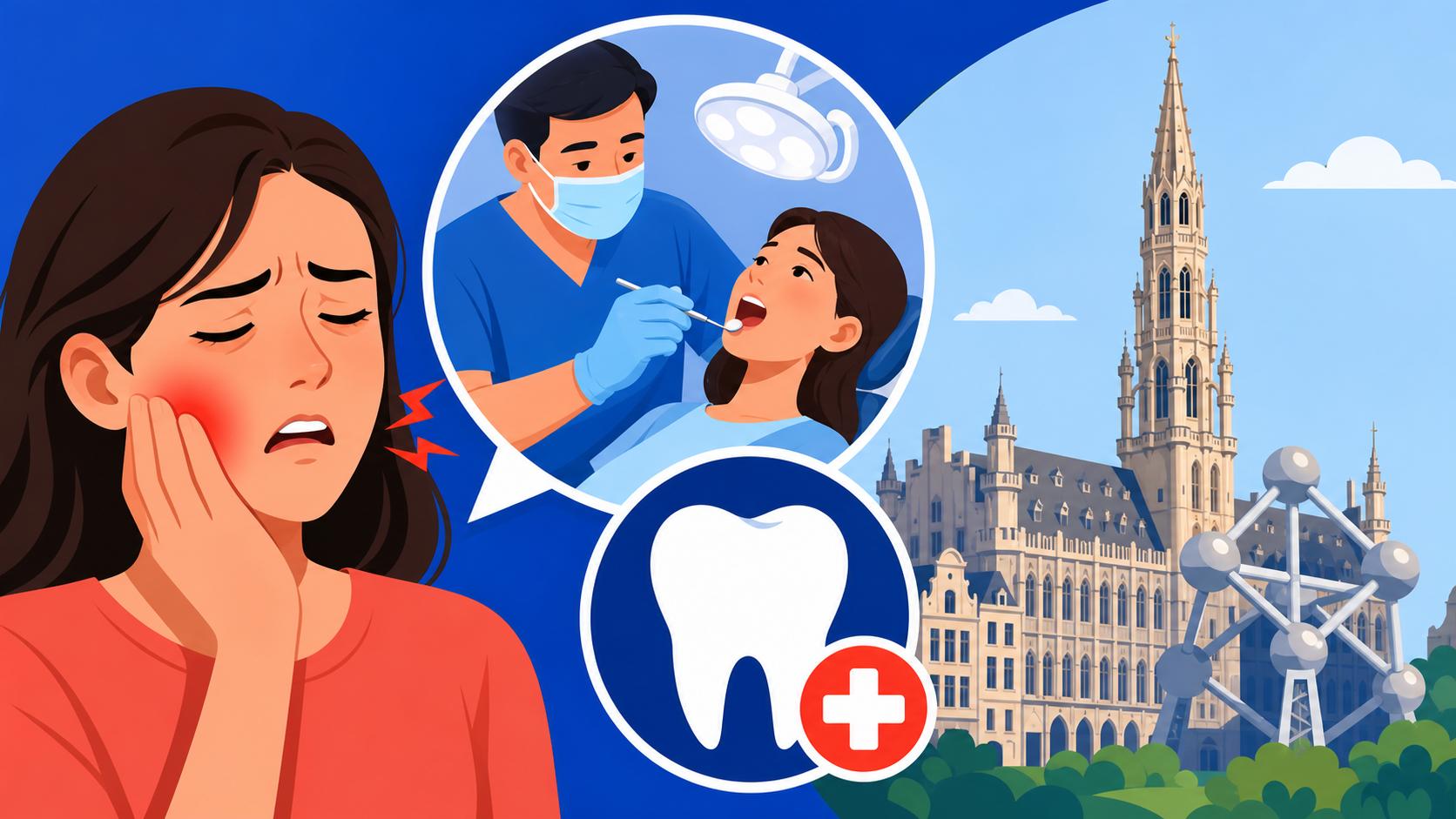
Finding an English-Speaking Dentist in Brussels for Emergencies
You are lying in bed in your Ixelles apartment when a sharp, pulsing throb starts in your molar. I’ve been there, staring at the ceiling at 2:00 AM, wondering if I can survive until Monday or if I need to find a dentist who won’t look confused when I try to explain my pain in broken French. This guide provides the exact roadmap for finding an English-speaking dentist in Brussels for emergencies, navigating the reimbursement system, and surviving the weekend with your sanity intact.
The Reality of Dental Emergencies in Brussels
Brussels is a wonderfully international city, but when the pain hits, the local administrative layers can feel like a labyrinth. Unlike some countries where you might just walk into a 24-hour clinic, Belgium operates on a more structured "on-call" system. The first thing you need to realize is that almost all dentists in Brussels are private practitioners, but they are deeply integrated into the national social security framework.
In my first year here, I made the mistake of thinking I could just "tough it out" because I didn't have my physical eID card yet. Do not do this. The Belgian system is designed to handle emergencies regardless of where you are in your residency process, provided you know which doors to knock on. If you are still waiting for your permanent documents, Accessing Belgian Healthcare Without an eID: Temporary Certificates can be a lifesaver, but most dentists will treat you as long as you can pay the upfront cost.
The language barrier is another valid frustration. While many younger dentists in the European Quarter or the leafy suburbs of Uccle and Woluwe-Saint-Pierre speak excellent English, the emergency "on-call" dentist assigned to you on a Sunday might not. This is why having a few key phrases or a digital tool ready is essential for your peace of mind.
Navigating the On-Call Dental Service (Garde/Wacht)
When a tooth breaks or an infection flares up on a Saturday night, you cannot simply call your regular dentist. You need the "Service de Garde" (French) or "Wachtdienst" (Dutch). This is a rotating roster of dentists who take turns covering the entire Brussels-Capital Region during weekends and public holidays.
How to Contact the Brussels Dental Guard
There is a central number for the Brussels dental emergency service. It typically operates from 9:00 AM to 6:00 PM on Saturdays, Sundays, and public holidays. Outside of these hours, if the pain is life-threatening (such as significant facial swelling that affects breathing), you must go to a hospital emergency room. For a deep dive into hospital protocols, see Emergency Medical Care in Belgium: 112, Hospitals, and Pharmacies.
When you call the guard service, you will likely be greeted by an automated menu in French or Dutch. Don't panic. Usually, you will be given the phone number of the specific dentist on duty for that day in your zone. When you call the dentist directly, simply ask, "Do you speak English?" Most Brussels-based medical professionals have a working knowledge of English, especially in a clinical context.
Using Digital Booking Platforms
If your emergency happens during a weekday but you need an appointment now, skip the phone book and use Doctena or Rosa. These apps allow you to filter practitioners by language. You can specifically select "English" and look for the next available slot. This is often much faster than calling ten different offices and being told they aren't taking new patients. I found my current dentist this way after a filling popped out during a business lunch; I was in the chair three hours later in Etterbeek.
Conventioned vs. Non-Conventioned Dentists
One of the most confusing parts of the Belgian system is the "Convention" status. This determines how much you pay out of pocket and how much your mutuelle will pay you back. Understanding Conventioned vs Non-Conventioned Doctors: How Out-of-Pocket Costs Differ is the difference between a €50 bill and a €150 bill.
- Conventioned Dentists: They agree to follow the official price list set by the government and insurance funds. If you see a conventioned dentist for an emergency, your reimbursement will be significantly higher.
- Non-Conventioned Dentists: They set their own rates. In Brussels, many dentists—especially those in high-end English-speaking clinics—are non-conventioned. You will pay more, and your mutuelle will only reimburse you based on the "official" rate, leaving you to cover the "supplement."
For expats who want to avoid these financial surprises, having a policy with Cigna Global can be a massive advantage. While the local mutuelle covers the basics, Cigna Global often covers those hefty supplements and private clinic fees that the public system ignores, which is particularly helpful for complex emergency procedures like root canals or crowns.
Documentation and Payment at the Dental Office
When you arrive at the dental office, the administrative process is relatively swift if you are prepared. Even in an emergency, they will ask for your eID card. This card allows the dentist to access your digital records and, in many cases, use the "eAttest" system.
The eAttest and Reimbursement Process
Belgium is moving away from the old paper "attestation" system. With eAttest, the dentist sends the claim directly to your insurance fund electronically. You pay the full amount at the desk, and a few days later, the reimbursement appears in your bank account. If they still use the paper system, they will give you a green or white slip. You must attach one of your "vignettes" (yellow or white stickers) to this slip and drop it in your mutuelle’s mailbox. If you are new and confused about these stickers, check out What Are Mutuelle Stickers Used For and Where to Put Them.
Typical Emergency Costs
Emergency dental care is not cheap, but it is regulated. You should expect to pay a "supplement" for a weekend or holiday visit. This is a legitimate surcharge for the dentist being on call.
| Service Type | Estimated Cost (Base) | Mutuelle Reimbursement (Approx) |
|---|---|---|
| Emergency Consultation | €30 – €60 | 75% – 100% |
| Weekend Surcharge | €25 – €40 | Partial |
| Simple Extraction | €60 – €100 | 75% |
| Emergency Root Canal (First stage) | €100 – €200 | 70% |
| X-Ray (Small) | €15 – €25 | 100% |
Keep in mind that if you haven't visited a dentist in the previous calendar year, your reimbursement rate might drop. The system rewards "preventive behavior." For more on managing these costs, see Healthcare Budgeting: Copays, DMG/GMD, and Reimbursements.
Post-Emergency Care and Pain Management
Once the dentist has patched you up, you’ll likely need a pharmacy. In Belgium, you cannot buy most painkillers—even high-dose Ibuprofen—at a supermarket. You must go to a "Pharmacie/Apotheek." If it's after hours, you’ll need to find the "Pharmacie de Garde" for your neighborhood.
The dentist might prescribe a specific mouthwash or supplement to help with healing. While local pharmacies are great, I often use iHerb to stock up on specific high-quality vitamins, clove oil, or sensitive-care dental products that aren't always available in the standard Belgian "Apotheek." iHerb is also a great source for post-procedure soft-food supplements if you're struggling to eat.
If your emergency requires follow-up surgery, you should investigate Dental Care in Belgium: Costs, Mutuelle Coverage, and Dentists to understand how to plan for long-term repairs. Often, an emergency visit only stabilizes the tooth; the actual "fix" comes later and can be much more expensive.
Practical Tips for the "New Expat" Toothache
- The Phone Call: If you're nervous, have your National Register Number (found on the back of your eID or on your Annex documents) written down. They will ask for it to create your file.
- The "Bise": Don't be surprised if the dentist greets you with a friendly nod or even the "bise" (air kiss) if you become a regular. Belgian medical culture is professional but often more personable than in the US or UK.
- Payment: Almost all dentists in Brussels accept Bancontact. Many do not accept credit cards (Visa/Mastercard) due to high merchant fees. Always have a Bancontact card or the Payconiq app ready.
- Private Backup: If you are a freelancer or on a "Single Permit," the public system might feel thin. This is where Cigna Global shines, providing that extra layer of dental protection that can save you thousands if an emergency turns into a surgical necessity.
Finding Long-Term Dental Support
After the emergency is over, the best thing you can do is register with a regular GP and a dentist. Having a Global Medical Record (DMG/GMD): Why You Need It for Better Refunds usually applies to your GP, but keeping your dental history with one clinic in Brussels makes future emergencies much easier to handle.
If you are looking for specific English-speaking clinics, areas like Schuman, Montgomery, and Louise are your best bets. Many clinics in these areas specifically cater to the "EU Bubble" and have administrative staff who are fluent in English, making the entire experience much less stressful. For those living outside the center, Brussels Healthcare Guide for Expats: Clinics, Hospitals, and Care offers a broader look at regional options.
Disclaimer
The information provided in this guide is for informational purposes only and does not constitute professional medical or legal advice. Healthcare regulations and emergency contact numbers in Belgium can change. Always verify current emergency services via official government channels or by calling 112 in a life-threatening situation. The author is an expat sharing personal experiences and is not responsible for any outcomes resulting from the use of this information.