Biking in Belgium: Villo!, Swapfiets, and Dedicated Bike Lanes
Getting stuck behind a tram in a narrow Brussels street while trying to commute is a rite of passage every expat dreads. I remember the first time I tried to bike to a meeting in Ixelles and ended up drenched, lost, and terrified of the traffic. This guide solves the mystery of Belgian biking, from choosing the right rental service to mastering the dedicated lane system safely.
Renting Leasing and Shared Bike Schemes in Belgium
When you first arrive, buying a bike often feels like a massive commitment, especially if you haven't yet figured out where you are going to store it. I spent my first three months lugging a cheap second-hand mountain bike up four flights of stairs because I didn't realize how common bike theft was in the city center. If you are still looking for a permanent home through HousingAnywhere, you might want to prioritize buildings with a secure "local vélo" or basement storage. Until then, shared schemes are your best friend.
Villo and the Public Bike-Sharing Experience
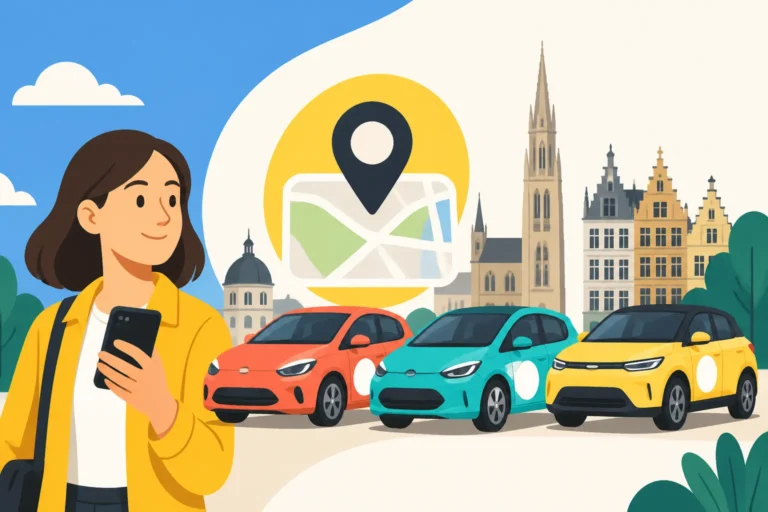
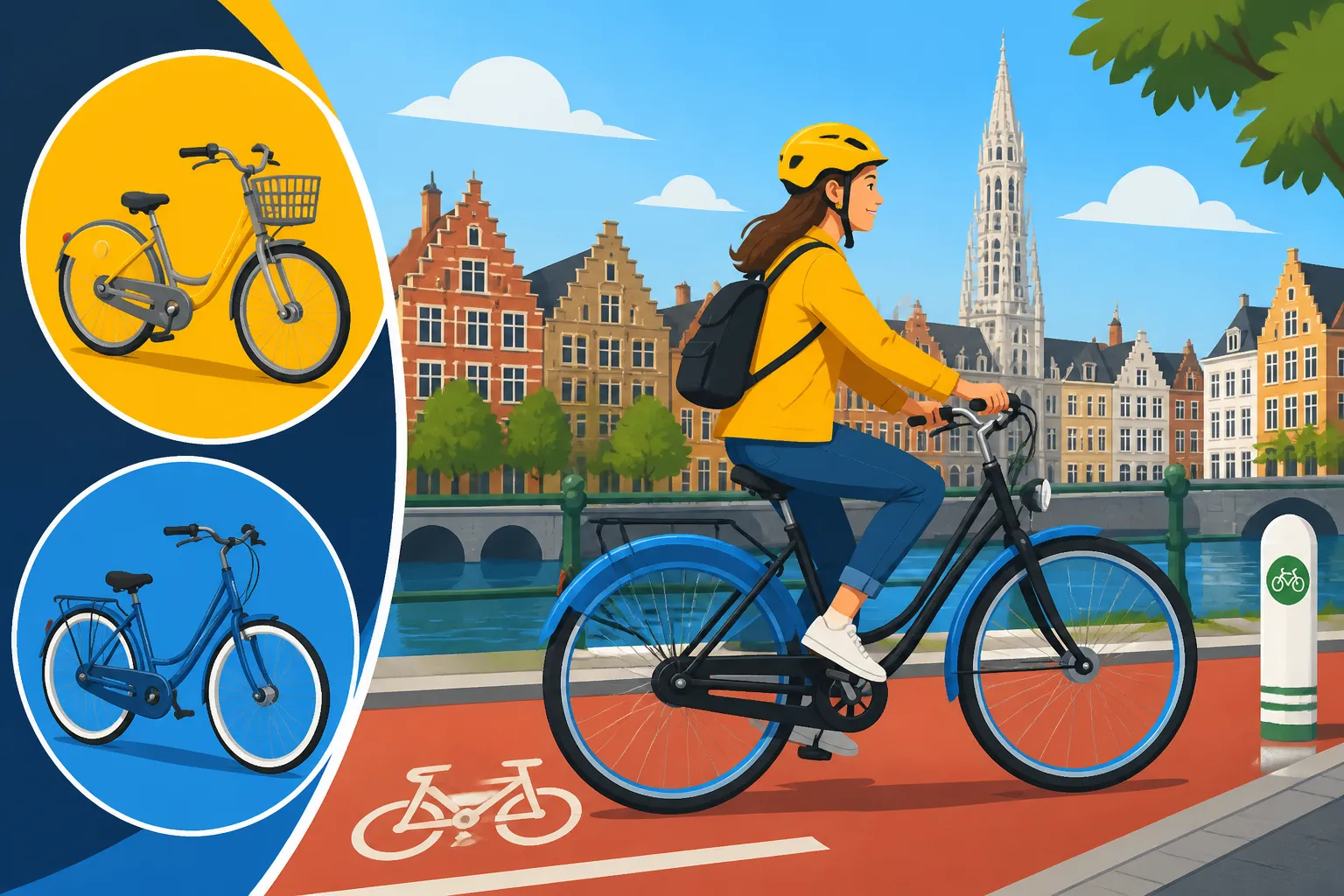
In Brussels, Villo! is the ubiquitous yellow bike service you see at every major intersection. It is a station-based system, meaning you pick up a bike at one point and drop it off at another. The bikes are built like tanks—heavy, sturdy, and usually featuring three gears that struggle slightly with the incline of the Mont des Arts.
The subscription model is incredibly affordable for residents. You can get a day pass or an annual subscription that links directly to your Mobib card. One thing I learned the hard way: always check the tires and the chain before you dock out. There is nothing worse than realizing your pedal is slipping just as you start the climb toward Chatelain. If you are Living in Brussels: Top Expat Neighborhoods (Ixelles, Etterbeek), Villo! is a lifesaver for short hops, but the 30-minute free limit means you have to be strategic about your docking stations.
Swapfiets The Worry Free Subscription
If you want the feeling of "owning" a bike without the maintenance headaches, Swapfiets is the expat gold standard. You’ll recognize them by their signature blue front tires. For a fixed monthly fee, you get a high-quality bike (either traditional or electric) that is yours to keep at home. The "swap" part of the name refers to their service guarantee: if your bike breaks, they come to you and swap it for a working one within 48 hours.
This service is particularly popular in student-heavy cities. If you are Living in Leuven: Student City Vibe and Expat Professional Life, you will see thousands of these blue-tired bikes parked near the university libraries. It removes the stress of finding a reliable repair shop that speaks your language. Just remember that you are still responsible for locking it properly; even with a subscription, a stolen bike carries a deductible fee that can sting if you aren't careful.
Blue-bike for Train Commuters
Belgium’s rail network is fantastic, but often the "last mile" from the station to your office is the most annoying part of the journey. This is where Blue-bike comes in. Unlike Villo!, these are located specifically at train stations. They are meant for round trips—you pick it up at the station in the morning and return it to the same station in the evening.
I frequently use these when visiting other cities for meetings. If you are exploring Living in Mechelen: The Hidden Gem Between Brussels and Antwerp, picking up a Blue-bike at the Mechelen station is much faster than waiting for a local bus. The cost is usually just a few euros for 24 hours, provided you have the annual membership, which is very cheap.
Navigating the Infrastructure and Dedicated Bike Lanes
One of the biggest shocks for new arrivals is the disparity in infrastructure between regions. Flanders is essentially a cycling utopia, with flat terrain and segregated paths that feel safer than the sidewalk. Brussels, however, is a patchwork of "brave new world" cycling lanes and terrifying 19th-century cobblestones.
Understanding the Fietsostrades and Regional Networks
In the north, you have access to the "Fietsostrades" or bicycle highways. These are long-distance, high-quality paths designed to get commuters from suburban areas into the heart of cities like Antwerp or Ghent without ever having to share the road with a car. They are often paved with smooth red asphalt and have their own bridges and tunnels.
When you are navigating these routes, staying connected is vital because a wrong turn can put you kilometers away from your exit. I always recommend using Airalo to ensure you have a stable data connection for your GPS. Google Maps has improved significantly in Belgium, but specialized apps like "Fietsnet" are better for planning scenic weekend rides through the "Vlaamse Ardennen."
The Evolution of the Brussels Cycle Path
Brussels has been undergoing a massive transformation under the "Good Move" plan. You will now see many streets where cars are restricted, and cyclists have priority. These are often marked as "Rue Cyclable" or "Fietsstraat," where cars are allowed but are strictly forbidden from overtaking cyclists.
However, you still have to contend with the Low Emission Zones (LEZ) in Brussels, Antwerp, and Ghent, which have reduced car traffic but increased the number of electric delivery vans. Always be wary of the "door zone" when riding next to parked cars. Belgian drivers are generally used to cyclists, but the sheer density of the capital means you must stay alert. If you are used to Brussels Transport (STIB/MIVB): Metros, Trams, and Bus Networks, transitioning to a bike will save you money, but it requires a much higher level of situational awareness.
Comparison of Popular Biking Services in Belgium
| Service | Best For | Location | Maintenance |
|---|---|---|---|
| Villo! | Short urban hops | Brussels Only | Included (Station-based) |
| Swapfiets | Daily commuting | Major Cities | Included (On-site repair) |
| Blue-bike | Station-to-office | Nationwide Stations | Included (At station) |
| Billy | Electric shared bikes | Brussels | Included (Free-floating) |
| Private Bike | Long-term savings | Everywhere | User Responsibility |
Essential Gear and Belgian Road Laws
Belgium has specific legal requirements for bicycles that the police actually do enforce, especially during the dark, rainy winter months. I once got pulled over in Ghent simply because my rear reflector was covered by a long coat. It’s not just about safety; it’s about avoiding unnecessary "amendes" (fines).
Mandatory Equipment and Safety Standards
By law, every bike in Belgium must have a bell that can be heard at 15 meters, working front (white/yellow) and rear (red) lights, and reflectors on the pedals and wheels. If you are buying a second-hand bike from a local market, these are often missing. You can find all the necessary safety kits and high-visibility gear on Amazon Belgium with quick delivery.
Helmets are not legally mandatory for adults on standard bikes, but they are highly recommended. However, if you are riding a "Speed Pedelec" (an e-bike that goes up to 45 km/h), a helmet and a license plate are required. Always check the Everyday Rules in Belgium: Garbage Sorting, Noise, and Etiquette of the road; for example, it is illegal to ride with headphones in both ears, and you can be fined for using your phone while cycling, just like a car driver.
The Art of Not Getting Your Bike Stolen
Bike theft is a "national sport" in Belgium, particularly in Brussels and Liege. The rule of thumb is that your lock should cost at least one-third of the value of your bike. I recommend a heavy-duty U-lock combined with a thick chain. Never rely on a thin cable lock; those can be snipped in seconds with basic wire cutters.
When parking, always attach the frame (not just the wheel) to a fixed object like a "sheffield stand." If you are Commuting from Waterloo or Tervuren to Brussels for Families, you might be tempted to leave your bike at the park-and-ride stations overnight—don't. If you absolutely must leave your bike outside, try to park it next to a much nicer, more expensive bike that has a weaker lock. It sounds cynical, but it is the reality of urban cycling here.
Handling the Weather and Terrain
The Belgian "drache" (heavy rain) is no joke. To survive a commute in November, you need a high-quality rain cape or "overshoes" to keep your work trousers dry. Many expats who are members of Gym Memberships in Belgium: Basic-Fit vs Premium Clubs use the gym showers to freshen up after a sweaty or rainy ride before heading into the office.
Don't forget the hills. While Flanders is flat, the southern part of Brussels and most of Wallonia are surprisingly hilly. If your commute involves going from the Lower Town to the Upper Town, an e-bike becomes less of a luxury and more of a necessity. You can find many Essential Belgian Apps to Download: SNCB, Itsme, Payconiq, and TooGoodToGo that help you track elevation or even find covered bike parking to keep your saddle dry while you shop.
Regional Variations and Biking Etiquette
The way people bike in Antwerp is very different from the way they bike in Namur. Understanding the local "vibe" will help you blend in and stay safe. In the north, biking is a primary mode of transport for everyone from toddlers to grandmothers. In the south, it is often seen more as a weekend leisure activity, though this is changing rapidly.
Biking in Flanders: The Priority System
In many Flemish towns, cyclists are the kings of the road. When you see a sign that says "Fietsstraat," remember that you can take up the whole lane. If you are Living in Leuven: Student City Vibe and Expat Professional Life, you will notice that at certain intersections, all cyclists get a green light at the same time in all directions. It looks like chaos, but it works surprisingly well if you just follow the flow.
One quirk of Belgian law is the "Priority from the Right." Unless there are specific markings (like shark teeth on the road), you must give way to traffic coming from your right, even if you are on a larger road. This applies to bikes too. I’ve seen many accidents caused by expats assuming they have the right of way because they are on a "main" street.
Biking in Wallonia and the Ardennes
If you are heading south for the weekend, the "RAVeL" network is your best friend. This is a series of converted old railway lines that offer hundreds of kilometers of car-free paths through the forest and along the rivers. It is much more peaceful than the urban grind of Brussels.
If you find that your bike needs a professional tune-up after a weekend in the mud, check your Common Charges (Charges Communes): What Exactly Are You Paying For? if you live in a modern apartment block. Sometimes, basic maintenance tools or a bike wash station are included in the building's amenities. Otherwise, local "Ateliers" (workshops) are everywhere, often run as social enterprises where you can learn to fix your own flat tire for a small donation.
Important Disclaimer
The information provided in this guide is for general informational purposes only and reflects the personal experiences of the author. While we strive to keep the data up to date, Belgian traffic laws, shared service pricing, and municipal regulations can change frequently. Always consult official sources like the Belgian Highway Code (Code de la Route) and the specific terms of service of providers like Villo!, Swapfiets, or Blue-bike before cycling. The author and publisher are not responsible for any accidents, fines, or thefts incurred while following this advice. Use your best judgment and prioritize safety at all times.