Brussels Transport (STIB/MIVB): Metros, Trams, and Bus Networks
Standing at Gare Centrale for the first time, clutching a heavy suitcase while staring at a flickering screen of Dutch and French abbreviations, is a rite of passage every expat in Brussels shares. I remember my first week here, spent wandering aimlessly around the De Brouckère station because I couldn't figure out if I needed a STIB or an MIVB ticket—only to realize they are exactly the same thing. This guide is designed to strip away that initial panic and turn you into a confident navigator of the capital's veins.
Understanding the STIB/MIVB Ecosystem
The first thing you need to wrap your head around is the bilingual nature of the city. STIB (Société des Transports Intercommunaux de Bruxelles) and MIVB (Maatschappij voor het Intercommunaal Vervoer te Brussel) are the same entity. Whether you see the blue and silver logo or hear the announcements in two languages, you are dealing with a single, highly integrated network. Brussels is not just a city; it is a collection of 19 communes, and the transport network is the glue that holds these diverse neighborhoods together. From the posh avenues of Woluwe-Saint-Pierre to the trendy bars of Saint-Gilles, the system is designed to keep the city moving 24/7.
The Hub and Spoke Model
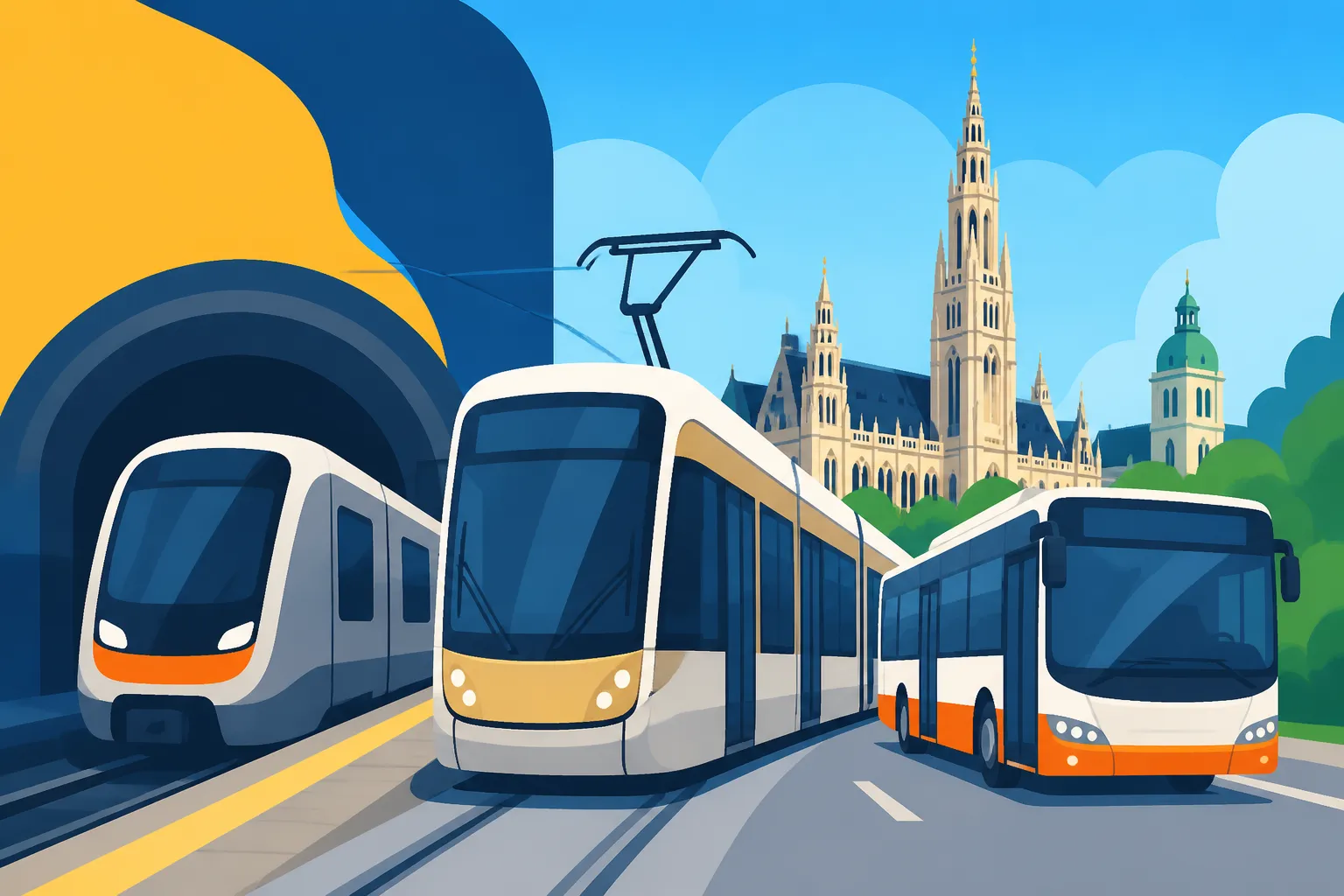
The Brussels transport system operates primarily on a hub-and-spoke model, with major intersections like Arts-Loi, Gare Centrale, and Midi acting as the primary transfer points. When you are looking for a place to stay through platforms like HousingAnywhere, pay close attention to the proximity of these hubs. Being on a direct line to Arts-Loi can save you thirty minutes of commuting time every single day. The metro is the backbone, the trams handle the medium-distance crawls through the charming narrow streets, and the buses fill in the gaps, reaching the furthest corners of the capital region.
The Bilingual Naming Confusion
One of the most common frustrations for newcomers is the station names. Every station has two names, and they don't always sound similar. For example, the same stop is called "Gare Centrale" in French and "Centraal Station" in Dutch. Others are even more distinct, like "Porte de Namur" and "Naamsepoort." You will quickly learn to recognize both, but in the beginning, it helps to keep a digital map handy. To stay connected and avoid getting lost in those first few days, I always recommend getting a local eSIM from a provider like Airalo so you aren't hunting for spotty station Wi-Fi just to find your way home.
The MOBIB Card and Ticket Options
The era of paper tickets with magnetic strips is largely a thing of the past in Brussels. Today, the system revolves around the MOBIB card, a small plastic smartcard that stores your subscriptions and "stored value" trips. There are two main types of MOBIB cards, and choosing the wrong one can be a headache when you realize you can't load certain products onto it later.
MOBIB Basic vs Personal
The MOBIB Basic card costs 5 euros and is anonymous. You can buy it at any "GO" vending machine or a "Bootik" (the STIB service centers). It’s great for visitors or for your first week, but it has limitations. You cannot load a monthly or yearly subscription onto it. For that, you need the "Personalized" MOBIB card. This requires a visit to a Bootik with your Belgian eID or a passport and a photo. Once you have a personalized card, you can manage everything online through the MySTIB portal, which is a lifesaver when you need to renew your pass on a rainy Monday morning.
Understanding Ticket Pricing and Brupass
Brussels has simplified its pricing, but the introduction of the "Brupass" and "Brupass XL" added a layer of complexity for those living on the outskirts. A standard STIB ticket allows you to travel anywhere within the 19 communes. However, if you live in the "Brussels Periphery"—places like Zaventem or Dilbeek—you will need a Brupass XL. This covers not just STIB, but also the Flanders Transport (De Lijn) and Wallonia Transport (TEC) Basics and the national trains within a designated zone.
| Ticket Type | Best For | Price (Approx. 2026) |
|---|---|---|
| Single Journey (Contactless) | Occasional users/Tourists | €2.20 |
| 10-Trip Brupass | Regular but not daily commuters | €17.50 |
| Monthly STIB Subscription | Daily commuters within 19 communes | €52.00 |
| Yearly STIB Subscription | Long-term residents | €499.00 |
| School Subscription | Students under 24 | €12.00 |
Digital Payments and Contactless
If you are only in town for a few days or your MOBIB card is empty, you can simply tap your debit or credit card (or phone/watch) on the red validators. This "Contactless" system is incredibly efficient and always charges you the lowest daily fare, capping the cost if you take multiple trips. Just remember that if you are traveling with a family, each person needs their own card or device to tap. It is also worth noting that you should always validate every time you enter a station or board a bus/tram, even if you have a monthly pass. The ticket inspectors (fondly known as "Orange Jackets") are strict and don't care if it’s your first day in the city.
Navigating the Metro and Pre-Metro Networks
The Brussels Metro is fast, frequent, and generally very clean. It consists of four main lines: 1, 2, 5, and 6. Lines 1 and 5 run east-to-west, crossing the city center and the European Quarter, while lines 2 and 6 form a loop around the "Petite Ceinture" (the inner ring road). Navigating the metro is fairly straightforward, but the "Pre-Metro" is where most expats get tripped up.
The Metro Lines Breakdown
Line 1 (Purple) and Line 5 (Gold) share a significant portion of their tracks through the center. If you are going from Schuman to De Brouckère, you can take either. However, pay attention at Merode; Line 1 heads toward Stockel, while Line 5 veers south toward Hermann-Debroux. Line 2 (Orange) and Line 6 (Blue) both cover the ring, but Line 6 extends all the way up to King Baudouin Stadium in Heysel. During peak hours, trains arrive every 3 to 6 minutes, making it the most reliable way to cross the city when the surface traffic is at a standstill.
The Curious Case of the Pre-Metro
In Brussels, you will often see tram lines (like the 3, 4, and 7) diving underground and behaving exactly like a metro. This is the "Pre-Metro." These lines are incredibly useful because they bypass the surface traffic in the city's most congested areas. The North-South axis (Gare du Nord to Albert) is the busiest Pre-Metro tunnel. If you are standing on a platform and see a tram approaching instead of a heavy metro train, don't worry—your ticket is still valid, and the frequency is usually just as high. There are ongoing works to convert some of these lines into full metro lines (the Metro 3 project), so keep an eye out for station closures and diversions.
Tram and Bus Logistics
While the metro gets you across the city, the trams and buses get you to your front door. The tram network in Brussels is one of the largest in Europe, and riding some of the older lines is a scenic experience in itself. The buses, meanwhile, are the workhorses of the hills and the residential zones.
The Brussels Tram Experience
Trams in Brussels have the right of way over almost everything—except pedestrians, though they don't always stop for them either. The 92 and 94 lines are particularly beautiful, taking you past the Royal Park and the elegant houses of Avenue Louise. If you are moving your belongings and need small household items for your new apartment, you might find yourself taking a tram to the nearest shopping district. For heavier items, it’s usually better to order from Amazon Belgium to avoid the "suitcase on a crowded tram" glare from the locals.
Bus Networks and the Noctis
The bus network is extensive and can be a bit overwhelming. The buses are numbered, and the colors on the maps usually indicate their primary destination zones. One crucial thing to know is the "Noctis" service. On Friday and Saturday nights, the standard network shuts down around midnight, and the Noctis buses take over. These night buses run every 30 minutes until 3:00 AM, radiating out from the Bourse/Grand Place area. They are a godsend for anyone living in Ixelles or Uccle who doesn't want to pay for a taxi after a night out. For a smoother transition during your first month, check out the Medical Emergency Checklist for Your First 30 Days in Belgium to ensure you have all your health and safety bases covered while exploring the city at night.
Practical Expat Survival Tips
Beyond the maps and the tickets, there is a "soft" side to using Brussels transport that only comes with experience. From the unwritten rules of the escalator to knowing which app to trust, these tips will save you from looking like a total tourist.
Escalator Etiquette and Safety
In Brussels, the rule is simple: stand on the right, walk on the left. If you stand on the left side of the escalator at Arts-Loi during rush hour, you will hear a sharp "Pardon" or a frustrated sigh. Security-wise, Brussels transport is generally safe, but pickpockets are very active at major tourist hubs like Gare du Midi and Rogier. Always keep your bag in front of you, especially when the metro is crowded. If you ever lose your phone or wallet, you’ll need to know the Emergency Numbers: Calling 112 in Belgium and What to Expect to file a report and block your accounts.
Must-Have Apps for Commuters
The official STIB/MIVB app is decent for real-time arrivals and route planning. However, many locals prefer "Citymapper" or "Google Maps" for their integration with other modes of transport. Another essential is the "Itsme" app. While it’s primarily for digital ID, you often need it to log into government portals to manage your Registering for Public Health Insurance: Step-by-Step at Your Commune or to renew your personalized MOBIB card. Having a reliable data connection is key here, so don't overlook the importance of your phone plan.
Integrating with Other Transport
Brussels is the heart of Belgium, and its transport system doesn't exist in a vacuum. You will often find yourself switching from a STIB bus to a De Lijn bus or a national train. Understanding how these systems overlap is essential if you plan on visiting other cities or if you live in a neighboring commune like Waterloo.
SNCB, De Lijn, and TEC
The national rail service, SNCB/NMBS, has several stations within the city limits. Sometimes, taking the train from Gare du Midi to Gare du Nord is faster than taking the metro. Your Brupass allows you to use these trains within the Brussels zone. However, if you are heading to Flanders, you’ll encounter the yellow De Lijn buses, and in Wallonia, the red and yellow TEC buses. While they often share stops with STIB, they require different tickets unless you have a Brupass. For those who commute from further away, check the guide on Commuting from Waterloo or Tervuren to Brussels for Families to see how the regional lines connect to the city center.
Airport Connections and the 12 Bus
Getting to Zaventem (Brussels Airport) is a specific task. The STIB/MIVB Airport Line: Cheapest Way from Zaventem to City Center, specifically the Bus 12, is the most cost-effective method. It is an express service that goes from the airport to the European Quarter (Schuman). Note that the fare for the airport bus is higher than a standard city trip. If you prefer the train, there is a "Diabolo fee" (an airport supplement) added to your ticket. If you're a student, make sure to read up on Student Health Insurance: Lower Social Security Contributions Explained as many student benefits also extend to cheaper airport transport options.
Making the Most of the City
Moving to a new country is exhausting, and the bureaucracy can feel like a mountain. But once you master the STIB network, the city opens up. You can spend your Saturday mornings at the Jeu de Balle flea market in the Marolles, your afternoons in the lush Bois de la Cambre, and your evenings in the vibrant bars of Saint-Géry—all without ever needing a car.
If you find the administrative side of living here overwhelming, remember that you aren't alone. Whether you're trying to figure out Everyday Rules in Belgium: Garbage Sorting, Noise, and Etiquette or navigating the complexities of Public Transport: SNCB/NMBS (National Trains) Fares and Passes, there is always a community of expats who have been through it before. If you're feeling adventurous and want to try something different, you might even look into Using Poppy, Cambio, and Miles Car Sharing in Belgium for those rare times when the bus just won't cut it.
Living in Brussels means embracing the beautiful, bilingual chaos. The tram might be late because of a protest at Schuman, or the metro might be packed because of a concert at Forest National, but that's just the pulse of the city. Grab your MOBIB card, keep your eyes on the "Next Train" sign, and enjoy the ride. You'll be a local before you know it.
Disclaimer
This guide is intended for informational purposes only. Transport routes, pricing, and regulations in Brussels are subject to change by the STIB/MIVB and regional authorities. Always check the official STIB website or visit a Bootik for the most current information regarding fares and subscriptions. The author is a resident expat, not a representative of any Belgian government agency.