Family Reunification for Non-EU Citizens Married to Non-EU Workers
Oh, the Belgian immigration system. If you're a non-EU citizen who’s landed a fantastic job here, the joy of a new life can quickly be overshadowed by the dread of bringing your beloved spouse to join you. It feels like an endless maze of paperwork, appointments, and baffling requirements, leaving you wondering if you'll ever see your family settled. Trust me, I’ve navigated similar waters, and this guide is here to demystify the family reunification process for non-EU workers wanting to bring their non-EU spouses to Belgium.
The Initial Hurdles: Understanding Belgium's Family Reunification for Non-EU Spouses
So, you're here in Belgium, probably working on a Single Permit, and now you want your spouse to join you. This isn't just a simple travel visa; it's a deep dive into specific immigration rules designed for family reunification. The Belgian authorities, through the Immigration Office (Office des Étrangers/Dienst Vreemdelingenzaken), have very clear, albeit sometimes frustrating, criteria you need to meet. It's not personal, it's just… Belgium.
Who Qualifies: The Sponsor and the Beneficiary
First, let's break down the two main roles in this bureaucratic ballet: you, the "sponsor," and your spouse, the "beneficiary."
As the sponsor, you're the anchor in Belgium. For family reunification purposes when you're a non-EU worker, you generally need to hold a valid long-term residence permit (like an A card or B card, usually issued after your initial Single Permit). Your residence status here needs to be secure and stable. This means no temporary permits that are about to expire without a clear path to renewal. Crucially, you'll need to demonstrate consistent, sufficient income and adequate housing. These aren't just suggestions; they are non-negotiable legal requirements that the Immigration Office will scrutinize with a fine-tooth comb. They want to ensure your family won't become a burden on the Belgian social welfare system. For a clearer picture on your own status, you might want to look into the Single Permit (Gecombineerde Vergunning) Process for Workers.
Your spouse, the beneficiary, must be exactly who they say they are – your legally married partner. Belgium takes marriage legitimacy seriously, especially when one or both parties are from outside the EU. They'll be looking for authentic proof of your marital bond and their identity. This isn't the time for shortcuts or assumptions; every document needs to be in perfect order, legalized, and translated appropriately. Age is also a factor: both you and your spouse must be at least 21 years old at the time of the visa application, although exceptions can be made if you were already married before you arrived in Belgium and established your principal residence here, in which case the minimum age is 18. This age requirement is often a sticking point, so it’s essential to be aware of it from the outset.
The Legal Framework: What You're Up Against
The legal basis for family reunification in Belgium primarily stems from the Law of 15 December 1980 on access to the territory, residence, establishment, and removal of foreigners, and its various implementing Royal Decrees. For non-EU citizens, specifically, Article 10 of this law is your main point of reference, outlining the conditions under which family members can join a principal resident. This legal framework is complex and often subject to interpretation, which is why preparing a thorough application is paramount.
The Belgian authorities are particularly keen on preventing "marriages of convenience." While this rarely applies to genuine couples, the stringent documentation requirements are partly designed to weed out such cases. They need to see undeniable evidence of a genuine and stable relationship, not just a certificate. This often means providing photos, communication records, and any other evidence that proves your relationship existed before the application and is ongoing. It’s not enough to simply submit a marriage certificate; the entire application package builds a narrative of your life together. Understanding these legal underpinnings helps you appreciate why they ask for what they ask for, even if it feels excessive.
Gathering Your Mountain of Paperwork: The Document Checklist
Prepare yourself, because this is where the real work begins. The sheer volume of documents required for family reunification can feel overwhelming, but approaching it systematically is key. Each paper is a piece of the puzzle, and a missing or incorrectly prepared piece can lead to delays or even rejection.
Essential Documents from the Sponsor in Belgium
As the sponsor, your responsibility is to prove your capacity to support your spouse without recourse to public funds. This means opening up your financial life to the Belgian state.
Here’s a typical list of what you'll need to pull together:
- Valid eID Card: Your Belgian electronic identity card (A or B card typically) is fundamental proof of your legal residence. Ensure it’s valid for the entire expected processing period, or at least that its renewal is underway.
- Work Contract and Payslips: The Immigration Office will demand recent payslips – usually the last three to six months – along with your current employment contract. They're looking for stability and consistency in your income. If your contract is temporary or your income fluctuates, this might require additional explanations or documentation.
- Proof of Health Insurance: You must be affiliated with a Belgian mutuelle (health insurance fund) and show proof of this. This is compulsory for all residents. While your spouse will also need coverage upon arrival, your current enrollment demonstrates your adherence to Belgian legal requirements. If you're looking for options to cover your spouse during the transition or for private alternatives, services like Cigna Global can offer peace of mind, especially for initial travel or supplemental coverage, though public mutuelle affiliation is key once they're registered residents. For details on getting yourself set up, see Compulsory Coverage Basics: Who Must Enroll in Mutuelle/Ziekenfonds.
- Housing Contract: A registered lease agreement (contrat de bail/huurovereenkomst) for a property in Belgium that is deemed "adequate" for two people is essential. This means it meets certain minimum size and sanitation standards. They will also often require proof of payment for the last few months to show your current tenancy.
- Proof of Stable and Regular Income: This goes beyond just payslips. You might need bank statements, tax assessments, or employer letters to further solidify your financial standing. The amount required is generally 120% of the minimum wage in Belgium, and this figure is regularly indexed, so you'll need to check the most up-to-date threshold at the time of application. Be prepared to show how your income reliably meets this requirement. For more on this, check out Demonstrating 'Sufficient Resources' for Family Reunification.
Remember, many of these documents will need to be officially translated if they are not in one of Belgium's national languages (Dutch, French, or German). This is where professional services like RushTranslate become invaluable, ensuring your documents are accepted without question.
Crucial Documents from the Beneficiary Abroad
Your spouse's part of the application is just as rigorous. They'll need to gather their personal documents, often requiring trips to various government offices in their home country.
Here's a breakdown:
- Passport: A valid passport with at least 12 months' validity beyond the expected duration of the requested visa is a must. It needs to have at least two blank pages for the visa stamp.
- Birth Certificate: An original, unabridged birth certificate, legalized by the competent authorities in their home country and often by the Belgian embassy or consulate there. This certificate proves their identity and age.
- Marriage Certificate: The original, legally recognized marriage certificate. This is the cornerstone of the application. Like the birth certificate, it will need to be legalized and then officially translated into Dutch, French, or German. Services like RushTranslate specialize in these types of official document translations, which are often required to be done by a sworn translator recognized in Belgium.
- Police Clearance Certificate (Certificate of Good Conduct): This document, issued by the police or relevant judicial authority in their country of residence (and any country they have resided in for more than one year in the past five years), proves they have no criminal record. It usually has a limited validity period (e.g., six months), so timing its acquisition is crucial.
- Medical Certificate: A medical certificate confirming good health, often issued by a doctor approved by the Belgian embassy or consulate in their home country. This is to ensure they don't pose a public health risk. This examination typically checks for certain communicable diseases. While your mutuelle in Belgium covers you, a general international health insurance like Cigna Global can be a wise choice to bridge any gaps or cover unexpected costs during the initial travel and settling-in period before full Belgian coverage is active.
It’s absolutely critical that all foreign documents are properly apostilled or legalized. This process authenticates the documents for international use. The requirements vary by country, so your spouse will need to confirm the exact process with the Belgian embassy or consulate responsible for their region. For more information on legalizing your documents, consider referring to Translating Birth and Marriage Certificates via Sworn Translators.
The Application Process: Step-by-Step Navigation
Once you have your document arsenal ready, it’s time to actually submit the application. This process generally starts abroad, then concludes with local registration in Belgium.
Submitting the Visa D Application from Abroad
The journey begins at the Belgian embassy or consulate in your spouse’s country of residence. They will need to apply for a long-stay visa, known as a Visa D, specifically for family reunification.
- Visa Application Form: This is usually available online through the embassy's website or the Belgian Immigration Office portal. It needs to be filled out accurately and completely.
- Appointment: Most embassies require an appointment for visa submissions. These can sometimes be hard to get, so start checking availability early.
- Submission of Documents: Your spouse will submit all the original documents, along with certified copies and their official translations, at this appointment. It's wise to bring an extra set of copies for your own records.
- Interview: An interview might be conducted at this stage to verify the information provided and assess the genuineness of the relationship. Questions might delve into details about your relationship, how you met, family members, etc.
- Visa Fee: There will be a non-refundable visa processing fee, payable at the time of application. In addition to this, there is often an administrative fee payable directly to the Immigration Office in Belgium, which you, as the sponsor, might need to pay from here.
- Processing: After submission, the application is sent to the Belgian Immigration Office (DOFI) in Brussels for processing. This is typically the longest part of the waiting game. Processing times can vary significantly, from a few weeks to several months, depending on the complexity of the case and the volume of applications. It's not uncommon for it to take several months, so managing expectations is key. Check out Family Reunification Processing Times: Why Does It Take 6 Months? for a more in-depth look at typical waiting periods.
The Commune Registration Upon Arrival
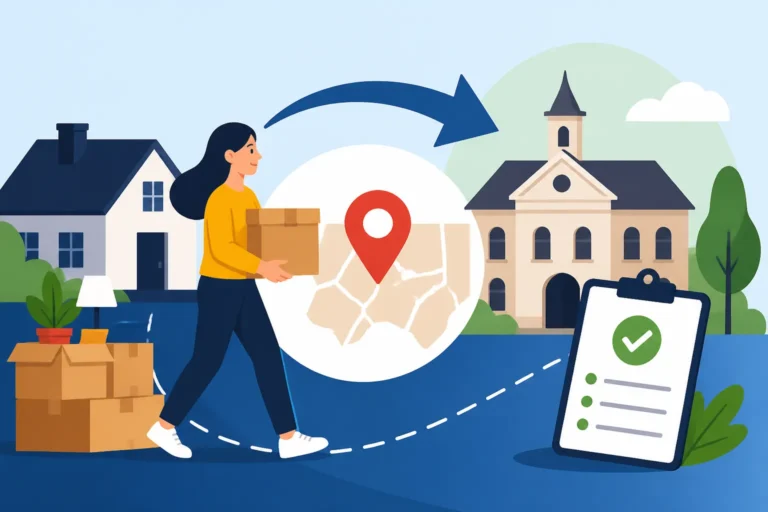
Once the Visa D is granted and your spouse arrives in Belgium, the race isn't over yet! There's a critical step that must be completed promptly: registration at your local commune (municipality).
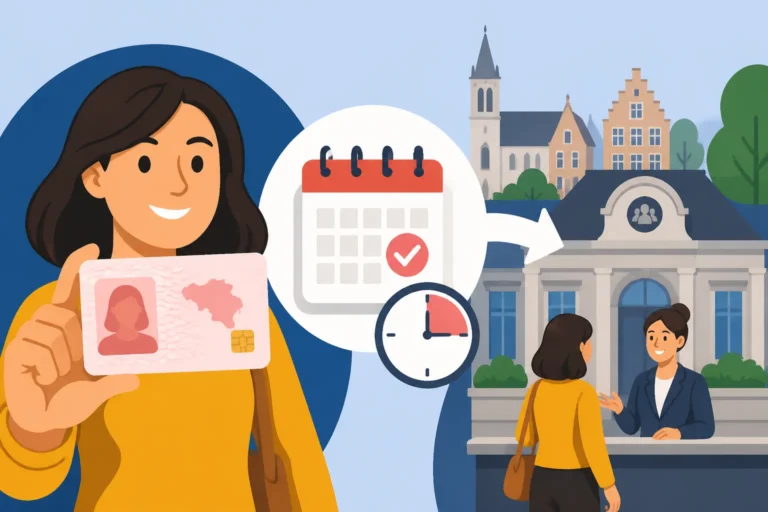
- The 8-Day Rule: Upon arrival, your spouse must register at your local commune within eight working days. This is absolutely crucial. Missing this deadline can lead to complications and fines.
- Documents for Commune Registration: They will need their passport with the Visa D, a copy of the family reunification approval, your Belgian eID, and your registered lease agreement. The commune will issue an "Annex 15" (Annexe 15/Bijlage 15), which serves as temporary proof of registration while their residence card is being processed. This Annex 15 confirms their legal temporary stay and right to reside with you.
- Police Check (Contrôle de Quartier): After registration, the local police will visit your declared address to verify that your spouse indeed lives there and that your housing is adequate. They will usually schedule this, but sometimes it can be a surprise visit. Ensure your name is on the doorbell and mailbox. If your spouse isn't home, they will leave a note for them to contact the local police station to arrange a new visit or provide proof of residence. This check is a routine part of the Residence Registration: Annexes, Communes, and the eID Card process.
- Issuance of Residence Card: Once the police check is successful and all administrative hurdles are cleared, your spouse will be invited to collect their Belgian residence card, typically an A card (for a temporary stay) initially, from the commune. This card will be valid for a specific period and will usually mention "family reunification."
Proving Your Financial Stability and Housing
These two elements are often the make-or-break factors in a family reunification application. The Belgian state wants assurances that you can fully support your family.
The Income Threshold: What's "Sufficient Resources"?
This is the golden question for many expats. "Sufficient resources" is not a vague concept; it's a specific amount defined by law. As of late 2025/early 2026, the general rule is that your net monthly income must be at least 120% of the integration income (leefloon/revenu d'intégration) for a person living alone. This amount is regularly indexed. To give you a rough idea, it usually hovers around €1,600-€1,800 net per month after taxes and social security contributions, but please check the precise, up-to-date figure with the Immigration Office or your commune when you apply, as it changes.
The calculation can be tricky:
- What counts: Your regular employment income, certain benefits (e.g., unemployment, sickness benefits if long-term and stable), and sometimes income from independent professional activity (if documented with tax returns).
- What often doesn't count (or is hard to prove): Sporadic income, undeclared work, or financial support from outside Belgium unless it's a very substantial, legally binding, and consistently transferred sum from an independent source.
- Deductions: Your net income is what they look at. This means after your social security and income tax deductions. Your payslips (fiches de paie/loonfiches) are your primary evidence.
It's not just about hitting the number, but proving its stability. They want to see that this income is regular and sufficient to meet the needs of your family members, meaning yourself and your spouse, without relying on social assistance. If your income is borderline, consider gathering additional evidence like savings accounts statements to bolster your case, though employment income is always preferred. Diving into Demonstrating 'Sufficient Resources' for Family Reunification will give you an even deeper understanding of the complexities here.
Adequate Housing: Beyond Just a Roof
Having a roof over your head isn't enough; it needs to be an adequate roof according to Belgian standards. This typically means:
- Size: The dwelling must be large enough for the number of occupants. While there aren't always strict square footage requirements, common sense applies. A studio might be considered adequate for one person, but not for a couple. A one-bedroom apartment is usually fine for two.
- Sanitation and Safety: The property must meet basic health and safety standards. This means proper ventilation, heating, running water, and sanitary facilities.
- Legal Tenancy: You must have a valid, registered lease agreement. The commune will verify this. Subletting is generally not accepted unless you have explicit permission from your landlord and the lease itself is registered.
- Police Verification: As mentioned, the local police will visit your address. They're not just checking if someone is physically there, but also that the living conditions are appropriate and that you genuinely reside there together. Ensure your name, and potentially your spouse's, is clearly visible on the mailbox and doorbell.
The goal is to prevent overcrowding and ensure that your family can live in dignity. This requirement is strictly enforced, and an inspection that deems your housing inadequate can be a reason for rejection. For a thorough review of what this means, refer to Adequate Housing Requirement for Bringing Family to Belgium.
The Waiting Game and Potential Pitfalls
You've submitted everything, paid the fees, and now… you wait. This can be the most trying part of the entire process.
Typical Processing Times and Communication
The Immigration Office in Belgium (DOFI) aims to process family reunification applications within a reasonable timeframe, but "reasonable" can be subjective. While official guidelines might suggest a decision within six months of receiving a complete application, it is not uncommon for it to take longer, sometimes up to nine months or more, especially for non-EU applications.
During this time, communication can be sporadic. You won't get daily updates. Often, the only way to check the status is through an online portal (if available for the embassy/consulate you applied through) or by contacting the embassy directly – though they usually only provide updates if there's significant progress or if more documents are needed. Bombarding them with calls often doesn't speed things up and can even be counterproductive. Patience, as frustrating as it sounds, is truly a virtue here. If you applied via an embassy that uses a service provider like VFS Global or TLS Contact, their tracking systems might offer some basic status updates.
It’s a good idea to keep copies of every single document you've submitted, along with proof of postage or submission, just in case something goes missing or they request clarification.
Common Reasons for Rejection and How to Appeal
Unfortunately, rejections do happen. Knowing the common pitfalls can help you avoid them:
- Insufficient Income: This is a very frequent reason. If your documented net income consistently falls below the official threshold, the application will likely be denied.
- Inadequate Housing: If the police inspection deems your accommodation unsuitable for two people, or if your lease is not properly registered or valid, it will be an issue.
- Lack of Legalization/Translation: Documents not properly authenticated (apostille/legalization) or not translated by a sworn translator will cause problems. This is where professional help from services like RushTranslate is crucial.
- Suspicion of Sham Marriage: While rare for genuine couples, if the authorities find inconsistencies in your story, suspect misrepresentation, or have doubts about the authenticity of your relationship, they can refuse the visa. This is why photos, communication logs, and travel history together can be surprisingly important.
- Criminal Record: A serious criminal record for either the sponsor or the beneficiary will almost certainly lead to rejection.
- Missing or Incomplete Documents: Even a single missing document can stall or reject an application. Double-check your checklist meticulously.
If your application is rejected, you will receive an official notification detailing the reasons. You usually have the right to appeal this decision before the Council for Alien Law Litigations (Conseil du Contentieux des Étrangers/Raad voor Vreemdelingenbetwistingen). This is a formal legal process, and it's highly advisable to seek legal counsel from an immigration lawyer in Belgium if you decide to appeal. An appeal can be complex and time-consuming, but if you believe the decision was unjust or based on an administrative error, it's an option to consider.
Life After Approval: Next Steps for Your Family
Congratulations! The visa is in hand, and your spouse has arrived. Now what? The process shifts from immigration to integration and settling into Belgian life.
Getting Your eID Card and Integrating
Once your spouse has successfully completed the commune registration and police check, they'll be called to collect their Belgian electronic identity card. Initially, this is typically an "A card," indicating a temporary residence permit. This card will be valid for a specific period (e.g., one year) and will need to be renewed. Keep track of the expiry date, because renewing your eID card is something you don't want to leave until the last minute. For details on how early you should apply for renewal, check Renewing Your eID: How Early Should You Apply Before Expiry?.
With the eID in hand, your spouse officially becomes a resident. This opens the door to:
- Mutuelle Registration: They must register with a Belgian health insurance fund (mutuelle/ziekenfonds). This is mandatory and ensures access to Belgium's excellent healthcare system, including reimbursements for medical costs.
- Finding a GP: Registering with a general practitioner (médecin généraliste/huisarts) is highly recommended. This doctor will become the central point for most healthcare needs.
- Language Courses: Belgium is trilingual (Dutch, French, German). Encouraging your spouse to take language courses, even if they work in English, is a fantastic way to aid integration and daily life. Many communes offer subsidized courses.
- Social Life: Connect with expat groups, local community centers, or hobby clubs to build a social network.
These steps are crucial for making Belgium feel like home and navigating daily life smoothly.
What the Residence Permit Allows
The A card granted through family reunification typically comes with important rights and permissions:
- Right to Work: For non-EU spouses joining a non-EU worker, the A card generally grants the right to work in Belgium without needing a separate work permit. This is a huge relief and a significant benefit, allowing your spouse to seek employment and contribute to your household income. However, it's always wise to confirm the exact wording and conditions on the residence permit itself or with the commune, as regulations can sometimes have nuances. If you’re curious about the specifics of employment for dependent spouses, refer to Can Dependent Spouses Work on a Family Reunification Visa?.
- Freedom of Movement in Schengen: With a valid Belgian residence card, your spouse can travel freely within the Schengen Area for up to 90 days in any 180-day period, just like any other Belgian resident.
- Pathway to Long-Term Residency: After a certain period (usually five continuous years of legal residence), your spouse may be eligible to apply for a B card (long-term resident permit) or even an L card (EU long-term resident status), which offer greater stability and fewer renewal requirements. This is a crucial step towards potentially making Belgium your permanent home.
The journey to family reunification in Belgium is undoubtedly challenging, but with careful preparation, patience, and attention to detail, it is entirely achievable. Stick with it, you've got this!
| Document Type | Sponsor (in Belgium) | Beneficiary (Abroad) | Notes |
|---|---|---|---|
| Personal & Status | Valid Belgian eID (A or B card) | Valid Passport, Birth Certificate | All foreign docs require legalization/apostille & sworn translation. |
| Financial Proof | Work Contract, Last 3-6 Payslips, Bank Statements | (None directly, relies on sponsor) | Must meet 120% of integration income threshold (net). |
| Housing Proof | Registered Lease Agreement, Proof of rent payments | (None directly, relies on sponsor) | Housing must be "adequate" for two people. |
| Health & Criminal | Proof of Mutuelle Affiliation | Police Clearance Certificate, Medical Certificate | Police check has limited validity; Medical exam by approved doctor. |
| Relationship Proof | (None directly, implied by marriage certificate) | Marriage Certificate | Must prove genuine and stable relationship (photos, communication, if requested). |
| Application Specifics | (Payment of administrative fee to Immigration Office) | Visa D Application Form, Visa Fee | Application starts abroad, then commune registration in Belgium. |
Disclaimer
The information provided in this guide is for general informational purposes only and does not constitute legal advice. Immigration laws and regulations in Belgium are complex and subject to change. It is always recommended to consult with the official Belgian Immigration Office, the Belgian embassy or consulate in your country, or a qualified immigration lawyer for personalized advice regarding your specific situation. We strive to keep this information up-to-date, but cannot guarantee its absolute accuracy at the time of your application.