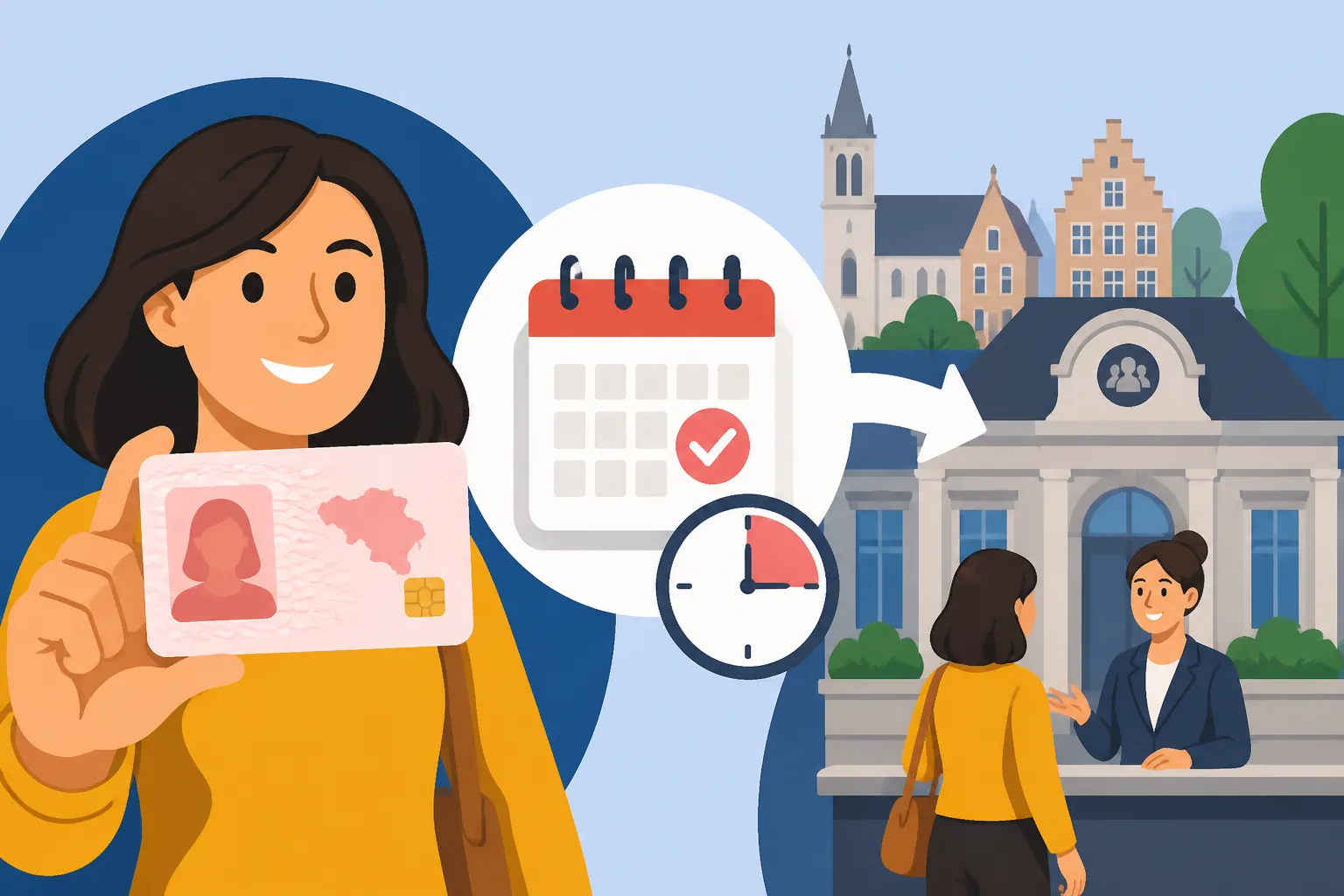
Renewing an A Card: Timelines and Commune Visits
Ah, the infamous A Card renewal – a process that strikes a familiar chord of dread, or at least a significant administrative headache, for many of us expats here in Belgium. You've navigated the initial hurdles of getting settled, perhaps secured your first job, and now, just when you thought you were finding your feet, that little white card in your wallet is staring you down with an expiry date. The anxiety is real: When do I start? What documents do I need? Will they ask for something impossible? Will I be left without a valid permit? Believe me, I’ve been there. This guide is designed to cut through the confusion and give you a realistic, step-by-step roadmap to successfully renewing your A Card, covering everything from crucial timelines to those all-important commune visits.
Understanding Your A Card and Why Renewal Matters
When you first arrive in Belgium and successfully register, the type of residence permit you receive largely depends on your specific situation – whether you're here for work, study, family reunification, or another reason. For many, especially those on an initial, temporary stay, the A Card is your first official recognition as a resident.
What Exactly is an A Card?
The "A Card," formally known as a "Certificate of inscription in the Aliens' Register" (Certificat d'inscription au registre des étrangers / Bewijs van inschrijving in het vreemdelingenregister), is essentially your temporary residence permit. It signifies that you have been granted authorization for a limited stay in Belgium for a specific purpose. Think of it as your golden ticket, albeit one with an expiration date.
For example, if you came to Belgium on a Single Permit (Gecombineerde Vergunning) Process for Workers or a student visa, your initial residence document will typically be an A Card. Its validity period usually matches the duration of your work permit or student enrollment, often for one year, sometimes two. Unlike the longer-term B, C, or L cards, the A Card is not a permanent residency document, which is why renewing it becomes a regular fixture for many expats. It's a testament to the ongoing nature of your purpose for being here. For instance, if you're working, it confirms your employer still needs you; if you're studying, it confirms your enrollment is still valid. Understanding The Belgian eID Card Types: A Card, B Card, F Card, and Others is crucial to grasp your current status and what your next steps might be.
The Importance of Timely Renewal
Let me tell you, overlooking your A Card renewal deadline is like forgetting your passport for an international flight – it’s a non-starter, and the consequences can range from inconvenient to downright dire. If your A Card expires and you haven't applied for renewal, you risk losing your legal right to reside in Belgium. This isn't just a bureaucratic formality; it has real-world implications that can unravel your life here.
Firstly, an expired A Card can lead to significant administrative fines, which can be hefty. More critically, you might lose your right to work. Imagine showing up to work one day only to find out your employer can no longer legally employ you because your permit has lapsed. That’s a nightmare scenario. Furthermore, having an invalid residence permit can complicate essential services like accessing healthcare. While you might have Healthcare in Belgium for Expats: Complete System Overview (2027) through a mutuelle like Partenamut or Helan, maintaining valid residency is often a prerequisite for continued coverage. Your ability to travel outside Belgium and re-enter can also be severely impacted, leaving you stranded or facing issues at border control. Banks might freeze your account or refuse certain transactions if your ID is no longer valid. In short, a timely renewal isn't just about avoiding trouble; it's about maintaining continuity in every aspect of your expat life.
The Renewal Timeline: When to Act and What to Expect
The thought of renewal might feel like a distant worry when you first get your A Card, but trust me, that expiry date creeps up faster than you think. Planning is your best friend here.
Key Deadlines and Early Application
General advice from veteran expats, myself included, is to kick off your renewal process at least three to four months before your A Card's expiry date. Why so early? Because Belgian bureaucracy, while structured, isn't known for its lightning speed. Processing times can vary wildly depending on your commune (local municipality) and the Immigration Office's current workload.
While the legal framework dictates that you should apply for renewal before your current card expires, there isn't always a strict, universally applied "start date." However, many communes will allow you to submit your application a few months in advance. For example, if your card expires in December, aiming to submit everything by September or October gives you a comfortable buffer. You don't want to be scrambling at the last minute, particularly if you're still waiting for a document from your employer or home country.
Trying to find a clear, official "start window" can be frustrating because it's not always explicitly stated by the authorities. However, based on my experience and that of countless others, the earlier, the better. Submitting early minimizes the risk of having an expired card while your application is still pending, which can lead to unnecessary stress and complications. It also gives you time to rectify any missing documents without pressure. Many expats also find it useful to check the website for their specific commune (e.g., Brussels, Antwerp, or Ghent) for any localised advice or online appointment booking systems.
The "Annexe 15" – Your Temporary Lifeline
If you've submitted your renewal application on time but your current A Card expires before your new one is ready, don't panic! The commune will issue you an "Annexe 15" (or "Bijlage 15" in Dutch). This is a crucial document that serves as a temporary residence permit. It legally confirms that your application for renewal is under review and that you are authorized to stay in Belgium while you wait.
The Annexe 15 typically grants you the right to reside in Belgium and often, crucially, the right to work. This means you can continue your employment without interruption. However, it's important to understand its limitations. While it proves your legal stay, it's not a full-fledged ID card. Most importantly, an Annexe 15 usually does not permit you to travel outside the Schengen Area. If you travel with just an Annexe 15, you risk being denied re-entry into Belgium or the Schengen zone, as it's not universally recognised as a travel document. Some people might find that certain administrative tasks, like opening a new bank account or formalizing specific contracts, can be more challenging with just an Annexe 15, though it should generally suffice for daily life within Belgium. For more detailed information on its uses and limitations, consult our guide on What is an Annex 15 (Annexe 15/Bijlage 15) and Can You Work With It?. Always double-check the specifics printed on your Annexe 15, as conditions can sometimes vary based on your individual situation or the specific commune.
Navigating Your Commune Visit for Renewal
The commune visit is often the most anxiety-inducing part of the renewal process. It's where you physically interact with the bureaucracy, present your documents, and (hopefully) get the ball rolling. Being prepared is key to a smooth experience.
Booking Your Appointment and Required Documents
First things first: book your appointment well in advance. In major cities like Brussels, Antwerp, or Ghent, appointment slots can fill up weeks, sometimes months, ahead of time. Don't wait until the last minute! Most communes now have online booking systems, which is a godsend compared to the old days of waiting in line for hours. However, in smaller communes, you might still need to call or visit in person to secure a slot.
Now, for the dreaded document list. This can vary slightly based on your specific situation (worker, student, family member) and even your commune, but here's a general checklist of what you'll almost certainly need:
- Your current A Card and valid passport/travel document: Original and copies.
- Proof of sufficient means: This is critical. For employees, recent payslips (usually the last 3-6 months) and your work contract. For students, proof of scholarship or blocked account statements. For self-employed individuals, recent tax assessments and proof of income. If you're supported by a spouse, their income documents.
- Proof of stable housing: Your registered address certificate (proof of domicile) from the commune, or a valid rental contract.
- Employer certificate (Attestation d'employeur / Werkgeversattest): A letter from your employer confirming your continued employment, position, and contract type (CDI/onbepaalde duur is usually preferred).
- Proof of health insurance/mutuelle registration: Evidence that you are still affiliated with a Belgian health insurance fund. This demonstrates your commitment to the Mutuelle and Ziekenfonds: Public Health Insurance Registration Guide.
- Recent passport-sized photos: Make sure they meet Belgian standards (light background, neutral expression, no glasses unless absolutely necessary). The photo booth at the commune itself often works best to ensure compliance.
- Any additional documents related to your specific purpose of stay: For students, a new enrollment certificate. For those with a Single Permit, your employer might need to provide an updated work permit document (though the Single Permit often bundles this).
- Translations: If any of your supporting documents (e.g., a marriage certificate from your home country, if applicable for dependent status) are not in French, Dutch, or German, you will need a sworn translation. Services like RushTranslate can be invaluable here, ensuring your documents are legally recognised and properly translated by certified professionals. Don't underestimate this step; an incorrect or uncertified translation can lead to delays or rejection.
It’s always a good idea to check your commune’s website or call them directly a few weeks before your appointment to get the most up-to-date and specific document list for your situation. Prepare both originals and photocopies of everything.
The Renewal Interview and Fingerprinting
When you attend your appointment, you'll meet with an immigration officer or a commune employee. The "interview" part might not be as formal as you imagine; it's often a straightforward check of your documents and a few questions to confirm your details and the continued purpose of your stay. They might ask:
- "Are you still working for the same company?"
- "Has your address changed?"
- "What is your current health insurance situation?"
- "Do you have any new dependents?"
Be honest, polite, and have all your documents neatly organised. They will likely take your fingerprints digitally, if they haven't already from your initial application, and capture a new photo if you haven't brought one or if the one you supplied isn't suitable. This biometric data is essential for your new eID card.
Sometimes, depending on your situation or if there are any discrepancies, they might ask more probing questions or request additional documentation. This is where patience comes in. Remember, these officials are just doing their job, following procedures. A calm and cooperative attitude goes a long way. After they have reviewed your application and documents, they will usually issue you an Annexe 15, if needed, and inform you of the next steps.
The Waiting Game and Post-Approval Steps
Ah, the waiting game – a quintessential part of expat life in Belgium. Once you've submitted your application and left the commune, all you can do is wait. And then, once approved, there are a few more steps before that shiny new A Card is truly yours.
Processing Times and Staying Informed
This is where the collective sigh of expat frustration often echoes across Belgium. Processing times for A Card renewals can be notoriously unpredictable. They can range from a few weeks in smaller, less busy communes to several months in larger cities or during peak administrative periods. For instance, while some Single Permit renewals might take around 4-6 weeks for the regional economic department to approve, the commune itself then needs to process the card production. Our guide on How Long Does It Take to Get Your Mutuelle Stickers (Vignettes)? might give you a sense of typical processing times for other administrative items, but residency permits are in a league of their own.
During this period, your Annexe 15 is your official proof of legal residence. You might hear stories of people checking their status online via MyMinfin (the federal public service finance portal) or by directly contacting the Immigration Office (Office des Étrangers / Dienst Vreemdelingenzaken – DOFI). However, often, the most reliable updates come directly from your commune. They will usually send you a letter or an SMS when your new card is ready for collection.
If it feels like an eternity, and you haven't heard anything after a couple of months (or longer, depending on what they initially told you), you can politely inquire with your commune's foreigners' department. Sometimes a gentle follow-up email or call can help, but avoid hounding them – it rarely speeds things up and can be counterproductive. Remember that the commune will be your primary point of contact for the physical card issuance, even if the Immigration Office makes the final decision on your residence status.
Collecting Your New A Card
Once your application is approved and your new A Card is ready, you'll receive notification from your commune. This letter or message will instruct you to come and collect your card. Often, you'll need to make another appointment, so don't just show up!
When you go to collect it, you'll typically be given two envelopes containing your PIN and PUK codes. These are vital. The PIN is what you'll use to activate your card and for digital identification services (like logging into government portals such as MyMinfin, or using Itsme). The PUK code is for reactivating your card if you forget your PIN. Keep these codes safe and separate from your card, ideally memorized or stored securely. You can learn more about how important this is for various administrative tasks, even for children, in our guide on Using an ISI+ Card for Children’s Healthcare Access, as digital IDs are pervasive here.
Once you have your new card and have activated it, your journey isn't quite over. Make sure to:
- Inform your employer: Provide them with a copy of your new card to update your personnel file.
- Update your bank: While your bank might not immediately flag an expired card if you had an Annexe 15, it's good practice to provide them with your new, valid ID.
- Update any other relevant services: This could include your mutuelle, utility providers, or any other institution where you've used your A Card as proof of identity or residence.
Common Challenges and Troubleshooting
Even with careful planning, navigating the A Card renewal process can throw a few curveballs. It’s normal to encounter unexpected hiccups, and knowing how to troubleshoot them can save you a lot of grief.
Missing Documents or Incomplete Applications
It's a classic scenario: you think you have everything, then the commune asks for "just one more document." This is incredibly common. Perhaps your employer's letter wasn't specific enough, or your bank statement didn't clearly show consistent income over the required period. Sometimes, they might even ask for a document that wasn't on the initial list you found online, simply because your situation has a nuance they need to clarify.
If this happens, the most important thing is to respond promptly and thoroughly. Gather the requested document as quickly as possible. If there's a specific reason you can't provide it (e.g., your bank statement doesn't conform to their template), communicate this clearly and offer an alternative form of proof. For example, if you're a freelancer, perhaps you can provide recent invoices or a letter from your accountant. The key is to be proactive and cooperative. An incomplete application will only lead to further delays, so it's always better to ensure everything is meticulously prepared the first time around.
Changes in Your Situation (Job, Address, Marital Status)
Life happens, and your circumstances in Belgium might change between the issuance of your last A Card and its renewal. This can include:
- Changing jobs: If you've switched employers, you'll need a new work contract and an employer certificate from your new company. This is a significant change, and you should ideally have informed the commune of a job change well before renewal, as it impacts your underlying permit. Our article on Changing Employers on a Single Permit: Do You Need a New Visa? delves into this in more detail.
- Moving house: If you've changed addresses, you should have already informed your commune. If you haven't, or if you've moved to a different commune, this will be a crucial point during renewal. Your official registration address must match your current residence. The commune might even initiate another The Police Check (Contrôle de Quartier) for Address Verification to confirm your domicile.
- Getting married or having children: These significant life events also require official updates at the commune. If you're renewing your A Card and these changes affect your dependents or family reunification status, you'll need to provide relevant marriage certificates or birth certificates, potentially with sworn translations.
It's always best to keep your commune informed of any significant changes in your personal or professional life as they occur, rather than waiting until renewal time. This proactive approach ensures your official records are accurate and can prevent issues during the renewal process. Many of these updates can be done by booking an "address change" or "status change" appointment at your commune.
Dealing with Rejections and Appeals
While nobody wants to imagine this scenario, sometimes an A Card renewal application can be rejected. This is incredibly stressful, but it's not necessarily the end of the road. Common reasons for rejection include:
- Insufficient funds: Not being able to demonstrate sufficient and stable income to support yourself (and any dependents).
- Lack of a valid purpose for stay: For instance, a student no longer enrolled, or a worker who lost their job and can't secure new employment.
- Public order concerns: Though rare, this can happen if an individual has a criminal record or is deemed a threat.
- Administrative errors: Sometimes, the rejection might be based on an error in your file or a misunderstanding.
If your application is rejected, you will receive a formal letter outlining the reasons for the decision. You typically have the right to appeal this decision. The appeal process usually involves filing a request with the Council for Alien Law Litigation (Conseil du Contentieux des Étrangers / Raad voor Vreemdelingenbetwistingen). This is a complex legal process, and it is highly recommended to seek professional legal advice from an immigration lawyer who specializes in Belgian immigration law. They can help you understand the grounds for rejection, prepare your appeal, and represent your interests. While it's an added cost and stress, it can be essential for challenging an unfavorable decision and safeguarding your right to stay in Belgium. It's a testament to the importance of accurate documentation and understanding your rights when dealing with the Immigration Office (DOFI).
Here's a handy table summarizing the typical timeline and key actions for your A Card renewal:
| Stage | Recommended Timing | Key Actions | Potential Pitfalls |
|---|---|---|---|
| Pre-Renewal Prep | 4-6 months before expiry | Check expiry date, review existing documents, research commune-specific requirements. | Forgetting the expiry date; assuming requirements haven't changed. |
| Appointment Booking | 3-4 months before expiry | Book online or via phone/in-person at your commune's foreigners' department. | Waiting too long, leading to no available slots before expiry. |
| Document Gathering | 2-3 months before expiry | Collect all required documents: passport, current A Card, payslips/income proof, employer letter, insurance, etc. | Missing documents; uncertified translations (if needed, remember RushTranslate); outdated photos. |
| Commune Visit | At scheduled appointment (before expiry) | Present documents, answer questions, undergo fingerprinting/photo, receive Annexe 15 (if applicable). | Incomplete application; not bringing originals and copies; confrontational attitude. |
| Waiting Period | 4 weeks to 6+ months (varies widely) | Keep Annexe 15 safe; monitor for notifications; avoid non-Schengen travel. | Impatience leading to excessive follow-ups; accidentally travelling outside Schengen. |
| Card Collection | Upon notification from commune | Schedule collection appointment, receive new A Card, PIN/PUK codes. Activate card. | Losing PIN/PUK codes; not activating the card; delaying collection. |
| Post-Collection | Immediately after receiving new card | Inform employer, bank, mutuelle, and any other relevant institutions of your new card details. | Forgetting to update critical contacts, leading to administrative issues down the line. |
Disclaimer
The information provided in this guide is for general informational purposes only and does not constitute legal advice. While we strive to keep the information accurate and up-to-date, immigration laws and procedures in Belgium can change frequently and may vary depending on individual circumstances and specific communes. Always consult with the official Belgian authorities (your local commune, the Immigration Office) or a qualified immigration lawyer for advice tailored to your specific situation.