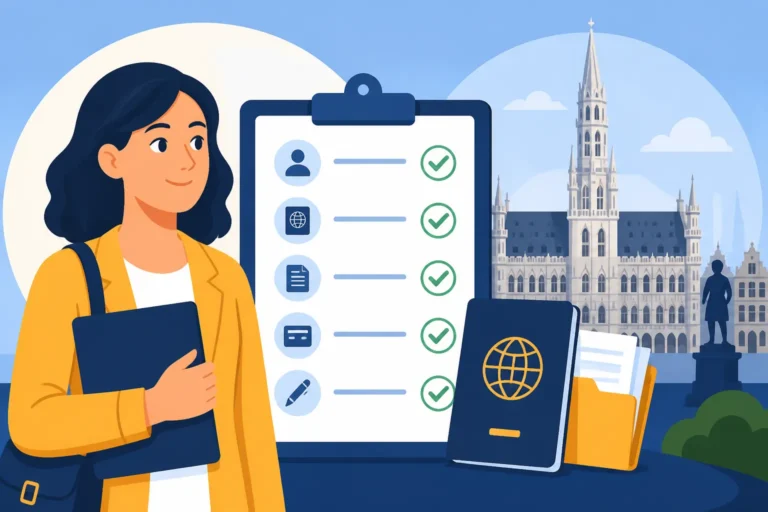
Switching from a Student Visa to an Employee Visa Without Leaving
Graduating from a Belgian university is an incredible milestone, but for many non-EU students, the celebration is cut short by a looming deadline: the expiration of your student residence card. The anxiety of potentially having to leave the country to reset your status is a burden I have seen far too many expats carry, but the good news is that Belgium provides clear legal pathways to transition directly into the workforce. This guide breaks down exactly how to navigate the switch from a student visa to a professional single permit without ever needing to pack your bags for a flight home.
The Bridge Between Degrees and Careers: The Search Year Visa
One of the most significant hurdles for fresh graduates is finding a job that meets the specific salary requirements for a work permit before their student ID expires. To solve this, the Belgian government introduced the "Orientation Year" or search year visa. This status allows you to stay in Belgium for up to 12 months following your graduation to hunt for a job or even start a company. It acts as a vital safety net, ensuring you aren't forced out the moment your thesis is defended.
Applying for the search year is done at your local commune, and it is essential to start this process at least 15 days before your current student residence card (A Card) expires. You will need to prove you have successfully completed your studies and that you possess sufficient financial means to support yourself during the search period. During this year, you have full access to the labor market, meaning you can take on any job—even those unrelated to your degree—while you search for a position that eventually qualifies you for a long-term single permit.
If you are currently in this limbo period, understanding the Search Year Visa (Orientation Year) for Graduating Students is your first step to long-term residency. It’s important to remember that once you find a qualifying employer, you will begin the transition to a more permanent work status. Many students overlook this transition phase, but having that extra year on the clock can be the difference between a panicked exit and a successful career launch in Brussels, Antwerp, or Ghent.
Navigating the Single Permit Application Process
Once you have secured a job offer from a Belgian employer, the real administrative heavy lifting begins. Unlike the student visa, which you largely managed yourself, the application for a work-and-residence status—known as the Single Permit—is a joint effort between you and your employer. In 2026, this process has been almost entirely digitized through The 'Working in Belgium' Portal: Mandatory Digital Filing in 2027, which has significantly streamlined the wait times that used to plague the system.
Your employer will initiate the request on the portal, but you will need to provide a mountain of documentation. This includes your valid passport, your current residence permit, and your diploma. Because Belgian authorities require documents to be in one of the national languages (French, Dutch, or German), you will likely need to use a service like RushTranslate to provide sworn translations of any documents issued in English or your native language. I’ve seen applications stalled for weeks simply because a translation wasn't "sworn" by a recognized Belgian court translator, so do not cut corners here.
The Single Permit is a "gecombineerde vergunning," meaning it handles both your right to work and your right to stay in the country. While the application is pending, you might receive an Annex 15 (Annexe 15/Bijlage 15) and Can You Work With It? document from your commune. This temporary paper allows you to remain in the country legally while the Immigration Office (DOFI) and the regional labor department finalize their decision. It is a stressful waiting game, often taking between 8 to 12 weeks, but as long as your application was submitted while your previous permit was valid, you are generally allowed to stay.
Financial Thresholds and Salary Requirements for 2026
The most critical factor in a successful switch is the salary. Belgium does not just grant work permits to anyone; the position must usually be for a "highly skilled worker," which comes with a specific annual gross salary threshold that is indexed every year. For 2026, these thresholds vary slightly depending on whether your workplace is in Flanders, Wallonia, or the Brussels-Capital Region. As a graduate of a Belgian higher education institution, you often benefit from lower thresholds if you are under the age of 30, making you more "affordable" for employers to sponsor.
It is vital to check the specific 2026 Salary Thresholds for Highly Skilled Workers in Brussels or the relevant regional guide before signing your contract. If your salary falls even one euro short of the gross annual requirement (which includes your 13th-month bonus and holiday pay), the regional labor department will reject the work permit portion of your application. I always advise students to be transparent with their HR departments about these numbers during the final interview stages, as many local companies are surprisingly unaware of the specific expat salary requirements.
| Region | Status | 2026 Estimated Threshold (Gross/Year) |
|---|---|---|
| Flanders | Highly Skilled (Under 30) | €38,500 |
| Flanders | Highly Skilled (Over 30) | €48,000 |
| Brussels | Highly Skilled | €47,500 |
| Wallonia | Highly Skilled | €47,200 |
| All Regions | EU Blue Card | €56,000 |
Essential Documentation: Health and Legal Clearances
Beyond the job contract and the diploma, there are two documents that catch many graduates off guard: the medical certificate and the criminal record background check. As a resident already living in Belgium, you might think your previous student filings are enough, but a fresh application for a work-related residence permit usually requires a specific medical form filled out by a doctor recognized by the Belgian embassy or a registered GP in Belgium. Preparing Medical Certificates for a Belgian Visa Application is a task you should handle the moment you get your job offer to avoid delays.
Furthermore, you must maintain continuous health insurance coverage during the transition. While you are moving from a student "mutuelle" to an employee social security system, there is often a gap of a few weeks where your status is "in-between." During this time, having a private policy from a provider like Cigna Global can provide the necessary proof of coverage that the Immigration Office demands. Without valid insurance, your application for a change of status can be flagged as incomplete.
You will also need to provide a "certificate of good conduct" (extraits de casier judiciaire). If you have lived in Belgium for more than six months, you can usually obtain this from your local commune. However, if you haven't been in the country long, you may need a background check from your home country, which—again—will require a sworn translation via RushTranslate. Navigating these Belgian Visas and Residence Permits: The Complete 2027 Guide requirements is all about staying ahead of the bureaucracy.
Updating Your Status at the Commune
Once the Single Permit is approved, you will receive an "Annex 46" via email or through the portal. This is your golden ticket. You must take this document to your local town hall (Maison Communale/Stadhuis). Even though you are not moving to a new city, the commune must process a "change of status" in the national register. This triggers the printing of your new EID card, which will likely be an A Card (temporary stay) or a B Card, depending on your specific contract and history.
During this appointment, the commune may ask for a new lease agreement or proof of address if you have moved since your student days. They will also collect a fee for the new card, usually around €25 to €50 depending on the commune. If your current card has already expired, this is also when they will issue you a new Annex 15 (Annexe 15/Bijlage 15) and Can You Work With It? to cover you until the physical card arrives by mail.
I cannot emphasize enough the importance of Registering at the Commune: The 8-Day Rule After Arrival or status change. While you are already a resident, failing to report your new work status can lead to administrative fines or complications when you eventually apply for permanent residency or citizenship. The commune clerks are the gatekeepers of your legal life in Belgium; treat these appointments with the utmost preparation and punctuality.
Social Security and Moving into the Workforce
The moment you transition to an employee visa, your relationship with the Belgian state changes. You are no longer a "consumer" of the education system but a contributor to the social security system. Your employer will begin deducting ONSS (Social Security) contributions from your gross pay. This is why it is essential to re-register with your health insurance provider (Mutuelle/Ziekenfonds). You should look into the Mutuelle and Ziekenfonds: Public Health Insurance Registration Guide to ensure your records are updated from "student" to "worker."
This change is actually beneficial for you. As a worker, your reimbursement rates for healthcare are often better, and you begin accruing rights toward a Belgian pension and unemployment benefits. If you were using a basic student insurance plan or a private expat policy like Cigna Global to satisfy visa requirements, now is the time to integrate fully into the Belgian public health system. You will receive new "vignettes" (stickers) to put on your medical documents, reflecting your new status as a taxpayer.
The administrative trail doesn't end at the office. You should also ensure you have a Global Medical Record (DMG/GMD): Why You Need It for Better Refunds registered with your Belgian GP. This small step reduces your out-of-pocket costs for doctor visits and ensures that all your medical history is centralized as you move from the carefree student life into the more structured world of a Belgian professional.
Disclaimer
This guide is intended for informational purposes only and does not constitute legal advice. Immigration laws in Belgium are subject to frequent changes and regional variations. Always consult with the official Immigration Office (DOFI) website or a qualified legal professional before making decisions regarding your residency status.