eAttest Explained: How Doctors Automatically Claim Your Refund
Finding a crumpled green slip of paper in your junk drawer six months after a doctor's visit is a rite of passage for every newcomer here. I once lost nearly two hundred euros in refunds because I simply forgot to mail those tiny attestations to my insurance provider before they expired. This guide explains eAttest, the digital system that finally automates your medical refunds in Belgium.
The End of the Paper Trail: What is eAttest
If you have spent any time navigating the Belgian administrative landscape, you know that "paperless" is a word used cautiously. For decades, the Belgian healthcare system relied on a physical document known as the "Attestation de Soins Donnés" (in French) or "Getuigschrift voor Verstrekte Hulp" (in Dutch). These were the small, color-coded slips of paper your doctor would hand you after a consultation. You then had to manually attach a yellow or white identification sticker and mail it to your insurance provider.
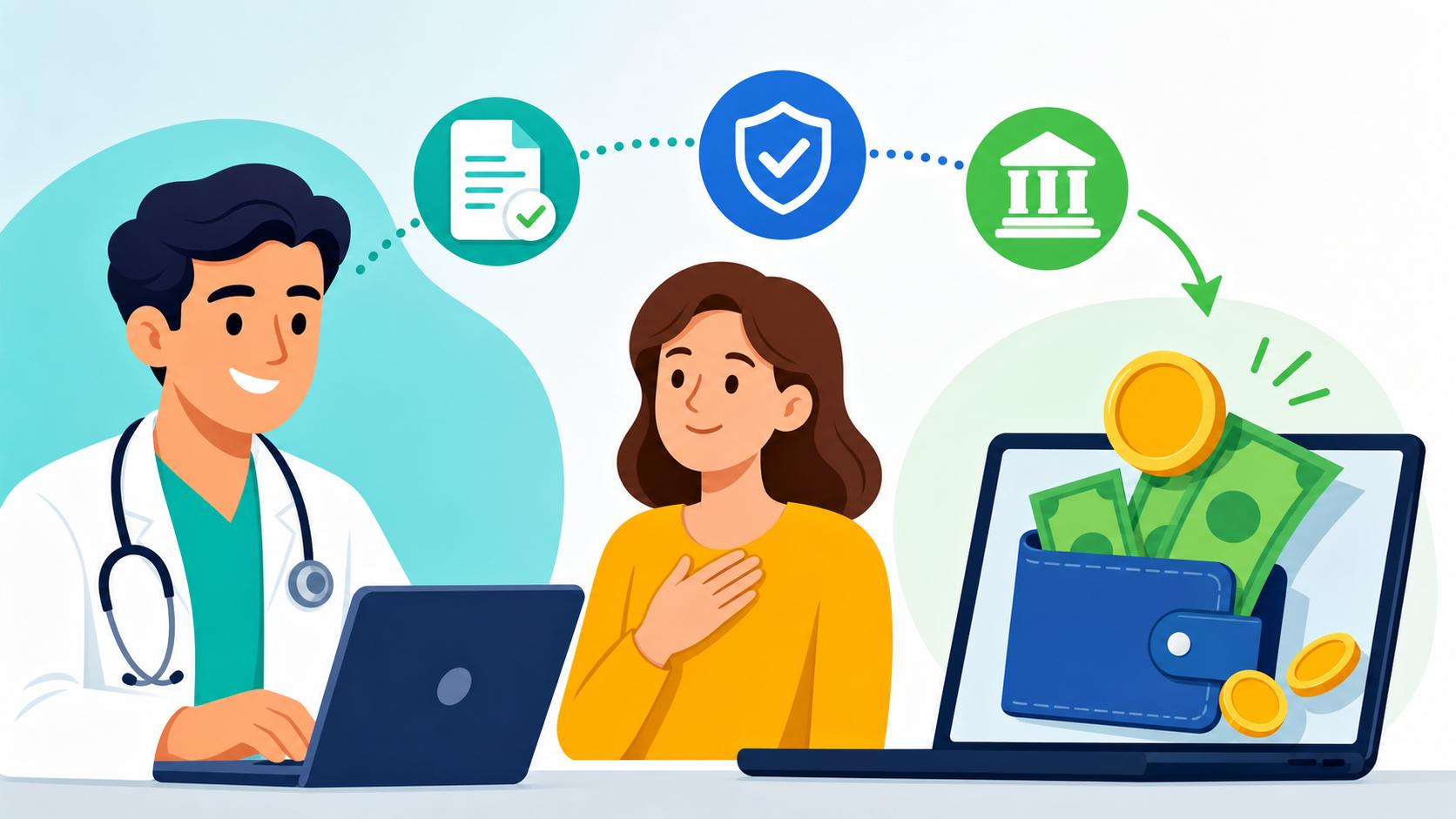
The eAttest system changes this entirely by allowing your doctor to send the claim directly to your insurance fund (the Mutuelle or Ziekenfonds) via a secure digital platform. This isn't just a convenience; it is a fundamental shift in how the Belgian social security system interacts with residents. Instead of you acting as the courier between the medical practice and the insurer, the software handles the heavy lifting.
When you walk into a practice today, you might not even realize eAttest is happening. The doctor performs the consultation, enters the codes into their computer, and hits a button. Within seconds, your insurance provider is notified that you have paid for a service and that a refund is due. This digital handshake ensures that the information is accurate, reducing the chances of administrative errors that often happen with handwritten paper slips.
For many of us who struggled with the manual system, this is a lifesaver. You no longer need to keep a stash of envelopes or find a red Bpost mailbox in the rain just to get your 20 euros back. However, it is important to note that while the system is becoming the standard, you still need to be properly enrolled in the Mutuelle and Ziekenfonds: Public Health Insurance Registration Guide to benefit from these automated transfers.
How the Digital Refund Process Works in Real-Time
To understand how eAttest functions during your actual appointment, you have to look at the interaction at the desk. When you first arrive at a clinic, you will be asked for your Belgian eID (Electronic Identity Card) or to scan a QR code via the Itsme app. This identifies you in the national registry and links your medical profile to your insurance records.
After the consultation, the doctor calculates the fee. In Belgium, many GPs are "conventioned," meaning they stick to state-agreed prices, but many are not. You can read more about this in our guide on Conventioned vs Non-Conventioned Doctors: How Out-of-Pocket Costs Differ. Regardless of the price, once you pay the doctor—usually via Bancontact or a banking app—the doctor initiates the eAttest transmission.
You will receive a small piece of paper called a "Justificatif" or "Bewijsstuk." This is not the attestation; it is simply a receipt for your records. It contains a summary of the transaction and a unique identification number for the digital claim. You do not need to send this receipt anywhere. You should, however, keep it until the money hits your bank account, just in case there is a technical glitch.
One of the most significant benefits of this system is the speed of reimbursement. Under the old manual method, it could take two to three weeks for a paper slip to be processed. With eAttest, the refund often appears in your bank account within two to five business days. This is particularly helpful for those of us managing a tight budget or those who require frequent specialist visits. If you are still waiting for older paper claims to be processed, you might want to check How to Submit Medical Receipts for Reimbursement in Belgium for tips on speeding up that legacy process.
The Role of the eID and the National Registry
The backbone of eAttest is your Belgian National Register number. This number is found on the back of your eID and is the key to all social security benefits in the country. When a doctor uses eAttest, they aren't just sending a bill; they are querying a central database to ensure you are currently "in order" with your social security contributions.
If there is an issue with your insurance status—perhaps you recently moved and your paperwork is still being processed at the commune—the eAttest system will flag it immediately. The doctor will then likely give you a traditional paper attestation instead. This is why it is so crucial to keep your address and contact details updated with your insurance provider.
For expats who are still waiting for their official residency cards, you might find that doctors cannot use eAttest for you yet. In these cases, you are stuck with the old-fashioned way of mailing slips. If you find the public system's speed or coverage limits frustrating, many of my fellow expats choose to supplement their Belgian plan with private options like Cigna Global, which can provide a higher level of service and faster access to English-speaking specialists without the same bureaucratic hurdles.
Beyond identity, the system also checks if you have a Global Medical Record. This is an electronic file managed by your primary doctor. Having one significantly increases your reimbursement rates. If you haven't set this up yet, I highly recommend reading about The Global Medical Record (DMG/GMD): Why You Need It for Better Refunds to ensure you aren't leaving money on the table every time you get sick.
Comparing the Old System vs. eAttest
It can be helpful to see exactly how these two methods differ so you know what to expect. While eAttest is the goal for all practices in Belgium, some older practitioners or certain specialists still haven't made the switch to the necessary software.
| Feature | Paper Attestation (Old) | eAttest (Digital) |
|---|---|---|
| Submission | Manual (Mail or Drop-box) | Automatic by the Doctor |
| Identification | Yellow/White Stickers (Vignettes) | eID or Itsme App |
| Proof of Visit | Green/Brown Multi-part Slip | Digital Receipt (Justificatif) |
| Processing Time | 10 – 21 Business Days | 2 – 5 Business Days |
| Risk of Loss | High (Lost mail or damaged paper) | Zero (Encrypted Transmission) |
| Bank Account | Linked to your Mutuelle profile | Linked to your Mutuelle profile |
As you can see, the digital route is superior in every way. However, you are still responsible for ensuring your bank account details are correctly registered with your Mutuelle. If the insurance fund has the wrong IBAN on file, the eAttest refund will fail, and the money will sit in a "pending" state until you fix the error.
While waiting for these refunds, I often find that managing my day-to-day health needs requires a bit of self-reliance. For things like high-quality vitamins or supplements that aren't typically covered by the Belgian public system, I frequently use iHerb. They ship reliably to Belgium, and it's often much cheaper than buying equivalent items at a local pharmacy (apotheek).
Tracking Your Refunds Online
One of the best things about the digital transition is the transparency it provides. You no longer have to wonder if your envelope reached the insurance office. You can track every eAttest claim through the official Belgian health portal.
By logging into the MyHealth.belgium.be Guide: Accessing Your Medical Records Online, you can see a history of every doctor's visit that was processed via eAttest. The portal shows the date of the visit, the amount paid, and the amount reimbursed. Most insurance providers also have their own apps (like the Partenamut or Helan apps) where you can see real-time notifications of incoming refunds.
If you are Choosing Your First GP (General Practitioner) in Belgium, don't be afraid to ask if they use eAttest. Most modern practices in cities like Brussels, Antwerp, and Ghent have fully adopted the system. It makes life easier for them, too, as it reduces their own administrative burden and the need to order books of paper attestations.
If you ever notice a discrepancy on the portal—for example, a visit shows up but the refund is significantly lower than expected—it is usually because of the "personal share" or "ticket modérateur." This is the portion of the fee that the patient must always pay out of pocket. You can learn more about how these calculations work in our guide on Understanding the 75% Reimbursement System for Medical Consultations.
When eAttest is Not Available
While eAttest is fantastic, it is not yet universal. There are several scenarios where you will still be handed a piece of paper and told to "send it to your mutuelle."
First, home visits often still rely on paper. While mobile technology exists, many doctors find it easier to carry a physical pad of attestations when they are visiting patients at their houses. Second, some specialists who work in large hospital settings might have different billing systems that aren't yet integrated with the national eAttest platform. Third, if the digital system is down (which happens occasionally during maintenance windows), the doctor must revert to paper.
In these situations, you will need to revert to the manual method. This involves taking one of those What Are Mutuelle Stickers Used For and Where to Put Them and sticking it in the designated box on the green slip. You then drop it into one of the white or blue mailboxes located outside your insurance provider's office.
For those of us who travel frequently or have complex medical needs, relying solely on the public system's digital speed can be risky. Having a private plan with Cigna Global can act as a secondary safety net. They often handle claims digitally through their own app, regardless of whether the Belgian doctor used eAttest or not, providing a consistent experience even when the local system defaults to paper.
Common Troubleshooting for Expats
Despite the system's efficiency, things can go wrong. The most common issue for foreigners is the "identity mismatch." This happens if the name on your eID doesn't perfectly match the name on your insurance file (a common problem with middle names or hyphenated last names). If the names don't match, the eAttest transmission will fail.
Another issue is "bank account lag." If you have recently changed banks and updated your details with your Mutuelle, it might take a few weeks for that change to propagate to the eAttest system. If a refund is sent to a closed account, it will eventually bounce back to the insurance provider, but it can take a month to sort out the paperwork.
If you don't see a refund within a week, your first step should be to check your insurance provider's online member area. Usually, there will be a message explaining why a payment is "pending." If there is no information there, your second step is to contact the doctor's office to confirm the transmission was successful. They can provide you with the digital transmission number from their software.
To keep your health in top shape while dealing with the stress of Belgian bureaucracy, I always suggest maintaining a good wellness routine. I personally get my magnesium and Vitamin D from iHerb because the grey Belgian winters can really take a toll on your energy levels. Having these staples delivered to my door means one less errand to run when I'm already busy chasing down administrative errors.
Privacy and Data Security
A common concern among expats is how much data is being shared through eAttest. The system is designed with strict GDPR compliance in mind. The doctor only sends the "nomenclature codes" (which identify the type of service, like a "standard consultation") and the financial data to the insurance provider. They do not send your full medical history or sensitive clinical notes through the eAttest channel.
The insurance provider needs this information to calculate your refund, but they do not have the right to use it to "profile" your health risks or deny coverage for pre-existing conditions. In Belgium, public health insurance is mandatory and non-discriminatory.
However, if you are concerned about your digital footprint or want an extra layer of privacy, you can always request a paper attestation instead. Doctors are legally required to provide one if the patient asks, though they might be surprised that you want to do more manual work! For most people, the convenience and speed of eAttest far outweigh the privacy concerns, especially since the data is encrypted using the same standards as Belgian banking.
If you are looking for more comprehensive protection, especially coverage that follows you if you move to another country, private providers like Cigna Global offer excellent digital tools and high security standards for your personal data. They are often more accustomed to dealing with the privacy expectations of international professionals.
Maximizing Your Health Budget
eAttest is just one part of the puzzle. To truly master the Belgian health system, you need to be proactive. This means staying on top of your Private Health Insurance in Belgium: When Do Expats Really Need It? and understanding when to use the public system versus when to go private.
Always check your "Itsme" app regularly. It is the easiest way to log into the various health portals and see if your eAttest claims are being processed correctly. Also, make sure you are ordering your recurring health supplies efficiently. Using a site like iHerb for your non-prescription needs can save you dozens of euros a month, which adds up when you consider the out-of-pocket "ticket modérateur" costs you pay at the doctor.
Belgium has one of the best healthcare systems in the world, and eAttest is a testament to the country's commitment to modernization. It might take a moment to get used to not receiving that green slip, but once you see the refunds appearing automatically in your bank account, you’ll never want to go back to the world of stamps and stickers.
Disclaimer
This article is intended for informational purposes only and does not constitute legal, financial, or professional medical advice. Healthcare regulations and digital systems in Belgium are subject to change. Always verify current procedures with your specific Mutuelle or Ziekenfonds and consult with a qualified medical professional for any health-related concerns. The mention of specific brands is based on common expat usage and does not imply a formal endorsement by the Belgian government.