Blood Tests in Belgium: Fasting Rules and Lab (Laboratoire) Visits
Navigating the Belgian medical system can feel like solving a puzzle where the instructions are written in two different languages and everyone assumes you already know the rules. I remember standing in a cold hallway in Ixelles at 7:00 AM, lightheaded from hunger, wondering if the glass of water I drank had just "ruined" my medical results. This guide will walk you through everything from getting that first paper referral to understanding why you received a bill in the mail three months later.
Understanding the Referral System for Blood Tests
In many countries, you might be used to booking a blood test directly through a private clinic or simply walking into a hospital. In Belgium, the process is deeply rooted in the referral system. Most blood tests begin in the office of a family doctor. If you are new here, your first priority should be Choosing Your First GP (General Practitioner) in Belgium to establish a home base for your medical history.
During a standard consultation, if your doctor suspects a deficiency or simply wants to run a routine check-up, they will generate a request form. This form is a dense document filled with checkboxes and medical codes that look like a foreign language—because, technically, they are. In the past, this was always a physical piece of paper, often called a "prescription" or "demande d'analyse." While Belgium is moving toward a more digital landscape, many doctors still hand over this physical paper. Guard it with your life; the lab cannot perform the tests without it.
If your doctor is part of a larger medical house (maison médicale) or a polyclinic, they might have a nurse on-site who can draw your blood immediately. However, it is much more common for the GP to give you the paper and tell you to visit a private laboratory or a hospital-based collection point. This is where Finding Medical Care in Belgium: GPs, Specialists, and Hospitals becomes a vital skill, as you will need to identify the most convenient laboratory (laboratoire/laboratorium) in your neighborhood.
The Role of the Global Medical Record
When you visit your GP for the referral, ensure you discuss your Global Medical Record (DMG in French, GMD in Dutch). This is a digital file that centralizes all your medical data. By Registering Your DMG/GMD with Your Doctor Safely, you ensure that all results from the lab are automatically sent back to your GP’s software.
Beyond the data sharing, the DMG is financially beneficial. It reduces your out-of-pocket costs for the GP visit and ensures that any subsequent specialist or lab work is handled with a higher rate of reimbursement from your insurance provider. Without a DMG, you might find yourself paying slightly more for the same blood work, which adds up if you are managing a chronic condition.
Fasting Rules: What À Jeun Really Means in Belgium
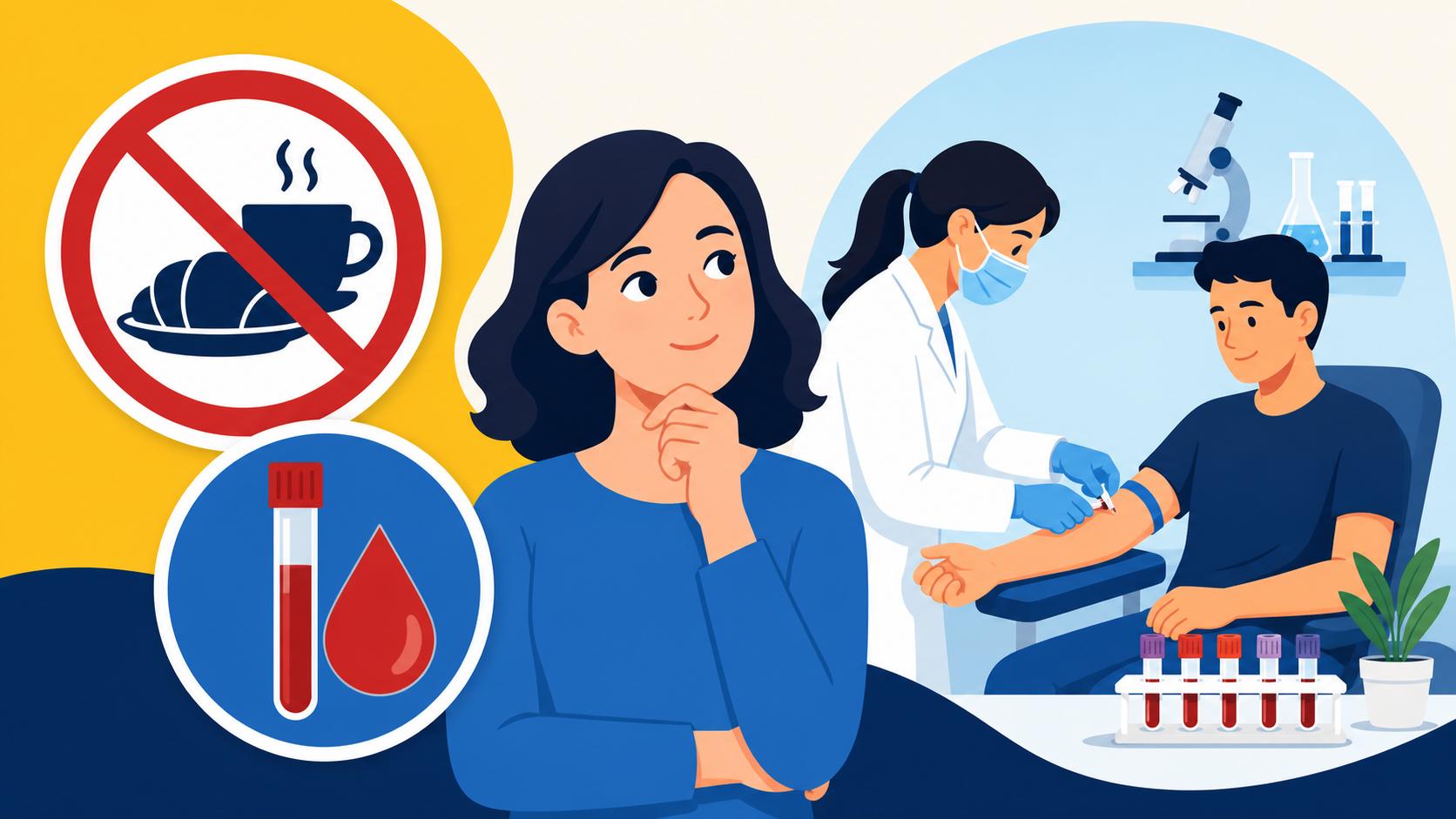
The most common phrase you will hear when a doctor hands you a blood test referral is "à jeun" (French) or "nuchter" (Dutch). This simply means "fasting." However, the cultural and medical interpretation of fasting can be stricter than what you might be used to back home. In Belgium, being "à jeun" generally means you have not consumed anything—except plain water—for at least 10 to 12 hours before the needle hits your arm.
The reason for this strictness is that Belgian labs often run comprehensive panels that include glucose and lipid profiles (cholesterol, triglycerides) as a default. Even a small "healthy" snack like an apple or a coffee with a splash of milk can cause a spike in your blood sugar or affect your fat levels, leading to an inaccurate diagnosis. I once had to repeat a full screening because I forgot that my morning "vitamin gummy" contained sugar—an expensive and literal pain.
What You Can and Cannot Consume
To ensure your Blood Tests in Belgium: Fasting Rules and Lab (Laboratoire) Visits go smoothly, follow these specific guidelines:
- Water: Plain, non-sparkling water is usually encouraged to stay hydrated, which makes your veins easier to find.
- Coffee and Tea: These are strictly forbidden, even if they are black. Caffeine can affect certain metabolic markers.
- Medication: Generally, you should take your daily essential medications unless your doctor specifically told you otherwise. If you are Managing Chronic Conditions: Diabetes and Asthma Care in Belgium, check with your GP whether you should delay your morning dose until after the blood draw.
- Smoking: Try to avoid smoking for at least two hours before the test, as nicotine can influence certain blood parameters.
Managing Hunger and Appointments
Because of the fasting requirement, most Belgian labs open very early, often at 7:00 AM or 7:30 AM. The "early bird" system is highly efficient here. Most expats prefer to visit the lab as soon as it opens to get the test over with and head straight to the nearest "boulangerie" for a well-deserved croissant.
If you have a busy work schedule, you can use digital tools to manage your time. Many labs now allow you to book a specific slot using the Rosa App: Booking Medical Consultations Online, which can significantly reduce the time you spend sitting in a waiting room while hungry and caffeinated-depleted.
Finding and Visiting a Lab
Once you have your paper referral and you’ve managed to stay fasted, you need to find a collection point. In Belgium, you have two main options: independent private laboratories and hospital-based labs.
Private laboratories like Synlab, LBS, or Eurofins are scattered throughout every commune in Brussels and every major city in Flanders and Wallonia. They often operate small "collection points" (centres de prélèvement) which are essentially small clinics dedicated solely to taking blood and urine samples. These are usually faster and more convenient than going to a large hospital.
Lab Visit Logistics
When you enter a lab, the first thing you will be asked for is your Belgian electronic ID (eID) card. This is non-negotiable. The administrative staff uses your eID to access your social security status and ensure the billing goes to the correct "mutuelle" (health insurance fund). If you are still waiting for your residence card, you must bring your Accessing Belgian Healthcare Without an eID: Temporary Certificates to prove your right to coverage.
After the administrative check, you will be given a ticket or asked to wait. The procedure itself is usually very quick. Belgian nurses and phlebotomists are generally highly skilled because they perform hundreds of these draws every week. If you are nervous or have "difficult veins," do not be afraid to tell them in English; most medical staff in major cities are functionally bilingual or trilingual.
Comparison of Lab Types in Belgium
| Feature | Private Lab (e.g., Synlab) | Hospital Lab (Urgences/Clinics) |
|---|---|---|
| Wait Times | Usually short (10–20 mins) | Can be long due to emergencies |
| Appointments | Often walk-in or via Rosa app | Usually required for non-emergencies |
| Results Speed | 24–48 hours for standard tests | Same day for urgent cases |
| Atmosphere | Quiet, professional, retail-like | Busy, clinical, part of a larger complex |
| Billing | Usually sent by post later | Often integrated into hospital bill |
Costs and Reimbursement for Blood Work
One of the most confusing aspects for expats is the financial side of Blood Tests in Belgium: Fasting Rules and Lab (Laboratoire) Visits. Unlike a GP visit where you might pay on the spot and get a refund later, labs often operate on a "tiers payant" (third-party payer) basis for the bulk of the cost, but with a twist.
The Belgian social security system covers a significant portion of medical analyses, provided they were ordered by a doctor. You will typically be responsible for a "ticket modérateur" (co-payment). However, you rarely pay this at the lab. Instead, the lab sends the main bill to your mutuelle and then sends you a separate invoice for your share several weeks or even months later.
The Lag in Billing
Do not be surprised if you receive a Paying a Lab Bill (Facture) Months After Your Blood Test long after you have forgotten about the appointment. This is standard Belgian bureaucracy. The invoice will arrive via post or through a digital platform like Doccle. It is vital to pay these promptly; Belgian "huissiers" (debt collectors) are very active and will add significant fees for even a small unpaid lab bill of €15.
If you are an expat who prefers more comprehensive coverage or if you are not yet fully integrated into the Belgian social security system, having a policy with Cigna Global can be a lifesaver. They can help cover the gaps that the public system might leave, especially if you require specialized tests that are not on the "conventioned" list of the Belgian state.
Maximizing Your Refunds
To ensure you aren't overpaying, you must be registered with a health fund. For those in Brussels, many people find success Registering for Public Health Insurance: Step-by-Step at Your Commune. Once registered, your lab costs are automatically calculated based on your insurance status. For most standard screenings, you will find that the Understanding the 75% Reimbursement System for Medical Consultations applies similarly to your blood work, meaning your final out-of-pocket cost is often surprisingly low—usually between €10 and €40 for a standard panel.
Accessing and Interpreting Your Results
In the "old days," you had to wait for your doctor to call you or pick up a physical copy of your results. Today, Belgium has an excellent digital infrastructure for health data. Almost as soon as the lab technician validates your results, they are uploaded to the federal health portal.
The MyHealth Portal
You can access everything by following the MyHealth.belgium.be Guide: Accessing Your Medical Records Online. You will need your eID and a card reader, or more conveniently, the "itsme" app. On this portal, you can see your blood glucose levels, cholesterol, vitamin counts, and more.
The results usually include a "reference range." If your numbers are outside this range, they will be highlighted in bold or red. While it is tempting to play "Dr. Google," remember that these results are sent simultaneously to your GP. It is always best to book a follow-up appointment to discuss what the numbers mean for your specific lifestyle and health goals.
Post-Test Supplements and Care
It is very common for expats in Belgium to find they are deficient in Vitamin D, especially during the long, grey winters. If your results show a deficiency, your doctor might prescribe a high-dose supplement. For general health maintenance and high-quality vitamins once you have your results, many expats turn to iHerb for a wider variety of brands and dosages than what is typically found in a local Belgian "pharmacie." This is particularly useful for those who prefer specific organic or vegan supplement options that aren't yet mainstream in the Belgian market.
Practical Tips for a Stress-Free Lab Visit
To make your experience as smooth as possible, keep these veteran tips in mind. First, always check the opening hours of your chosen collection point the day before. Some smaller points in rural areas or specific Brussels communes might close at midday or only be open on certain days of the week.
Second, if you are not a fan of needles, tell the nurse. The French phrase is "Je suis un peu nerveux/nerveuse avec les piqûres." They are used to this and will often let you lie down during the draw. Finally, bring a small snack and a juice box in your bag. The moment the needle is out, you can break your fast immediately while waiting for the elevator.
Language and Support
If you are worried about the language barrier, focus on labs in areas with high international populations. Consulting a Brussels Healthcare Guide for Expats: Clinics, Hospitals, and Care can help you find labs where English is commonly spoken. Places like the Delta Hospital or the clinics around the European Quarter (Schuman/Luxembourg) deal with expats every single day and will make the process feel much less like an administrative hurdle and more like a standard part of your health maintenance.
| Task | Timing | Essential Item |
|---|---|---|
| Referral | 1–2 weeks before | GP Appointment |
| Fasting | 10–12 hours before | No coffee/food |
| The Visit | Early morning | eID Card & Paper Referral |
| The Results | 24–48 hours later | MyHealth.belgium.be / itsme |
| The Bill | 1–3 months later | Bank app for payment |
Disclaimer
This guide is intended for informational purposes only and reflects the personal experiences of expats living in Belgium as of 2026. Medical regulations, fasting requirements, and insurance reimbursement rates can change. Always consult with a qualified medical professional or your specific health insurance provider for clinical advice and up-to-date administrative rules. We do not provide medical diagnoses or legal advice regarding healthcare coverage.