What to Do If You Lose Your Belgian eID Before a Doctor Visit
You are standing at the reception desk of a medical clinic in Ixelles, or perhaps a busy hospital in Antwerp, and you reach into your wallet only to find an empty slot where your Belgian eID should be. I remember the sheer, cold panic I felt when this happened to me right before a specialist appointment I had waited three months for; I felt like a ghost in the system. This guide solves the immediate administrative crisis of accessing Belgian healthcare when your physical ID is missing.
Immediate Steps: Reporting the Loss and Securing Your Identity
The moment you realize your Belgian eID is gone, the clock starts ticking. In Belgium, your eID is not just an identification document; it is your digital key to the social security system. Without it, the "e-health" connection that allows doctors to see your insurance status is severed. Your first move must be to call DOCSTOP. This is a 24/7 service that prevents the fraudulent use of your document. I cannot stress enough how vital this is, as your eID contains your digital signature, which could be used to sign contracts or access government portals in your name.
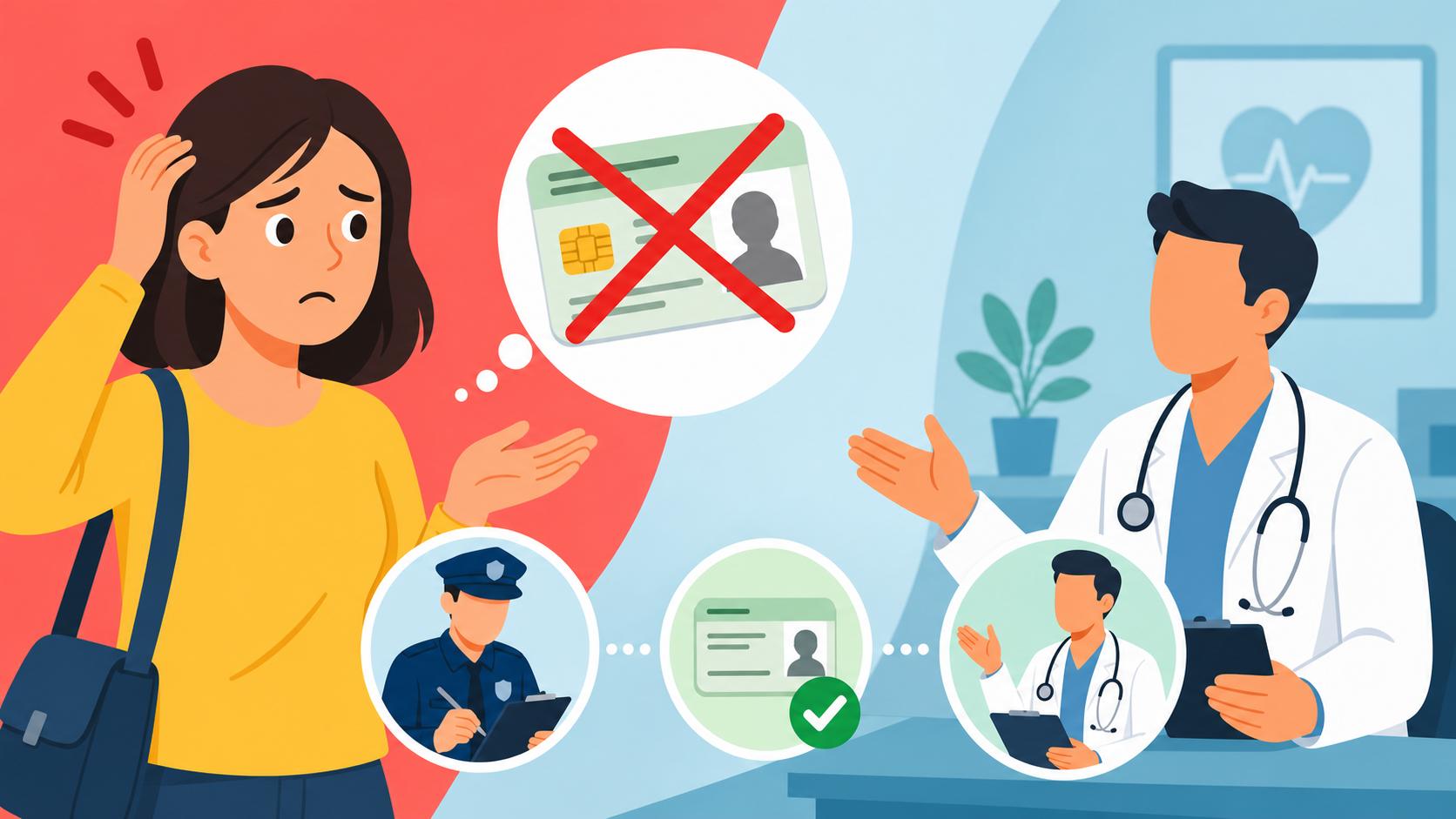
Once you have called DOCSTOP, you need to make it official with the local authorities. If you believe your card was stolen, you must visit the local police station to file a report. If you simply lost it, you should head directly to your local commune. This is a classic hurdle in Registering for Public Health Insurance: Step-by-Step at Your Commune, as the administration requires a valid ID for almost every interaction. The commune will issue you a temporary document, usually known as an Annex 12. This piece of paper is your lifeline. It contains your photo and, most importantly, your National Register Number (NISS/INSZ).
While waiting for your new card, which can take several weeks, you might find yourself needing to supplement your health routine. While the local pharmacy might be difficult to navigate without your digital prescriptions, I’ve often used iHerb to maintain my supply of vitamins and wellness products that don't require a Belgian doctor's digital signature. It’s a small way to keep your health on track while the bureaucracy grinds forward.
Navigating the Doctor Visit Without a Physical Card
When you arrive at your appointment, the receptionist will likely ask for your eID immediately to "read" it into their system. If you don't have it, don't walk away. You can still be treated. Explain that you have lost your card and provide them with your National Register Number. This 11-digit number (starting with your birthdate in YY.MM.DD format) is the "master key" to your medical files. Most doctors' software allows them to manually input this number to verify your coverage.
However, be prepared for a bit of friction. Some smaller practices or older Choosing Your First GP (General Practitioner) in Belgium may be less familiar with the manual override process. This is where your Annex 12 becomes essential. It serves as legal proof of your identity and your right to reside in Belgium. If the doctor cannot verify your insurance status digitally, they will treat you as a "private" patient. This means you will pay the full price of the consultation upfront, rather than just the co-pay.
In these scenarios, having a secondary layer of protection is a massive stress-reliever. While the public system is excellent, some expats prefer the direct billing and English-language support provided by Cigna Global, which can act as a safety net when the local administrative gears get stuck. They are often more flexible with documentation than the rigid local "Mutuelle" offices when you are in a transitional period.
The Role of Your Mutuelle and Reimbursements
The biggest headache of losing your eID before a medical visit is the breakdown of the "Tiers Payant" system. Normally, you only pay a small portion of the bill, and the doctor claims the rest directly from your insurance. Without your card, you will likely be handed a "Certificate of Care Provided" (the green or white paper receipt). You must handle this manually, which is a process we cover in How to Submit Medical Receipts for Reimbursement in Belgium.
To get your money back, you will need your "vignettes"—those little yellow or white stickers provided by your insurance fund. If you haven't lost those along with your wallet, you are in luck. Stick one on the doctor's receipt and drop it into the physical mailbox of your Mutuelle and Ziekenfonds: Public Health Insurance Registration Guide. If you lost your stickers too, you can usually print new ones from your insurance provider’s website or pick them up at a local branch office.
| Document Needed | Purpose at Doctor/Pharmacy | Where to Get It |
|---|---|---|
| Annex 12 | Temporary legal identification | Your local Commune |
| National Register Number | Accessing your e-health digital file | Found on Annex 12 or old payslips |
| Mutuelle Stickers | Manual reimbursement claims | Your insurance provider’s office |
| Police Report | Proving theft to avoid replacement fees | Local Police Station (Commissariat) |
Even without a card, your rights to healthcare remain. The Healthcare Budgeting: Copays, DMG/GMD, and Reimbursements system is designed to eventually pay you back, even if you have to jump through these manual hoops. Just ensure you keep every single scrap of paper the doctor gives you.
Managing Pharmacies and Prescriptions
The Belgian pharmacy system is almost entirely paperless now. When a doctor prescribes medication, they "upload" it to your ID card. This creates a catch-22: if you have no card, the pharmacist cannot "see" your prescription. If you are heading to a doctor and know you don't have your eID, you must explicitly ask the doctor for a "Proof of Electronic Prescription." This is a piece of paper with a barcode.
The pharmacist can scan this barcode to see what has been prescribed for you. Without this paper or your eID, they cannot give you prescription-only medication. For Emergency Medical Care in Belgium: 112, Hospitals, and Pharmacies, this can be a major roadblock. If you find yourself in this situation after-hours, you might have to visit a hospital pharmacy where they have more robust systems for looking up patients by their National Register Number.
During these times, you might realize that the public system, while robust, has its limits during an administrative crisis. This is why many international workers look into Private Health Insurance in Belgium: When Do Expats Really Need It? to cover the gaps. A provider like Cigna Global can sometimes offer more direct paths to specialists who are used to dealing with international patients and alternative forms of ID, bypassing some of the local bottlenecks.
Practical Tips for Future-Proofing Your Healthcare Access
After you've survived the stress of that first cardless doctor visit, it is time to set up backups. The first thing you should do once your new eID arrives is to download the "Itsme" app. This is the gold standard for digital ID in Belgium. Even if you lose your physical card, as long as you have your phone and your Itsme account is active, you can log into "MyHealth.belgium.be" to show doctors your data or prove your insurance status.
Another "old-school" but effective backup is to keep a few What Are Mutuelle Stickers Used For and Where to Put Them in your car's glove box or a separate travel pouch. These stickers contain your insurance code and your National Register Number, making it much easier for a receptionist to help you. I also recommend taking a clear photo of the front and back of your eID and saving it in a secure, encrypted folder on your phone. While not a legal ID, it provides all the numbers a doctor needs to find you in the system.
If you are currently searching for a new practitioner to help with this transition, our guide on Finding Medical Care in Belgium: GPs, Specialists, and Hospitals can help you find offices that are more "expat-friendly" and perhaps more patient with administrative issues. Always remember that the Belgian system is heavily decentralized; what one commune or clinic tells you might be slightly different elsewhere, so being armed with your Annex 12 and your National Register Number is your best defense against being turned away.
Handling the Financial Aftermath
Finally, be aware that losing your card might result in a "facture" (bill) arriving in your mailbox weeks later. This often happens in hospitals where they treat you first and figure out the insurance later. If you were unable to provide your ID at the time, the hospital might bill you at the full, non-insured rate. Don't panic. Once you have your new eID or a valid certificate from your mutuelle, you can contact the hospital's billing department to have the invoice corrected.
Living in Belgium as an expat is often a lesson in patience and paperwork. Whether you are ordering a quick health boost from iHerb or navigating a complex surgery, the system eventually works, provided you follow the "paper trail." Validating your frustration is part of the process—it is genuinely annoying to lose your eID, but it is a hurdle you can clear with the right temporary documents in hand.
Disclaimer
This guide is provided for informational purposes only and does not constitute legal or official administrative advice. Procedures at Belgian communes and medical facilities may change, and it is always recommended to contact your local town hall or insurance provider for the most current requirements regarding lost identification.