Paternity Leave (Congé de Paternité) Medical Administration Steps
Navigating the Belgian administrative labyrinth while sleep-deprived and holding a newborn is perhaps the ultimate "welcome to Belgium" test. I remember sitting in a dimly lit hallway with a stack of French forms, wondering if I’d accidentally signed away my pension just to get a few weeks off to change diapers. This guide breaks down the complex medical administration steps for paternity leave so you can focus on your baby instead of the bureaucracy.
The Foundations of Paternity Leave in Belgium
Paternity leave, often referred to in administrative circles as birth leave (congé de naissance/geboorteverlof), has seen significant updates in recent years. As of 2026, the system is designed to be inclusive, but it remains strictly regulated by both labor law and social security mandates. For most employees, you are entitled to 20 days of leave. This is not just a "nice to have" benefit; it is a statutory right, provided you meet the residency and employment criteria.
The first thing to understand is that this leave is split into two distinct financial phases. The first three days are paid directly by your employer at 100 percent of your salary. The remaining 17 days are paid by your health insurance fund, known as the Mutuelle or Ziekenfonds. This transition from employer-pay to state-pay is where most expats run into trouble, as it requires a proactive shift in medical administration.
If you are just starting your journey and haven't yet settled your insurance, you should consult the Mutuelle and Ziekenfonds: Public Health Insurance Registration Guide to ensure your foundation is solid. Without an active registration, the second phase of your paternity leave payment will simply not happen. Validation of your professional status is key here, as the Mutuelle needs to see that your social security contributions are up to date.
Step 1: The Initial Employer Notification and Medical Proof
Your journey begins long before the baby arrives, but the "medical" part of the administration kicks in the moment the birth occurs. Legally, you are expected to inform your employer of the intended leave, but the formalization requires a medical certificate of birth. This is not the same as the fancy birth certificate you get from the town hall later; it is a clinical document usually provided by the maternity ward.
The hospital or the attending midwife will provide a document called the "Attestation d'accouchement" or "Geboorteattest." You must provide a copy of this to your HR department immediately. This document serves as the legal trigger for your first three days of paid leave. I’ve seen many expats wait until they have the official commune documents, but your employer needs the medical proof first to justify your absence in their payroll system.
If you happen to be sick yourself during this period, the rules change. A standard medical note for illness cannot be "stacked" on top of paternity leave to extend it. For a deeper look at how clinical notes function in the workplace, see our guide on Sick Leave in Belgium: Medical Certificates and Informing Employers. Managing these two types of leave requires clear communication with your GP to ensure the dates do not overlap in a way that voids your insurance claims.
Step 2: Engaging the Mutuelle for the Statutory Period
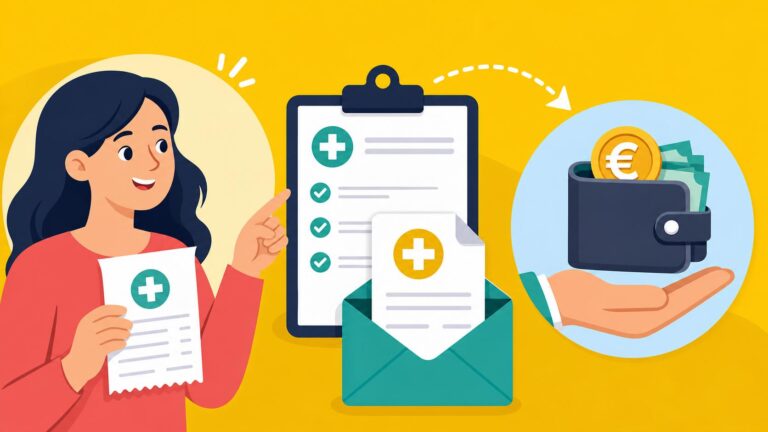
Once those first three days are up, your employer stops paying you. To receive your "indemnities" for the remaining 17 days, you must submit a formal request to your Mutuelle. This is the stage where paperwork often goes missing. You will need to fill out a specific "Request for Birth Leave" form, which is usually available on your Mutuelle’s web portal (like Partenamut, Helan, or CM).
Along with this form, the Mutuelle will require a copy of the birth certificate issued by the commune. Because you have 15 days to register the birth at the town hall, there is often a gap between when you start your leave and when you have all the documents. Pro-tip: Keep your Mutuelle "stickers" or vignettes handy. You will need to slap one on every single physical document you mail to them. If you are confused about these little blue stickers, refer to What Are Mutuelle Stickers Used For and Where to Put Them for a breakdown of their importance.
During this period, your pay will drop to 82 percent of your gross salary, and it is capped at a certain daily maximum. This can be a shock to the system if you are a high earner. Many expats choose to supplement their public coverage with private options like Cigna Global to ensure they have a wider safety net for family health complications that might arise during the transition. While the Mutuelle covers the basics of leave, private global plans can offer peace of mind for specialized pediatric care or private hospital rooms that the standard system might only partially reimburse.
Step 3: Registering with the Commune and Household Composition
The medical administration of paternity leave is inextricably linked to your legal residency status. Within 15 days of the birth, you must visit the "Maison Communale" or "Stadhuis" of the place where the baby was born. They will issue the official birth certificates. You should ask for several copies—you will need them for the Mutuelle, your employer, and potentially for your home country’s embassy.
The commune will also update your "Household Composition." This is a vital document in Belgium. The Mutuelle uses your household status to determine your reimbursement levels and to link the baby to your insurance as a dependent. If the administration at the commune is slow, it can delay your paternity payments. We have a detailed walkthrough on Registering for Public Health Insurance: Step-by-Step at Your Commune that explains how to navigate these local offices efficiently.
During this frantic time, physical and mental exhaustion is real. I found that keeping a stock of high-quality supplements from iHerb, such as Vitamin D and Magnesium, helped significantly with the "brain fog" that comes with Belgian paperwork and a crying infant. Taking care of your own health is a prerequisite for successfully managing the administration of your child's birth.
Paternity Leave: Employees vs. Self-Employed
The process for the self-employed (indépendants/zelfstandigen) is markedly different from that of salaried employees. While employees deal with their employer and Mutuelle, the self-employed must coordinate through their Social Insurance Fund (e.g., Xerius, Acerta, or Partena Professional).
| Feature | Salaried Employees | Self-Employed (Indépendants) |
|---|---|---|
| Duration | 20 Days (as of 2026) | 20 Days (Full or Half days) |
| First 3 Days | Paid 100% by Employer | No employer pay |
| Remaining Days | Paid 82% by Mutuelle (Capped) | Flat rate "Identity" payment |
| Application Via | Employer + Mutuelle | Social Insurance Fund |
| Deadline to Take | Within 4 months of birth | Within 4 months of birth |
| Birth Grant | Available via Groeipakket/Camille | Available via Social Fund |
For those running their own business, the medical proof is still the "Attestation d'accouchement," but the payment is a flat-rate daily allowance rather than a percentage of income. If you are transitioning into this status, check out Freelancing and Self-Employment in Belgium: Legal Setup and Taxes to understand how your social contributions affect your eligibility for these benefits.
Step 4: The Postpartum Medical Follow-up and Benefits
Medical administration doesn't end with the leave application. You must also ensure the newborn is correctly added to your Mutuelle as a dependent. This involves submitting the "Extrait d'acte de naissance" to the insurance fund. Once registered, the baby will receive their own set of yellow or blue stickers and eventually their own ISI+ card (if they don't have an eID yet).
This is also the time to coordinate with the preventative health organizations: Kind en Gezin (in Flanders) or ONE (in Wallonia/Brussels). These organizations provide free medical checkups, vaccinations, and home visits. While they are not part of your "leave" administration, their records are often required if you ever need to apply for specialized medical leave later. You can find more about these services in our guide on Postpartum Care: Kind en Gezin, ONE, and Home Nursing Visits.
Remember that the financial side of medical care in Belgium involves a lot of "pay first, get reimbursed later" scenarios. Ensure you understand the Healthcare Budgeting: Copays, DMG/GMD, and Reimbursements system so you aren't caught off guard by hospital bills for the birth that arrive three months after you've finished your paternity leave.
Navigating Complex Scenarios: When Things Go Wrong
What happens if the birth is premature, or if you are an expat whose partner is giving birth in a different country? Belgium allows for paternity leave even if the birth occurs abroad, provided you can produce a legalized and translated medical birth certificate. This usually requires a sworn translator to ensure the Mutuelle accepts the document.
If the administrative burden starts to affect your well-being, do not hesitate to seek help. The transition to parenthood in a foreign country is a major life stressor. Belgium has excellent resources for this, which we cover in Mental Health in Belgium: Therapy, Psychiatry, and Expat Support. Many Mutuelles even offer a small reimbursement for "parental support" or "postnatal help" (titres-services) to help you keep the house running while you navigate the paperwork.
Finally, keep an eye on the "Groeipakket" or "Allocations Familiales." This is the monthly child benefit. While it is a separate administration from your paternity leave, the medical data from the birth registration triggers the start of these payments. It is all one interconnected web of Belgian social security.
Essential Checklist for Paternity Leave Administration
- Notify Employer: Inform them of the birth immediately via email or phone.
- Obtain Hospital Certificate: Get the "Attestation d'accouchement" before leaving the hospital.
- Visit the Commune: Register the birth within 15 days and get multiple copies of the birth certificate.
- Submit to Mutuelle: Send the birth certificate and the official "Request for Birth Leave" form to your insurer.
- Check Household Composition: Ensure the baby appears on your household extract (available via MyMinfin or the commune).
- Update HR: Provide the official commune certificate to your HR department to finalize the leave dates.
- Apply for Birth Grant: Contact your child benefit fund (e.g., Parentia, Famiwal) to claim your one-time birth premium.
By staying organized and tackling each "medical" administrative step as it arises, you can ensure that your paternity leave is a time of bonding rather than a time of battling the Belgian state. It feels overwhelming at first, but once those first reimbursements hit your bank account, you'll know you've successfully conquered the system.
Disclaimer
This guide is provided for informational purposes only and does not constitute legal, financial, or professional medical advice. Belgian labor laws and social security regulations are subject to frequent changes and regional variations between Flanders, Wallonia, and Brussels. Always verify specific requirements with your employer's HR department, your Mutuelle, or a qualified legal professional to ensure compliance with the most current regulations in 2026.