Can I Open a Belgian Bank Account Before Receiving My eID?
Arriving in Belgium as a new resident often feels like running directly into a wall of classic bureaucracy. You need a Belgian bank account to pay your housing deposit, set up utility contracts, and receive your first salary payment, yet the bank tells you they cannot open an account without your Belgian electronic identity card (eID). Meanwhile, getting that plastic card requires weeks or even months of waiting on municipal appointments and police verification. This guide explains exactly how to break out of this administrative loop and secure a working account before your final residency card lands in your hands.
The Administrative Catch-22: Why Belgian Banks Ask for an eID
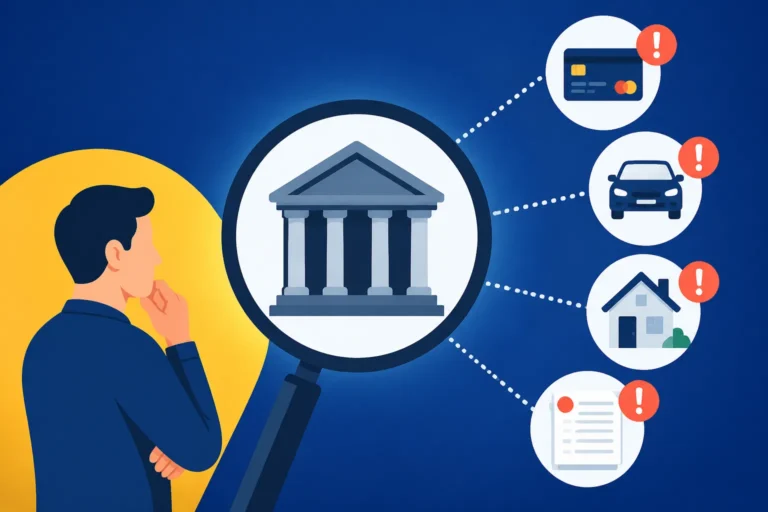
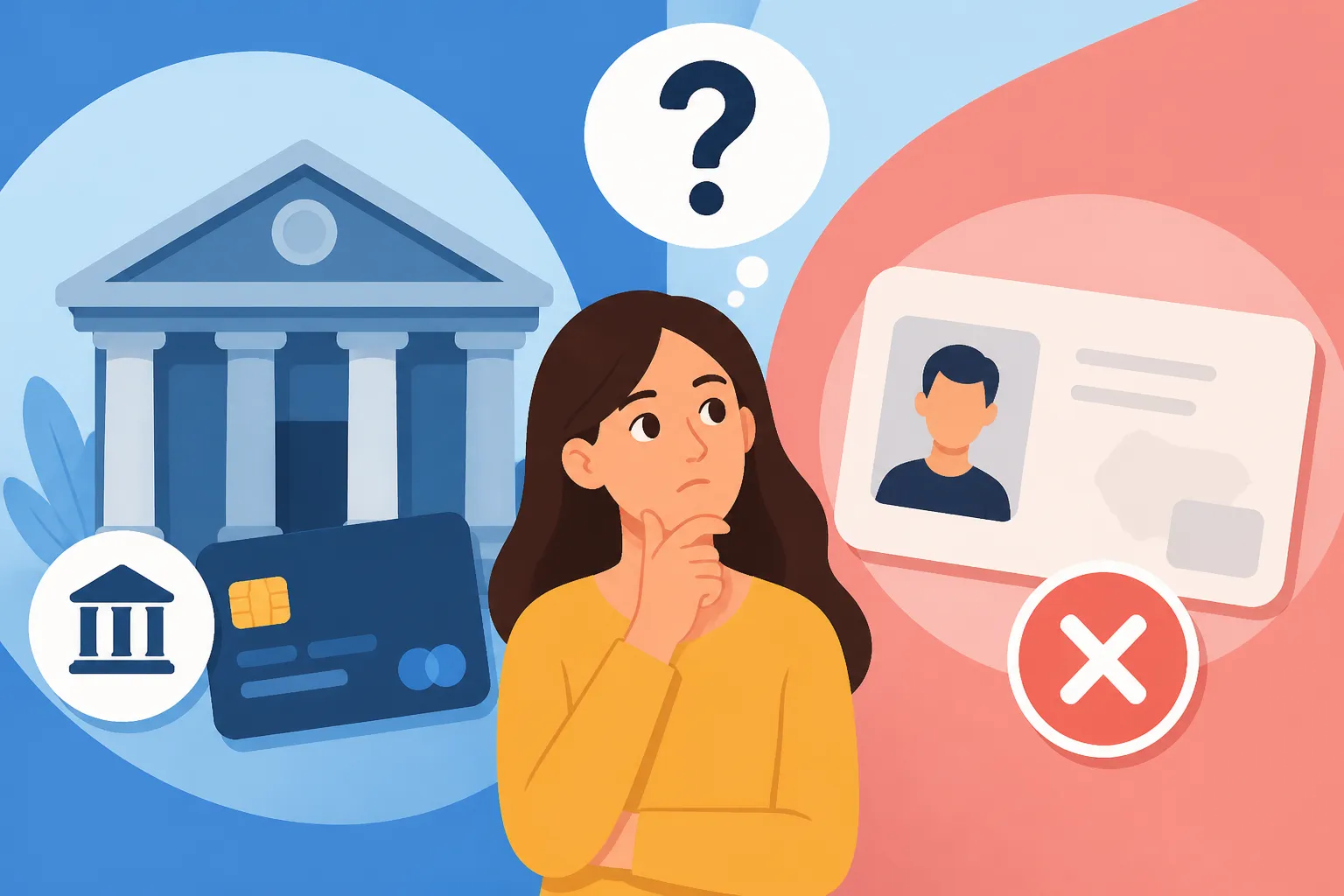
Every newcomer to the Kingdom quickly learns about the notorious administrative loop. You walk into a local branch in Brussels, Antwerp, or Ghent, hopeful and organized with your passport and employment contract, only to be turned away by a teller who strictly demands a Belgian national register number (Rijksregisternummer or Numéro National) linked to a physical eID. Understanding why banks behave this way helps you navigate around their refusal scripts.
Understanding National Identity Requirements and Compliance
Belgian financial institutions operate under strict anti-money laundering and Know Your Customer (KYC) regulations enforced by European and national authorities. The Belgian national register number serves as the central key for your tax identification, legal residence status, and financial reporting.
When a bank creates an account, its internal computer systems automatically prompt the agent to scan a Belgian eID card or query the National Register database directly. If you only present a foreign passport, the system throws up an error flag or requires manual compliance overrides that frontline staff are often reluctant or untrained to process. This creates the impression that an eID is legally mandatory, whereas in reality, it is simply the easiest path for the bank’s internal software.
The Waiting Period: From Commune Registration to eID Card
To understand why relying solely on the eID causes such severe delays, you have to look at the timeline of moving to Belgium. The law requires you to complete your initial registration shortly after moving, following the guidelines for Registering at the Commune: The 8-Day Rule After Arrival. Once you present your documents at the local municipal office (Maison Communale or Stadhuis), you enter a processing period.
Next comes the physical address verification step, where a local community officer visits your living space as part of The Police Check (Contrôle de Quartier) for Address Verification. Only after the officer verifies that your name is on the doorbell and you actually live there does the commune authorize the issuance of your identity card. Ordering, manufacturing, and receiving the physical card with its PIN and PUK codes can easily take four to eight weeks. Expecting someone to live without financial access during this multi-week stretch is unrealistic, which is why alternative legal pathways exist.
How to Open a Traditional Belgian Account Without an eID
Contrary to popular belief among front-desk bank clerks, you do not actually need the physical plastic card to open a traditional Belgian bank account. You simply need official documentation from the Belgian government that proves your legal stay and assigns you a national registration number.
Using Temporary Annexes as Proof of Residence
When you register at your local commune, you receive official paper documentation while your file is reviewed and processed. These paper certificates are known as “Annexes” (Annexe/Bijlage), and they carry significant legal weight.
If you are navigating the administrative process, it is essential to understand the differences detailed in Understanding Immigration Annexes: Annex 8, Annex 15, and Annex 49. For instance, an Annex 15 serves as a temporary proof of registration or extension of stay and clearly displays your assigned national register number. Major Belgian retail banks have internal compliance procedures that explicitly allow opening a resident bank account using a foreign passport combined with a valid, stamped Annex document.
When visiting a branch with an Annex, ask to speak with an advisor who specializes in foreign clients or expat accounts. Standard branch tellers may reflexively say no because their software interface prefers the eID card reader. An expat-focused advisor knows how to manually enter your assigned national number from the paper document and upload a scan of your passport.
Passport-Based Registration at Local Branches
Certain major institutions offer specialized non-resident or incoming-resident accounts that can be initiated using only your passport and proof of a future Belgian address, such as a signed lease agreement or work contract.
When applying with just a foreign passport, you will likely encounter additional background checks. The bank will ask for:
* A valid international passport (EU national ID cards work for EU citizens)
* Proof of tax residence in your previous country or current address
* A signed Belgian lease agreement or employer certificate
* A short declaration explaining why you require a Belgian account before your eID is issued
Knowing how to handle these prerequisites avoids the common pitfalls outlined in Opening a Belgian Bank Account: Documents Needed and Roadblocks. If the branch staff seems hesitant, politely remind them that you hold a valid national register number on your temporary paper registration and request that they submit your file to their internal legal compliance department for manual approval.
Operational Limits on Accounts Opened Without an eID
While an account opened via passport or Annex gives you a fully functional Belgian IBAN starting with “BE”, it comes with temporary limitations that you should plan for.
| Feature / Access | Account via Paper Annex / Passport | Fully Verified Account via eID |
|---|---|---|
| Local BE IBAN | Available immediately upon approval | Available immediately |
| Incoming Salary Deposits | Fully supported | Fully supported |
| Outgoing SEPA Transfers | Fully supported | Fully supported |
| Debit Card (Bancontact / Visa) | Issued with standard limits | Issued with standard limits |
| Itsme Digital ID Registration | Not available (Requires eID card) | Fully supported |
| Online Banking Limits | May have lower daily transfer caps | Standard or customizable caps |
| Credit Cards & Personal Loans | Usually blocked until full eID | Subject to standard credit checks |
The primary hurdle you will face during this temporary phase is the inability to set up Itsme Authentication: How to Set Up Belgium’s Vital Digital ID. Itsme is Belgium’s universal digital identity app used to log into tax portals, sign documents, and verify online banking transactions. Because Itsme strictly requires scanning a physical Belgian eID card or using a Belgian bank card connected to a verified national register profile, you will need to rely on traditional hardware card readers or SMS codes provided by your bank until your physical card arrives.
Digital and Neo-Banking Alternatives for Immediate Financial Setup
If traditional brick-and-mortar banks give you bureaucratic resistance, or if you need an operational account before you even step foot in the commune, digital financial services offer an immediate lifeline.
Multi-Currency Accounts for Relocation Needs
For your first few weeks, holding an account that provides a European IBAN is often enough to handle immediate payments. Services like Wise allow you to open a balance online before arriving in Belgium using your home country passport and address proof.
Using Wise gives you access to euro-denominated account details that allow you to receive funds, make local transfers, and pay rent deposits via standard European bank protocols. Because European law forbids “IBAN discrimination”—the illegal practice where companies reject non-Belgian European IBANs—you can legally use a European account set up through Wise to receive your salary or pay utility bills while you sort out your local paperwork. Once settled, you can easily handle SEPA Transfers: How Long Do Bank Transfers Take in Belgium? to move funds between your multi-currency setup and a domestic Belgian institution.
Wealth and Savings Setup During the Transition Period
Expats moving with savings often worry about leaving large amounts of cash sitting idle in non-interest-bearing temporary accounts while waiting for their local resident status to clear. Digital investment and savings platforms like Trade Republic provide a way to earn competitive interest on euro balances while your administrative setup is underway.
Opening an account with Trade Republic typically requires standard European identity verification via smartphone camera and passport. This allows you to park your emergency funds or relocation savings in an interest-bearing environment safely, without needing to wait for the local municipality to complete your home police check or issue your plastic card.
Managing Digital Assets While Changing Country Status
If you maintain a portion of your portfolio in digital assets or need to move capital across borders outside the traditional banking network, platforms like Binance offer global account access. However, moving your tax residence to Belgium requires updating your identity verification details with these platforms eventually.
Setting up or maintaining a profile on Binance during a move allows you to manage global liquid assets without relying on a local Belgian banking partner during your first few weeks. Once your local eID and tax status are solidified, you can update your profile address to reflect your Belgian residence, keeping your tax reporting clean and compliant.
Managing Direct Debits and Local Payments Before Your eID Arrives
Once you have established either a temporary traditional account or an alternative European account, you must integrate it into the Belgian payment landscape. Belgium heavily relies on localized payment systems that require a bit of setup.
Setting Up Utilities and Rent Without an eID
Landlords and utility companies (gas, electricity, water, internet) will ask for a bank account to set up automatic payments. Once you obtain your BE IBAN through an Annex-approved bank account or a valid European IBAN, you can execute standard agreements for How to Set Up Direct Debits (Domiciliation) for Utility Bills.
If a utility supplier insists on a domestic Belgian IBAN and rejects a foreign European account, gently point out that European regulations prohibit IBAN discrimination. However, to save time and avoid headaches during your first week, presenting a BE IBAN issued by a local branch using your Annex 15 is always the path of least resistance.
Local Payment Habits: Bancontact and Mobile Transfers
Belgium is a virtually cashless society, but it relies on its own national payment scheme rather than purely on global credit networks. When shopping at local markets, paying at bakeries, or settling split bills with colleagues, you will constantly encounter Bancontact and Payconiq: The Backbone of Belgian Payments.
When you open a traditional bank account using your foreign passport and paper Annex, the bank will issue you a debit card equipped with Bancontact functionality. This card allows you to make payments everywhere in the country immediately.
However, linking your account to the Payconiq mobile application to scan QR codes with your phone might require additional identity verification steps if your bank app requires Itsme for high-security activation. Until your eID arrives, stick to using the physical debit card and its PIN for daily transactions.
Step-by-Step Action Plan for Your First 30 Days
To streamline your arrival and avoid getting stuck without money, follow this structured plan to get your financial accounts running smoothly.
Step 1: Pre-Arrival Financial Prep
- Open a multi-currency account using Wise before departing your home country so you have a working Euro IBAN on day one.
- Move sufficient funds to cover your initial Airbnb, hotel, and immediate living expenses.
- Prepare printed physical copies of your employment contract, passport, visa (if applicable), and rental agreement.
Step 2: Immediate Post-Arrival Administration
- Visit your commune within your initial arrival window to launch your residence process.
- Obtain your paper registration receipt (such as an Annex 15 or Annex 8) featuring your assigned national register number.
- Double-check that your full name is clearly visible on your home apartment mailbox and doorbell to ensure a smooth police check.
Step 3: Opening the Local Belgian Bank Account
- Book an in-person appointment at a traditional bank branch, preferably one located in expat-heavy quarters (such as European Quarter in Brussels or city centers in Antwerp and Ghent).
- Present your passport, printed rental contract, and paper Annex showing your national register number.
- Explicitly request a standard current account with a Bancontact debit card, asking the agent to process the file using manual registration numbers.
Step 4: Post-eID Activation and Account Upgrade
- Once your police check clears and you collect your physical eID card from the commune, log into your bank app or visit your branch.
- Scan your physical eID card using a USB card reader or branch terminal to fully update your profile.
- Download and activate Itsme using your updated bank profile or eID card reader, unlocking full access to Belgian digital services, tax portals, and simplified online transactions.
By tackling the process in these distinct steps, you avoid the trap of waiting passively for bureaucracy to run its course. You can handle all your immediate living costs, satisfy your landlord, receive your salary, and enjoy your new Belgian life from the moment you unpack your bags.
Disclaimer
This article is for general informational purposes only and does not constitute professional advice. Laws, prices and regulations vary by location and change over time. Consult a qualified professional for guidance on your specific situation.