Enrolling Kids in Local Belgian Schools: Dutch vs French Systems
Moving your family to Belgium is a whirlwind of finding a home and navigating paperwork, but nothing quite matches the stress of choosing a school for your children. I remember sitting at my kitchen table in Brussels, surrounded by printed maps and three different browser tabs, wondering if my kids would be better off in a Dutch or French-speaking environment. This guide deciphers the complexities of the two main educational systems, explains the registration madness, and helps you make a choice that fits your child’s future.
Understanding the Linguistic Divide in Belgian Education
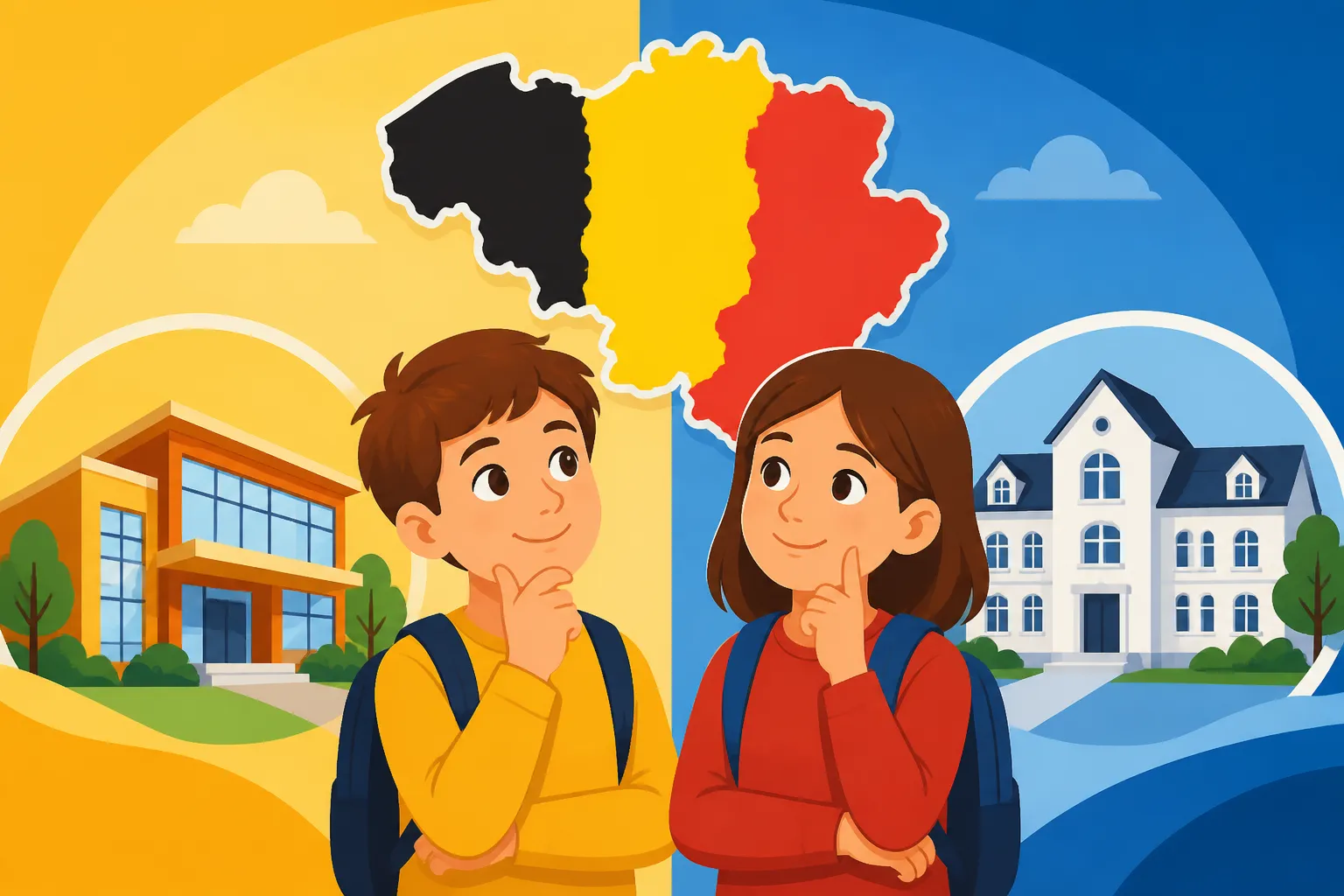
In Belgium, education is not managed by the federal government but by the three linguistic "Communities": the Flemish Community (Dutch-speaking), the French Community, and the much smaller German-speaking Community. This means that if you live in Flanders, your children will almost certainly attend a Dutch-speaking school. In Wallonia, they will attend a French-speaking school. However, if you live in Brussels, you have the unique—and often overwhelming—opportunity to choose between the two.
The Dutch-speaking system, known as Vlaams Onderwijs, is often praised for its rigorous academic standards and its focus on multilingualism. Flemish students typically start learning French at age 10 or 11, and English follows shortly after. On the other hand, the French-speaking system, Enseignement en Fédération Wallonie-Bruxelles, is often seen as having a slightly more relaxed, holistic approach to early childhood education, though it remains academically demanding in the later years.
When you are searching for a home via HousingAnywhere, it is vital to consider which side of the linguistic border you are on. Living just a few kilometers across the "language frontier" can fundamentally change the schools available to you. For instance, if you settle in a commune like Tervuren or Hoeilaart, you are in Flanders, and your local schools will be Dutch-speaking, even if you are just a ten-minute drive from the French-speaking suburbs of Brussels.
The Enrollment Process: Deadlines and Bureaucracy
Enrolling your child in a Belgian school is not as simple as walking into the local building and signing a form. It is a highly regulated, often digital process with strict windows of time. In Flanders and for Dutch-speaking schools in Brussels, you will use a system called Meld je aan. You list your preferred schools in order, and an algorithm assigns places based on proximity and whether siblings already attend the school.
In the French-speaking system, the process is slightly different and often involves a centralized "Inscription" period, usually occurring in the first few months of the calendar year for the following September. If you miss these windows, you may find yourself on a long waiting list, which is a common source of "Expat Burnout."
Before you can even apply, you must ensure your administrative ducks are in a row. You cannot enroll a child without a national register number, which you receive after Registering at the Commune: The 8-Day Rule After Arrival. Most schools will also want to see that your residency is being processed, which often involves The Police Check (Contrôle de Quartier) for Address Verification to confirm you actually live where you say you do.
| Feature | Dutch-Speaking System (Flanders/Brussels) | French-Speaking System (Wallonia/Brussels) |
|---|---|---|
| Start Age | 2.5 years (optional but common) | 2.5 years (optional but common) |
| Compulsory Education | 5 to 18 years old | 5 to 18 years old |
| Primary Focus | Rigorous structure, early multilingualism | Social integration, creative expression |
| Registration Portal | Meld je aan (digital) | CoPi / Inscription (digital/paper) |
| Secondary Tracks | ASO, TSO, KSO, BSO | General, Technical, Artistic, Vocational |
Curriculum and Daily Life: What to Expect
One of the biggest shocks for new expats is the "2.5-year-old" start. In Belgium, children can start Maternelle or Kleuterschool as soon as they reach two and a half years of age. While not compulsory until age five, almost every child in Belgium starts at this age. It is essentially free "pre-school" that focuses on socialization, potty training, and basic motor skills. If you are transitioning from the Kind en Gezin Registration Process for New Expat Parents, this is the natural next step after the crèche.
In the Dutch system, the day usually begins around 8:30 AM and ends at 3:30 PM. Wednesdays are a unique Belgian quirk: schools close at noon. This requires parents to find childcare for Wednesday afternoons, which is where Finding Extracurricular Activities (Académies) for Expat Children becomes essential. The French system follows a similar schedule, though some schools are experimenting with different "rhythms" that might extend the day but provide longer breaks.
Lunch is another cultural hurdle. Most Belgian children bring a tartine (a sandwich) in a lunchbox. While some schools offer "warm meals" for a fee, the cold sandwich culture is dominant. To make your life easier during the first few weeks, I highly recommend ordering high-quality lunchboxes and school gear from Amazon Belgium to avoid the last-minute rush at the local supermarkets. You will also want to ensure you have a local SIM or an eSim from Airalo to stay in the loop with the various WhatsApp groups and school apps like Hoplr or Klasbord that teachers use to communicate.
Supporting Non-Native Speakers: OKAN and DASPA
If your child does not speak Dutch or French, don't panic. The Belgian system is actually very well-equipped for this. In the Dutch system, there is a program called OKAN (Onthaalonderwijs voor Anderstalige Nieuwkomers). These are specialized "reception classes" where children spend a year focusing almost entirely on Dutch immersion before transitioning into the mainstream curriculum.
The French system offers a similar program called DASPA (Dispositif d'Accueil et de Scolarisation des Elèves Primo-Arrivants). These programs are a godsend for expat families. I’ve seen children go from zero French to being completely fluent and making local friends within six months. The teachers in these programs are incredibly patient and used to the "Expat Trauma" of moving to a new country.
When choosing a school, ask if they have specific language support. Some schools in areas like Ixelles or Waterloo are very accustomed to international students and have robust systems in place. If you are Commuting from Waterloo or Tervuren to Brussels for Families, you might find that schools in these "green" outskirts have more space and specialized support compared to the crowded city-center schools.
Healthcare and School Requirements
Belgium takes school health very seriously. Once your child is enrolled, they will be subject to mandatory School Medical Exams in Belgium: Requirements and Records. These are not performed by your GP but by specialized centers (CLB in Flanders or PSE in the French system). They check height, weight, hearing, vision, and ensure that all vaccinations are up to date.
Speaking of vaccinations, you must be aware of the Vaccinating Babies in Belgium: The Compulsory Polio Vaccine Law. This is the only legally required vaccine in Belgium, and schools will ask for proof of this. While other vaccines like Measles and Mumps are highly recommended and tracked via Family Health in Belgium: Pregnancy, Birth, and Pediatric Care, the Polio certificate is the one that can actually prevent enrollment if missing.
If your child has specific needs or chronic conditions, it is best to discuss this early with the school director. Finding a local doctor to help with these certificates is a priority; for example, knowing How to Find an English-Speaking Pediatrician in Waterloo can be a lifesaver if you are living in the southern outskirts and need medical forms filled out in a language you fully understand.
Costs and Financial Support
Public education in Belgium is free, but it is not "cost-free." You will be expected to pay for school trips, hot meals (if opted for), and certain supplies. Schools are legally prohibited from charging for essential curriculum materials, but the "voluntary" contributions for the school fund are common.
To help offset these costs, every child residing in Belgium is entitled to the "Child Benefit" system. In Flanders, this is the Groeipakket, and in Brussels/Wallonia, it is managed by agencies like Famifeed. Understanding the Child Benefit (Groeipakket / Allocations Familiales) Payouts is crucial, as this money is intended to help with school costs, clothing, and extracurriculars. It is automatically triggered once you are registered at the commune, but it never hurts to double-check with your HR department or local social security office.
Choosing the Right Path for Your Child
Ultimately, the choice between the Dutch and French systems often comes down to your long-term plans. If you plan to stay in Belgium permanently, the Dutch system offers a significant advantage: children who graduate from Flemish secondary schools are almost always fluent in both Dutch and French, whereas the reverse is rarely true. This bilingualism is a superpower in the Belgian job market.
However, the French system is often praised for its "joie de vivre" and may be a softer landing for children coming from English or Romance-language backgrounds. Whichever you choose, remember that the first few months are the hardest. Between the "Grey Belgian Winters" and the language barrier, it will feel like an uphill battle. But one day, you’ll hear your child chatting away in a new language with their classmates, and you’ll realize that the bureaucratic nightmare was worth it.
Disclaimer
The information provided in this guide is for general informational purposes only and does not constitute legal or professional educational advice. School enrollment rules and linguistic policies in Belgium are subject to change. While we strive to keep this information up to date, always consult with the official "Meld je aan" or "Enseignement.be" portals and your local commune for the most current regulations and deadlines.