School Medical Exams in Belgium: Requirements and Records
Finding a crumpled, official-looking letter at the bottom of your child’s backpack is a rite of passage for every parent in this country. I remember staring at my first summons to a medical center in Brussels, panicking that I’d missed a deadline or failed a secret parenting test. This guide breaks down exactly what those school medical exams involve, why they are mandatory, and how to manage the paperwork without losing your mind.
Understanding the System: CLB and PSE Explained
When you first arrive, the Belgian school system can feel like a labyrinth of acronyms. Depending on where you live and which language community your child’s school belongs to, you will be dealing with one of two main bodies. In Flanders, it is the Centrum voor Leerlingenbegeleiding (CLB). In the French-speaking community (Wallonia and most of Brussels), it is the Promotion de la Santé à l'École (PSE). While they serve the same purpose, their internal cultures and communication styles can differ significantly.
The Flemish System (CLB)
The CLB is a multidisciplinary team that doesn't just focus on physical health; they are also involved in educational guidance and psychological support. If your child is in a Dutch-speaking school, you will receive invitations from the CLB for periodic check-ups. These centers are often located off-campus, meaning the school will sometimes organize a bus to take a whole class together, or you might be asked to bring your child to a specific center at a scheduled time.
The CLB acts as a bridge between the school and the home. They are particularly focused on preventive care. If a child is struggling with vision or hearing, it is the CLB's job to catch it early so it doesn't interfere with their learning. They are generally quite efficient, but the paperwork is almost exclusively in Dutch. If your language skills are still a work in progress, don't be afraid to ask for a translation or bring a friend along to the initial consultation.
The French-Speaking System (PSE)
For those in the Federation Wallonie-Bruxelles, the PSE handles the medical side, often in partnership with the school’s CPMS (Centre Psycho-Médico-Sociaux). The PSE’s primary mission is the "bilan de santé," a comprehensive health assessment. Unlike the CLB, which sometimes feels more holistic and counseling-heavy, the PSE focuses very strictly on medical benchmarks: growth charts, vaccination status, and sensory screenings.
You’ll find that the PSE often conducts exams within the school premises if the facility has a dedicated medical room, or at a nearby medical center. One thing I’ve noticed is that the PSE is very firm about vaccination records. They will meticulously check the "Carnet de Santé" (health booklet) to ensure your child is up to date with the Belgian immunization schedule. If you are still getting settled, reviewing Healthcare in Belgium for Expats: Complete System Overview (2027) can help you understand how these school checks fit into the wider national health strategy.
Why These Exams Are Mandatory
In Belgium, these exams are not optional suggestions; they are a legal requirement under the preventative healthcare mandate. The government views school as the perfect environment to ensure every child—regardless of their socio-economic background—has access to basic health screening. This helps in the early detection of issues like scoliosis, obesity, or developmental delays that might otherwise go unnoticed.
From an expat perspective, this can feel invasive. Back home, you might have been used to seeing your own private pediatrician for everything. While you can opt to have the exam performed by your own doctor (more on that later), you must still prove that the specific Belgian requirements were met and that the data was shared with the school’s medical service. Failing to participate can lead to administrative friction with the school board, as they are audited on their compliance with these health regulations.
The Timeline of School Medical Examinations
One of the most confusing aspects for new arrivals is when these exams actually happen. They don't occur every year. Instead, they are strategically placed at pivotal developmental milestones. Usually, you’ll see a flurry of activity in the early primary years, a lull in mid-primary, and then a final set of comprehensive checks as the child enters puberty and secondary school.
Primary School Milestones
The first major check-up usually happens in the first year of primary school (around age six). This is a big one. The medical team is looking for "school readiness" from a physical perspective. Can the child see the board clearly? Can they hear the teacher in a noisy classroom? They also check for basic motor skills. I remember my daughter having to hop on one leg and touch her nose with her eyes closed—simple tasks that tell a doctor a lot about neurological development.
Another check typically happens in the third primary and then again in the sixth primary. The sixth-primary exam is particularly important as it serves as the final childhood assessment before the transition to the more complex world of secondary education. During these years, the focus shifts slightly toward posture and dental hygiene. If you’re worried about finding a specialist for a follow-up, you can check our guide on Finding Medical Care in Belgium: GPs, Specialists, and Hospitals to locate English-speaking practitioners.
Secondary School Check-ups
Once your child hits secondary school, the medical exams become less frequent but more focused on the challenges of adolescence. There is usually a significant screening in the second year of secondary school (around age 14). At this stage, the medical staff might talk to the student about lifestyle choices, mental health, and sexual health in a confidential setting.
These exams are less about "hopping on one leg" and more about ensuring the teenager is coping with the physical and emotional changes of puberty. The doctors will still check height, weight, and vision, but they also use this time to administer booster shots for things like tetanus, diphtheria, and the HPV vaccine. If your teenager is feeling anxious about these visits, it helps to explain that these are routine and designed to support their privacy.
Special Cases and Transfers
If you move to Belgium mid-year or your child enters the system outside of the standard "check-up years," the school might request an "entry exam." This is simply to establish a baseline in their records. They will want to see previous medical history from your home country. This is where things get tricky. You will need to provide a clear, ideally translated, summary of their health history and vaccinations.
| Grade Level | Frequency | Primary Focus Area |
|---|---|---|
| Nursery (Maternelle/Kleuter) | Periodic | Growth, Motor Skills, Basic Vision |
| 1st Primary (P1) | Mandatory | Comprehensive: Vision, Hearing, BMI, Motor |
| 3rd Primary (P3) | Mandatory | Growth, Posture, Dental, Vision |
| 6th Primary (P6) | Mandatory | Final Childhood Assessment, Puberty Onset |
| 2nd Secondary (S2) | Mandatory | Adolescent Health, Boosters, Mental Wellness |
| 4th/6th Secondary | Variable | Final check-ups, Vocational health checks |
What Actually Happens During the Exam?
It is helpful to walk your child through the process so they aren't surprised. These aren't like the "scary" doctor visits involving blood draws or painful procedures (unless a vaccine is scheduled, but you’ll always be notified of that in advance). The atmosphere is usually quite clinical but friendly, often involving nurses and "assistants médicaux" who are used to working with children.
Physical Growth and Nutrition
The most basic part of every exam is the "biométrie." This involves measuring height and weight to calculate Body Mass Index (BMI). Belgium, like many European countries, is very proactive about monitoring childhood obesity. If your child’s growth curve shows a sudden spike or dip, the PSE or CLB will send a letter home suggesting a follow-up with your GP.
Don't take this personally. It's a data-driven system. If they suggest your child needs more vitamin D or iron (common in our grey Belgian winters), you can find a wide range of supplements on iHerb, which many expats prefer for familiar brands. They also check for scoliosis by asking the child to bend forward, checking the alignment of the spine. For many kids, this is the first time they’ve ever had their "posture" examined, and it can be a bit of a giggle-fest.
Sensory Screening: Vision and Hearing
These are perhaps the most vital parts of the school exam. The vision test is standard—reading letters or symbols from a chart—but they also check for color blindness and "lazy eye" (amblyopia). Early detection of these issues can be the difference between a child succeeding in school or struggling silently.
The hearing test is usually done with headphones in a quiet corner. The child has to raise their hand when they hear a beep. If a child fails this, the center will refer you to an audiologist for a more thorough "bilan." We found that these screenings are often more rigorous than what our local GP would do during a 15-minute consultation. If a referral is made, remember to check how your Mutuelle and Ziekenfonds: Public Health Insurance Registration Guide handles the reimbursement for these specialist visits.
Vaccination Review and Catch-ups
This is the part that causes the most stress for expat parents. Belgium has a specific vaccination schedule, and while only the Polio vaccine is strictly "compulsory" by law for residence, the school medical services strongly "recommend" the full schedule (including MMR, DTP, and Meningitis). For more on the legalities, read about Vaccinating Babies in Belgium: The Compulsory Polio Vaccine Law.
During the exam, the nurse will cross-reference your child's home-country records with the Belgian requirements. If there is a gap—for example, if your home country schedules a booster at age 12 but Belgium does it at age 10—they will offer to administer the vaccine at the school center for free. You must sign a consent form for this. If you prefer your own doctor to do it, that's fine, but you must provide proof to the PSE/CLB that it has been done.
Managing Your Child’s Medical Records
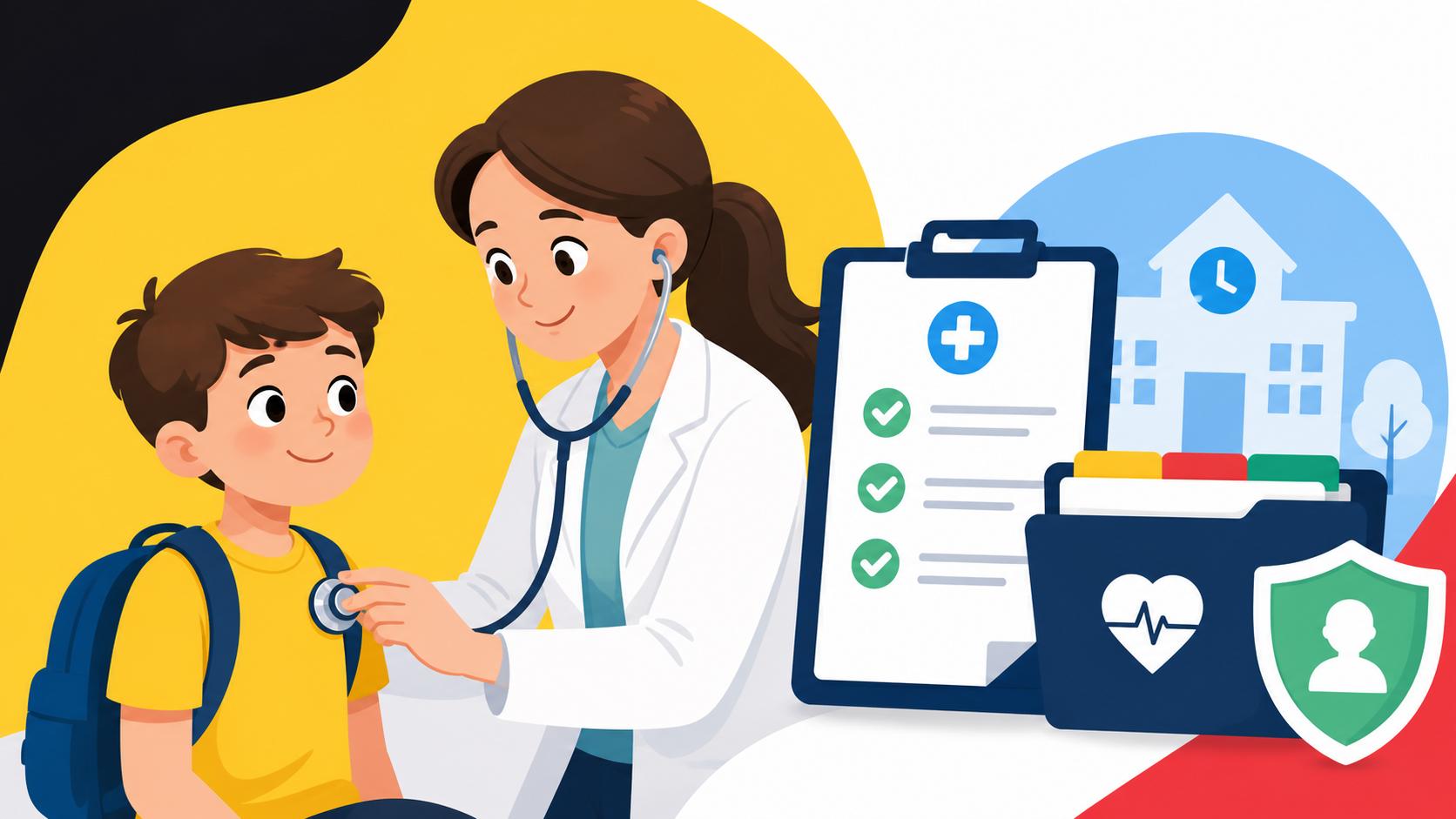
In the age of digital everything, you might expect Belgium to have a seamless, paperless system. We’re getting there, but for now, it’s a bit of a hybrid. You will likely be given a physical "Carnet de Santé" or a health folder. Keep this in a safe place! It is your child’s medical passport in Belgium.
The Vaccination Record (Carnet de Vaccination)
In the French-speaking system, the "Carnet de Vaccination" is a small green or blue booklet. Every time your child gets a jab, the doctor or nurse sticks a little label in there and stamps it. This booklet is requested for school trips, summer camps (stages), and sports club registrations.
If you lose this booklet, it can be a nightmare to reconstruct the data. I always recommend taking a high-quality photo of every page and storing it in a secure cloud folder. When you move here, you'll likely need help Translating Medical Records from Your Home Country to French/Dutch to ensure the school nurse enters the data correctly into the Belgian database.
Accessing Digital Health Records via MyHealth.belgium.be
The Belgian government has made huge strides with the "Ma Santé" (MyHealth) portal. Once your child is registered at the commune and has an NISS (National Register Number), their medical data—including vaccinations administered in Belgium and summaries from hospital visits—should start appearing online.
You can log in using your eID or the Itsme app. This is incredibly useful for double-checking if a school exam result has been uploaded. For a step-by-step on how to navigate this, see our MyHealth.belgium.be Guide: Accessing Your Medical Records Online. It saves a lot of time when you’re filling out those endless school forms at the start of September.
Transferring Records from Your Home Country
When you arrive, don't wait for the first school exam to organize your records. Get a summary from your previous pediatrician. If your records are in a language other than English, French, or Dutch, you will almost certainly need a formal translation.
The school medical service will take these foreign records and "translate" them into the Belgian equivalent codes. Sometimes, they might ask for a blood test to prove immunity if the records are unclear. This is common for things like Hepatitis B or Measles. If you have comprehensive private coverage through Cigna Global, these diagnostic tests are usually covered even if they aren't part of the "free" school service.
Rights, Privacy, and Parental Choice
A common question I get from the expat community is: "Do I have to let the school doctors touch my child?" The answer is a bit nuanced. While the check-up is mandatory, the provider is not strictly mandated, provided you follow the rules.
Can You Opt Out? (The Private Doctor Route)
Yes, you can choose to have these exams done by your own GP or pediatrician. This is called "le libre choix" (free choice). However, there is a catch. You must inform the PSE/CLB in writing before the scheduled school exam. They will then provide you with a specific form that your private doctor must fill out.
This form covers the exact same screenings (vision, height, spine, etc.) that the school would have done. You will have to pay for this private consultation yourself, though it is usually covered by your Understanding the 75% Reimbursement System for Medical Consultations. Once the form is filled, you must return it to the school medical service. If you don't return it, they will consider the requirement "unfulfilled" and will summon your child for the school version anyway.
Confidentiality and Data Sharing
The results of these exams are confidential. The school teachers and the principal do not get a full report on your child's health. They are only notified of "relevant" information that impacts school life. For example, if your child needs to sit at the front of the class because of a vision issue, the teacher will be told.
The medical team is bound by professional secrecy. However, the data is shared within the public health system to track national trends. If you have concerns about how this data is used, you have the right to request access to your child's file at the CLB or PSE center. They are generally very open about sharing their findings with parents.
Handling Referrals to Specialists
If the school exam identifies a potential issue—say, an irregular heartbeat or a suspected case of dyslexia—they will not treat it themselves. Instead, they will issue a "referral" note. It then becomes the parent's responsibility to book an appointment with a specialist.
This is where the Belgian system requires you to be proactive. Waiting lists for specialists like ophthalmologists or speech therapists (logopedists) can be long in major cities. If you've just arrived and haven't set up your local network yet, it’s worth Choosing Your First GP (General Practitioner) in Belgium early on, as they can help expedite these referrals and coordinate with the school medical team.
Practical Tips for Expat Parents
After a few years in the system, you learn the "hacks" that make these medical hurdles easier to jump. It’s all about preparation and understanding the cultural expectations of the Belgian medical staff.
Overcoming the Language Barrier
The medical forms sent home are often dense and full of medical jargon. Don't guess! Use a translation app or ask a local parent for help. In my experience, the doctors at the PSE and CLB centers in Brussels are often multilingual and can speak English, but in smaller towns in Flanders or Wallonia, you should be prepared to communicate in the local language.
If you are particularly nervous, you can request that the results be sent to you in writing so you can translate them at your own pace. Most centers are very accommodating to expats, as they deal with international families daily. Just remember that your Social Security Contributions: How Employers Deduct Health Costs go toward funding these services, so don't be afraid to utilize them to their fullest.
Preparing Your Child for the Visit
For younger children, the idea of a "medical exam" can be scary. I always tell my kids that it’s like a "health treasure hunt" where the doctors check how much they’ve grown. Since they often go with their classmates, there is a bit of "positive peer pressure" that makes the experience less intimidating.
Remind them that they will need to undress to their underwear for the growth and spine check. This is standard practice in Belgium and is handled with as much modesty as possible, usually with boys and girls screened separately or in private cubicles. If your child has specific modesty concerns due to cultural or religious reasons, it is best to communicate this to the center in advance.
Essential School Health Supplies
Beyond the exams, the school will expect you to keep your child "school-ready." This includes regular checks for head lice (poux/luizen)—a perennial favorite in Belgian schools—and ensuring they have appropriate indoor shoes for gym class to protect their developing feet.
If the school nurse identifies dry skin or minor allergies during the exam, they might suggest specific creams or non-prescription items. Again, iHerb is a great resource for organic or specific brand-name items that might not be easily found in your local Belgian "Pharmacie." Keeping a small "health kit" at home based on the school's feedback is a great way to stay ahead of the curve. If you're looking for more specialized advice for your little ones, our guide on Pediatricians in Belgium: Routine Vaccines and Child Checkups offers deeper insights into long-term care.
Disclaimer
This article is for informational purposes only and does not constitute professional medical or legal advice. Regulations regarding school medical examinations and vaccinations in Belgium may change; always consult with your local PSE/CLB center, your GP, or the official websites of the Flemish or French-speaking communities for the most current requirements. If you're considering additional coverage for your family, you might want to look into Private Health Insurance in Belgium: When Do Expats Really Need It? to see how it complements the public system.