Family Liability Insurance (Assurance Familiale): Why Expats Need It
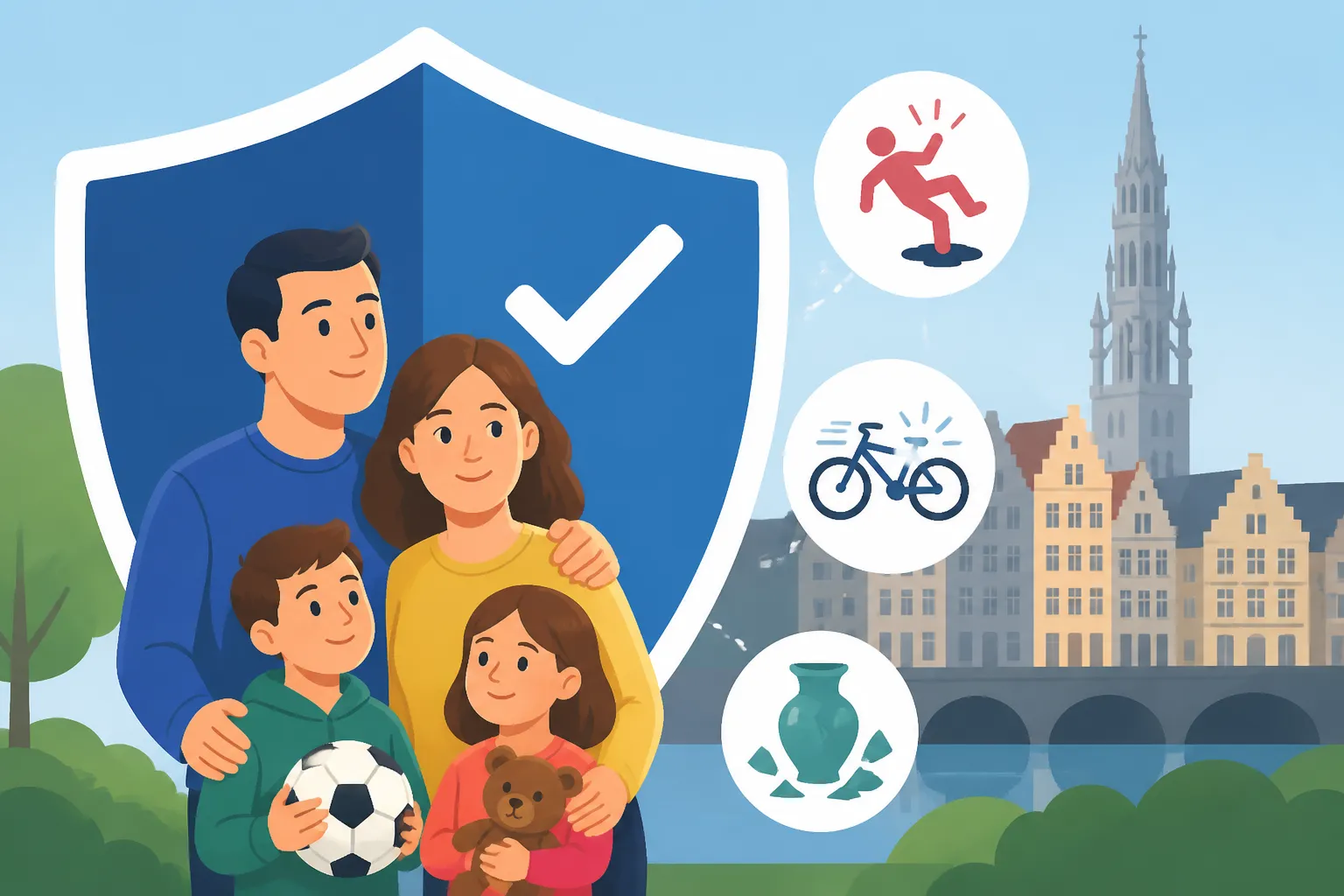
Imagine the sheer panic of your toddler accidentally knocking over a neighbor’s expensive antique vase during a playdate, or your dog suddenly darting into the street and causing a cyclist to swerve and crash. I’ve personally lived through the heart-stopping moment of a washing machine leak flooding the apartment below me in Etterbeek. This guide solves the mystery of Family Liability Insurance, ensuring you don't face financial ruin over life's little accidents.
What Exactly Is Assurance Familiale in Belgium
In the Belgian legal landscape, there is a concept that every expat eventually hears whispered in hushed, serious tones: the "bon père de famille" or "goede huisvader" rule. This translates to acting like a "good father of the family"—basically, the standard of a reasonable, prudent person. If you fail to meet this standard and cause damage to a third party, Belgian law dictates that you are responsible for the financial consequences. Family Liability Insurance, known as Assurance Familiale or Familiale Verzekering, is designed specifically to step in when you, your family, or even your pets accidentally cause harm to others.
While it is not strictly mandatory by national law in the same way car insurance is, it is one of the most culturally mandatory things you will encounter. Most landlords will actually write a requirement for this coverage into your lease, or at the very least, strongly imply that you are a reckless risk-taker if you don't have it. It covers "civil liability," which is a fancy way of saying "paying for the stuff you broke or the people you hurt." Without it, you are personally on the hook for damages that could easily reach into the hundreds of thousands of euros if a serious injury is involved.
For those just arriving, managing these initial costs is a big part of Banking and Finance in Belgium: Complete Expat Guide (2027). You will find that the Belgian system is built on a foundation of various protections, and this insurance is perhaps the cheapest peace of mind you can buy. It usually covers not just you, but everyone living under your roof, including temporary guests and domestic help. It’s a wide safety net that catches the slips and trips of everyday life in a country where personal responsibility is taken very seriously.
The Concept of Third Party Liability
Third-party liability is the core of this insurance. In Belgium, a "third party" is anyone who isn't covered by your policy. If you accidentally hit your own spouse with a rogue tennis ball, the Familiale won't pay out because you are part of the same insured unit. However, if that tennis ball hits your neighbor, they are a third party, and the insurance kicks in. This distinction is vital to understand when you are evaluating Insurance Essentials: Mandatory and Optional Covers for Expats because it defines the limits of your protection.
The liability doesn't just cover physical damage to objects; it covers physical injury to people. If your child is running in a park in Antwerp and knocks over an elderly person, causing a hip fracture, the insurance handles the medical bills, rehabilitation costs, and even potential loss of income for that person. In a country with high medical standards, these costs add up fast. While Social Security in Belgium: Employer and Employee Contributions covers your own health, it doesn't cover the bills of the people you accidentally injure.
Who Is Covered Under Your Policy
One of the best things about the Belgian Familiale is how inclusive it is. A standard policy typically covers the policyholder, their spouse or partner (even if not married, provided they live together), children living at home, and even children who are away at university but still financially dependent. It also covers your pets. If your cat decides to explore the neighbor’s balcony and knocks over their expensive BBQ, you’re covered. Even your "household staff," like a cleaner you hire via titres-services, is usually covered while they are working for you.
This inclusivity extends to temporary guests. If you have friends visiting from abroad and they accidentally start a small kitchen fire that damages the kitchen cabinets in your rented apartment, your Familiale policy usually covers the damage. This is a huge relief for expats who frequently host family from back home. It’s worth noting that if you are managing your global finances with tools like Wise, you can easily set up the small monthly or annual premium payments for this insurance without worrying about high exchange fees if your main income is in a different currency.
The Global Reach of Belgian Liability Insurance
A surprising benefit of the Assurance Familiale bought in Belgium is that it often has worldwide coverage. This means if you are on holiday in Spain and you accidentally damage a hotel's property, your Belgian policy might still protect you. This makes it an essential part of your Cost of Living in Belgium 2026: Budgeting for Cities and Families because it replaces the need for certain types of travel liability add-ons.
However, always check the geographic limits in your specific contract. Most Belgian providers offer "Worldwide" or at least "Europe-wide" coverage as standard. For expats who travel frequently, this is a massive bonus. It acts as a secondary layer of protection alongside your credit card insurance or specific travel policies, ensuring that a clumsy moment in a foreign museum doesn't follow you back to Brussels as a legal nightmare.
Why Expats Are Specifically Vulnerable Without It
Expats often arrive in Belgium with a "it won't happen to me" attitude, especially if they come from countries where litigation is less common. But Belgium has a very structured way of handling disputes. When damage occurs, the affected party will almost immediately ask for your insurance details. If you don't have them, the conversation turns cold very quickly. As someone who has navigated the "commune" systems and the local social norms, I can tell you that being "the uninsured foreigner" is a label you want to avoid.
The vulnerability comes from a lack of local "safety networks." If a local Belgian causes damage, they likely have a family lawyer or a broker they’ve used for twenty years. As an expat, you are often on your own. Having an Assurance Familiale means you have an insurance company’s legal department standing behind you. They handle the negotiations, the paperwork, and the settlements. This is particularly important when dealing with the potential for Dealing with Noise Complaints: When to Call the Belgian Police or other neighborly disputes that can escalate into liability claims.
Furthermore, many expats live in apartment buildings where "common" areas and "private" areas overlap. A leak in your bathroom that seeps into the neighbor's ceiling is a classic Belgian liability case. While your Home Insurance (Assurance Habitation): Liability vs Content covers the damage to your own stuff and the building structure (if you have the right policy), the "liability" part of the damage to the neighbor's property is often handled by your Familiale policy.
The High Cost of Civil Litigation in Belgium
While Belgium isn't as litigious as the United States, the legal system is formal and can be expensive. If you are sued for damages and you don't have insurance, you will need to hire a lawyer to defend you. Legal fees in Brussels or Antwerp can easily start at 150 to 250 euros per hour. An Assurance Familiale policy almost always includes "Protection Juridique" (Legal Protection), which pays for your lawyer and the court costs if the case goes to trial.
Imagine a scenario where you are Biking in Belgium: Villo!, Swapfiets, and Dedicated Bike Lanes and you accidentally clip a pedestrian. If that pedestrian decides to sue you for "moral damages" or long-term pain and suffering, the legal battle could last years. The insurance company doesn't just pay the final bill; they pay for the defense. For a policy that costs roughly 25 cents a day, this is an incredible value for an expat who might not understand the nuances of the Belgian Civil Code.
Real Life Scenarios from the Expat Community
I've seen it all in the expat forums: a dog biting a delivery driver’s trousers, a child throwing a rock that hits a parked Tesla, a drone crashing into a historic church roof. In one memorable case, an expat’s guest accidentally left a candle burning, which scorched a marble mantelpiece in a rented "Maison de Maître." The repair cost was astronomical because of the specialized craftsmanship required.
Without Familiale insurance, that expat would have had to dip into their long-term savings. If you are using platforms like Trade Republic to build a nest egg or Binance for your crypto portfolio, the last thing you want is to be forced to liquidate your investments to pay for a charred piece of marble. The insurance acts as a firewall, protecting your wealth from the unpredictability of daily life.
Cultural Expectations and the Good Father Standard
In Belgium, if you cause damage, there is a cultural expectation that you will "fix it." There is very little "accidents happen, don't worry about it" culture when it comes to property damage. This is why the "bon père de famille" standard is so important. It’s not just a legal term; it’s a social yardstick. By having Assurance Familiale, you are signaling to your landlord, your neighbors, and your community that you are a responsible resident who respects the local norms.
This cultural integration is part of the broader expat journey. When you are busy figuring out Emergency Numbers: Calling 112 in Belgium and What to Expect or how to sort your trash, the insurance might seem like a minor detail. But it is often the thing that saves your reputation in the neighborhood after an unfortunate incident. It allows you to say, "I am so sorry, let me give you my insurance broker’s number," which immediately de-escalates almost any conflict.
Coverage Deep Dive What is Included and What is Not
Not all Assurance Familiale policies are created equal, and as an expat, you need to look at the fine print. Most standard policies cover "non-contractual civil liability." This means damage you cause to someone you don't have a contract with. However, many Belgian policies have been updated to include things like "objective liability" for fires and explosions, which is a key requirement for many apartment dwellers.
You also need to look at the "Franchise" or the deductible. This is the amount you pay out of pocket before the insurance covers the rest. In Belgium, the standard franchise is often around 250 to 300 euros, though you can find "no-franchise" policies for a higher premium. If the damage you caused is only 100 euros, the insurance won't pay out, and you’ll handle it yourself. This is why keeping a bit of liquid cash in an account like Wise is always a good idea for these smaller mishaps.
| Feature | Standard Coverage | Premium / Add-on Options |
|---|---|---|
| Geographic Limit | Belgium or Europe | Worldwide |
| Legal Protection | Basic Defense | Full Legal Representation & Higher Limits |
| Deductible (Franchise) | ~€280 (indexed) | €0 to €150 |
| Pets Covered | Dogs, Cats, Small Pets | Horses or Exotic Animals (often extra) |
| Digital Risk | Not usually covered | E-reputation & Cyber-bullying protection |
| Property Damage | Included | Higher limits for "Art and Antiques" |
Exclusions to Watch Out For
There are several things a standard Familiale policy will not cover, and these are often the source of frustration for expats who didn't read the manual. First and foremost: intentional damage. If you lose your temper and smash a window, the insurance will laugh in your face. Second: professional liability. If you are working from home as a freelancer and a client trips over a cable in your home office, your Family insurance won't cover it; you need a "RC Professionnelle" (Professional Liability) policy for that.
Motorized vehicles are also a major exclusion. If you hit someone with your car, that is covered by your mandatory car insurance, not your Familiale. However, there is a gray area with e-scooters and e-bikes. In Belgium, if the e-bike provides assistance only when pedaling and stays below a certain speed, it’s often covered by the Familiale. But if it’s a high-speed "speed pedelec" or a powerful e-scooter that doesn't require physical effort, you might need a separate motor policy. Always clarify this with your broker.
The Importance of Legal Defense (Protection Juridique)
Many expats skip the "Protection Juridique" add-on to save a few euros, but this is a mistake. This part of the policy doesn't just defend you; it can also help you claim damages from others. If someone crashes into you while you are walking and their insurance refuses to pay, your Legal Protection will pay for the lawyer to sue them.
In a foreign country where you might not know the legal procedures, having a professional service to handle the "Mise en Demeure" (formal notice) and the subsequent legal steps is invaluable. It levels the playing field against larger companies or more experienced local litigants. It’s a vital component of your overall financial security, much like how you would protect your investments on Trade Republic or your assets on Binance with strong passwords and 2FA.
How Much Does It Cost and How to Choose a Provider
The good news is that Assurance Familiale is remarkably cheap in Belgium. For a single person, you can find policies for as little as 70 to 90 euros per year. For a family with children and pets, it usually ranges between 100 and 150 euros per year. Given the potential millions in coverage (most policies cover up to 20 or 30 million euros in personal injury), the ROI is incredible.
When choosing a provider, you have two main routes: the big traditional banks/insurers (like KBC, BNP Paribas Fortis, or AXA) or the "direct" online insurers (like Ethias, Flora, or Yuzzu). The traditional routes are great if you want a physical office to walk into and a human being to talk to—something many expats find comforting when they are still learning the language. Online insurers are often cheaper and have very slick apps that work well with the digital-first lifestyle many of us lead.
Bundling vs. Standalone Policies
You will often be offered a discount if you bundle your Familiale insurance with your "Assurance Incendie" (Fire/Home Insurance). This is usually a smart move. Not only does it save you 10-15% on the premium, but it also prevents "finger-pointing" between companies if an incident involves both property damage and liability. For example, if a pipe bursts and ruins your neighbor’s expensive electronics, having one company handle both the home claim and the liability claim makes the process much faster.
If you are already navigating the complexities of Social Security in Belgium: Employer and Employee Contributions through your employer, you might check if they offer any "group insurance" perks that include liability. Some large international companies in Brussels provide this as part of an expat package, though it is becoming rarer.
Key Factors to Compare
When you are looking at different quotes, don't just look at the price. Look at the "Capital Assuré"—the maximum amount they will pay out. While 20 million euros sounds like a lot, in cases of permanent disability for a young person, those costs can actually be reached. Also, check the "Scope of the Family." Does it cover your kids even if they are traveling during the summer? Does it cover you if you are house-sitting for a friend?
Customer service in English is also a major factor. Some insurers like Flora or certain brokers in the "EU Quarter" of Brussels specialize in the expat market and provide all their contracts and claim forms in English. This can save you hours of frustration with Google Translate when you are already stressed out by an accident.
How to File a Claim and Handle a Liability Dispute
If the unthinkable happens and you cause damage, the first rule is: do not admit liability on the spot. This sounds harsh, but it is a standard requirement of almost all insurance contracts. You can apologize and offer your assistance, but saying "It's totally my fault, I'll pay for everything" can technically void your coverage. Instead, say "I have insurance for this, let's exchange details so our companies can handle it."
Take photos immediately. If you spilled red wine on a white designer rug, take a photo of the rug and the bottle. If your dog bit someone, take a photo of the location and, if possible, the damage to the clothes. You will need to file a "declaration of claim" (déclaration de sinistre) with your insurer, usually within 5 to 8 days of the incident.
The Immediate Steps After an Incident
- Exchange Information: Get the name, address, and insurance details (if they have them) of the other party.
- Gather Evidence: Take photos, videos, and get the names of any witnesses.
- Contact Your Broker: Send an email or use the app to report the incident. Provide a clear, factual description of what happened.
- Wait for the Expert: For larger claims, the insurance company will send an "expert" to evaluate the damage. Do not throw away the damaged item until they have seen it.
If you are using a digital bank like Wise, you might find it easier to pay the deductible via their app once the claim is processed. The insurance company will usually pay the third party directly for the damage, minus your deductible, which you then pay to the third party or the insurer depending on their process.
Working with Your Broker vs. Dealing Directly
If you went through a broker, they are your best friend during a claim. Their job is to fight the insurance company on your behalf. If the insurer tries to claim that your dog’s breed isn't covered or that the incident happened outside of the covered hours, the broker will argue the legal points for you. If you went with a "direct" insurer, you will be dealing with their claims department. This is usually fine for simple claims, but for complex legal disputes, it can feel a bit lonely.
Many expats find that using a broker who understands the international community is worth the slightly higher premium. They can explain the "Constat Amiable"—a standard form used in Belgium to agree on the facts of an accident without assigning blame. While mostly used for cars, a similar factual agreement is helpful for any liability claim.
Understanding the Settlement Process
The settlement can take anywhere from a few weeks for a simple broken window to several years for a complex medical injury. During this time, your insurance company will handle all correspondence. If the other party’s lawyer contacts you, simply forward the email to your insurer and do not respond. This is what you pay them for.
Once a settlement is reached, the insurance company will send you a "quittance"—a document stating that the payment is the final settlement and the other party cannot ask for more money later. Make sure you keep copies of all these documents. In the digital age, keeping them in a secure cloud drive alongside your financial records from Trade Republic or Binance is the modern "bon père de famille" way to stay organized.
Family Liability Insurance Disclaimer
This guide is intended for informational purposes only and does not constitute legal or financial advice. Insurance laws and policy terms in Belgium can change, and individual circumstances vary significantly. Always read the General Conditions (Conditions Générales) of any insurance policy before signing. We recommend consulting with a licensed insurance broker or legal professional to ensure your specific needs are met. The mention of specific brands does not constitute an endorsement beyond their utility in the context of expat financial management.