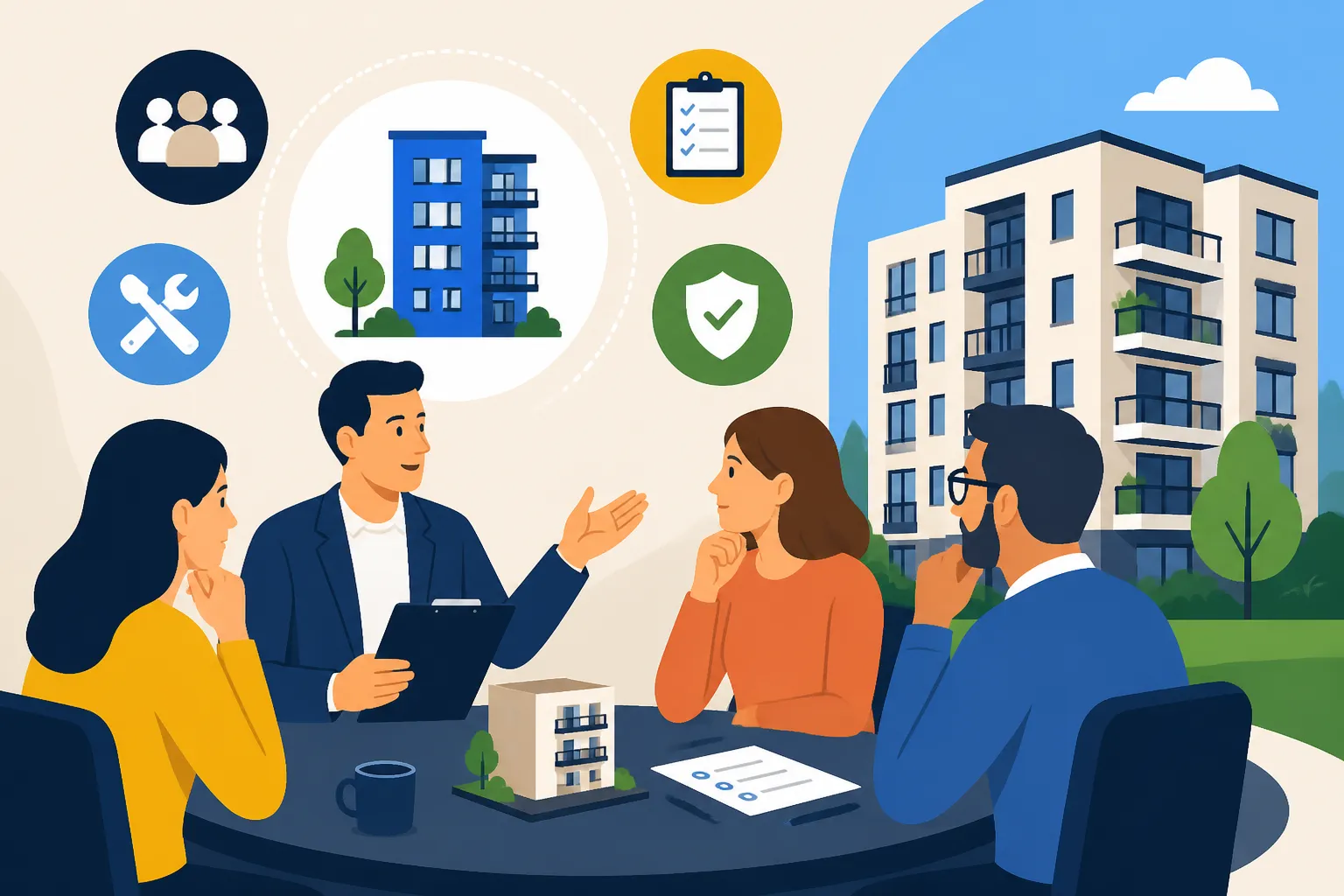
Navigating Syndicate Meetings (Syndic) for Apartment Owners
Walking into a room full of neighbors you barely recognize to debate the cost of elevator maintenance can feel more intimidating than a Belgian tax audit. I remember my first general assembly, clutching a French-language agenda and feeling completely lost as the debate over lobby lighting turned into a three-hour shouting match. This guide breaks down the complex world of Belgian co-ownership so you can protect your investment and your sanity.
The Foundation of Belgian Co-ownership and the Role of the Syndic
Every apartment building in Belgium operates under a legal framework called the co-ownership (copropriété/mede-eigendom). When you buy a flat, you aren't just buying the space between your walls; you are buying a share of the roof, the pipes, the entrance hall, and the gardens. This relationship is governed by the "Acte de Base" (Basic Act) and the "Règlement de Copropriété" (Co-ownership Rules). Understanding these documents is the first step when Buying Property in Belgium as an Expat: Process and Taxes. These papers define your "quotités" (shares), which determine how much your vote is worth and how much of the Common Charges (Charges Communes): What Exactly Are You Paying For? you are responsible for paying.
The "Syndic" is the legal representative of the building's association of co-owners. Think of them as the CEO of your building. They are responsible for executing the decisions made during meetings, maintaining the building, paying the utility bills for common areas, and managing the reserve fund. In Belgium, a Syndic can be a professional company or a volunteer co-owner (syndic bénévole). While a volunteer might save the building money, professional firms are usually better equipped to navigate the increasingly strict Belgian building codes. If you are living in Apartment Types: Kots, Studios, and Unfurnished Rental Norms, you might not deal with the Syndic directly, but as an owner, they are your primary point of contact for everything from a leaky roof to ordering a new eID-compatible intercom system from Amazon Belgium.
Beyond the Syndic, there is often a "Conseil de Copropriété" (Council of Co-owners). This is a small group of owners elected to supervise the Syndic. They don’t have the power to make major decisions alone, but they act as a bridge between the residents and the management company. If you’re an expat owner, joining this council is a fantastic way to ensure your voice is heard and to stay updated on the building’s health. It’s also a great way to meet neighbors who can help you understand local etiquette, like the rules for Dealing with Noise Complaints: When to Call the Belgian Police or how to properly use the communal trash rooms.
Preparing for the Annual General Meeting (AGM)
The Assemblée Générale (AG) is the most important date in your calendar as a property owner. By law, it must happen once a year within a specific timeframe defined in the building's statutes. You will receive an invitation, usually by registered mail or via a digital portal, at least 15 days in advance. If you’re traveling for work and rely on an Airalo eSIM to stay connected, make sure you’ve updated your contact preferences with the Syndic so you don't miss this notification. Missing the meeting means you lose your chance to vote on the budget or major renovations.
When the agenda arrives, read it meticulously. Each point on the agenda will be voted on, and the Syndic cannot legally make you pay for something that wasn't properly discussed and approved. Look for mentions of the EPC Ratings (PEB): Why Energy Certificates Matter for Winter Heating for the building. In 2026, Belgium has introduced stricter mandates for communal insulation and heating systems. If your building’s PEB rating is low, expect to see items on the agenda regarding Renovating Properties: EPC Subsidy Applications for Energy Upgrades. These renovations often require a 2/3 majority vote, and the costs can be substantial, often requiring a special assessment fee on top of your monthly charges.
If you cannot attend the meeting in person, you have the right to give a "procuration" (proxy) to someone else. This can be another owner or a third party, but it cannot be the Syndic themselves. This is a common pitfall for expats. Never leave your proxy blank; specify exactly how you want your representative to vote on each agenda item. I once made the mistake of giving a general proxy to a neighbor who then voted 'yes' on a €10,000 hallway repainting project that I completely disagreed with. Be specific, be proactive, and if the meeting is held in a language you don't master, consider bringing a friend to translate or requesting a digital meeting where you can use translation tools.
| Syndic Type | Typical Cost | Best For | Potential Drawback |
|---|---|---|---|
| Professional Syndic | €25 – €45 per lot/month | Large buildings (10+ units) | Can be impersonal and slow to react |
| Volunteer Syndic | Minimal/Expenses only | Small buildings (2-6 units) | Risk of legal errors or neighbor friction |
| Hybrid Management | Variable | Tech-savvy buildings | Requires high owner engagement |
Navigating the Meeting Drama and Voting Rules
Belgian AGMs are notorious for being long, sometimes lasting four or five hours. They usually take place in the evening in a local school hall, a café basement, or the Syndic's office. The meeting begins with the "Quorum" check. For the meeting to be valid, more than 50% of the shares must be present or represented by proxy. If the quorum isn't met, a second meeting must be called, which usually has no quorum requirement but causes a massive delay in building repairs. This is why your attendance is so vital for the building's functional health.
Voting in Belgium follows specific majority rules depending on the importance of the decision. For simple administrative tasks, like approving the previous year's accounts or Setting Up Electricity and Gas: Engie, Luminus, and Peak Tariffs for the common areas, a simple majority (50% + 1) is enough. However, for things like changing the building's rules or hiring a firm for Hiring a Domestic Cleaner via Titres-Services (Dienstencheques) for the lobby, you often need a 2/3 majority. The most serious decisions, such as a complete change in the building's purpose or total reconstruction, require a 4/5 majority or even unanimity.
Don't be afraid to ask questions during the "Questions & Answers" portion. If you see an expense on the balance sheet that looks odd—perhaps a massive bill for Navigating the Belgian Post Office: Customs Fees for Non-EU Parcels that seems irrelevant to the building—ask for the invoices. You have a legal right to inspect all building documents in the weeks leading up to the meeting. Being a "diligent owner" isn't being rude; it's being responsible. In the Belgian context, owners who stay silent are often the ones who end up paying for the mistakes of a negligent Syndic. If you're looking for more information on your rights as a resident, you might find it useful to compare your situation with the rules for Renting in Belgium: Apartments, Contracts, and Tenant Rights (2027).
Post-Meeting Action Items and Your Rights of Appeal
Once the meeting concludes, the drama isn't quite over. The Syndic is required to send out the "Procès-Verbal" (minutes) within 30 days. This document is a legal record of every vote and decision made. As soon as it hits your inbox or mailbox, check it against your notes. If a decision was recorded as "approved" but you remember it being rejected, you must act quickly. Errors in the minutes can lead to unauthorized work being carried out and charged to your account.
In Belgium, you have a four-month window from the date of the meeting to challenge a decision in the "Justice de Paix" (Peace Court). This is a relatively accessible court designed for neighbor and property disputes. You might challenge a decision if it was "irregular, fraudulent, or abusive." For instance, if the majority voted to install a luxury rooftop terrace that only they can access but you have to pay for, a judge may rule that this is an abusive use of the majority vote. While I hope you never need to take your neighbors to court, knowing that this "safety valve" exists is essential for expat owners who might feel steamrolled by a local majority.
Finally, ensure you stay on top of your financial obligations following the meeting. If a major renovation was approved, the Syndic will send out a call for funds. Make sure your bank details are updated and that you’ve set aside a budget for these surprises. Using platforms like HousingAnywhere can help you understand the market value of your property and how these building improvements might increase your long-term ROI. A well-maintained building with a proactive Syndic is worth significantly more on the Belgian market than one where owners refuse to invest in the communal infrastructure.
Disclaimer
The information provided in this guide is for informational purposes only and does not constitute legal, financial, or professional advice. Belgian property laws and co-ownership regulations are subject to frequent changes, and local commune rules may vary. Always consult with a qualified Belgian lawyer, notary, or professional Syndic regarding your specific situation and the legal documents of your building before making financial or legal decisions.