Tech and Engineering Jobs in Flanders (Antwerp, Ghent, Leuven)
Searching for a software engineering or specialized engineering role in Flanders often feels like trying to solve a Rubik’s Cube where the colors keep changing between Dutch, French, and English. I remember sitting in a small cafe in Ghent, staring at a job description that required "perfect trilingualism" and wondering if my Python skills even mattered. This guide clears the fog, mapping out the high-tech corridors of Antwerp, Ghent, and Leuven to help you land your next big role.
The High-Tech Landscape of Flanders
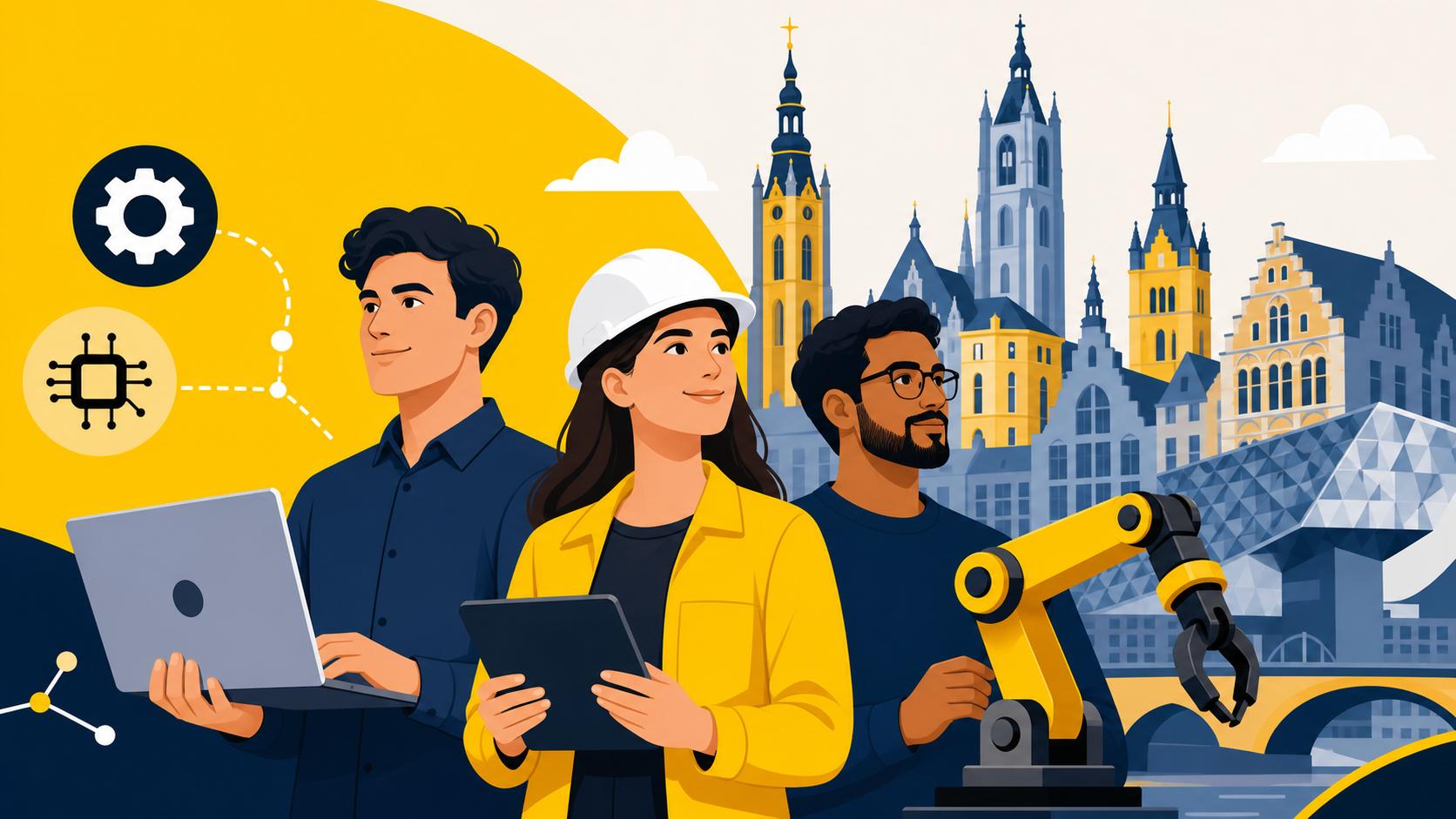
Flanders isn't just a region of picturesque canals and medieval belfries; it is the economic engine of Belgium, driven by a relentless focus on innovation and R&D. For tech and engineering professionals, this means a high density of opportunities, but it also means navigating three distinct city-identities. Antwerp, Ghent, and Leuven each offer a different "flavor" of tech, and understanding which one fits your expertise is the first step toward a successful relocation or career jump.
Antwerp: Logistics, IoT, and the Port of the Future
Antwerp is home to the second-largest port in Europe, which has naturally turned the city into a massive hub for logistics tech, maritime engineering, and the Internet of Things (IoT). If you are an engineer specializing in supply chain automation, sensor technology, or sustainable industrial systems, this is your playground. The "Beacon" in Antwerp is a prime example of this ecosystem, acting as a business and innovation hub where startups and corporates collaborate on smart city and industrial IoT solutions.
Beyond the port, Antwerp has a burgeoning fintech and retail tech scene. Because the city is a global center for the diamond trade and a major fashion capital, there is a constant demand for cybersecurity specialists and data scientists who can handle high-value transaction systems and consumer analytics. When you are looking for work here, you'll find that companies are increasingly open to international talent, provided you can demonstrate a solid understanding of Belgian Work Culture: Bilingual Workplaces, Meetings, and Hierarchy.
Ghent: The Biotech and SaaS Powerhouse
Ghent is often called the "Silicon Valley of Belgium," particularly when it comes to Software as a Service (SaaS) and biotechnology. The city has a rebellious, entrepreneurial spirit that has birthed scale-ups like Showpad and Deliverect. If you are a developer, Ghent offers a vibrant community of "techies" who value clean code and innovative architecture. The biotech cluster around Ghent University is also world-class, making it a prime destination for chemical engineers and bioinformatics specialists.
The atmosphere in Ghent is slightly more relaxed than in the corporate world of Brussels or the industrial world of Antwerp, but don't let that fool you. The competition for talent is fierce. The city is compact, meaning networking often happens in the local "brown cafes" or at tech meetups near the Graslei. For those coming from abroad, Ghent is often the easiest place to integrate socially, but you’ll still want to brush up on the local language through platforms like DutchPod101 to truly feel at home during those Friday afternoon drinks.
Leuven: The Knowledge Hub and Spin-off Paradise
Leuven is dominated by KU Leuven, one of the oldest and most innovative universities in the world. This academic backbone has created a unique "spin-off" culture. The city is the home of imec, a world-leading R&D hub for nanoelectronics and digital technologies. If your background is in hardware engineering, semiconductor technology, or advanced electronics, Leuven is arguably the most important city in Europe for your career.
The tech scene here is deeply integrated with research. You’ll find engineers who are also part-time researchers and startups that are built on a decade of lab work. Because of the university's international draw, Leuven is incredibly English-friendly. However, the administrative side of living here remains quintessentially Belgian. You will still need to navigate the Registering for Public Health Insurance: Step-by-Step at Your Commune process and handle your local taxes with the same precision as a circuit board design.
Language Requirements and Cultural Nuances in Flemish Tech
The most common question I get from expats is: "Do I really need to speak Dutch to work in tech in Flanders?" The honest answer is "It depends," but the nuanced answer is that while you can get hired with only English, your career ceiling and social integration will depend on your willingness to learn. In the tech sector, English is the lingua franca for documentation and coding, but Dutch is the language of the coffee machine and the boardroom.
Is English Enough for Software Engineering
In cities like Ghent and Leuven, many international tech companies and startups operate primarily in English. If you are a high-level Full Stack Developer or a Cloud Architect, your technical skills are in such high demand that many firms will overlook a lack of Dutch. However, you must be careful when reading job descriptions. If a role mentions "customer-facing" or "project management," they will almost certainly require Dutch, and perhaps even French.
Using resources like Coursera or Udemy to keep your technical certifications (AWS, Azure, Kubernetes) up to date is vital, but don't ignore the linguistic side. Even in an English-speaking office, being able to understand the "small talk" in Dutch can be the difference between feeling like a permanent "outsider" and becoming a core member of the team. For those who want to bridge the gap quickly, Lingoda offers structured classes that can fit around a busy dev schedule.
Integrating into a Dutch-Speaking Workplace
Flemish work culture is characterized by a "polder model" of consensus and a high degree of modesty. Unlike the hyper-competitive tech scenes in London or New York, the Flemish appreciate engineers who are reliable, punctual, and collaborative. They value "no-nonsense" communication. If a system is broken, tell them it's broken—don't sugarcoat it, but don't be arrogant about it either.
Learning the local language is seen as a sign of respect. Even if your Dutch is rudimentary, showing that you are using DutchPod101 to learn basic phrases will go a long way with your Flemish colleagues. It signals that you are here to stay and that you value their culture. This is particularly important if you are looking for English-Speaking Jobs in Brussels: EU Bubbles and NGOs but living in a Flemish suburb where the local commune expects Dutch for all official interactions.
Soft Skills and Flemish Professional Etiquette
In Flanders, there is a clear distinction between "work time" and "private time." While tech startups might have a "ping-pong table" culture, the underlying expectation is high productivity during office hours. Meetings are usually structured and start exactly on time. If you are late to a meeting in Antwerp, it is noticed, and it is considered unprofessional.
Networking in Flanders isn't about "selling yourself" aggressively. It’s about building long-term trust. When attending tech events in Ghent or Leuven, focus on asking insightful questions about the technology rather than handing out as many business cards as possible. This approach mirrors the advice found in CVs and Cover Letters in Belgium: Formats and Interview Norms, where a clean, fact-based CV is preferred over a flashy, over-designed one.
Navigating the Job Search Strategy in Flanders
The job market in Flanders for tech and engineering is "hidden" more than you might expect. While LinkedIn is a powerful tool, many of the best roles are filled through specialized agencies or internal referrals. To succeed, you need a multi-pronged approach that combines digital tools with local "boots-on-the-ground" networking.
Leveraging Specialized Job Boards and Agencies
Generic job boards often get flooded with applicants. For tech in Flanders, you should look at niche sites like ICTJob.be or specialized recruitment agencies like Vivid Resourcing, Jefferson Frank, or Computer Futures. These agencies have deep connections with the big players in the Port of Antwerp and the biotech firms in Ghent. They can often provide insights into the salary ranges and company culture that you won't find in a public listing.
When working with a recruiter, be very clear about your visa status. If you are a non-EU citizen, you need to ensure the employer is willing to handle the Single Permit (Gecombineerde Vergunning) Overview for 2027. Not all small startups have the HR capacity to deal with the immigration office, so focusing your search on "international-ready" companies is a more efficient use of your time.
Networking and the Hidden Tech Job Market
Networking in Flanders often happens through "User Groups." Whether it's a Java User Group (JUG), a Python Meetup, or a DevOps Days event, these are the places where the real hiring happens. If you show up consistently to these events in Ghent or Antwerp, you will eventually meet the CTOs and Lead Engineers who have the power to hire without ever posting an ad.
Another great way to network is through "Inburgering" (integration) courses if you are eligible. While it might seem counterintuitive to network at a language school, you will meet other highly skilled expats who are already working in the Belgian tech sector. They can provide referrals, which are gold in the Flemish market. Referrals often bypass the initial CV screening, putting you directly in front of a hiring manager who is looking for someone with a proven CVs and Cover Letters in Belgium: Formats and Interview Norms.
| Feature | Antwerp | Ghent | Leuven |
|---|---|---|---|
| Primary Industry | Logistics, Port Tech, IoT | SaaS, Biotech, Creative | Nanoelectronics, R&D, Spin-offs |
| Major Tech Hubs | The Beacon, Port of Antwerp | Ghent Science Park, Ghelamco Hub | imec, Arenberg Science Park |
| English Friendliness | Moderate (High in Port) | High (Startup Culture) | Very High (University Presence) |
| Commute Style | Bike / Tram | High Bike Usage / Train | Bike / Walking |
| Vibe | Industrial & Corporate | Artistic & Entrepreneurial | Academic & Innovative |
Optimizing Your CV for the Belgian Tech Sector
Belgian CVs are traditionally quite detailed. While the "one-page" rule is popular in the US, a two-page CV is perfectly acceptable in Flanders, especially for senior engineering roles. You should include your specific technical stack for every project, the size of the teams you worked in, and the tangible impact of your work (e.g., "reduced server latency by 20%").
Avoid being overly "salesy" in your cover letter. Flemish managers prefer honesty and a clear explanation of why you want to live and work in Belgium. If you have already started the process of Registering for Public Health Insurance: Step-by-Step at Your Commune or have a Belgian phone number, mention it. It shows that you are already settled and reduces the perceived "risk" of hiring an expat.
Salary, Benefits, and the Infamous Belgian Net Pay
If there is one thing that shocks tech professionals moving to Flanders, it's the gap between their gross and net salary. Belgium has some of the highest personal income tax rates in the world, but this is offset by an extensive social safety net and a complex system of "extra-legal benefits" that can significantly increase your purchasing power.
Understanding Gross vs. Net for High-Skilled Workers
In many countries, a €5,000 monthly salary sounds incredible. In Belgium, after the Social Security in Belgium: Employer and Employee Contributions and income tax are deducted, you might only take home about €2,800 to €3,000. It is vital to use a Belgian salary calculator (like the ones provided by SD Worx or Partena) before signing a contract. You need to understand the reality of Gross vs Net Salary in Belgium: Why the Difference is So Big to set a realistic budget for housing and living.
However, tech companies are masters of "salary optimization." They will often offer a lower base salary supplemented by various tax-free or low-tax benefits. This is why you should never look at the gross number alone. Always ask for a "simulation" of your net take-home pay, including all the bells and whistles the company offers.
Perks: From Mobility Budgets to Eco-vouchers
The "Belgian Package" often includes things you won't find elsewhere. The most famous is the "company car" with a fuel card. In recent years, this has evolved into the "Mobility Budget," where you can choose to take cash, a high-end electric bike, or have your rent/mortgage paid by the company if you live within a certain distance of the office. For an engineer living in the center of Ghent, having the company pay your rent is often much better than having a car you can't park.
Other common perks include:
- Meal Vouchers: Digital tickets (Sodexo/Edenred) worth about €8 per workday for groceries or restaurants.
- Eco-vouchers: Used for energy-efficient appliances or sustainable products. To learn more, check out Eco-Vouchers (Eco-chèques): What Can You Actually Buy With Them?.
- Hospitalization Insurance: Private cover that handles the costs the Mutuelle and Ziekenfonds: Public Health Insurance Registration Guide doesn't reach.
- Net Allowances: Small tax-free amounts for things like "home office" costs or "internet usage."
The Impact of Indexation on Tech Salaries
Belgium has a unique system called "Automatic Wage Indexation." When the cost of living (inflation) rises, your salary is legally required to increase by the same percentage. In years of high inflation, this can result in a 5% to 10% raise overnight. For tech professionals, this provides a level of financial stability that is rare in other markets.
However, keep in mind that indexation applies to the gross salary. Because of the progressive tax brackets, a 10% gross increase might only result in a 5-6% net increase. It’s a quirk of the system that every resident, from the junior dev to the senior architect, has to live with. To manage these finances, many expats use Wise for international transfers to avoid high bank fees when sending money back home.
Visa Pathways and Legal Setup for Tech Professionals
For non-EU tech talent, the administrative hurdles can be daunting. The Belgian government has made efforts to streamline the process for "highly skilled workers," but the system is still famous for its love of stamped documents and specific deadlines.
The Single Permit Process for Non-EU Engineers
The "Single Permit" is the most common route for tech professionals. It combines your work permit and residence permit into one application. As of 2026, most of this process has moved to the Single Permit Digital Transition 2026: The 'Working in Belgium' Portal. This has made tracking your application easier, but the processing times can still range from 8 to 16 weeks.
To qualify as a highly skilled worker, you usually need to meet a specific salary threshold. These thresholds are updated annually and vary by region (Flanders, Wallonia, and Brussels). If your salary is above the threshold, the labor market test (proving no Belgian or EU citizen can do the job) is often waived, making the process much smoother for your employer.
The EU Blue Card vs. National Permits
The EU Blue Card is another option for highly skilled tech workers. It requires a higher salary threshold than the standard Single Permit but offers more mobility within the European Union after a certain period. If you are an engineer who plans on moving between different EU tech hubs (like Berlin or Amsterdam) in the future, the Blue Card is worth discussing with your HR department.
Regardless of the permit, once you arrive, your first task is the "Commune visit." You have 8 days to register at your local city hall. In Antwerp or Ghent, this usually requires an appointment booked weeks in advance. You will then face the "police check," where a local officer visits your home to verify you actually live there. It’s a strange tradition, but once it's done, you get your Residence Registration: Annexes, Communes, and the eID Card.
Transitioning from Student to Search Year
If you are currently studying at KU Leuven or Ghent University, you have a massive advantage. Belgium offers a "Search Year" visa, allowing graduates to stay in the country for 12 months to find a job. Once you find a tech role that meets the salary requirements, you can switch from the search year visa to a Single Permit without leaving the country. This is a common path for many international students who eventually become leaders in the Flemish tech scene.
Upskilling and Continuous Learning for Engineers
The tech world moves fast, and Flanders is no exception. To stay competitive in Antwerp, Ghent, or Leuven, you need to be a "lifelong learner." Fortunately, the region offers plenty of resources for those who want to level up their skills.
Local Certifications and Training Hubs
Flanders has a strong tradition of vocational training. Organizations like VDAB (the Flemish employment agency) offer specialized tech courses, often in collaboration with companies like Cisco, Microsoft, and Oracle. Even if you are already employed, you can sometimes use "educational leave" (Congé-Éducation/Educatief Verlof) to take these courses during work hours.
For those in the engineering sector, imec academy in Leuven provides advanced training in nanoelectronics and semiconductor technology. These aren't just "coding bootcamps"; they are high-level academic and industrial courses that can significantly boost your value on the job market.
Digital Learning Platforms for Career Growth
While local training is great, many tech professionals prefer the flexibility of online platforms. Coursera and Udemy are widely recognized by Belgian employers. If you are looking to move into Data Science or AI, completing a specialized track on one of these platforms can help bridge the gap if your formal degree is in a different field of engineering.
In the Belgian context, having a certification in Agile or Scrum (like a PSM I) is also highly valued. Many Flemish tech companies have adopted Agile methodologies, and being able to prove you understand the framework will make your transition into a new team much smoother.
Language Learning Resources for Long-term Success
Finally, never stop learning the language. While you can survive in English, your long-term success in Flanders depends on Dutch. Use Lingoda for structured speaking practice and FrenchPod101 if you find yourself working in the "Brussels bubble" where French is more common.
Learning the language is the ultimate "soft skill." It shows your commitment to the country and opens up leadership roles that are often closed to those who only speak English. It makes the administrative burden of living in Belgium—from understanding your Social Security in Belgium: Employer and Employee Contributions to arguing with a landlord about a rental deposit—much more manageable.
Disclaimer
This guide is intended for informational purposes only and does not constitute legal, financial, or professional career advice. Immigration laws, salary thresholds, and tax regulations in Belgium are subject to frequent changes. Always consult with official government sources, a qualified immigration lawyer, or a professional tax advisor before making significant life or career decisions.