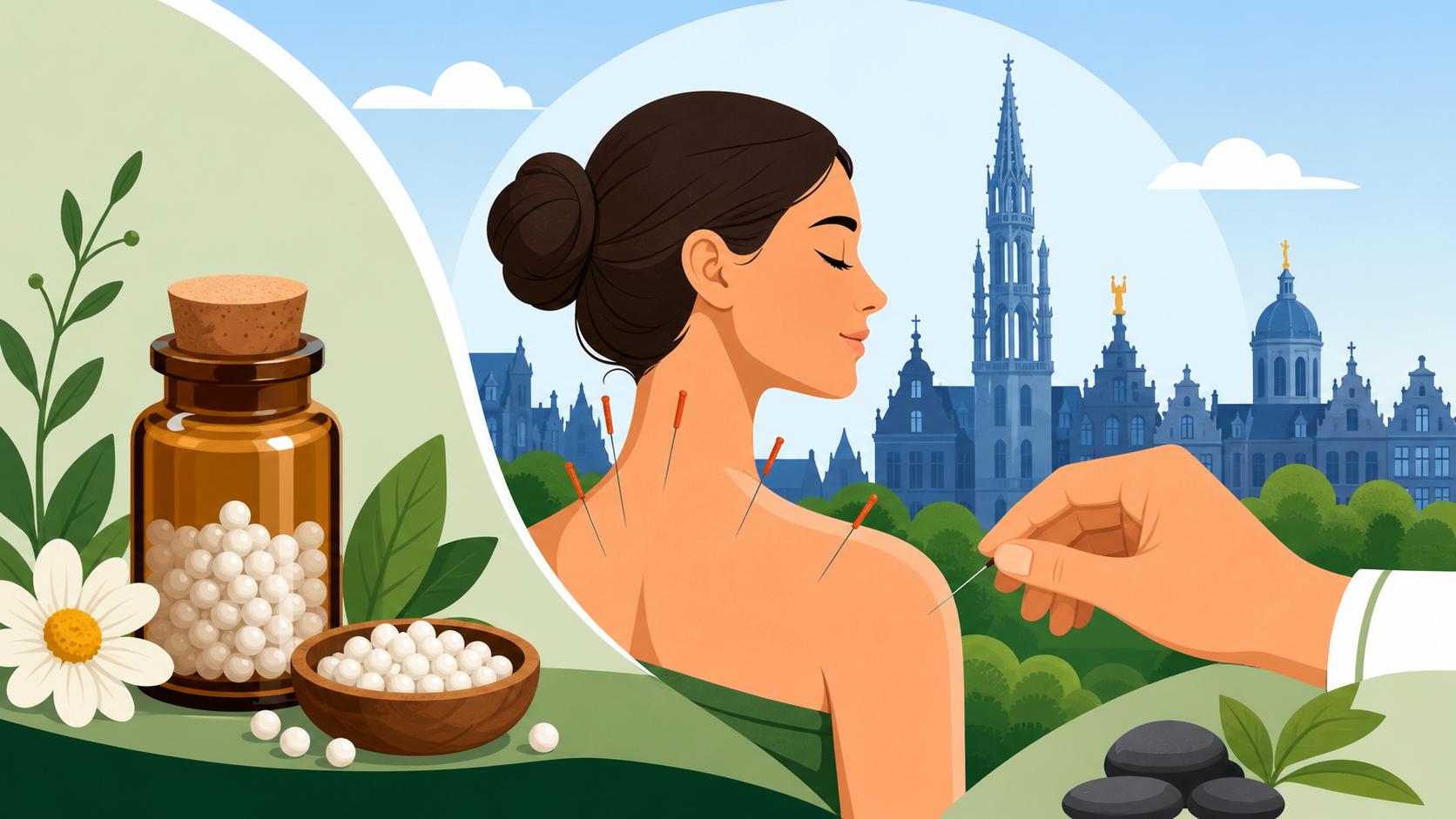
Alternative Medicine: Homeopathy and Acupuncture in Belgium
Navigating the Belgian healthcare system often feels like trying to solve a Rubik's Cube in the dark, especially when you are looking for treatments that fall outside the traditional pill-for-every-ill approach. I remember my first winter in Brussels, desperate for a natural remedy for a nagging cough, only to find myself confused by the overlapping worlds of official medicine and "non-conventional" therapies. This guide solves that confusion by mapping out exactly how homeopathy and acupuncture work within the local landscape, ensuring you get the care you need without the bureaucratic headache.
Navigating the Legal Framework for Alternative Medicine in Belgium
When you first arrive, you might notice that the Belgian medical establishment is quite traditional. However, since the passage of the Colla Law in 1999, the government has slowly moved toward a more inclusive framework for four specific non-conventional practices: homeopathy, acupuncture, osteopathy, and chiropractic care. While the law exists, its implementation is a slow-moving Belgian beast. As an expat, you need to understand that "recognized" does not always mean "fully integrated" into the state medical system in the way a standard blood test would be.
The legal status of these therapies determines who can practice them and how much you will pay. In Belgium, to practice homeopathy or acupuncture legally, a practitioner usually needs to be a registered doctor first, or at the very least, hold a recognized medical degree. This is a crucial distinction. If you visit a practitioner who is also a GP, your path to reimbursement is much smoother. If you choose a therapist who is strictly an acupuncturist without a medical degree, your Mutuelle might still offer a small refund, but it won't be through the standard RIZIV/INAMI channels.
To get the most out of your medical journey, I highly recommend reading through Healthcare in Belgium for Expats: Complete System Overview (2027) to understand where alternative care fits into the broader picture. Many expats are surprised to find that while the system is rigid, there is a deep underlying respect for "soft" medicines among the population, even if the state insurance is still catching up.
Verification of Practitioner Credentials
Finding a reliable therapist in a new country is nerve-wracking. In Belgium, you should look for memberships in professional unions. For homeopathy, the Unio Homoeopathica Belgica is the gold standard. For acupuncture, the Belgian Federation of Acupuncturists (BAF) ensures its members meet strict educational requirements. When you book an appointment, do not be afraid to ask if they are "conventioned" or if they have a "RIZIV number."
This number is the key to your paper trail. If they have one, you can often claim higher refunds. If they don’t, you are likely paying "out of pocket," which is where supplemental insurance like Cigna Global becomes incredibly valuable. They often cover these holistic approaches more generously than the local public funds. I’ve found that being proactive and asking about these credentials upfront saves you from the "sticker shock" of a 70-euro bill with zero reimbursement later.
The Role of the GP in Your Holistic Journey
In Belgium, the General Practitioner (GP) is the gatekeeper of your health. Even if you are a firm believer in natural medicine, it is wise to start by Choosing Your First GP (General Practitioner) in Belgium. A sympathetic GP can provide referrals to specialists who use integrated methods. Some GPs in urban centers like Antwerp or Brussels are even "Homeopath-GPs," meaning they are fully licensed doctors who prefer to prescribe natural remedies first.
Having a GP who understands your preference for alternative medicine also helps with your Global Medical Record (DMG/GMD). This record centralizes your data, and having your holistic treatments noted there can actually improve your reimbursement rates for other related visits. It creates a cohesive narrative for your health that the Belgian administration respects.
Homeopathy and Its Place in the Belgian Pharmacy
One of the first things you will notice when visiting Pharmacies (Apotheek/Pharmacie) in Belgium: Operating Hours and Services is that homeopathic remedies are everywhere. Unlike some countries where you have to hunt down a specialized health food store, most Belgian pharmacists are trained in basic homeopathy. You can walk into almost any apotheek and find Boiron tubes or Dr. Vogel products right alongside the paracetamol.
However, just because it’s available doesn't mean it’s free. Over-the-counter (OTC) homeopathic products are rarely reimbursed by the public health insurance. You pay the full retail price at the counter. If you find yourself spending a significant amount on these remedies, you might want to look into ordering bulk supplies of high-quality supplements and natural products from iHerb, which often carries brands that are harder to find or more expensive in local boutiques.
Buying Homeopathic Remedies and Professional Advice
The pharmacist in Belgium is more than just a cashier; they are a highly educated medical professional. If you ask for a remedy for stress or seasonal allergies, they will often offer a choice between a chemical solution and a homeopathic one. This "dual-track" approach is very common. I once spent twenty minutes discussing the merits of Arnica vs. Ibuprofen with a pharmacist in Ixelles, and his knowledge of the homeopathic dilution scales was impressive.
For those managing chronic issues, your homeopath will write a prescription. Even though it's homeopathic, having that piece of paper is vital. While the public system might not cover the pills themselves, many "Mutuelles" offer a small annual "homeopathy package" (often around 50 to 100 euros per year) as a loyalty benefit. You will need to submit your receipts to access this.
Understanding Reimbursements and Out of Pocket Costs
When calculating your Healthcare Budgeting: Copays, DMG/GMD, and Reimbursements, you have to separate the consultation from the remedy. If your homeopath is a licensed MD, you will receive a standard green or white "attest" for the visit. This allows you to claim back a portion of the fee just like a regular doctor's visit.
| Feature | Public Mutuelle Coverage | Private Insurance (e.g., Cigna Global) |
|---|---|---|
| Consultation (Medical MD) | Partial (standard rate) | High / Full coverage |
| Consultation (Non-MD) | Very low / Fixed annual cap | Dependent on plan |
| Remedies/Granules | Almost zero | Usually covered if prescribed |
| Acupuncture Sessions | Small fixed refund per session | Comprehensive coverage |
As shown in the table, the public system is quite stingy with the actual remedies. This is where your personal health strategy comes in. I often use iHerb for my basic health maintenance—things like Vitamin D, magnesium, and herbal tinctures—and save my Mutuelle "alternative care quota" for the actual specialist consultations.
Acupuncture and Traditional Chinese Medicine for Expats
Acupuncture has gained massive popularity in Belgium over the last decade, particularly for pain management and stress relief. For many of us living the high-pressure expat life in the EU bubble, the toll on our nervous systems is real. Whether it's the grey weather or the administrative stress, many find relief in Traditional Chinese Medicine (TCM).
Finding a practitioner who speaks English is relatively easy in major cities, but you should still check Finding Medical Care in Belgium: GPs, Specialists, and Hospitals to see if there are any recommended clinics in your neighborhood. Most acupuncture clinics in Belgium are clean, professional, and follow strict European hygiene standards, including the use of single-use disposable needles.
What to Expect During an Acupuncture Session
A typical session in Belgium lasts about 45 to 60 minutes. The first visit is usually longer as the practitioner takes a full history—often including looking at your tongue and checking your pulse in multiple positions. This holistic view is a breath of fresh air compared to the sometimes-rushed nature of standard medical consults.
One thing to keep in mind is that acupuncture is often used in conjunction with other therapies. If you are struggling with Mental Health in Belgium: Therapy, Psychiatry, and Expat Support, your therapist might suggest acupuncture to help regulate your cortisol levels. It’s becoming a very common "adjunct" treatment, and Belgian doctors are increasingly open to this collaboration.
Mutuelle and Ziekenfonds Support for Acupuncture
Most Belgian health insurance funds (Mutuelles/Ziekenfonds) have recognized the cost-saving potential of acupuncture. If you are a member of a fund like Partenamut, Helan, or Christian Mutuality, you can typically get a refund of about 10 to 15 euros per session, for a limited number of sessions per year (usually 5 to 10).
To claim this, the practitioner must be recognized by the insurance fund. They will give you a specific form to send in. It’s not a huge amount, but it helps take the edge off a 60-euro session. For those who require weekly treatments for chronic conditions, Private Health Insurance in Belgium: When Do Expats Really Need It? is a question worth asking. Plans from providers like Cigna Global often include "alternative therapies" as a core part of their outpatient modules, which can cover the majority of the cost without the session limits imposed by the state funds.
Integrating Holistic Wellness into Your Expat Life
Living in Belgium offers a unique opportunity to blend the best of Western medicine with ancient traditions. You have access to world-class hospitals and, at the same time, a culture that appreciates the "slow" healing of homeopathy. The key to success is balance. Don't feel you have to choose one over the other.
I’ve found that the best approach is to maintain a good relationship with a local GP for your official paperwork—like Social Security Contributions: How Employers Deduct Health Costs and sick notes—while building a support network of alternative practitioners for your long-term wellness.
Supplementing Your Health Naturally
Because the Belgian weather can be notoriously "un-sunny," maintaining your internal health is a top priority. While pharmacies are great, I often find the selection of specialized natural supplements a bit limited or overpriced. This is why many expats turn to iHerb to stock up on specific brands they trusted back home. Whether it's high-potency probiotics or specific Ayurvedic herbs that aren't common in the Belgian herboristerie, having an international source makes life much easier.
Remember that if you are bringing specific medications from home, you should check the rules on Pharmacies and Medication in Belgium: Prescriptions and OTC Rules. Some herbal supplements that are sold freely in the US or UK might have different regulations here, though generally, most "wellness" products are fine for personal use.
Managing Stress and Burnout with Alternative Care
Belgium takes burnout very seriously. If you find yourself struggling, your GP might prescribe a "rest" period. During this time, many expats find that homeopathy or acupuncture provides a way to recover that isn't just about "sitting at home." It gives you a proactive way to manage your recovery.
Be sure to document everything. If your doctor suggests acupuncture for stress, ask for a written recommendation. This can sometimes help with insurance claims or even with your employer's occupational health checks. Using these tools effectively is all part of mastering the Belgian system and ensuring your time in this beautiful, complex country is healthy and vibrant.
Important Considerations for Expat Health Insurance
Before you dive headfirst into a series of acupuncture sessions, take a moment to review your insurance policy. If you are only relying on the basic Belgian Mutuelle, your out-of-pocket costs for alternative medicine will be higher than for standard care.
- Check the "Extra-Legal" Benefits: Every Mutuelle has a booklet of "extra" benefits. This is where the 10-euro refunds for acupuncture are hidden.
- Verify MD Status: If you want standard 75% reimbursements, the practitioner must be a medical doctor.
- Consider an International Plan: If you rely heavily on alternative medicine, a plan from Cigna Global might actually save you money in the long run because their "Alternative Medicine" riders are designed for the global citizen who expects more than just the basics.
- Keep All Receipts: Even the tiny ones from the pharmacy for homeopathic pellets. You never know when you might hit your "Maximum Billing" threshold, and every euro counts.
Ultimately, the Belgian approach to alternative medicine is a reflection of the country itself: a bit bureaucratic, very traditional, but surprisingly open-minded once you know which buttons to push. By combining the local Mutuelle with international resources like iHerb for your supplements and Cigna Global for your major coverage, you can create a healthcare safety net that perfectly matches your holistic lifestyle.
Disclaimer
This article is for informational purposes only and does not constitute medical or legal advice. Healthcare regulations in Belgium are subject to change, and you should always consult with a qualified medical professional or your insurance provider before beginning any new treatment or making changes to your health coverage. For the most current information, please refer to official Belgian government resources or your specific Mutuelle's policy documents.