Medical Translation Services: Interpreters for Hospital Visits
Staring at a Belgian specialist who is explaining a complex diagnosis in rapid-fire French or Dutch is a nightmare scenario for any foreigner. I remember sitting in a cold exam room in Brussels years ago, nodding along while completely lost, too embarrassed to admit I didn't understand the risks of my procedure. This guide breaks down how to access medical translation services and professional interpreters in Belgium so you never have to sacrifice your health for a language barrier.
Navigating the Belgian Language Landscape in Healthcare
Belgium is a country defined by its linguistic borders, and nowhere is this more apparent—or more stressful—than in the healthcare system. Depending on whether you are in Flanders, Wallonia, or the Brussels-Capital Region, the "default" language of your doctor will change. While many Belgian physicians are highly educated and often speak excellent English, relying on a doctor’s secondary language skills for life-altering medical decisions is a gamble. In my experience, even the most fluent English-speaking doctors may struggle with the specific nuance of medical terminology or the legal jargon found in Belgian hospital contracts.
The linguistic divide is not just a matter of convenience; it is a matter of safety. In the Dutch-speaking north, healthcare providers are legally required to communicate in Dutch. In the French-speaking south, it is French. Brussels is officially bilingual, but in practice, you might find a hospital that leans heavily toward one side. When you are trying to describe a subtle internal pain or understand the side effects of a new medication, "getting the gist" isn't enough. You need precision. This is why Finding Medical Care in Belgium: GPs, Specialists, and Hospitals is often the first step in ensuring you are in an environment where your linguistic needs can be met.
Furthermore, patients in Belgium have a legal right to clear and understandable information regarding their health status. This is enshrined in the Law on Patients' Rights. If you do not speak the language of the region, the burden of understanding shouldn't fall entirely on you. However, the reality of a busy Belgian hospital means that unless you advocate for yourself and request an interpreter, you might be left to fend for yourself with a translation app that could easily mistake a "benign" condition for something much more "acute."
Beyond the basic conversation, there is the issue of cultural nuance. A professional medical interpreter does more than swap words; they bridge the gap between your home country’s medical culture and the Belgian approach. For example, the way a Belgian doctor discusses "burnout" or "long-term leave" might be very different from what you expect. Understanding these subtleties is why many expats eventually look into Private Health Insurance in Belgium: When Do Expats Really Need It? to ensure they have access to private clinics where English-speaking staff are more common.
Types of Medical Translation Services Available in Belgium
When you realize you need help, it’s important to know that there isn't just one type of "translator." In the Belgian medical context, you will most likely encounter intercultural mediators. These are specialized professionals trained by the Federal Public Service (FPS) Health. They do not just translate language; they are trained to handle the "intercultural" aspect of the interaction, helping the doctor understand your cultural background while helping you navigate the Belgian system's eccentricities. Most large hospitals in major cities have a department dedicated to this.
If an on-site mediator isn't available, many hospitals now utilize remote video interpretation. This has become the gold standard for speed and efficiency. You might find your doctor pulling a tablet onto a stand and connecting to a live interpreter within minutes. This service is often subsidized or provided for free in public hospitals for specific languages, though English is sometimes treated differently because of the assumption that doctors already speak it. If you are using a service like Cigna Global, your policy may even include access to dedicated helplines that provide over-the-phone translation support for medical emergencies.
For highly sensitive situations—such as a complex surgery, a psychiatric evaluation, or a birth—you might prefer to hire a private medical interpreter. These professionals can accompany you to multiple appointments, ensuring continuity of care. They are particularly useful when you are Choosing Your First GP (General Practitioner) in Belgium and want to ensure the foundational history of your health is recorded correctly in your Global Medical Record (GMD). Private interpreters charge by the hour, and while they are an out-of-pocket expense, the peace of mind they provide when discussing anesthesia or chronic illness management is often worth every cent.
Comparison of Medical Interpretation Options in Belgium
| Service Type | Availability | Best For | Typical Cost |
|---|---|---|---|
| Intercultural Mediator | Large Public Hospitals | General consults, ER visits | Free or subsidized |
| Remote Video/Phone | Most Hospitals/Clinics | Quick questions, prescriptions | Included in hospital fees |
| Private Interpreter | Independent Agencies | Surgeries, Mental Health | €50 – €120 per hour |
| Social Services Aide | Local Communes/CPAS | Administrative medical help | Free for low-income |
| Bilingual Friends | Personal Network | Routine check-ups | Free (but risky) |
How to Access and Book Medical Interpreters
Accessing a translator in a Belgian hospital isn't always as simple as asking the person at the front desk. You often have to navigate the "Service de Médiation" or the "Social Service" department of the hospital. If you have a planned appointment, I highly recommend calling the hospital at least 48 hours in advance to request a mediator. In cities like Brussels, Antwerp, or Ghent, the demand for these services is high, and while they try to accommodate everyone, they aren't always standing by in the hallway.
When you call, be specific about your needs. Don't just say "I need English." Explain that you require assistance with medical terminology. Many hospitals use the "Intermed" system, a centralized platform for booking mediators. If you are visiting a smaller clinic or a private practice, you might need to arrange your own support. This is where your Brussels Healthcare Guide for Expats: Clinics, Hospitals, and Care becomes a vital resource for finding facilities that are known for their international-friendly services.
It is also worth checking with your mutuelle (public health insurance fund). While the mutuelle typically covers the cost of the medical treatment itself, some funds offer supplementary benefits that include assistance with language barriers or even a list of "conventioned" doctors who are known to be multilingual. If you are struggling with the administrative side of health, such as Registering for Public Health Insurance: Step-by-Step at Your Commune, the social assistants at your local mutuelle office can often act as a bridge, translating the complex requirements into English for you.
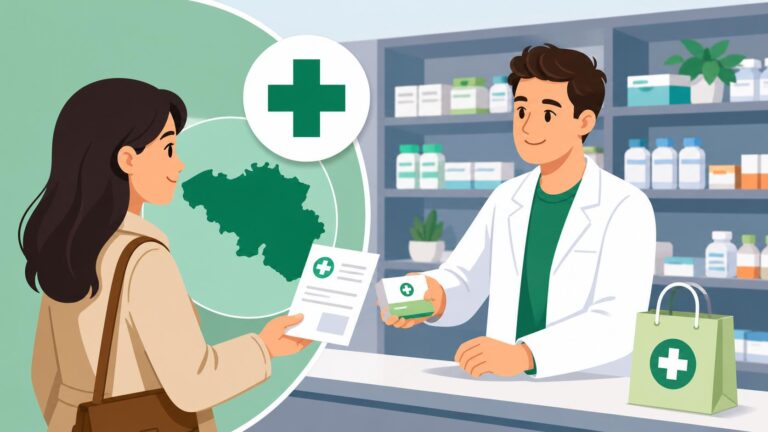
For those who prefer a more proactive approach, there are private agencies like "Tele-Interpreting" services that operate 24/7. These are often used by expats who have moved to more rural areas of Wallonia or Flanders where English isn't as widely spoken. If you find yourself in a situation where you need to communicate with a pharmacist about a prescription, you might even find yourself using an app to bridge the gap. After you've successfully navigated the pharmacy, you might use a site like iHerb to stock up on familiar wellness products that aren't easily found in the local "Apotheek."
Practical Tips for a Multilingual Medical Consultation
Walking into a three-way conversation between you, a doctor, and an interpreter can feel a bit like a diplomatic summit. To make the most of it, you need to be prepared. Before you even leave your house, write down a "cheat sheet" of your symptoms, medications, and any allergies. Having this in writing allows the interpreter to scan the information quickly and ensures that no details are lost if you get flustered during the conversation. This is especially important if you are Managing Chronic Conditions: Diabetes and Asthma Care in Belgium, where specific dosages and historical data are critical.
During the consultation, remember to speak directly to the doctor, not the interpreter. It feels unnatural at first, but professional interpreters are trained to be a "invisible" voice. Look at your physician, speak in short sentences, and pause frequently to allow the translation to happen. This "consecutive interpretation" style is much more accurate than trying to talk over one another. If the doctor uses a term you don't understand, don't just nod. Ask the interpreter to explain the concept, not just the word. In the Belgian system, doctors sometimes use very clinical terms that don't have a direct equivalent in everyday English.
After the visit, you will likely receive a "Compte Rendu" or a medical report. This will be in the local language (French or Dutch). Do not leave the hospital without asking the interpreter to give you a brief verbal summary of the key points in this document. You may later need to use professional services for Translating Medical Records from Your Home Country to French/Dutch if you are transferring your care to a Belgian specialist, but having that immediate summary of your visit is vital for your own records and for any follow-up care.
Finally, keep a record of who helped you. If you had a particularly good experience with a specific mediator at a hospital like Erasme or UZ Brussel, ask for their name. You can often request the same person for follow-up appointments. This continuity is a huge benefit for your mental health. Speaking of which, if you are seeking support for emotional well-being, the requirements for translation are even more stringent, so be sure to consult Finding English-Speaking Therapy and Counseling in Belgium to find professionals who can speak your language natively.
Specialized Translation Needs for Expats
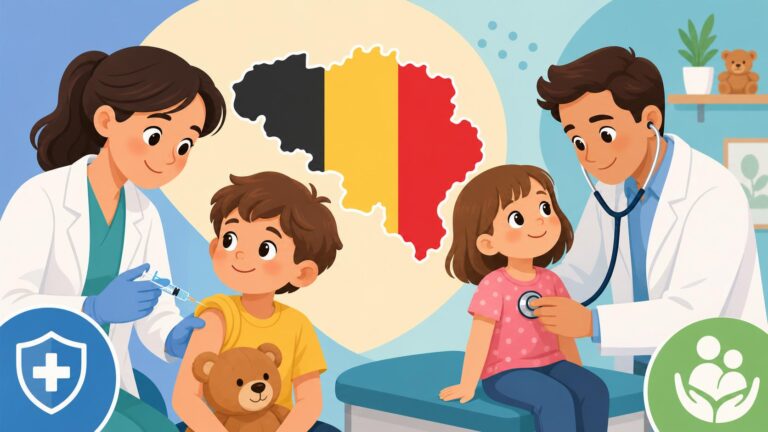
There are certain medical milestones where a simple "how-to" guide isn't enough. For example, if you are Giving Birth in Belgium: Prenatal Care, Delivery, and Hospital Stays, you are entering a months-long process involving midwives, obstetricians, and pediatricians. In these cases, a language barrier isn't just a hurdle; it’s a source of significant anxiety. I’ve seen many expat couples hire a "doula" who is bilingual. While a doula is a birth support person, for an expat in Belgium, they often serve as the primary translator and navigator of the hospital system during labor.
Another specialized area is the translation of legal medical documents. If you are applying for a "Single Permit" based on health grounds or if you are dealing with a work-related injury, the government will require "sworn translations" (traductions assermentées/beëdigde vertalingen). These are translations performed by professionals who have been sworn in by a Belgian court. A regular interpreter cannot provide these. If you are Managing Chronic Conditions: Diabetes and Asthma Care in Belgium, you will almost certainly need sworn translations of your prior medical history to ensure your Belgian specialists have the full picture.
In emergency situations, the rules change. When you call Emergency Numbers: Calling 112 in Belgium and What to Expect, the operators are usually trained to handle calls in French, Dutch, and English. However, once the ambulance arrives, the paramedics may only speak the local language. In these moments, having a "Medical ID" set up on your phone in the local language can be a lifesaver. This simple step, combined with a high-quality global insurance plan like Cigna Global, ensures that even when you can't speak for yourself, your medical needs are communicated.
Lastly, don't forget the follow-up. Belgian healthcare involves a lot of paperwork—invoices, reimbursement slips (vignettes), and lab results. If you receive a bill that you don't understand, don't ignore it. Misunderstanding a bill can lead to a "huissier" (bailiff) showing up at your door months later. If you aren't sure what you are paying for, take the document to your mutuelle or use a translation app to parse the "prestation" codes. You might find that once you understand your prescriptions, you can save money by ordering basics through iHerb, but always clear any supplements with your Belgian doctor first.
Comparing Translation Options for Expats in Belgium
For most of us, the choice of translation service comes down to a balance of cost, urgency, and the complexity of the medical issue. If you are just going in for a routine flu shot, a translation app or a bilingual friend might suffice. But for anything that involves a "consent form," you need a professional.
When I first arrived, I tried to save money by using a friend to translate a consultation for a persistent back issue. It was a disaster. My friend, though fluent in French, didn't know the word for "vertebrae" or the specific nuances of "nerve impingement." I ended up with a treatment plan I didn't fully understand and a lot of wasted time. Since then, I’ve relied on the official hospital mediators. Even if it takes a bit more effort to book them, the accuracy is non-negotiable.
If you are currently navigating a health crisis or just planning for the future, make sure you have the Medical Emergency Checklist for Your First 30 Days in Belgium saved on your phone. It includes the phrases you need to request an interpreter in both French and Dutch. Being an expat is hard enough; don't let a language barrier stand between you and the world-class healthcare that Belgium has to offer.
Disclaimer
The information provided in this guide is for educational and informational purposes only and does not constitute professional medical, legal, or financial advice. Healthcare regulations and translation service availability in Belgium are subject to change. Always consult with a qualified healthcare provider or a certified legal professional regarding your specific circumstances. While we strive to keep this information up to date for 2026, we recommend verifying service details with the relevant Belgian authorities or your insurance provider.