Fluoride in Belgian Water: Do Kids Need Supplements?
Moving to Belgium often means trading one set of worries for another, especially when you realize the local tap water doesn't taste like what you're used to back home. I remember staring at my toddler’s first toothbrushing session in Brussels, paralyzed by whether the water here was actually protecting her teeth or if I was failing as a parent. This guide breaks down the fluoride reality in Belgium so you can stop second-guessing your morning routine.
The Fluoride Landscape in Belgian Tap Water
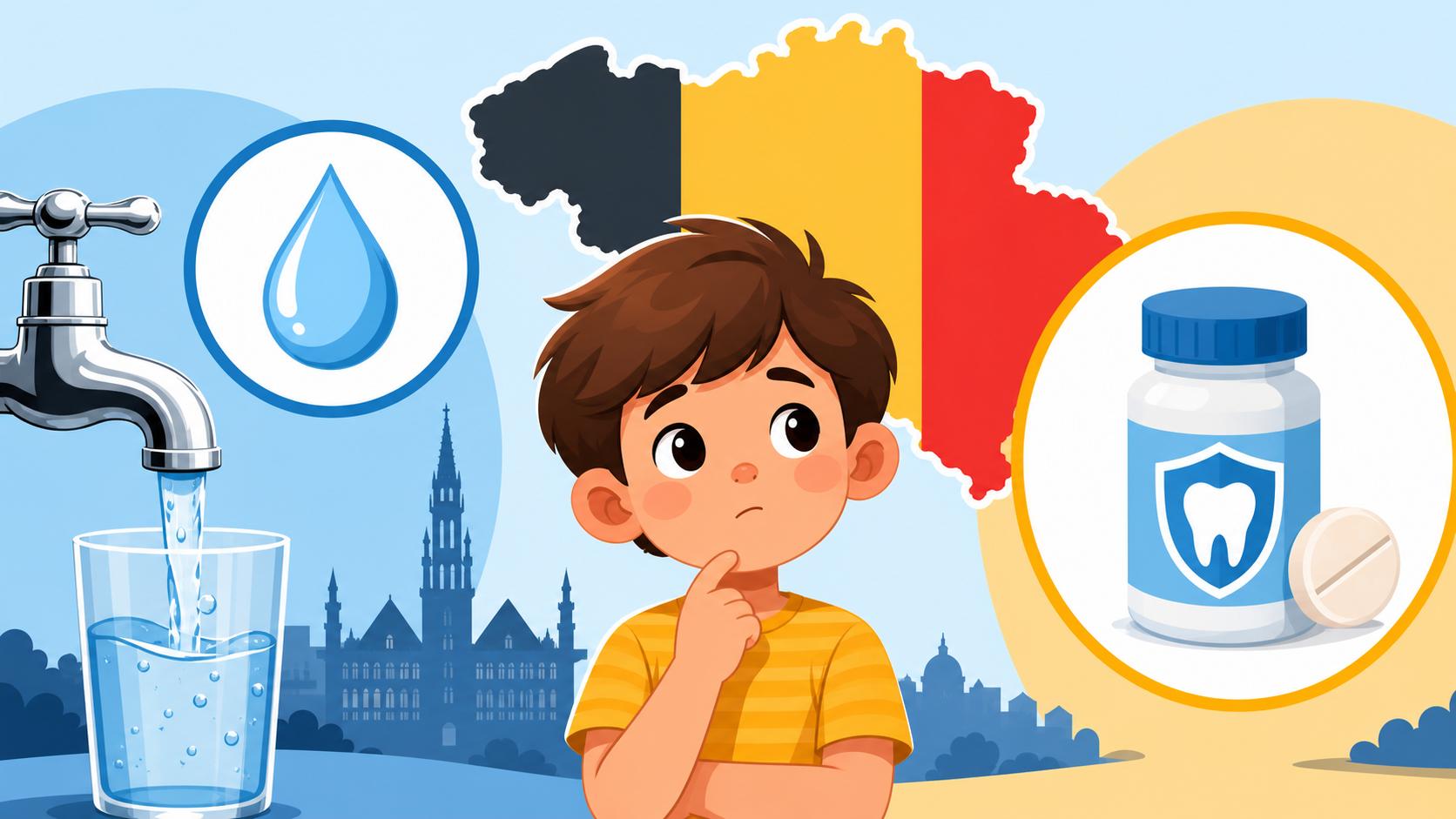
If you are coming from the United States, the United Kingdom, or Australia, you are likely accustomed to the idea that fluoride is a standard additive in municipal water supplies. In Belgium, the situation is drastically different. Belgium was actually one of the first countries in the world to cease the practice of water fluoridation. Today, you will not find a single public water provider in the country—whether it is Vivaqua in Brussels, De Watergroep in Flanders, or SWDE in Wallonia—that artificially adds fluoride to the drinking water.
This policy often catches expat parents off guard. The natural fluoride levels in Belgian tap water are generally very low, often well below 0.3 mg/L, which is significantly lower than the 0.7 mg/L typically recommended for dental protection in countries that fluoridate. When I first moved to Ixelles, I spent hours scouring the Healthcare in Belgium for Expats: Complete System Overview (2027) to see if I had missed some vital public health directive. The reality is that Belgium, like much of Continental Europe, relies on a different strategy for oral health.
Why Belgium Doesn't Fluoridate
The decision to keep fluoride out of the water isn't about "anti-science" sentiment; it is about targeted delivery. Belgian health authorities believe that fluoride is most effective when applied topically (like toothpaste) rather than ingested systemically via drinking water. There is also a cultural emphasis on personal choice and avoiding "mass medication" of the population. While this sounds noble, it places the burden of dental prevention squarely on the shoulders of parents.
Living here, you quickly realize that Finding Medical Care in Belgium: GPs, Specialists, and Hospitals includes finding a dentist who understands the specific needs of expat children who may have started their lives under a different dental regime. The transition can be jarring, but it is manageable once you understand the local tools at your disposal.
Do Belgian Kids Actually Need Fluoride Supplements
The short answer is: rarely, but it depends on your child’s specific risk profile. In the past, it was common for Belgian pediatricians to prescribe "fluoride drops" or tiny tablets (Zymafluor) for infants. However, the Superior Health Council of Belgium updated its guidelines years ago. The current consensus is that systemic supplementation (swallowing fluoride) is no longer the primary recommendation for the general population.
Instead, the focus has shifted entirely to topical application. This means the type of toothpaste your child uses is far more important than the water they drink. If you are concerned about your child’s intake of essential minerals, you can find high-quality pediatric vitamins on iHerb that complement a Belgian diet, but you should always consult your local practitioner before adding a dedicated fluoride supplement.
The Role of Fluoridated Salt
One thing many expats miss is that Belgium allows the sale of fluoridated table salt. If you walk down the spice aisle at a Delhaize or Carrefour, you might see salt packages marked with "Fluor." This is a common European alternative to water fluoridation. The idea is that households can choose to use this salt for cooking, providing a low-level systemic dose of fluoride. However, most dentists in Brussels and Antwerp still suggest that for children, the priority remains the biannual checkup and proper brushing.
When a Dentist Might Prescribe Supplements
There are "high-risk" scenarios where a Belgian dentist might still recommend supplements. This usually happens if a child has particularly weak enamel or if they are prone to rapid cavity development. In these cases, you might be directed to Pharmacies and Medication in Belgium: Prescriptions and OTC Rules to pick up a specific prescription. It’s important to note that "over-supplementing" can lead to dental fluorosis—white spots on the teeth—so you should never start a supplement regime just because you're worried about the lack of fluoride in the tap water.
Navigating Dental Care for Children in Belgium
The Belgian dental system is world-class, but the administrative side can be a headache for newcomers. For children under 18, most basic dental procedures are fully reimbursed by your "Mutuelle," provided the dentist is "conventioned." This is a huge relief when you are trying to manage the Healthcare Budgeting: Copays, DMG/GMD, and Reimbursements for a growing family.
Finding an Expat-Friendly Dentist
In international hubs like Brussels or Tervuren, you will find many dentists who speak perfect English and are used to parents asking about fluoride levels. I highly recommend booking an appointment as soon as your child’s first teeth emerge. This isn't just about cleaning; it’s about establishing a "Global Medical Record" (GMD) for their dental health. If you are looking for specific providers, the Brussels Healthcare Guide for Expats: Clinics, Hospitals, and Care is a great place to start your search.
During these visits, the dentist will likely perform a "fluoride varnish" application. This is a highly concentrated fluoride gel painted onto the teeth. It’s a standard part of Pediatricians in Belgium: Routine Vaccines and Child Checkups in a dental context and provides the protection the water lacks.
Private Insurance and Dental Extras
While the public system is generous, it doesn't cover everything. If your child needs orthodontics later on, the costs in Belgium can skyrocket. This is where many expats look into private options. Companies like Cigna Global offer plans that can bridge the gap for more extensive dental work that the standard Belgian Mutuelle might not fully cover. Having that extra layer of security saved me a lot of stress when my eldest needed a specialized consultation that fell outside the standard reimbursement brackets.
Comparison of Water Hardness and Fluoride by Region
While fluoride is low across the board, the mineral content (hardness) of Belgian water varies wildly. Hard water doesn't affect cavities directly, but it does affect how you maintain your home and sometimes how your skin and hair react to the local supply.
| Region | Primary Provider | Average Fluoride Level | Water Hardness (French Degrees) |
|---|---|---|---|
| Brussels | Vivaqua | < 0.15 mg/L | 30 – 45 (Very Hard) |
| Antwerp | Water-Link | < 0.20 mg/L | 15 – 25 (Moderately Hard) |
| Ghent | De Watergroep | < 0.10 mg/L | 20 – 30 (Hard) |
| Liège | CILE | < 0.10 mg/L | 15 – 35 (Varies by Source) |
| Waterloo | SWDE | < 0.12 mg/L | 35 – 45 (Very Hard) |
As you can see, regardless of where you settle, the fluoride levels remain negligible. This is a consistent national policy. If you're struggling with the transition to a new city, don't forget to check out Family Health in Belgium: Pregnancy, Birth, and Pediatric Care for more on how to manage your family's wellness in the early months of your move.
Practical Steps for Parents Moving to Belgium
If you are currently packing your boxes or have just arrived, here is a realistic to-do list to ensure your kids' teeth stay healthy in a fluoride-free-water environment:
- Switch to Local Toothpaste Standards: Belgian "toddler" toothpastes are formulated with specific fluoride concentrations (usually 500ppm to 1000ppm depending on age). Don't just rely on what you brought from home; check the labels at the local "Apotheek."
- Use iHerb for Natural Alternatives: If you prefer fluoride-free options for younger babies who still swallow their toothpaste, iHerb has a massive selection of expat-favorite brands that can be delivered right to your door in Brussels or Ghent.
- Register with a Mutuelle Immediately: You cannot get dental reimbursements without being registered. Follow a Mutuelle and Ziekenfonds: Public Health Insurance Registration Guide to get your stickers (vignettes) as soon as possible.
- Ask for a Fluoride Varnish: During your first dental checkup, specifically ask the dentist if they recommend a varnish. In Belgium, this is the gold standard for prevention.
- Monitor Your Child's Diet: Since the water isn't doing the work, reducing sugary snacks and "sippy cup" juice is even more critical here than it might be in London or New York.
The Bottled Water Trap
Many expats in Belgium default to bottled water because they find the tap water too "hard" or they dislike the taste. Be careful here—some bottled waters like Volvic or Evian have almost zero fluoride, while others (often the bubbly ones) can have very high mineral contents. If you use bottled water for formula, ensure it is marked with a "suitable for infants" logo (a baby silhouette), which guarantees a safe and balanced mineral profile.
Final Thoughts for the Expat Parent
It is completely normal to feel a bit of "bureaucracy burnout" and health-related anxiety when you first arrive. The fluoride question is just one of many small cultural shifts you'll navigate. The good news is that Belgian children have remarkably low rates of tooth decay compared to many other European nations, proving that their topical-first approach actually works—as long as you stay on top of those dental appointments.
If you find yourself overwhelmed by the logistics of the Belgian system, remember that you aren't alone. Whether it's choosing the right Private Health Insurance in Belgium: When Do Expats Really Need It? or just figuring out which garbage bag goes out on Tuesdays, there is always a fellow expat who has been through it. Take a deep breath, book that dentist appointment, and maybe treat yourself to a sugar-free Belgian chocolate afterward.
Disclaimer
The information provided in this guide is for educational and informational purposes only. It is not intended as a substitute for professional medical or dental advice, diagnosis, or treatment. Always seek the advice of your dentist, pediatrician, or other qualified health provider with any questions you may have regarding a medical condition or the use of supplements for your child. Dietary and medical needs can vary significantly based on individual health profiles and regional water quality variations.