Using an ISI+ Card for Children’s Healthcare Access
You’ve just arrived in Brussels or Antwerp, your boxes are half-unpacked, and your toddler suddenly develops a fever. You head to the pharmacy, expecting to just hand over a passport, only to be asked for a "social security card" or an "ISI+ card" that you’ve never heard of. I vividly remember standing in a line at a local apothecary, feeling completely lost because I hadn't yet received the right plastic card for my daughter. This guide solves the mystery of the ISI+ card and ensures your children have seamless access to the Belgian healthcare system.
What Exactly is an ISI+ Card?
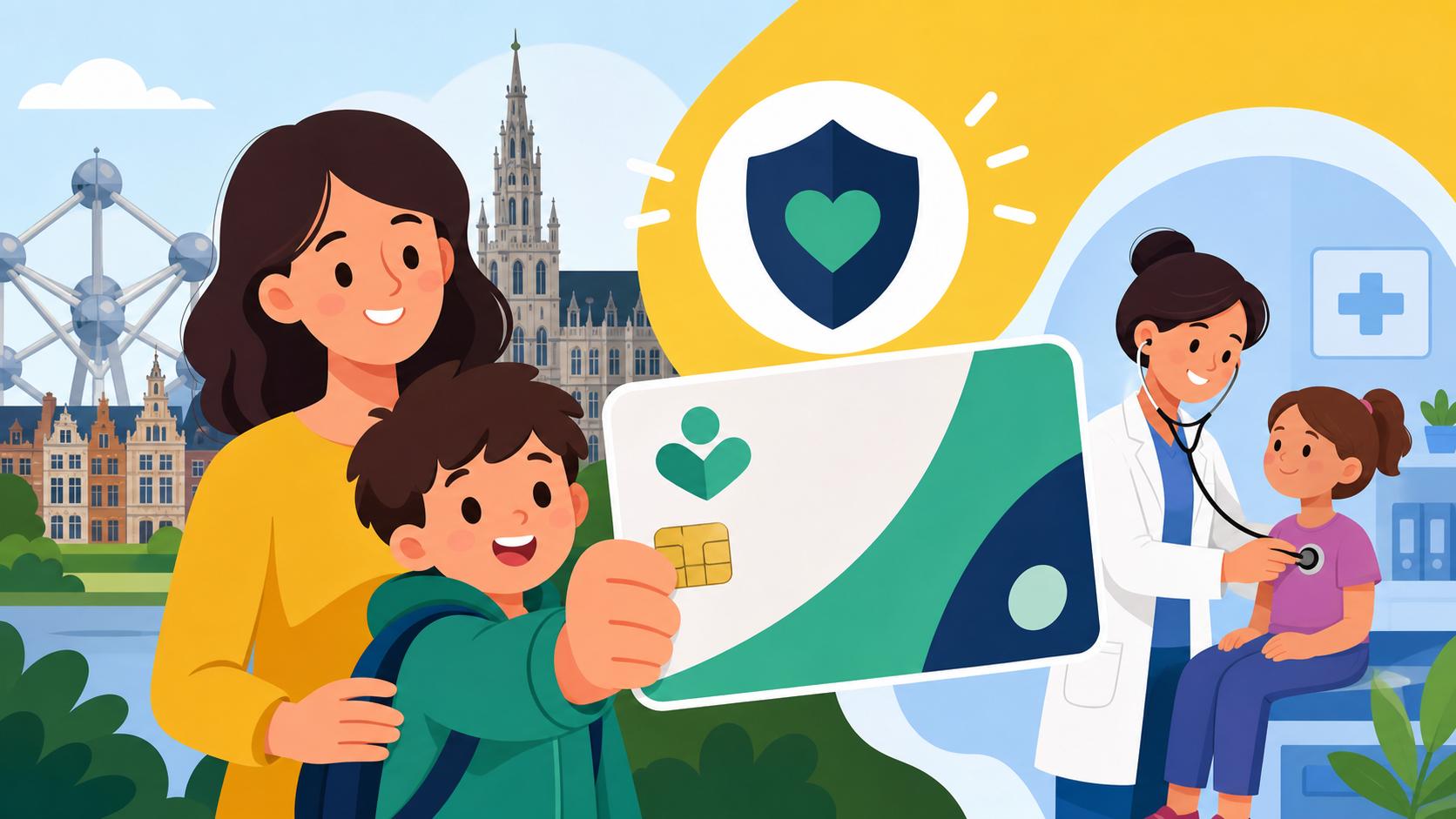
The ISI+ card is a specific social security identification card used in Belgium for individuals who are entitled to Belgian social security but do not have an electronic identity card (eID). In the context of expat life, this most commonly applies to children under the age of 12. While adults use their Belgian eID to prove their insurance status at a doctor or pharmacy, children don't always have a card with a chip. The ISI+ card bridges that gap.
Why Children Don't Have Standard eIDs
In Belgium, the mandatory electronic identity card (eID) is only issued to residents aged 12 and over. For foreigners, this is usually your A, B, or F card. Children under 12 are technically eligible for a "Kids-ID," but this is an optional travel document that costs money and requires an application at your local commune. Because the government still needs a way to track a child’s health insurance and social security contributions, they created the ISI+ card as a free, mandatory alternative for healthcare purposes.
The Difference Between ISI+ and Kids-ID
It is a common point of confusion for new arrivals: do you need both? A Kids-ID is primarily for identification and international travel within the Schengen area. The ISI+ card, however, is strictly for social security. It contains the child’s National Register Number (the numéro national or rijksregisternummer) and allows healthcare providers to see which Mutuelle and Ziekenfonds: Public Health Insurance Registration Guide the child is registered under. If you have a Kids-ID, you can often use it at the pharmacy because it also contains the chip, but the ISI+ is the standard "insurance card" for children.
Who Else Uses an ISI+ Card?
While this guide focuses on children, it is worth noting that certain adults might also receive an ISI+ card. This includes cross-border workers who live in a neighboring country like France or the Netherlands but work in Belgium, or expats who have been granted social security rights but are still waiting for their official residency card to be printed. If you find yourself in the latter category, you might find our guide on Accessing Belgian Healthcare Without an eID: Temporary Certificates particularly useful during those first few weeks of administrative limbo.
How to Obtain and Activate the ISI+ Card
The good news for exhausted parents is that the ISI+ card is usually issued automatically. However, "automatically" in Belgium often comes with a few caveats and a fair amount of patience. Understanding the triggers for issuance can save you several frantic calls to the insurance office.
The Trigger: Registering with a Mutuelle
The ISI+ card is not sent by the commune (town hall); it is sent by your health insurance fund (the mutuelle or ziekenfonds). Once you have completed Registering for Public Health Insurance: Step-by-Step at Your Commune and chosen a provider, you must add your children as "dependents" on your policy. Once the insurance fund processes the child's registration, they trigger the request for the ISI+ card. The card is then printed by the Crossroads Bank for Social Security and mailed directly to your home address registered at the commune.
What to Do During the Waiting Period
It usually takes between two to four weeks for the card to arrive in your mailbox after the insurance registration is finalized. If your child needs a doctor or medication during this window, don't panic. Your insurance provider can issue a paper "certificate of entitlement" or a temporary document that carries the same weight as the card. I remember carrying a folded, slightly crumpled piece of paper to the pediatrician for three weeks before the plastic card finally arrived. If you are worried about gaps in coverage during your relocation, looking into Private Health Insurance in Belgium: When Do Expats Really Need It? can provide peace of mind, and some expats choose Cigna Global for comprehensive international coverage that overlaps with the Belgian public system.
If the Card Never Arrives
If it has been more than a month and you haven't seen the card, the first step is to check your "eBox" (the digital government mailbox) or contact your mutuelle. Sometimes, if there is a typo in your address at the commune, the card is returned to the sender. It is also vital to ensure your name is clearly marked on your physical mailbox; Belgian mail carriers are notoriously strict about not delivering mail if the name on the envelope doesn't match the name on the box. While you wait, you can still book appointments through platforms like Using the Rosa App: Booking Medical Consultations Online.
Using the ISI+ Card in Daily Life
Once that small green and white card arrives, it becomes one of the most important items in your wallet. In Belgium, the healthcare system is highly digitized, and the ISI+ card is the key that unlocks your child’s electronic records.
At the Pharmacy
When you take a prescription to the pharmacy, the pharmacist will ask for the child's card. By inserting the ISI+ card into their reader, they can see the "electronic prescription" uploaded by your doctor. This system also ensures you only pay the "remittance" price (the portion not covered by insurance) rather than the full cost. For parents looking for specific supplements or health products that aren't always stocked locally, I’ve found iHerb to be a great resource for international brands that the local pharmacie might not carry. For more on how this works, see Pharmacies and Medication in Belgium: Prescriptions and OTC Rules.
At the Hospital and Pediatrician
Whenever you visit Pediatricians in Belgium: Routine Vaccines and Child Checkups, you will be asked for the card at the reception desk. This allows the doctor to link the visit to the child’s The Global Medical Record (DMG/GMD): Why You Need It for Better Refunds. Having a GMD for your child is a pro-tip for expats; it centralizes their medical history and actually reduces your out-of-pocket costs for consultations. If you end up in a situation involving Emergency Medical Care in Belgium: 112, Hospitals, and Pharmacies, having the ISI+ card ready will significantly speed up the administrative intake at the ER (the Urgences or Spoedgevallen).
| Feature | ISI+ Card | Kids-ID | Belgian eID (Adult) |
|---|---|---|---|
| Primary Purpose | Social Security / Health | Identification / Travel | Identity / Social Security |
| Mandatory? | Yes, for health access | Optional for under 12s | Mandatory for 12+ |
| Cost | Free | Varies by Commune (~€10-€20) | ~€25 |
| Issued By | Health Insurance Fund | Local Commune | Local Commune |
| Travel Utility | None | Within EU/Schengen | Within EU/Schengen |
Managing Prescriptions and History Online
Belgium has a fantastic portal called MyHealth.belgium.be. Even though your child only has an ISI+ card, you can log in using your own eID or "Itsme" app and see your children's data linked to your account. You can check their vaccination history, see active prescriptions, and even check which Family Health in Belgium: Pregnancy, Birth, and Pediatric Care screenings are upcoming. This level of transparency is a lifesaver when you can't remember if your child had their last polio booster or what the name of that specific ear drop was.
Losing or Replacing the ISI+ Card
Life with kids is messy, and cards get lost. Whether it was left at the doctor's office or disappeared into the void of a toy box, losing the ISI+ card is a headache, but not a disaster.
How to Request a Duplicate
If you lose the card, you do not go to the police (unless your entire wallet was stolen). Instead, you contact your mutuelle. Most Belgian insurance funds, like Partenamut, CM, or Helan, allow you to request a new card directly through their member portal or app. There is usually a small administrative fee (around €10) for a replacement card if it was lost, though it is often free if the card was defective or stolen (with a police report). While waiting for the new one, you may need to know What to Do If You Lose Your Belgian eID Before a Doctor Visit as the process for obtaining temporary proof is quite similar.
When the Card Expires
The ISI+ card technically has a long validity period, often up to 10 years. However, the moment your child turns 12 and receives their official Belgian eID, the ISI+ card becomes obsolete. The eID chip will then take over all the functions of the ISI+ card. It is a good idea to keep the ISI+ card in a safe place until that 12th birthday, as you might still need it if there are delays in issuing the first eID.
Traveling Outside Belgium
It is important to remember that the ISI+ card is not a travel document. It does not prove your child's right to healthcare in other EU countries. For that, you need the European Health Insurance Card (EHIC). You can usually request the EHIC for free from your mutuelle at the same time you register for the ISI+ card. While the ISI+ stays in your wallet for local visits to the Finding Medical Care in Belgium: GPs, Specialists, and Hospitals, the EHIC is what you’ll need for that summer trip to France or Italy.
Final Advice for New Expat Parents
Navigating the Belgian healthcare system feels like learning a new language, even if you already speak French or Dutch. The ISI+ card is just one small piece of the puzzle, but it’s the one that ensures your child can get the care they need without you facing massive, unreimbursed bills.
Always keep a photo of the front and back of the card on your phone. Many pharmacists are kind enough to manually enter the National Register number from a photo if you’ve forgotten the physical card at home. It’s also worth checking if your employer offers additional Hospitalization Insurance (Assurance Hospitalisation): Employer Benefits, which often covers the costs the public mutuelle doesn't, such as private hospital rooms for you to stay overnight with your child.
Belgium’s system is incredibly high-quality once you have the right plastic cards in hand. Don’t let the initial paperwork discourage you. Once the ISI+ card is in your possession, you’ve conquered one of the biggest administrative hurdles of parenting in the Land of Chocolate and Fries.
Disclaimer
This article is provided for informational purposes only and does not constitute legal, financial, or medical advice. Belgian administrative procedures and social security laws are subject to frequent change. Always verify the latest requirements with your local commune or your specific health insurance provider (Mutuelle/Ziekenfonds) to ensure you have the most up-to-date information for your situation.