Finding Dog Parks and Leash Rules in Belgian Cities
Finding yourself standing in a rain-slicked Belgian park while a neighbor gives you a stern look for letting your Golden Retriever off its lead is a rite of passage for many expats. When I first moved to Brussels, I assumed the sprawling greenery meant total freedom for my pup, only to realize the "Police Ordonnance" was far stricter than I expected. This guide solves the confusion by mapping out the specific leash laws across major Belgian cities and identifying the best off-leash zones where your dog can truly run free.
Understanding General Leash Laws in Belgium
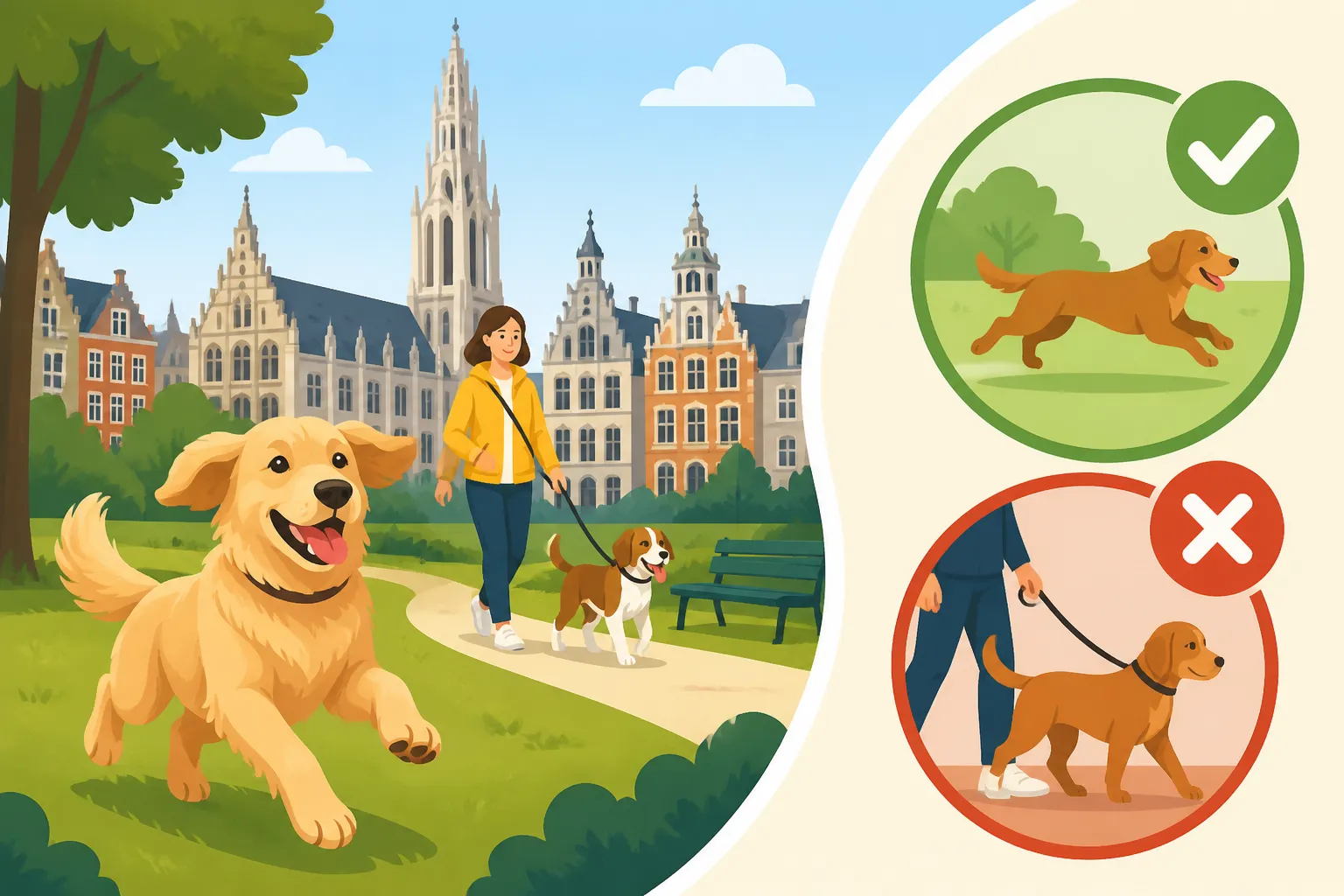
In Belgium, the general rule of thumb is that dogs must be on a leash in all public spaces. This includes streets, sidewalks, public squares, and most parks. However, the interpretation of these rules can vary slightly depending on whether you are in the Brussels-Capital Region, Flanders, or Wallonia. Generally, the leash must be of a "reasonable length," usually meaning no more than two meters, to ensure you have full control over the animal. Using a retractable lead in a crowded area like the Grand Place in Brussels is often looked upon with disfavor, as it creates a tripping hazard for tourists.
The legal framework is often governed at the municipal level. This means that a park in Ixelles might have different hours for off-leash play than a park just across the border in Etterbeek. Failure to comply with these rules can result in administrative fines (GAS boetes in Dutch, or Sanctions Administratives Communales in French). These fines often start at 50 euros but can climb significantly if your dog is deemed a nuisance or if you are a repeat offender. It is essential to check the local "Police Regulations" posted at the entrance of every major green space.
Before you even head to the park, ensure your administrative ducks are in a row. Every dog in Belgium must be microchipped and registered with DogID, the national database. If you are just arriving, you might need to consult our guide on Expat Pet Relocation: Bringing Cats and Dogs to Belgium to understand the transition from foreign registries to the Belgian system. Having your dog's ID linked to your Belgian address is not just a legal requirement; it is your best hope if they decide to chase a squirrel into the Sonian Forest and get lost.
Brussels Specific Regulations and Communal Differences
Brussels is a patchwork of 19 different communes, and each acts like its own little fiefdom when it comes to dog rules. In the City of Brussels commune (which includes the city center and the European Quarter), the rules are strictly enforced by park rangers. You will notice green signs with a dog silhouette—if there is no line through it, you are in a designated area. If there is a red line, stay on the leash.
One of the most popular spots for expat dog owners is the Parc du Cinquantenaire. While it feels massive, only specific areas near the peripheral paths are designated for off-leash activity. Most of the central lawns are technically leash-only zones to protect the thousands of people who picnic there during the summer. If you are living in a high-density area, you might be using HousingAnywhere to find pet-friendly apartments, and you will quickly realize that proximity to a "Zone de Liberté" (Freedom Zone) is a major selling point for any rental.
In communes like Uccle and Watermael-Boitsfort, which border the Sonian Forest, the rules get even more specific. The forest itself is a protected Natura 2000 site. This means that while some paths allow dogs, many require they stay on a short lead to protect the local deer population. If you are caught with an off-leash dog in a restricted forest zone, the fines are much higher than in a city park because you are violating environmental protection laws. For those living in these areas, Living in Brussels: Top Expat Neighborhoods (Ixelles, Etterbeek) provides more context on the local vibes and which communes are most welcoming to large breeds.
Finding the Best Off Leash Zones in Brussels
If you want your dog to socialize, you need to head to a "Hondenzone" or "Espace Chien." These are often fenced-in areas or specific meadows where the leash rule is officially suspended. In the Bois de la Cambre, there are large sections where dogs are allowed to run, provided they are under "perfect call control." This is a subjective term used by the Belgian police, meaning if your dog doesn't come back the first time you call, you are technically in violation.
Woluwe Park is another gem for dog owners. It features rolling hills and several ponds. Be careful, though; some ponds are designated for ducks and swans, and if your dog jumps in, you could be fined for disturbing the wildlife. The "Espace Chien" in Woluwe is particularly social, and it is a great place to meet other expats. Using an eSIM from Airalo is incredibly helpful here, as you can use local apps or Google Maps to pinpoint these specific "freedom zones" without worrying about roaming charges or losing your way in the larger forest-connected parks.
Another hidden secret is the Parc Josaphat in Schaerbeek. It has a dedicated, fenced dog run that is quite large compared to the small "play pens" found in London or Paris. These fenced areas are vital if your dog has a high prey drive. While walking to these parks, you’ll need to navigate the Brussels Transport (STIB/MIVB): Metros, Trams, and Bus Networks. Dogs are allowed on Brussels public transport for free if they fit in a bag, or for a reduced fare if they are on a lead. Large dogs must wear a muzzle on the metro, a rule that is strictly enforced during peak hours.
Navigating Flanders: Antwerp and Ghent Dog Rules
Flanders generally has very clear signage. You are looking for the word "Hondenzone." In Antwerp, the city has invested heavily in creating high-quality dog parks. The Rivierenhof is a massive park on the outskirts of the city that offers designated trails for dog walkers. If you are Living in Antwerp: Port City Vibe and Best Areas for Foreigners, you will find that the city is quite dense, making these "dog islands" in the park system essential for your pet's mental health.
In Ghent, the Citadelpark is the central hub, but it is often crowded. For a better experience, head to the Blaarmeersen, where there is a dedicated dog swimming pond. This is a rarity in Belgium and is worth the trip. The Flemish government is quite strict about "Hondenpoep" (dog waste). You are legally required to carry at least two waste bags on your person at all times when walking a dog. Police have been known to stop walkers just to check if they have bags; if you can't produce one, you can be fined on the spot.
When traveling between these cities with your pet, the train is your best friend. You can check the Public Transport: SNCB/NMBS (National Trains) Fares and Passes for current pet pricing. Usually, it's a flat fee (around 3 euros) for a "Pet Ticket" regardless of the distance, provided the dog is on a leash and sits on the floor. It is a very dog-friendly way to explore the country, and most Belgian trains have plenty of legroom for a large dog to tuck under the seat.
Essential Dog Park Etiquette and Cultural Norms
Belgians are generally very polite, and this extends to the dog park. There is an unwritten rule that you should always ask "C’est un mâle ou une femelle?" (Is it a male or a female?) before letting your dog approach another. This helps avoid potential territorial scraps. Also, the concept of the "bise" (the cheek kiss) is for humans; Belgians generally don't like strangers petting their dogs without asking first. It is seen as a breach of the dog's space and the owner's privacy.
Noise is another factor to consider. If your dog is a "barker," be careful in urban parks surrounded by apartments. Residents are quick to call the authorities if a dog is barking incessantly in a park at 7:00 AM on a Sunday. To avoid issues, you should familiarize yourself with Everyday Rules in Belgium: Garbage Sorting, Noise, and Etiquette. Managing your dog's noise level is part of being a "good neighbor," a concept that carries significant weight in Belgian social circles.
If you ever find yourself in a dispute with a neighbor over your dog, or if someone complains about noise, it can escalate quickly. Knowing the protocol for Handling Noise Complaints: When to Call the Belgian Police is useful, though you should always aim for a friendly "Bonjour" and a quick apology first. Belgians value conflict resolution through direct, calm communication. Bringing a small treat or simply moving to a different part of the park can save you a lot of administrative headache.
Comparative Overview of Major City Dog Parks
The following table summarizes the key features of the most popular dog-friendly zones in Belgium to help you plan your weekend outings.
| City | Park Name | Off-Leash Type | Water Access | Fenced? |
|---|---|---|---|---|
| Brussels | Bois de la Cambre | Open Meadows | Yes (Lakes) | No |
| Brussels | Parc Josaphat | Dedicated Run | No | Yes |
| Brussels | Woluwe Park | Large Meadows | Yes (Ponds) | No |
| Antwerp | Rivierenhof | Forest Trails | Yes (Moat) | Partially |
| Antwerp | Nachtegalenpark | Designated Zone | No | Yes |
| Ghent | Blaarmeersen | Dog Beach | Yes (Swim) | Yes |
| Ghent | Citadelpark | Small Zones | No | No |
| Leuven | Provinciedomein | Dedicated Park | Yes | Yes |
Administrative Requirements and Digital Tools for Owners
When you are out and about, you might need to order supplies. Amazon Belgium has a wide selection of leashes, muzzles, and travel bowls that can be delivered to a "Point Relais" if you aren't home. This is particularly useful because many local Belgian pet shops (like Tom&Co) are excellent but may not always have the specific international brands you are used to.
For the tech-savvy expat, there are several local apps like "DogPack" or "PlayDogs" that show user-generated reviews of Belgian dog parks. These are invaluable for finding out if a park is currently muddy (a common Belgian problem) or if there is construction. Since you’ll likely be using your phone to navigate these new spots, ensuring you have your Setting Up Itsme While Waiting for Your Physical eID Card done is vital. Itsme is the digital key to almost everything in Belgium, and while it's not directly related to dogs, it's how you'll log into your commune's portal to pay a fine or register your pet's change of address.
Finally, remember that while you are focusing on your dog's social life, yours matters too. Belgian dog parks are one of the few places where the local "reserve" breaks down. It is much easier to strike up a conversation with a Belgian while your dogs are wrestling in the grass. This is a key part of Building Community: Making Friends and Cultural Integration. Don't be afraid to ask for advice on local vets or the best "dog-friendly" cafes in the neighborhood. Most Belgians are proud of their local knowledge and will be happy to share their favorite spots with a fellow dog lover.
Overcoming Cultural Shocks and Practical Tips
The biggest shock for many is the "Zero Tolerance" for waste. In many US or UK cities, you might get a warning. In Belgium, the "Bruxelles-Propreté" or the local Flemish equivalent are often out in plain clothes. They aren't there to be mean; they are there to keep the city walkable. Always have your bags visible. I usually tie one to the handle of the leash so it's obvious I am prepared.
Another practical tip involves the weather. Belgium is famous for its "Drache Nationale" (heavy rain). Many dog parks become mud pits between November and March. Investing in a good pair of wellies and a high-quality dog raincoat is not an option; it is a necessity. You’ll see most local dogs wearing coats, not for fashion, but to keep the damp out. If you are still getting settled and need to drive to a larger forest for a dry path, make sure your paperwork is correct, especially if you are Exchanging a Foreign Driver’s License for a Belgian One.
Lastly, keep an eye on the "Hunting Season" (Saison de la Chasse) if you head into the Ardennes or the larger forests in Wallonia. From October to December, certain areas are closed to walkers for safety. These are clearly marked with red posters on trees. Never ignore these, and never let your dog off-leash in these areas, as the sound of a gunshot can cause a dog to bolt, and the terrain is unforgiving. Stick to the city parks during these months to be safe.
Disclaimer
The information provided in this guide is for general informational purposes only and does not constitute legal advice. While every effort has been made to ensure the accuracy of these regulations as of 2026, local municipal laws and police ordinances in Belgium are subject to frequent changes. Always check the official signage at the entrance of any public park or consult your local commune (Maison Communale/Stadhuis) for the most current rules and fine structures. The author and publisher are not responsible for any fines, legal issues, or incidents arising from the use of this information.