What is a Maestro Card and Why is Mastercard/Visa Sometimes Rejected?
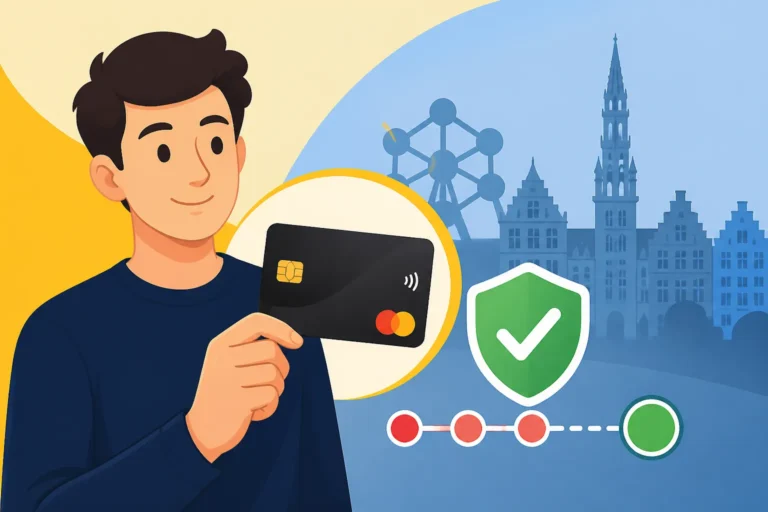
You are standing at the counter of a charming local boulangerie in Ixelles, the scent of fresh baguettes filling the air. You reach for your sleek, metal premium Visa card to pay for a three-euro croissant, only for the clerk to point at a faded sticker on the terminal and mutter, "Bancontact only." I remember my first week in Brussels, trying to buy groceries at a Colruyt, only to have my international Mastercard declined four times while a line of impatient locals sighed behind me. This guide solves the mystery of why your globally accepted cards fail in Belgium and how to master the local payment landscape.
The Belgian Payment Paradox: Why Global Giants Fail Locally
Belgium operates on a financial island that often baffles newcomers from North America, the UK, or even neighboring France. While the rest of the world has largely harmonized around the Visa and Mastercard networks, Belgium has spent decades fiercely protecting its domestic system. Understanding this paradox is the first step toward financial sanity in your new home.
The Legend of Bancontact Only
For many small business owners in Belgium, the term "Visa" is synonymous with "high fees." Historically, the Bancontact network was the only affordable way for a local butcher or a neighborhood pharmacy to accept digital payments. This created a culture where anything other than a local debit card was viewed with suspicion. Even today, you will find that many places—especially those outside the main tourist hubs of Grand Place—strictly adhere to this rule. If you are currently Registering at the Commune: The 8-Day Rule After Arrival, be prepared; many municipal offices still prefer or exclusively require a Bancontact-compatible card for residency fees.
Why the Commune and Bakeries are the Gatekeepers
The reason your foreign card gets rejected isn't usually a lack of funds; it is a lack of the correct "handshake" between the card and the terminal. Belgian terminals are often programmed to prioritize the Bancontact protocol. When you insert a standard Visa or Mastercard, the terminal looks for a specific domestic chip ID. If it doesn't find it, it simply terminates the transaction. This is particularly common in low-margin businesses like bakeries or when paying for Tipping Culture in Belgium: Restaurants, Cafes, and Deliveries. These merchants simply haven't enabled the "credit" side of their payment contracts because the transaction fees would eat their small profits.
The Psychological Barrier of Credit
There is also a cultural element at play. Belgians are traditionally debt-averse. The idea of a "credit card" as a primary tool for daily coffee or bread is still somewhat alien to the older generation of shopkeepers. They view debit as "real money" and credit as "borrowed money." When you offer a Visa or Mastercard, even if it is a debit version, the terminal often processes it as a credit transaction. This creates a friction point that can only be smoothed over by having a card that carries the local branding.
Decoding Maestro and the Great Transition
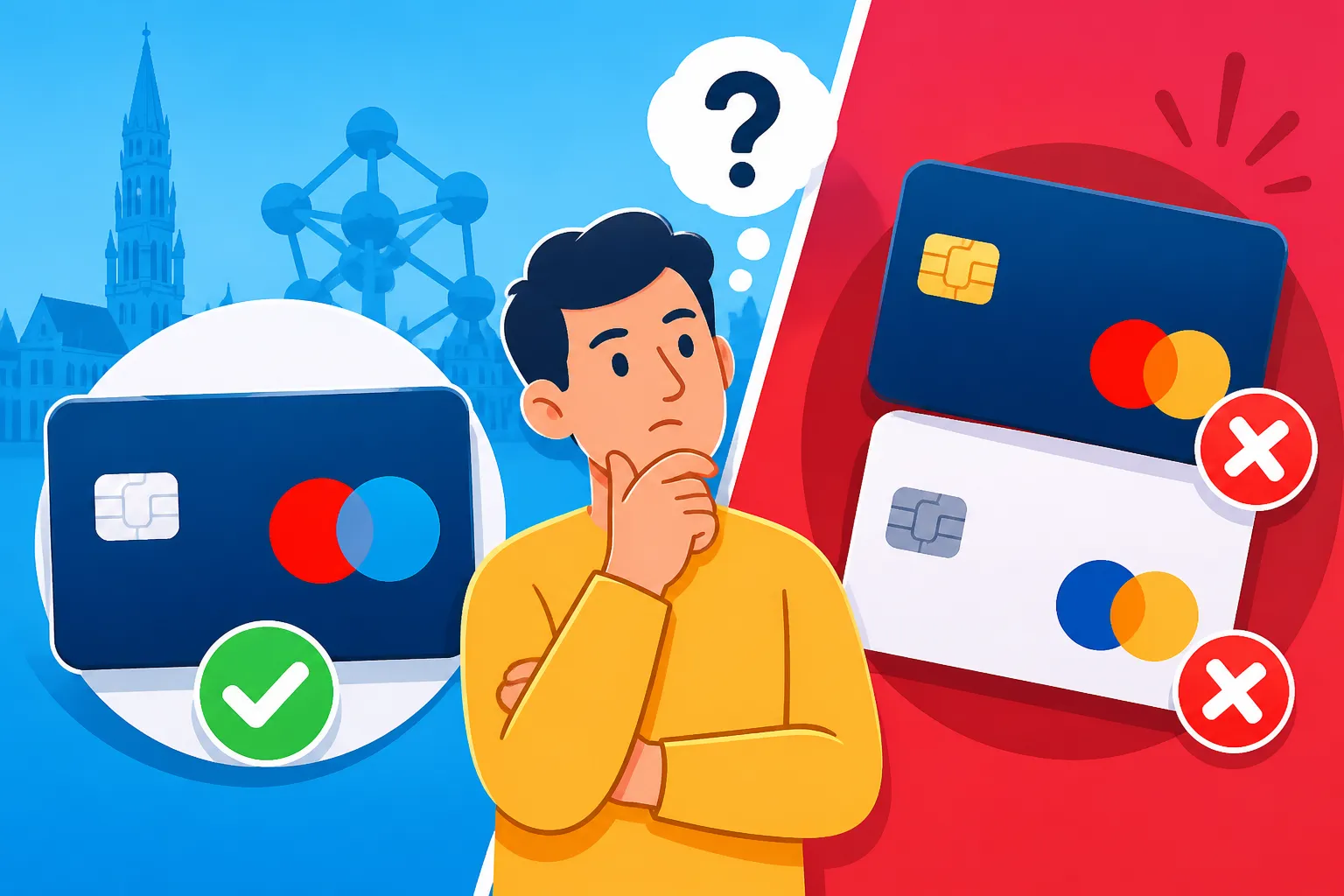
If you have been in Europe for a while, you’ve likely seen the blue and red circles of the Maestro logo. For decades, Maestro was the international bridge for Belgian banks. It allowed a Bancontact card to work in a German ATM or a Dutch supermarket. However, the world is changing, and the "Maestro Card" as we knew it is officially entering its sunset years.
What is a Maestro Card Anyway
Maestro is a debit brand owned by Mastercard. Think of it as the "basic" version of a Mastercard that doesn't allow you to spend money you don't have. In Belgium, almost every bank-issued card was a "co-badged" card. One side of the chip handled Bancontact (for domestic use), and the other side handled Maestro (for international use). This dual-identity card was the gold standard for expats. It’s why Opening a Belgian Bank Account: Documents Needed and Roadblocks is usually the very first thing I suggest to new arrivals; without that specific co-badged card, your financial life is significantly more difficult.
The Technical Difference Between Debit and Credit
The confusion for many expats arises from the fact that modern cards look identical. Your Wise card or your Trade Republic card might look like a standard Mastercard, but the underlying "Interchange Fee" is what matters. Belgian merchants pay a very low, flat fee for Bancontact/Maestro transactions. For Visa or Mastercard Credit, they might pay 1.5% to 3% of the total price. When you are buying a 1,20 euro stamp at a local Bpost point, the merchant literally loses money if you use a premium credit card.
The Great Sunset: Transitioning to Debit Mastercard
Since July 2023, Belgian banks have slowly stopped issuing Maestro cards, replacing them with "Debit Mastercard" or "Visa Debit." This is supposed to make online shopping easier, as Maestro was notoriously difficult to use for e-commerce. However, the transition has been bumpy. Some old terminals in deep Wallonia or rural Flanders still haven't been updated to recognize these "New" debit cards, leading to the same old rejection message. If you are managing your Cost of Living in Belgium 2026: Budgeting for Cities and Families, you need to ensure your primary bank has issued you the updated hardware.
Why Your Foreign Card Keeps Getting Declined
It is a specific type of embarrassment to have a card with a five-figure limit declined for a ten-euro lunch. Usually, the fault lies not with your bank, but with the specific hardware and software configuration of the Belgian merchant.
Merchant Fees: The Small Business Perspective
To understand why a merchant rejects your card, you have to look at their monthly statement. A small "frietkot" (fries stand) might process 200 transactions a day. If each transaction costs them an extra 20 cents because tourists are using foreign-issued Visa cards, that’s 40 euros a day—the price of several large bags of potatoes. Many small business owners specifically ask their terminal providers to "turn off" the Visa/Mastercard functionality to avoid these costs. Even if you are using a crypto-backed card from Binance, if it runs on the Visa network, it will be treated with the same cost-prohibitive logic.
Terminal Compatibility and Old Hardware
Belgium has a lot of legacy infrastructure. Some terminals in older shops are "offline" terminals that only sync with the Bancontact network once a day. These machines literally cannot communicate with the global Visa or Mastercard authorization centers in real-time. If you are out enjoying the city after Registering for Public Health Insurance: Step-by-Step at Your Commune, don't be surprised if the smaller clinics or specialist doctors also have these older, Bancontact-only machines.
The Pre-Authorization Struggle
Another reason for rejection, especially at gas stations or hotels, is the "pre-authorization" hold. Belgian systems are very aggressive with this. A self-service gas station might try to "hold" 125 euros on your card before you pump a single liter of petrol. If you are using a foreign debit card that doesn't support this specific type of communication, the transaction will fail instantly. This is where having a local account becomes vital for your Social Security in Belgium: Employer and Employee Contributions and other bureaucratic payments.
| Card Type | Domestic Acceptance | International Acceptance | Online Shopping | Best For |
|---|---|---|---|---|
| Bancontact | 100% | Very Low | Limited | Local Groceries, Communes |
| Maestro | 95% | Medium (Europe) | Poor | Small Shops (Legacy) |
| Visa/MC Debit | 70-85% | High | Excellent | Daily Spending, Subscriptions |
| Visa/MC Credit | 60% | 100% | 100% | Travel, Hotels, High Value |
Strategic Workarounds for the Modern Expat
You don't have to carry a roll of cash like it’s 1995. There are several clever ways to bypass the "Bancontact Only" gatekeepers while still enjoying the benefits of your international accounts.
The Power of Neobanks and Digital Wallets
While traditional Belgian banks are slow, the neobank revolution has provided some relief. However, you must be careful. A standard Wise account gives you a Visa debit card. While excellent for currency conversion, it will still be rejected at a "Bancontact only" terminal. To truly solve this, you need a card that supports the local protocol. Some newer fintechs are beginning to integrate Bancontact into their digital wallets. If you are active in the What is a Flexi-job and Who is Eligible to Work One? economy, having a fast, digital-first way to receive and spend money is essential.
Linking Your Accounts via Payconiq
The real "pro tip" for living in Belgium is an app called Payconiq by Bancontact. Almost every merchant in the country, from the posh boutiques in Antwerp to the smallest farm stall in the Ardennes, has a Payconiq QR code. You can link your Belgian bank account to this app and pay with your phone. It bypasses the physical card terminal entirely. If you have successfully set up your Itsme Authentication: How to Set Up Belgium's Vital Digital ID, linking your bank to Payconiq becomes a breeze. This is the ultimate "I’ve lived here a long time" move.
The Hybrid Approach: Two Cards are Better Than One
My personal strategy, and one I recommend to everyone I coach through the expat transition, is the "Two-Card Shuffle." I keep a local Belgian bank card (from a bank like KBC, ING, or BNP Paribas) specifically for the commune, the bakery, and the local supermarket. For everything else—online shopping, dining at larger restaurants, and travel—I use my Trade Republic or other international cards to earn rewards or better exchange rates. This ensures you are never the person holding up the line while trying to explain that your card "definitely has money on it."
Dealing with Online Friction
Many Belgian websites, especially utility providers or government portals where you might be Filing Your Income Tax via Tax-on-web (MyMinfin), will ask for a Bancontact payment. They often won't even provide an option for Visa or Mastercard. In these cases, having your local Belgian card and its associated "card reader" (that little calculator-looking device) is the only way to finalize the transaction. It feels archaic, but it is the gate through which all Belgian financial life passes.
Practical Advice for Your First 30 Days
When you first arrive, do not rely on your home country's bank. Even if they tell you the card is "international," they don't understand the specific Bancontact barrier. Carry at least 50 euros in cash for emergencies until your local card arrives in the mail. When Grocery Shopping: Aldi and Lidl vs Delhaize for Expat Budgets, check the entrance for the Bancontact logo. If you see it alongside Visa/Mastercard, you are safe. If you see it alone, reach for your Belgian debit card or cash. Belgium is a wonderful place to live, but it requires playing by its unique financial rules. Once you have your local card and Payconiq set up, you’ll find the system is actually incredibly efficient—it just demands a little "local flavor" to get started.
Disclaimer Regarding Financial Advice
The information provided in this guide is for informational purposes only and does not constitute professional financial, legal, or investment advice. Payment systems, bank fees, and terminal technologies in Belgium are subject to change. Always consult with your financial institution or a qualified professional regarding your specific situation and refer to official Belgian government or banking websites for the most current regulations.