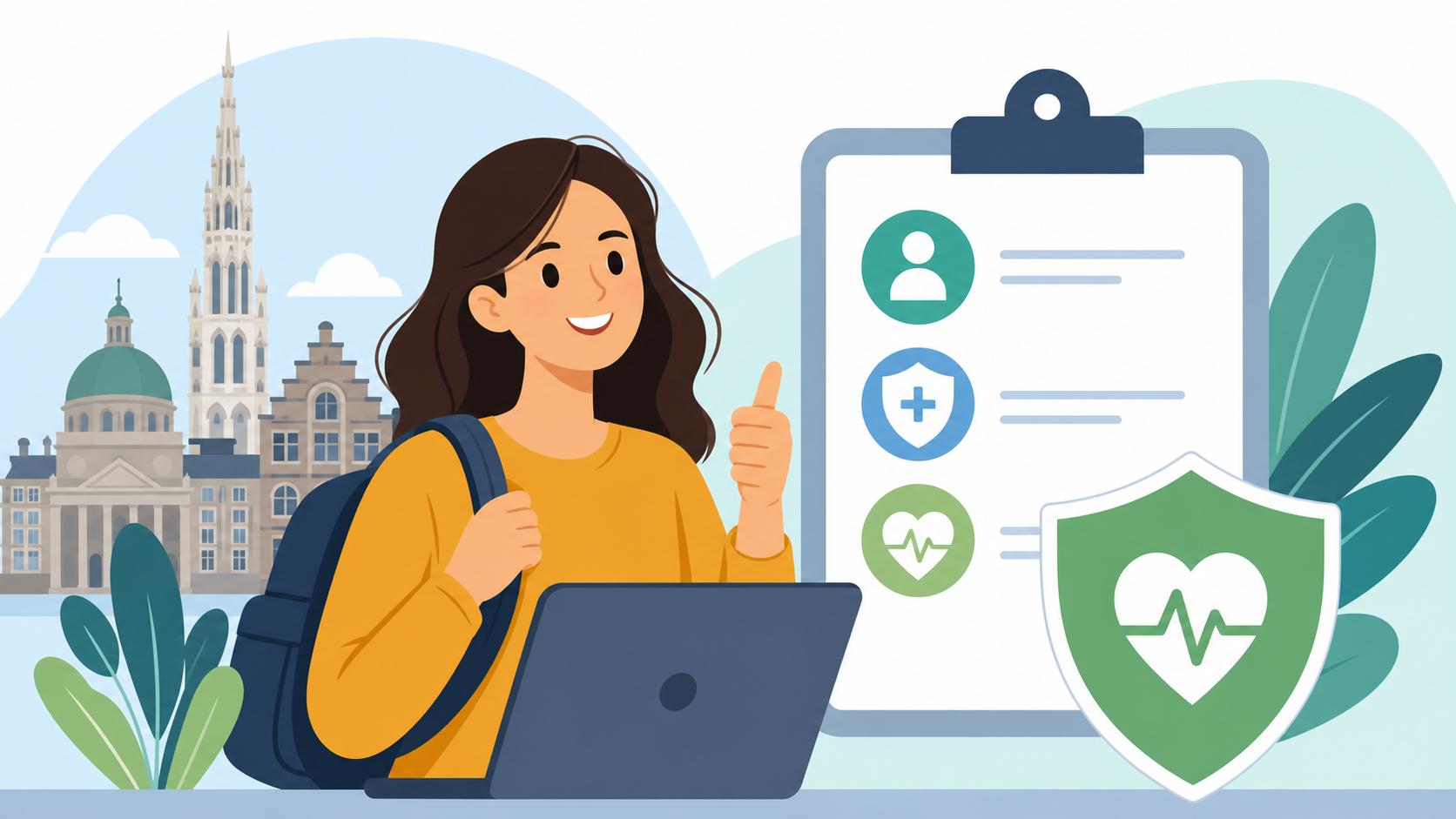
How to Sign Up for Partenamut as a New Expat in Brussels
Navigating the Belgian administrative maze often feels like a second, unpaid full-time job. I remember my first week in Brussels, standing confused in a rain-soaked queue at the commune, clutching a folder of damp documents and wondering if I would ever actually see a doctor. This guide simplifies that chaos by providing a clear, step-by-step path to signing up for Partenamut.
Understanding the Belgian Health Insurance Landscape
Before you dive into the paperwork, you need to understand that the Belgian healthcare system is a hybrid of public solidarity and private management. In this country, health insurance is not just a "good idea"—it is a legal requirement for every resident. The system is managed by "mutuelles" (in French) or "ziekenfondsen" (in Dutch). These are non-profit organizations that handle the reimbursement of your medical expenses on behalf of the state.
Choosing the right mutuelle is one of your first big "expat hurdles." In Brussels, you will find that Partenamut is one of the most popular choices for the international community. They have spent years tailoring their services to non-Belgians, offering English-speaking support and a relatively streamlined digital interface. However, do not mistake them for a purely private insurer. They operate within the framework of Healthcare in Belgium for Expats: Complete System Overview (2026), which means they provide the mandatory base coverage defined by law, supplemented by their own specific benefits.
It is worth noting that while a mutuelle covers a significant portion of your bills (usually 50% to 75%), there are often "gaps" in coverage, especially for private hospital rooms or specialized international treatments. For these gaps, many expats consider supplemental expat policies like Cigna Global to ensure they have 100% coverage regardless of where they are treated.
Why Partenamut is a Popular Choice for Brussels Expats
The reason so many of us end up at a Partenamut office—whether the one on Boulevard Anspach or near the European Quarter—is accessibility. Brussels is a bilingual city, but for many newcomers, French is the primary language of administration. Partenamut is the largest "free" (non-political/non-religious) mutuelle in the French-speaking community.
Beyond the mandatory coverage, they offer "extra-legal" benefits that appeal to a younger, active expat demographic. This includes partial refunds for gym memberships, travel vaccinations, and even birth control. If you are coming from a country with a nationalized health service (like the UK’s NHS) or a purely private system (like in the US), the concept of Mutuelle and Ziekenfonds: Public Health Insurance Registration Guide can be jarring. Partenamut bridges this gap with an English-friendly website and a mobile app that actually works.
Preparation: Documents You Must Gather Before Applying
The Belgian administration thrives on physical evidence. Do not attempt to register until you have your "folder of life" ready. If you show up missing even one document, the "Brussels Shuffle" will begin, and you will be sent home to try again another day.
First and foremost, you need proof of your right to stay in Belgium. If you are an EU citizen, this is usually your Annex 8 or your physical eID card. For non-EU citizens, things are slightly more complex. You will likely be holding an Annex 15 (a temporary document) while waiting for your actual residence card. The good news is that Partenamut generally accepts the Annex 15 to start your file, though they may put your reimbursements on "hold" until your final national number is issued.
Essential Document Checklist
- Identity Proof: Your passport and your Belgian residence permit (eID). If the eID hasn't arrived, the Annex 15 or Annex 19 is mandatory.
- Work Contract or Proof of Status: You need to show why you are in Belgium. If you are an employee, your most recent payslip or work contract is vital. This determines how your social security contributions are handled.
- Bank Account Details: You need a Belgian or SEPA-compliant bank account for reimbursements.
- E104 Form (if applicable): If you are moving from another EU country, this form proves you were insured there, which can help you skip the mandatory six-month waiting period (the "stage") that usually applies to new residents.
While you are waiting for these documents to clear, you might find yourself needing basic health supplies or supplements. Since Belgian pharmacies can be pricey for non-prescription items, many expats use iHerb to source their vitamins and wellness products at a more reasonable rate.
If you are still in the process of Registering for Public Health Insurance: Step-by-Step at Your Commune, keep in mind that your mutuelle registration is tethered to your commune status. You cannot officially complete one without the other.
Step-by-Step Registration Process for Partenamut
Once you have your documents, you have two main routes: the digital path or the in-person visit. In the current climate, Partenamut has moved heavily toward digital "onboarding," but many expats still prefer the "face-to-face" reassurance of an office visit to ensure nothing is lost in translation.
Option 1: The Online Application
If you have a Belgian eID and an eID card reader (or the "Itsme" app set up), the online process is remarkably fast. You head to the Partenamut website, select "Become a Member," and follow the prompts. You will be asked to upload scans of your work contract and identity documents.
The system will then generate a membership proposal. Pay close attention to the "titulaire" status—this means you are the primary insured person. If you have a spouse or children who are not working, you can usually add them to your file as "dependents." This is a crucial step in Adding Family Members: Enrolling Spouses and Children in Your Mutuelle.
Option 2: The In-Person Appointment
For those with complex situations—such as freelancers, students, or those waiting on a "Single Permit"—an appointment is safer. You can book these via the Partenamut website. I highly recommend the office at Rue de la Loi if you work in the EU bubble, as they are very used to international profiles.
During the appointment, the advisor will create your "dossier." They will explain the monthly fee (which is roughly 15-20 EUR per month for the supplemental services) and provide you with your "vignettes."
The Importance of the Vignettes (Stickers)
Shortly after you register, you will receive a sheet of small blue stickers in the mail. These are your "vignettes." In the age of digital everything, these stickers feel like a relic of the 1970s, but they are the key to your health life in Belgium.
You must stick these on every paper doctor’s receipt or lab bill you receive. These stickers contain your unique identification number and barcode. Without them, the mutuelle cannot process your refund. For a deeper look at this quirks, see our guide on What Are Mutuelle Stickers Used For and Where to Put Them.
Managing Your Coverage and Reimbursements
Signing up is only half the battle; knowing how to get your money back is the other half. The Belgian system relies on a "pay-front-and-reimburse" model. When you go to a GP, you will likely pay about 30 EUR out of pocket. If the doctor uses "eAttest," the claim is sent digitally to Partenamut, and you will see the refund in your bank account within days.
However, many specialists still use the old-fashioned paper "attestation de soins." You must stick your vignette on this paper and drop it into one of the big white or orange Partenamut mailboxes scattered across the city. This is the manual way of How to Submit Medical Receipts for Reimbursement in Belgium.
| Service Type | Typical Cost (Out of Pocket) | Partenamut Reimbursement (Approx) | Notes |
|---|---|---|---|
| General Practitioner (GP) | €30.00 | €22.00 – €26.00 | Higher refund if you have a DMG/GMD |
| Specialist (Dermatologist, etc) | €50.00 – €90.00 | €25.00 – €40.00 | Often depends on "convention" status |
| Dental Cleaning | €60.00 | €45.00 – €60.00 | Annual checkup is highly subsidized |
| Emergency Room Visit | €50.00+ | Variable | Depends on the hospital and tests |
Linking Your Global Medical Record (DMG/GMD)
To get the highest possible reimbursement from Partenamut, you must ask your chosen doctor to open a "Dossier Médical Global" (DMG) for you. This is essentially a centralized digital file of your health history. Not only does it help with continuity of care, but it also reduces your "co-payment" (the part you pay yourself) for every doctor's visit.
Finding a doctor who speaks your language and is willing to manage this for you is an essential part of Choosing Your First GP (General Practitioner) in Belgium. Once the DMG is opened, Partenamut is notified automatically, and your higher reimbursement rate kicks in.
Supplementary Benefits and Expat Support
What sets Partenamut apart from the basic state insurance (CAAMI) is the "Advantage" package. Since you are paying a small monthly fee, you should take full advantage of what they offer.
Expats often struggle with the "Grey Brussels Winter," which can lead to a slump in physical and mental health. Partenamut offers a refund of up to 50 EUR per year for a sports club membership. They also provide significant discounts on eyeglasses and dental work, which are notoriously under-covered by the basic state system.
If you are dealing with chronic issues or need specific health products not found in the local "Apotheek," companies like iHerb are useful, but remember that Partenamut only reimburses medications that are officially recognized by the Belgian state. Always check the Pharmacies and Medication in Belgium: Prescriptions and OTC Rules before assuming you will get a refund for an imported supplement.
When Mutuelle Isn't Enough
While Partenamut is excellent for day-to-day care, it has limitations. If you are hospitalized in a single room, the surcharges can be astronomical—sometimes triple the standard rate. This is why many expats look into Private Health Insurance in Belgium: When Do Expats Really Need It?). A policy from Cigna Global can act as a secondary layer, covering those "comfort" costs and providing access to a wider network of private specialists without the long wait times often found in the public system.
Tips for a Smooth Transition
- Check the "Convention" Status: Before booking a doctor on apps like Rosa or Doctena, check if they are "conventioned." Conventioned doctors agree to the state-mandated prices. "Non-conventioned" doctors can charge whatever they like, and Partenamut will still only reimburse you at the state rate, leaving you with a large bill.
- Download the "MyPartenamut" App: It allows you to track your reimbursements in real-time, order new vignettes, and request "certificates of insurance" for travel.
- The Waiting Period (Stage): If you are not coming from another EU country with an E104 form, be prepared for a 6-month "waiting period" where you pay into the system but cannot claim reimbursements yet. During this gap, having private insurance like Cigna Global is non-negotiable.
- Pharmacy Bills: When you buy medicine, the pharmacist will usually deduct the "mutuelle" portion immediately if you show your eID. You only pay the "net" amount. For everything else (like high-quality vitamins), many of us rely on iHerb to keep our medicine cabinets stocked without the Brussels price tag.
Moving to a new country is hard enough without worrying about how to see a doctor. By getting your Partenamut registration sorted in your first month, you can tick one major box off your "to-do" list and focus on enjoying the frites and chocolate that make Brussels worth the paperwork.
Disclaimer
The information provided in this guide is for informational purposes only and does not constitute legal, financial, or professional medical advice. Belgian regulations and insurance policies are subject to change. Always consult with an official Partenamut representative or a qualified legal advisor regarding your specific residency and insurance status.