Refilling Foreign Prescriptions at a Belgian Pharmacy
Arriving in a new country only to realize your medication is running low is a panic-inducing moment most expats face eventually. I remember standing in a small pharmacy in Ixelles during my first week in Brussels, clutching a crumpled prescription from my doctor back home while the pharmacist looked at me with a mix of confusion and pity. This guide solves the complex puzzle of refilling foreign prescriptions in Belgium, ensuring you never miss a dose while navigating the local healthcare system.
The Legal Reality of Foreign Prescriptions in Belgium
The first thing you need to understand is that Belgium operates under strict European Union guidelines regarding the recognition of medical orders. While Belgium is famous for its world-class healthcare, its pharmacists are legally bound by specific protocols that dictate whether they can honor a piece of paper signed by a doctor who doesn't practice on Belgian soil. The rules vary significantly depending on whether your prescription originated within the European Economic Area (EEA) or outside of it.
If your prescription is from another EU member state, Iceland, Liechtenstein, or Norway, it is technically a cross-border prescription. Under EU Directive 2011/24/EU, a pharmacist in Belgium should recognize a prescription issued in another EU country, provided it contains the necessary information to identify the patient, the prescriber, and the product. However, "should" is the operative word. In practice, many pharmacists are cautious because of differences in brand names and dosage formats.
For those coming from the United States, Canada, the UK, or Australia, the situation is more complex. A Belgian pharmacist is not legally obligated to honor a non-EU prescription. While some may show flexibility for non-controlled substances like basic birth control or asthma inhalers, they are technically taking a professional risk. Most will insist that you see a local doctor to have the script "converted" into a Belgian format. This is often the first real hurdle in Finding Medical Care in Belgium: GPs, Specialists, and Hospitals during your first month in the country.
Essential Requirements for a Valid Foreign Prescription
To increase your chances of a successful refill, your foreign prescription must meet specific criteria. Belgian pharmacists are meticulous about documentation. If even one piece of information is missing, they are likely to turn you away to protect their license. At a minimum, your prescription must be written in a way that a French or Dutch speaker can decipher, or ideally, in English, which most Belgian pharmacists speak fluently.
The most critical element is the use of the International Nonproprietary Name (INN). Brands change across borders—what is called Tylenol in the US is Paracetamol in Belgium, and more complex drugs have even more divergent branding. Your doctor back home must list the active ingredient and its concentration. If the pharmacist cannot verify the exact chemical composition, they cannot legally dispense the medication.
Beyond the drug name, the document must include the prescriber’s full contact details, including their professional address, email, and telephone number with the international country code. It must also clearly state the patient's full name and date of birth. Finally, the prescription must be dated and signed. A digital printout without a "wet" signature or a verifiable digital QR code is often rejected at the counter. Understanding Pharmacies and Medication in Belgium: Prescriptions and OTC Rules will help you realize that the local system relies heavily on these formal details.
Step by Step Guide to Navigating the Belgian Pharmacy
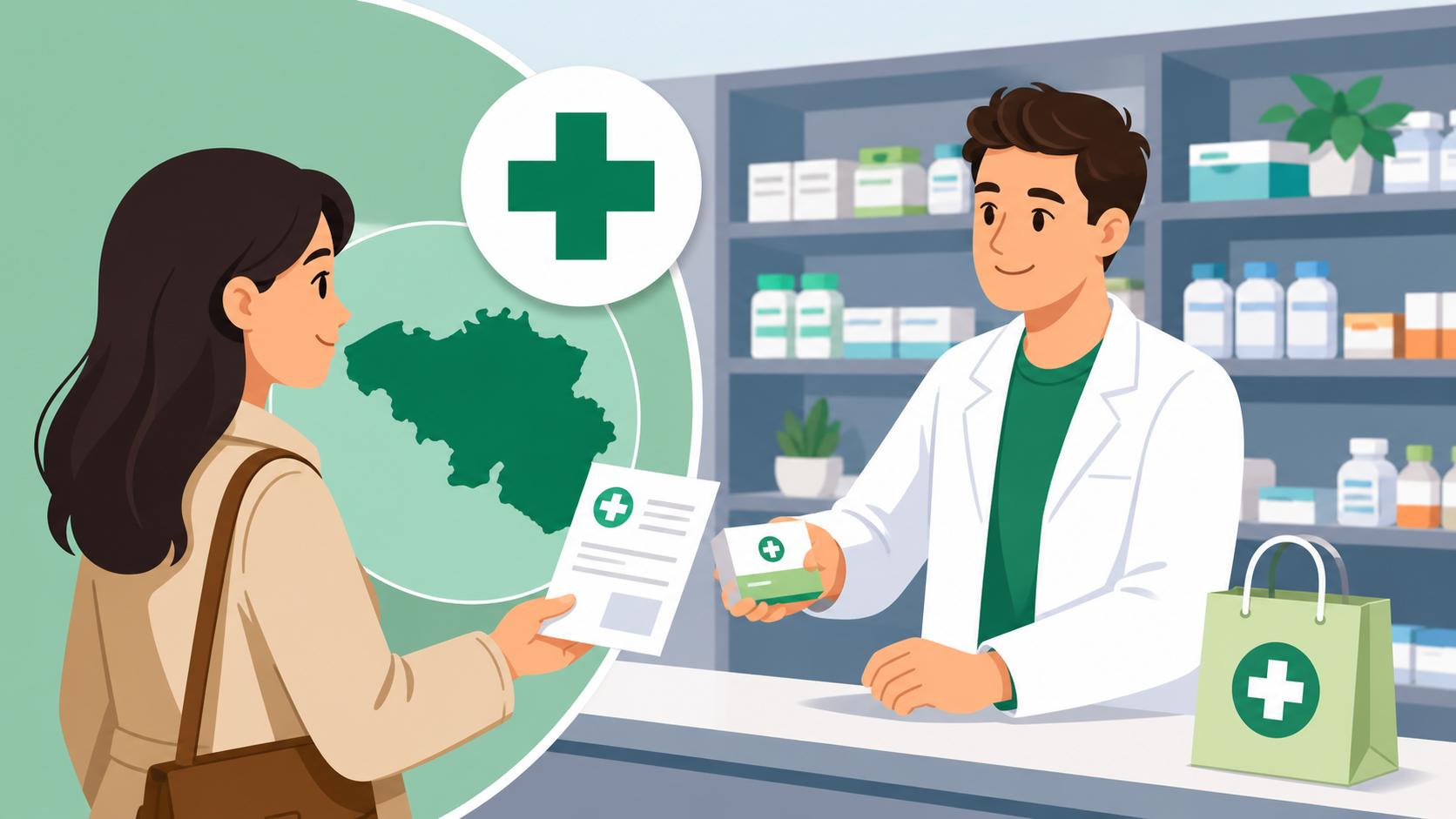
When you walk into a local pharmacie (in Wallonia/Brussels) or apotheek (in Flanders), you should be prepared for a conversation. Do not just hand over the paper and wait. Explain that you are a new resident and that this is a continuation of a long-term treatment. This transparency builds trust with the pharmacist, who is often a highly trained medical professional capable of giving expert advice.
If the pharmacist agrees to help but doesn't have your specific medication in stock, they can usually order it for delivery within a few hours or by the next morning. Belgium has an incredibly efficient pharmaceutical distribution network. However, if the drug is not authorized for sale in Belgium, you are at a dead end. In such cases, the pharmacist might suggest a Belgian equivalent, but they will almost certainly require a local doctor’s approval before dispensing it.
For those who are still waiting for their Belgian ID card or residency papers, you may find that the pharmacist asks for a passport. This is to create a temporary profile in their system. If you find yourself in an urgent situation after hours, you will need to locate a Pharmacie (Apotheek) in Belgium: Operating Hours and Services that is "on call." These pharmacies may charge a small additional fee for service during night or weekend hours.
Comparing Prescription Rules by Origin
| Feature | EEA / EU Prescription | Non-EU Prescription (US, UK, etc.) |
|---|---|---|
| Legal Recognition | Mandated by EU Law | At Pharmacist's Discretion |
| Reimbursement | Possible via Mutuelle | Almost Never Possible |
| Language Req. | English, French, or Dutch | English (Highly Recommended) |
| Controlled Drugs | High Scrutiny / Often Rejected | Strictly Forbidden |
| INN Requirement | Mandatory | Essential for Success |
When the Pharmacy Says No: The Backup Plan
If you are turned away, do not take it personally. The Belgian pharmaceutical union (APB) enforces strict safety standards. Your next step is to book an appointment with a local General Practitioner. This is a standard part of the expat journey and is actually beneficial in the long run. A local GP will not only give you a Belgian prescription but also start your The Global Medical Record (DMG/GMD): Why You Need It for Better Refunds, which lowers your future healthcare costs.
When you visit the GP, bring your original foreign prescription, the original packaging of your medication, and any medical records explaining the diagnosis. Most Belgian GPs speak excellent English and are used to the "conversion" process for expats. They will verify the dosage and ensure the Belgian equivalent is appropriate for you. Once you have this Belgian script, it will often be valid for up to three months, and you can easily use it at any pharmacy in the country.
If you are a student or a temporary worker without a full Belgian contract yet, you can still access these services. You might find it helpful to read about Accessing Belgian Healthcare Without an eID: Temporary Certificates to understand how to handle the administrative side of the visit. While the GP visit costs money upfront, it is the only guaranteed way to secure your medication long-term.
Understanding Costs and the Reimbursement System
One of the biggest shocks for new expats is the cost difference. If you use a foreign prescription, you will pay the full retail price out of pocket. The Belgian "Mutuelle" system, which provides generous subsidies for medication, only applies to Belgian prescriptions linked to your social security number or eID. Even if you have a valid EU prescription, the Belgian pharmacy cannot automatically apply the Belgian social security discount to it.
For those with international health insurance like Cigna Global, you can typically claim these costs back later. Cigna Global is particularly popular among expats in Brussels who want to bypass the local bureaucracy and maintain high levels of coverage regardless of which country's doctor wrote the prescription. Keep every receipt (the quittance or bewijs) given by the pharmacist, as your insurer will require these for any reimbursement claim.
Furthermore, remember that many items that are prescription-only in your home country might be over-the-counter here, or vice versa. If you are looking for specific vitamins or health supplements that are not available in the local pharmacy, many expats rely on iHerb. This is a reliable way to get familiar brands of supplements delivered to Belgium, though you must be careful about Importing Medication to Belgium: Customs Limits and Expat Rules to avoid hefty fines at the border.
Handling Controlled Substances and ADHD Medication
If your foreign prescription is for a controlled substance—such as strong painkillers, certain sleep aids, or ADHD medications like Ritalin or Adderall—the rules are incredibly rigid. You cannot simply walk into a Belgian pharmacy with a foreign script for these. In fact, bringing more than a 30-day supply of these into the country without a specific "Schengen Certificate" or similar medical attestation can lead to legal trouble.
For ADHD specifically, Belgium has very specific protocols for diagnosis and prescribing. You will likely need to see a specialist (psychiatrist or neurologist) rather than just a GP to get a Belgian script for stimulants. This can take time, so start the process as soon as you arrive. I highly recommend checking out the guide on Bringing ADHD Medication (Stimulants) Into Belgium Legally for a deeper dive into the required paperwork and the specific steps to take with the Belgian Federal Agency for Medicines and Health Products (FAMHP).
Practical Tips for the First 30 Days
The first month is the most vulnerable time for an expat's health management. Before you leave your home country, ask your doctor for a "Summary of Care" or a "Patient Health Profile" in addition to a physical prescription. This document acts as a bridge, proving to Belgian doctors that your treatment is established and necessary. It’s also wise to check the Medical Emergency Checklist for Your First 30 Days in Belgium to ensure you know where the nearest hospital is located.
Always carry a photo of your prescription on your phone, but remember that the pharmacy will almost always require the physical paper copy. If you lose your paper script, a pharmacy cannot accept a photo of it as a legal document. This is where having a digital backup or a contact for your home doctor becomes essential. If you are struggling with the language, don't hesitate to look for Finding English-Speaking Doctors in Brussels, Antwerp, and Ghent to find a practitioner who can help translate your needs into the Belgian system.
Finally, do not wait until you have only one pill left. Start the "conversion" process at least two weeks before your supply runs out. Between finding a GP, waiting for an appointment, and potentially waiting for the pharmacy to order your specific brand, the timeline can be longer than you expect. Being proactive is the best way to avoid the stress of a medical gap.
Disclaimer
The information provided in this guide is for informational purposes only and does not constitute legal or medical advice. Healthcare regulations in Belgium are subject to change, and individual pharmacy policies may vary. Always consult with a qualified medical professional or the Belgian Federal Agency for Medicines and Health Products (FAMHP) for the most current advice regarding your specific situation.