Medical Emergency Checklist for Your First 30 Days in Belgium
Moving to a new country is an exhausting whirlwind of cardboard boxes and confusing paperwork, but nothing spikes the adrenaline quite like a midnight fever when you do not yet have a local ID card or a doctor's name. I remember vividly the panic of my first week in Brussels, staring at a Dutch-language medicine bottle while feeling completely helpless. This guide provides a strategic medical checklist to navigate the Belgian healthcare system safely during your first 30 days.
Phase 1: Establishing Your Emergency Communication Line
The first rule of survival in Belgium is realizing that the medical system is world-class, but it is also highly decentralized. You cannot simply walk into any building and expect a receptionist to speak perfect English while handling your foreign insurance. You need to know exactly who to call and which language triggers the fastest response.
In your first 48 hours, you must memorize the number 112. This is the universal emergency number for ambulance, fire, and police. When you call 112, you will be asked to choose between "Medical/Fire" or "Police." If you are in the middle of a health crisis, always choose medical. The operators are generally multilingual, but starting the conversation with a polite "Parlez-vous anglais?" or "Spreekt u Engels?" goes a long way. For more detailed instructions on what happens during that high-stress call, see Emergency Numbers: Calling 112 in Belgium and What to Expect.
Beyond the sirens and flashing lights, there is the "middle ground" of emergencies—the kind where you are too sick to wait for Monday morning but not sick enough for a life-support machine. This is where the service known as 1733 comes in. This is the national number for After-Hours Medical Care: On-Call Doctors (Garde/Wacht). When you call 1733, you enter your postal code, and the system directs you to the nearest "Huisartsenwachtpost" or "Poste de Garde." These are clinics specifically designed for urgent weekend and evening consultations. Knowing your local GP post's address before you actually need it is a veteran move that will save you hours of wandering around a rainy neighborhood in Antwerp or Ghent.
Finally, do not forget the Belgian Poison Centre: When to Call 070 245 245. This service is free, available 24/7, and is essential if you or a family member accidentally ingests something suspicious. Since Belgian cleaning products and over-the-counter medications might have different concentrations or active ingredients than what you are used to back home, having this number programmed into your phone is non-negotiable.
Phase 2: Navigating the Hospital System and the ER
One of the biggest culture shocks for expats is realizing that not all hospitals in Belgium are created equal in terms of administration. While you are in your first 30 days, you likely do not have your electronic residency card (eID) yet. You might be holding an "Annex 15" or a temporary paper document. This makes Finding Medical Care in Belgium: GPs, Specialists, and Hospitals slightly more complex because the hospital staff cannot simply "swipe" your card to pull up your insurance data.
If you find yourself Going to the Emergency Room (Urgences/Spoedgevallen) in Belgium, try to head to a large university hospital if you are in a major city. In Brussels, UZ Brussel (in Jette) or Saint-Luc (in Woluwe) are excellent choices with many English-speaking staff members. In Flanders, UZ Leuven is world-renowned. The ER process follows a triage system: you will see a nurse first who determines if your condition is life-threatening. If it isn't, prepare to wait. Belgian ERs are efficient, but they prioritize based on severity, not arrival time.
During these first 30 days, while your local registration is pending, you may be asked to pay a higher deposit upfront if you don't have a Belgian mutuelle yet. This is where having a plan with Cigna Global can be a literal lifesaver. Their international coverage acts as a bridge, ensuring that the hospital can verify your ability to pay without you needing to front thousands of euros in cash. Always carry a digital or printed copy of your Cigna Global policy summary to show the admissions desk. They are familiar with international providers and this often bypasses the administrative headaches of being a "temporary" resident.
Emergency Contact and Information Summary
| Service Type | Contact Number / Resource | Best For |
|---|---|---|
| Life-Threatening Emergency | 112 | Heart attacks, accidents, severe breathing issues |
| After-Hours GP | 1733 | High fever, sudden infections, weekend illness |
| Poison Control | 070 245 245 | Chemical ingestion, medicine overdose |
| On-Call Pharmacy | pharmacie.be / apotheek.be | Getting prescriptions filled after 7:00 PM |
| Mental Health Support | 106 (Tele-Accueil / Tele-Onthaal) | Crisis talk, emotional distress |
Phase 3: Pharmacy Survival and Medication Rules
In Belgium, pharmacies (identified by a glowing green cross) are the gatekeepers of health. Unlike some countries where you can buy high-dose painkillers in a supermarket, almost everything here requires a trip to the apotheek or pharmacie. Even basic paracetamol is kept behind the counter. This can be frustrating when you just want a quick fix for a headache at 9:00 PM.
The most important thing to understand in your first month is the "Wachtdienst" or "Service de Garde." Pharmacies take turns staying open late or on Sundays. You cannot just go to your neighborhood spot and expect it to be open. You must check the list posted in the window of any pharmacy or visit the website pharmacie.be. Be aware that if you use an on-duty pharmacy at night, there is often a "garde fee" (around 5 euros) added to your bill, though this is usually reimbursed if you have a valid prescription. For a deeper dive into these logistics, read Pharmacies and Medication in Belgium: Prescriptions and OTC Rules.
While you are getting used to the local brands, you might find that certain vitamins or specialized wellness supplements you rely on are much more expensive in Belgium or require a prescription that seems unnecessary. This is where I often suggest using iHerb. During my first month, I used iHerb to restock my usual melatonin and specific zinc supplements because the local Belgian equivalents were double the price. It provides a sense of continuity for your health routine while you are still figuring out the difference between "Brufen" and "Dafalgan." Plus, iHerb shipping to Belgium is surprisingly reliable if you keep your orders within reasonable customs limits.
Phase 4: Administrative Prep to Prevent Financial Shocks
The medical emergency isn't over when you leave the doctor's office; the "financial emergency" begins when the bills start arriving in your mailbox six weeks later. To avoid a total meltdown, you need to start the Mutuelle and Ziekenfonds: Public Health Insurance Registration Guide process the moment you have your lease or your work contract. In Belgium, health insurance is mandatory, and it is funded through Social Security Contributions: How Employers Deduct Health Costs.
However, there is often a "waiting period" or a delay in getting your vignettes (the little yellow stickers you put on medical forms). During this gap, keep every single piece of paper a doctor gives you. If a doctor gives you a green or white slip of paper (a getuigschrift or attestation), that is your money. Do not lose it. Once your insurance is active, you will submit these to get a refund. Understanding Healthcare Budgeting: Copays, DMG/GMD, and Reimbursements is key to knowing that you will usually pay the full price upfront and get about 75% back later.
One of the smartest things you can do in your first 30 days is to visit a local GP and ask them to open a "Global Medical Record" for you. This is known as The Global Medical Record (DMG/GMD): Why You Need It for Better Refunds. By doing this, you are officially registering with that doctor. Not only does this ensure your medical history is centralized in the Belgian system, but it also lowers your "co-payment" (the amount you pay out of pocket) for every future visit. It is the single most effective way to lower your healthcare costs as a resident.
While you wait for the bureaucracy of the commune to process your residence, having Cigna Global ensures you aren't caught in a "no-man's-land" where you are paying into the Belgian system but cannot yet access its benefits. They can bridge that gap for months if the commune is slow—and in Brussels, the commune is almost always slow. Also, if you need specific wellness items to stay healthy during the move, check iHerb for your familiar brands, as the stress of moving can often trigger the very medical emergencies you are trying to avoid. Staying stocked on Vitamin C and probiotics from iHerb can be your first line of defense against the "move-in flu" that hits almost every new expat.
Phase 5: Creating Your Personal "Red Folder"
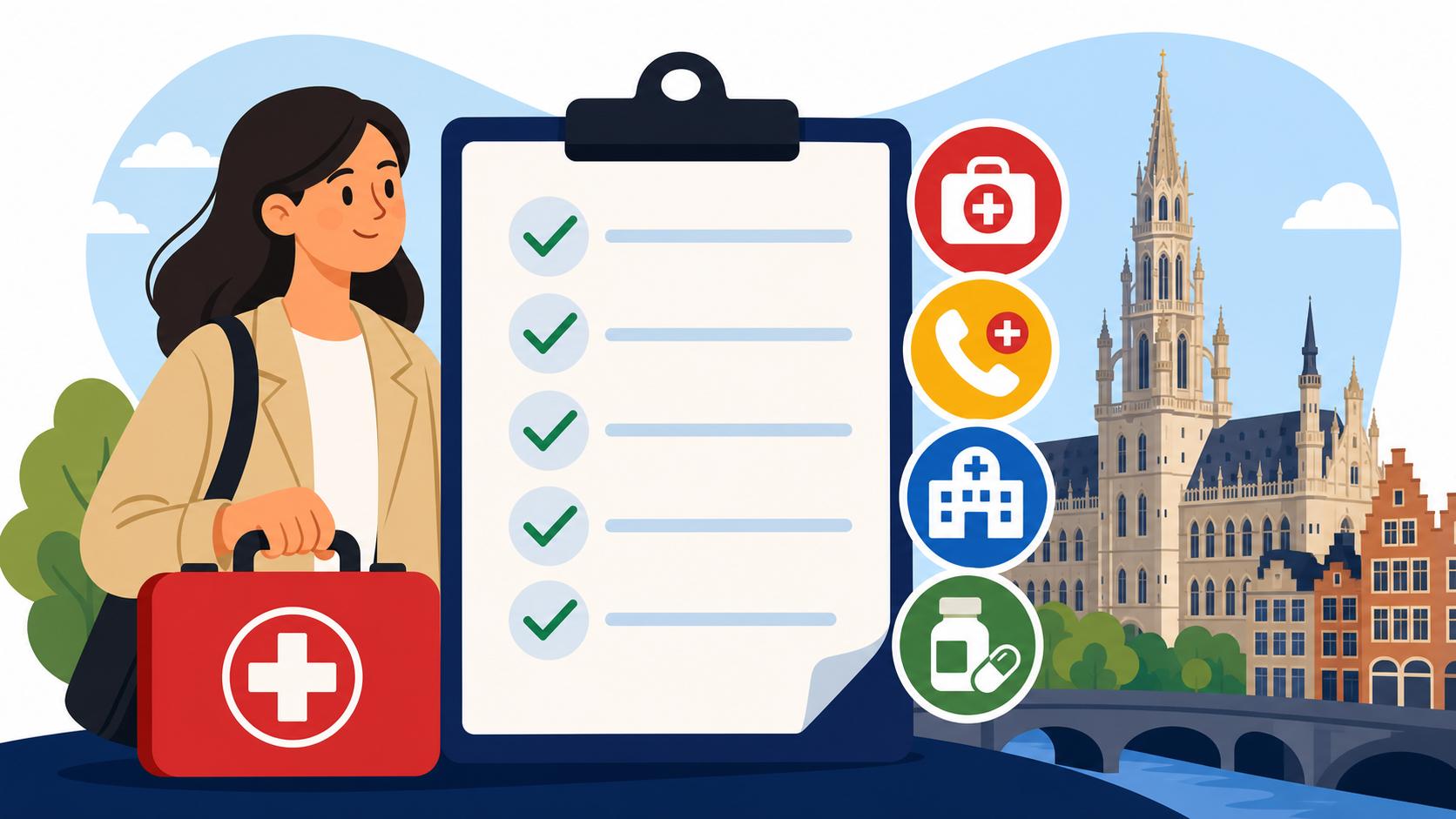
My final piece of advice for those first 30 days is to create a physical "Red Folder." In this folder, keep your passport, your Annex 15 (or eID if you have it), your Cigna Global policy, and a list of any allergies written in French or Dutch. If you have an emergency, you can simply grab this folder and go. Belgian doctors are incredibly thorough, but they appreciate when an expat is prepared.
Include a few "just in case" items in that folder: a list of your current medications from your home country and their active ingredients (not just the brand names). This helps the Belgian doctor find the local equivalent quickly. If you have chronic conditions, this folder is your lifeline. Being a "veteran" expat isn't about never having an emergency; it's about not being surprised when one happens. By following this checklist, you turn a potential nightmare into a manageable administrative hurdle, leaving you free to actually enjoy your new life in the heart of Europe.
Disclaimer
The information provided in this article is for educational and informational purposes only and is based on the author's personal experience as an expat in Belgium. It does not constitute professional medical advice, diagnosis, or treatment. Always seek the advice of your physician or another qualified health provider with any questions you may have regarding a medical condition. In the event of a medical emergency, dial 112 immediately. The author and publisher are not responsible for any actions taken based on the information provided in this guide.