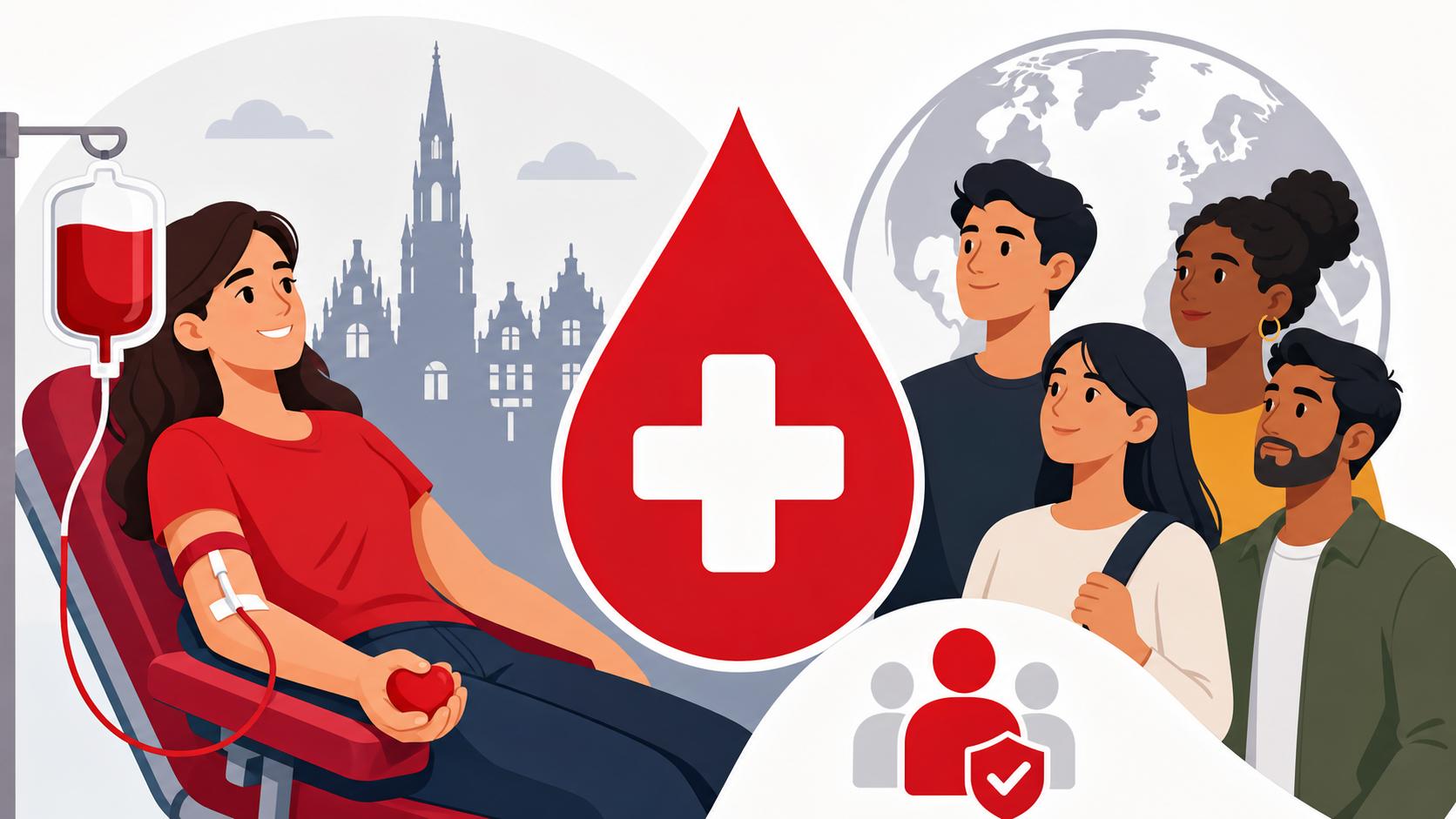
Donating Blood in Belgium: Red Cross Eligibility for Foreigners
Navigating the Belgian medical system is hard enough when you are sick, but trying to give back through blood donation can feel like an administrative maze of language barriers and specific health criteria. I remember standing in a community center in Ixelles, staring at a Dutch-only questionnaire, wondering if my childhood in London or my recent holiday in Thailand made me ineligible. This guide breaks down exactly how foreigners can donate blood in Belgium safely and legally.
Understanding the Red Cross System in Belgium
In Belgium, blood donation is managed by two distinct branches of the Red Cross, depending on which region you are in. If you are living in Wallonia or the Brussels-Capital Region, you will likely interact with the Croix-Rouge de Belgique. If you have settled in Flanders, the Rode Kruis-Vlaanderen will be your primary point of contact. While both organizations follow federal safety guidelines, their websites, booking systems, and even the "thank you" snacks after your donation might differ slightly based on local culture.
For many of us who have moved here, the first hurdle isn't the needle—it's the paperwork. Unlike a standard visit for Emergency Medical Care in Belgium: 112, Hospitals, and Pharmacies, where the focus is on immediate treatment, blood donation is a strictly regulated preventative process. The Belgian authorities are incredibly protective of the blood supply, which means the screening process is rigorous. This can feel frustrating if you were a regular donor in your home country and find yourself temporarily deferred here.
The blood supply in Belgium is used for everything from emergency surgeries to treating chronic illnesses. Because the country has a high standard of care, the demand for "common" and "rare" blood types is constant. If you are an expat with a rare blood type (like O-negative), you are especially encouraged to navigate the bureaucracy. Understanding the Healthcare in Belgium for Expats: Complete System Overview (2027) can help you realize that while the Red Cross is a non-profit, it operates with the same clinical precision as any major hospital.
Eligibility Criteria and the Expat Question
The most common question I hear from fellow expats is: "Can I actually donate if I wasn't born here?" The short answer is yes, but there are several layers of eligibility you need to peel back. First, you must be between the ages of 18 and 70 (though first-time donors over 65 are rarely accepted). You must also weigh at least 50 kilograms. Beyond these basics, the Belgian Red Cross looks closely at your medical and travel history.
For years, many expats from the United Kingdom were banned from donating in Belgium due to concerns over Creutzfeldt-Jakob Disease (vCJD), often referred to as "Mad Cow Disease." If you lived in the UK for more than six months between 1980 and 1996, you were historically barred. However, these rules have seen significant updates recently. It is always worth checking the latest specific "donor self-test" on the Red Cross website before you make the trip. Even if you have comprehensive private insurance like Cigna Global, the Red Cross follows its own independent safety protocols that no amount of private coverage can override.
Travel history is the second major hurdle for foreigners. If you have recently traveled outside of Europe, particularly to areas where malaria or the West Nile virus is prevalent, you will face a deferral period. This usually ranges from four weeks to six months. If you are ever unsure about how a recent trip affects your eligibility, it is best to consult with a professional when Finding Medical Care in Belgium: GPs, Specialists, and Hospitals or simply call the Red Cross donor line. They are used to dealing with international travelers and can give you a clear "yes" or "no" based on your specific destination.
Common Deferral Periods in Belgium
| Reason for Deferral | Duration of Deferral |
|---|---|
| Tattoo or Piercing | 4 Months |
| Dental Cleaning | 24 Hours |
| Major Surgery | 6 Months |
| Tropical Travel (Malaria zone) | 6 Months (usually) |
| Pregnancy / Giving Birth | 6 Months |
| New Sexual Partner | 4 Months |
The Language Barrier and the Medical Interview
Let's be realistic: the medical questionnaire is long, and in many centers, it is only available in French or Dutch. To ensure the safety of the blood supply, the Red Cross must be certain you have understood every question. If your language skills are still in the "ordering a coffee" stage, you might find it helpful to bring a bilingual friend or use a translation app to prepare. Some centers in Brussels are more accustomed to English speakers and may have staff willing to help, but it is not a guarantee. You can often find Finding English-Speaking Doctors in Brussels, Antwerp, and Ghent who might be able to explain the terminology to you beforehand.
Once you have filled out the form, you will have a private interview with a doctor. This is not a judgment on your lifestyle; it is a clinical assessment. They will ask about your sexual history, any medications you are taking, and your general health. Be honest. If you are taking supplements to boost your health, perhaps sourced from iHerb, mention them. Most vitamins and over-the-counter supplements won't disqualify you, but certain medications for skin conditions or blood pressure might.
The doctor will also check your hemoglobin levels with a quick finger-prick test. This is very similar to the process used for Blood Tests in Belgium: Fasting Rules and Lab (Laboratoire) Visits, except you don't need to be fasting. In fact, you should definitely eat a light meal and drink plenty of water before your appointment. If your iron levels are too low, the doctor will advise you to wait a few months and perhaps look into iron-rich foods or supplements, which are easily found at a local pharmacy or via iHerb.
The Donation Process and Post-Care
The actual donation is the easiest part. Once the doctor clears you, you’ll be ushered to a comfortable lounge chair. A trained nurse will perform the draw, which usually takes about 5 to 10 minutes for whole blood. If you are a veteran donor, you might consider donating plasma or platelets in the future, which takes longer but is equally vital for the Belgian medical system. During the process, the staff is incredibly attentive. If you feel even slightly lightheaded, tell them immediately—they are experts at managing donor reactions.
After the needle is out and you’ve been bandaged up, the Red Cross insists you stay for at least 15 minutes in the "recuperation" area. This is the best part of the expat experience—the snacks! In Belgium, this usually involves a drink (juice, water, or coffee) and a selection of biscuits. If you're lucky, you'll get the classic Belgian Speculoos. It’s a small cultural moment that makes you feel like part of the community. Use this time to rest; your body needs a moment to begin regenerating the lost fluid.
For the rest of the day, you should avoid strenuous exercise. If you’re a gym-goer, skip the heavy lifting. If you experience any unusual symptoms later, refer to your Medical Emergency Checklist for Your First 30 Days in Belgium to know who to contact, though usually, the Red Cross provides a specific post-donation phone number for any concerns. Keeping your hydration up is key, and if you have international health insurance like Cigna Global, you can rest easy knowing you're covered for any general health follow-ups, though complications from donation are extremely rare.
Where to Donate: Centers and Mobile Units
Belgium is well-served by both permanent donation centers and mobile units that visit schools, town halls, and large corporate offices. In Brussels, the center at Rue de la Braie is very popular, while in Antwerp, the center on Egmontstraat is a main hub. Using the "Où donner" (Where to give) tool on the Red Cross website is the most efficient way to find a spot near you.
When you go, you must bring a valid form of identification. For most of us, this will be our Belgian eID card. If you are still waiting for your residence permit, a passport is usually acceptable, but it can sometimes complicate the registration in their digital system. It is wise to verify this when Choosing Your First GP (General Practitioner) in Belgium or by calling the center directly before your appointment.
Remember that your blood is tested after every donation for infectious diseases like HIV and Hepatitis. If anything unusual is found, the Red Cross will contact you discreetly. This serves as a secondary health check, but it should never replace regular screenings with your doctor. Most expats find that once they’ve successfully donated once, the subsequent times are much faster and more routine, turning a daunting administrative task into a rewarding way to integrate into Belgian society.
Practical Tips for Your First Belgian Donation
To make your experience as smooth as possible, I’ve put together a few "pro tips" from my own trial and error in the Belgian system. First, book your appointment online. While some mobile units allow walk-ins, the permanent centers are much more efficient if you have a time slot. This is especially true in busy cities like Brussels or Ghent where centers can get crowded during lunch hours.
Second, don’t donate on an empty stomach. Unlike many medical procedures in Belgium where you are told to be "à jeun" (fasting), blood donation requires energy. A solid breakfast or lunch will prevent the dreaded "post-donation slump." If you're worried about your energy levels, consider taking a multivitamin from iHerb in the days leading up to your appointment to ensure your body is in peak condition.
Finally, keep a record of your donation. The Red Cross will eventually send you a donor card. This card is not just a badge of honor; it contains your blood type and your donor number, which makes future registrations much faster. If you ever move within Belgium, your records can be transferred between the French and Dutch branches, though you might need to prompt them to do so. It’s one of the few parts of Belgian bureaucracy that actually works quite well once you are in the system.
Disclaimer
This guide is for informational purposes only and is based on personal expat experiences and general health guidelines in Belgium. Eligibility rules for blood donation can change frequently due to new medical regulations or emerging health trends. Always consult the official Croix-Rouge de Belgique or Rode Kruis-Vlaanderen websites or speak directly with a medical professional before attempting to donate blood. This content does not constitute professional medical advice.