Over-the-Counter (OTC) Drugs in Belgium: What You Can Buy Freely
Waking up with a pounding headache or a sudden fever in a new country is stressful, especially when you realize the local supermarket doesn’t even sell basic painkillers. I remember pacing through Brussels on a rainy Sunday, desperate for ibuprofen, only to find every convenience store and grocery aisle devoid of medication. This guide explains exactly which Over-the-Counter (OTC) drugs you can buy freely in Belgium and how to navigate the pharmacy system without a prescription.
The Belgian Pharmacy Landscape: Why It’s Different from Home
If you are coming from the US, the UK, or even neighboring countries like the Netherlands, the first thing you will notice is the absolute monopoly of the "Apotheek" or "Pharmacie." In many countries, you can grab a pack of paracetamol alongside your milk and eggs at a grocery store or even at a petrol station. In Belgium, this is strictly forbidden. Every single medicinal product, even a low-dose aspirin or a cough lozenge, must be sold within a licensed pharmacy. This can be incredibly frustrating when you’re used to 24/7 convenience, but it is rooted in a cultural belief that medication—no matter how common—requires professional oversight.
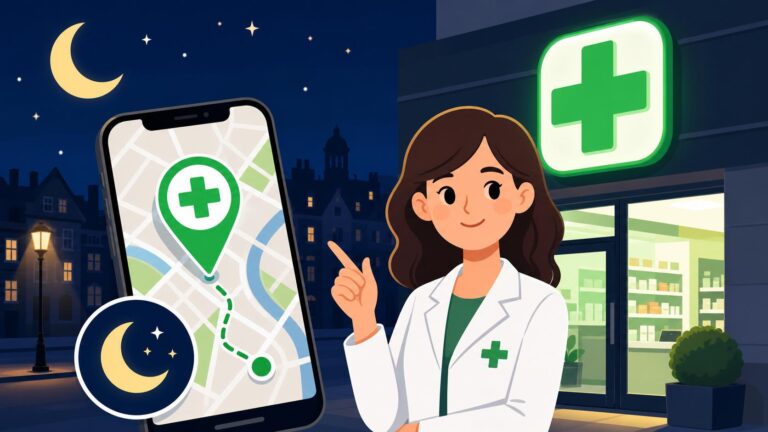
The iconic neon green cross is your lighthouse here. When it is lit, the pharmacy is open. If it is dark, they are closed. Most pharmacies follow standard retail hours, usually opening around 9:00 AM and closing by 6:00 PM or 7:00 PM, with many taking a lunch break and closing early on Saturdays. On Sundays, the entire country seems to shut down, which is why Emergency Medical Care in Belgium: 112, Hospitals, and Pharmacies becomes such vital knowledge. You won’t find "drugstore" aisles filled with hundreds of brands; instead, you’ll likely stand at a counter and talk to a highly trained professional who will go into the back to fetch what you need.
The role of the Belgian pharmacist is much more clinical than in many other parts of the world. They aren't just there to ring up your purchase; they are legally obligated to advise you. If you ask for a specific brand of cold medicine, don’t be surprised if they ask you about your symptoms, other medications you’re taking, or if you have high blood pressure. They act as a first line of defense for the healthcare system. While this can feel intrusive when you just want to get back to bed, it’s actually a great way to avoid dangerous drug interactions. For those with international coverage like Cigna Global, having a local pharmacist who understands the Belgian system can help you differentiate between what you can claim and what is a simple out-of-pocket OTC expense.
Pain Relief and Fever Management: What’s Readily Available
Paracetamol is the undisputed king of the Belgian medicine cabinet. You will almost never hear a Belgian ask for "Acetaminophen" or "Tylenol." Instead, they ask for Dafalgan or Perdolan. These are the two most common brands available without a prescription. You can buy them in various forms: standard tablets, effervescent "sparkling" tablets (which are very popular here), and even suppositories, which are more commonly used for children in Belgium than in many Anglosphere countries. Most pharmacists will default to the 1-gram dose for adults, but be aware that if you are used to the 325mg or 500mg doses common elsewhere, you should specify this.
When it comes to Non-Steroidal Anti-Inflammatory Drugs (NSAIDs), the rules are slightly tighter than you might expect. While you can certainly buy Buying Paracetamol and Ibuprofen in Belgium: Pharmacy Only Rules without a prescription, the dosage is capped. You can easily get 200mg or 400mg tablets (common brands include Nurofen and Ibuprofen Teva). However, if you are looking for 600mg or 800mg doses for severe back pain or dental issues, the pharmacist will likely require a prescription from a GP. If you’re just starting your journey here, Choosing Your First GP (General Practitioner) in Belgium is a priority so you can have these stronger options available when needed.
Aspirin is also available OTC, usually under the brand name Aspro or Aspegic. Interestingly, Belgians often prefer effervescent powders that you dissolve in water. If you are looking for topical pain relief—say, for a sports injury or joint pain—Voltaregel (Diclofenac) is readily available without a prescription. It’s always worth asking for the "generic" or "huismerk" version to save a few Euros, as the brand-name markups at Belgian pharmacies can be significant.
Respiratory Health: Coughs, Colds, and Allergies
Navigating the cold and flu aisle (which, again, is behind the counter) can be a bit of a linguistic challenge. If you have a dry cough, you’ll be looking for a "toux sèche" or "droge hoest" suppressant. Common OTC brands include Bronchosedal or Natterman. For a productive cough with mucus, you’ll ask for something for "toux grasse" or "slijmhoest," with Mucomyst or Acetylcysteine being the standard go-to. These often come as effervescent tablets that you take once a day.
For nasal congestion, the Belgian approach is quite focused on saline sprays and localized decongestants. You can buy Otrivine or Nesivine over the counter, but pharmacists are very strict about warning you not to use them for more than five to seven days due to the risk of "rebound" congestion. If you prefer something more natural, many pharmacies stock a wide range of essential oil-based sprays (like those from the Belgian brand Pranarom). If your congestion is severe, you might want to look into Managing Asthma: Accessing Inhalers and Specialists in Winter as the damp Belgian climate can often turn a simple cold into something more persistent.
Allergy sufferers will find Cetirizine and Loratadine readily available under various brand names like Zyrtec or Sanelor. These are sold in packs of 7, 10, or 20 without a prescription. If you need a larger quantity because you have chronic hay fever, it is actually much cheaper to get a prescription from your doctor, as the Mutuelle and Ziekenfonds: Public Health Insurance Registration Guide explains how these prescribed versions are often partially reimbursed by the state, whereas the OTC "small packs" are paid entirely out of pocket. For those who prefer specific organic or international allergy supplements, using a service like iHerb can be a good supplement to the local pharmacy offerings.
Digestive Issues and Stomach Comfort
Stomach upsets are a common part of expat life, whether it’s reacting to the rich Belgian sauces or the local "grey shrimp" croquettes. For heartburn and acid reflux, Gaviscon and Rennie are the most ubiquitous OTC solutions. You can find them in liquid form or chewable tablets. If you need something stronger, like Omeprazole (a Proton Pump Inhibitor), it is actually available over the counter in low-dose, small-count packs (usually 14 tablets), often sold under the name Pantomed Control or Sedacid.
For more "urgent" digestive issues, Imodium (Loperamide) is the standard for diarrhea and is sold freely in pharmacies. Conversely, if you are dealing with constipation, Dulcolax or various macrogol-based powders (like Movicol) are available. Belgians also have a strong affinity for "Buscopan" for stomach cramps. It’s an antispasmodic that is very effective and sold without a prescription, though the pharmacist will usually check that you don’t have a history of glaucoma or other contraindications before handing it over.
Probiotics and general gut health supplements are a huge market in Belgium. You will see brands like Enterol or Probactiol prominently displayed. While these are excellent, they are also quite expensive in local pharmacies. This is another area where expat veterans often look to iHerb to stock up on high-quality probiotics at a more competitive price point. If your digestive issues become chronic, don’t ignore them; Finding Medical Care in Belgium: GPs, Specialists, and Hospitals will help you find a gastroenterologist who can look deeper than an OTC fix.
Skin Care and First Aid Essentials
The first aid section of a Belgian pharmacy is usually the most "accessible" part of the shop, meaning you might actually be allowed to pick up the items yourself before taking them to the counter. You will find a wide range of "Flamigel" or "Flaminal," which are local favorites for burns and minor wounds. For disinfecting, the standard is often "Hiso-corne" or "Betadine" (iodine-based). Note that in Belgium, they still frequently use "Eosine," that bright red liquid, for drying out small wounds—don't be alarmed if you see children with red spots on their knees; it’s just the local version of a liquid bandage!
Hydrocortisone creams for itchy skin or insect bites are available OTC, but they are usually very low concentration (0.5% or 1%). If you have severe eczema or a bad reaction to a Belgian forest tick, you will likely need a prescription for something stronger. Speaking of forests, Tick Bites and Lyme Disease Risks in Belgian Forests is a must-read for anyone planning to hike in the Ardennes, as you'll want to have the right tweezers and antiseptic ready in your kit.
For general skincare, Belgian pharmacies are a goldmine. Brands like La Roche-Posay, Vichy, and Avène are standard stock. While these are technically "paracosmetics" rather than drugs, they are sold with the same level of professional advice. If you have specific dermatological needs, the pharmacist can often recommend a "preparations magistrales"—a custom-mixed cream that the pharmacist makes in their lab based on a doctor's formula. Even without a prescription, you can buy high-quality urea creams for dry feet or specialized shampoos for dandruff (like Nizoral).
Navigating Costs and Logistics of OTC Purchases
One of the biggest shocks for newcomers is the price of medication. Because everything is sold through pharmacies, there is no "price war" like you see in UK supermarkets. A box of 20 paracetamol can cost between €4 and €8 depending on the brand and location. To keep costs down, always ask: "Hebt u een generiek alternatief?" (Dutch) or "Avez-vous un générique?" (French). Generic versions are chemically identical and can be 30% to 50% cheaper.
If you find yourself needing medication after hours, you will have to use the "pharmacie de garde" or "apotheek van wacht." This is a rotating system where one pharmacy in a district stays open all night and through the weekend. You can find the nearest one by looking at the list posted on any pharmacy window or using the official website. Be prepared to pay a "garde fee" (usually around €5) if you are buying OTC items during these hours. This fee is often waived if you have a "vringend" (urgent) prescription, but for a simple bottle of cough syrup, expect the surcharge. Understanding How to Find an On-Duty Pharmacy (Pharmacie de Garde) at Night will save you a lot of wandering in the dark.
Finally, keep your receipts! If you have private insurance like Cigna Global, or even some supplementary Belgian hospital insurance, you might be able to claim back some of these costs if they are related to a specific illness. Also, if you have a "Global Medical Record" with your doctor, some medications that are normally OTC might become cheaper if the doctor "prescribes" them for a chronic condition. You can learn more about this in the guide on The Global Medical Record (DMG/GMD): Why You Need It for Better Refunds.
| Common Symptom | International Brand (Ref) | Belgian OTC Brand | Active Ingredient |
|---|---|---|---|
| General Pain / Fever | Tylenol / Panadol | Dafalgan / Perdolan | Paracetamol |
| Inflammation / Pain | Advil / Motrin | Nurofen / Spidifen | Ibuprofen |
| Heartburn | Gaviscon / Tums | Gaviscon / Rennie | Alginate / Calcium Carb |
| Diarrhea | Imodium | Imodium / Loperamide | Loperamide |
| Seasonal Allergies | Claritin / Zyrtec | Zyrtec / Sanelor | Cetirizine / Loratadine |
| Dry Cough | Robitussin | Bronchosedal | Dextromethorphan |
| Chest Congestion | Mucinex | Mucomyst | Acetylcysteine |
| Stomach Cramps | – | Buscopan | Hyoscine Butylbromide |
OTC Drugs in Belgium Disclaimer
The information provided in this guide is for educational and informational purposes only and does not constitute professional medical advice, diagnosis, or treatment. Always seek the advice of your physician, pharmacist, or other qualified health provider with any questions you may have regarding a medical condition. Never disregard professional medical advice or delay in seeking it because of something you have read in this article. Belgian laws regarding medication availability and pharmacy regulations are subject to change, and you should always verify the current status of any medication with a licensed Belgian pharmacist.