How to Find an On-Duty Pharmacy (Pharmacie de Garde) at Night
You wake up at 3:00 AM with a throbbing migraine or a child screaming from an ear infection, only to realize your medicine cabinet is completely empty. I’ve been in that exact position, standing in the rain in a quiet Brussels neighborhood, staring at a closed pharmacy door and wondering why nothing in this country seems to be open when you actually need it. This guide solves that middle-of-the-night panic by explaining exactly how to find an on-duty pharmacy in Belgium and how the after-hours system actually works.
Understanding the Belgian Pharmacy System and the Garde System
The first thing every expat learns—usually the hard way—is that Belgium does not have 24-hour "CVS" or "Boots" style pharmacies on every corner. Most standard pharmacies close by 6:30 PM or 7:00 PM on weekdays and have very limited hours on Saturdays, with almost all of them closing on Sundays. To ensure the population still has access to life-saving medication, the country uses a rotating "on-call" system known as the Pharmacie de Garde in French or Apotheek van Wacht in Dutch.
This system is a mandatory public service where pharmacists take turns staying open or being "on-call" during the night, weekends, and public holidays. It is important to realize that this is a professional medical service, not a convenience store. You shouldn't head to an on-duty pharmacy for a bottle of shampoo or a new toothbrush; the service is strictly intended for urgent medical needs that cannot wait until the next business morning. Understanding this distinction is part of the broader Emergency Medical Care in Belgium: 112, Hospitals, and Pharmacies framework that keeps the system from being overwhelmed.
There are different levels of "on-duty" service. Some pharmacies remain physically open with their lights on, while others might require you to call a specific number first so the pharmacist can travel from their home to the shop. In major cities like Antwerp or Brussels, there is almost always a pharmacy physically open 24/7, but in more rural areas of Wallonia or Flanders, you might have to drive 15 to 20 minutes to reach the one assigned to your zone for that night.
Night vs Weekend Rotations
The rotation schedule is meticulously planned and regulated by the local professional unions. During the day on a Saturday or Sunday, you will find a "Day Guard" (Garde de jour / Dagwacht). These are pharmacies that cover the weekend gap. They are generally accessible just like a normal pharmacy, though they might be busier than usual because they are the only ones open in a five-mile radius.
The "Night Guard" (Garde de nuit / Nachtwacht) usually begins at 10:00 PM and runs until 8:00 AM the following morning. This is where the rules become stricter. In many cases, for security reasons, the pharmacy will look closed. You will often have to speak through an intercom or a small security window. This is also when the specific "guard fee" applies, which we will break down later. If you are also looking for a doctor during these hours, you should consult our guide on After-Hours Medical Care: On-Call Doctors (Garde/Wacht) to coordinate your care.
The Role of the Pharmacist on Duty
A pharmacist in Belgium is more than just a cashier; they are highly trained medical professionals who act as a first line of defense in the healthcare system. When you visit a pharmacie de garde, the pharmacist has the right to ask about your symptoms to ensure the medication you are requesting is appropriate. If they believe your condition is a life-threatening emergency, they may even advise you to stop looking for a pharmacy and head straight to the hospital.
They also have a record of your medical history if you have linked your eID card to the Belgian "Global Medical Record" system. This allows them to check for potential drug interactions even at 4:00 AM. If you are new to the country, it is worth reading about Pharmacies and Medication in Belgium: Prescriptions and OTC Rules to understand what can be bought freely and what requires a doctor’s note.
How to Locate an On-Duty Pharmacy Right Now
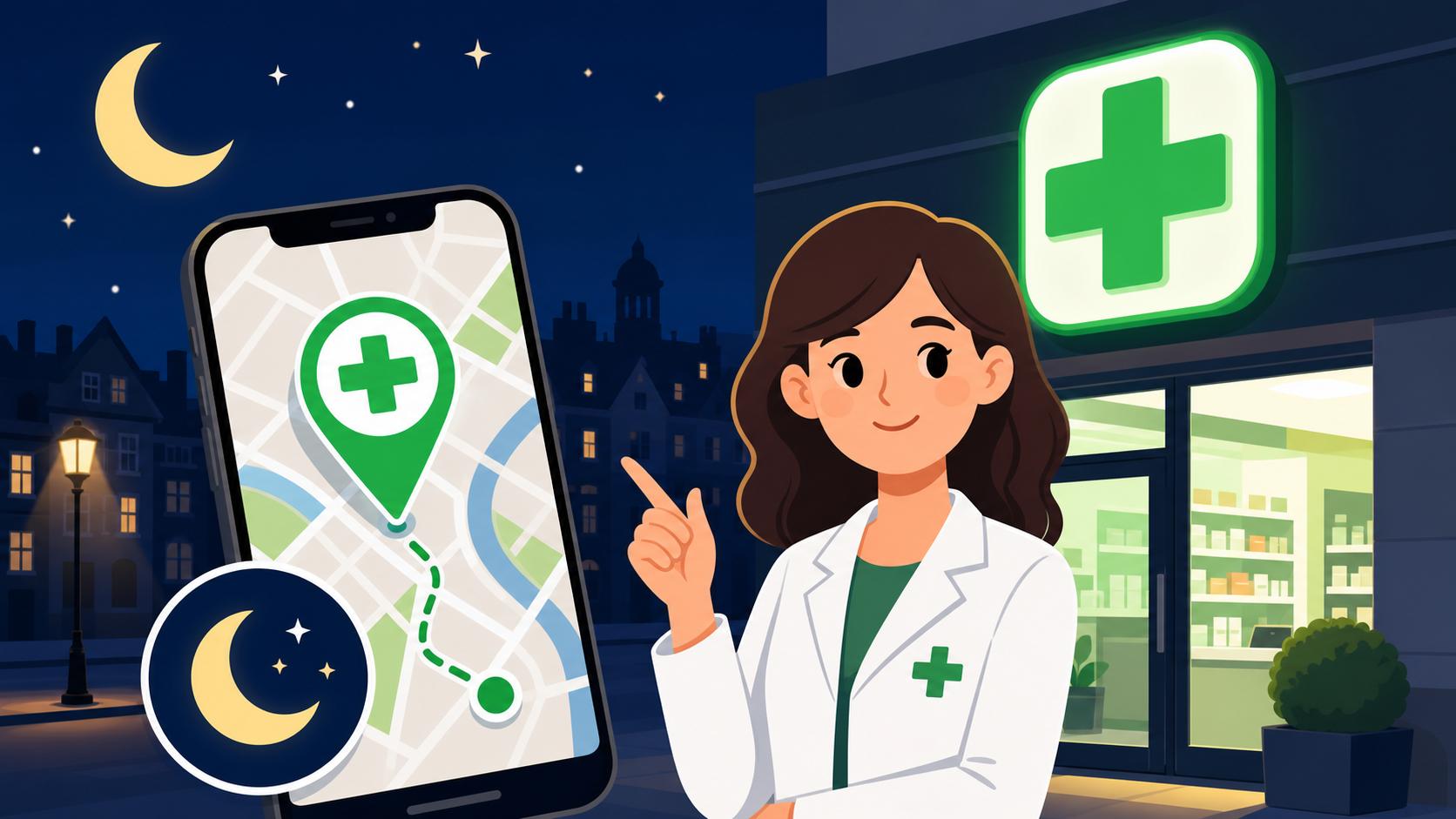
When you are in a rush, you don't want to be clicking through broken links. The most reliable way to find the nearest on-duty pharmacy is via the official national portals. For those in French-speaking areas or Brussels, you head to Pharmacie.be. If you are in Flanders, the portal is Apotheek.be. Both sites have a very simple search bar where you enter your postal code.
The website will generate a list or a map of the pharmacies currently on duty. It is vital to check the timestamp on these results, as the rotations can change at exactly 10:00 PM or 8:00 AM. I always recommend calling the pharmacy listed before you get in your car. Sometimes a pharmacy might be listed as "on-call" but requires you to phone ahead so they can open the security shutter for you. This prevents you from standing out in the cold if the pharmacist is in the back room.
Using the 0903 99 000 Call Center
If you don't have internet access or find the websites confusing, there is a dedicated phone line: 0903 99 000. Please be aware that this is a premium-rate number, often costing around €1.50 per minute. When you call, you will be asked for your language preference and then your postal code. An operator or an automated system will then provide the address of the nearest available pharmacy.
I found this service particularly helpful during my first few months when I didn't have a stable data plan. However, keep in mind that the operators may not always speak perfect English, though they are usually very patient with expats. It's helpful to have a pen and paper ready to jot down the street name, as Belgian street names in Brussels can be long and bilingual. This is just one of many Finding Medical Care in Belgium: GPs, Specialists, and Hospitals resources you should keep saved in your phone.
Physical Indicators and the Green Cross
In the old days, every pharmacy would post a printed list of the on-duty rotations on their front door. While many still do this, it is becoming less common due to security concerns and the ease of digital updates. However, if you are walking around your neighborhood, look for the "Green Cross" sign.
In Belgium, a blinking green cross usually signifies that the pharmacy is open. If the cross is dark, the pharmacy is closed. Some pharmacies have a digital display underneath the cross that scrolls through the address of the current pharmacie de garde. If you are in a pinch and see a pharmacy with a light on but the door locked, look closely at the window; there is almost always a small sign directing you to the nearest open location.
| Feature | Regular Pharmacy | Pharmacie de Garde (Night/Sunday) |
|---|---|---|
| Availability | 9 AM – 6:30 PM (approx) | 10 PM – 8 AM / All day Sunday |
| Accessibility | Walk-in | Often via intercom/security window |
| Surcharge | None | Guard Fee (approx. €5 – €10) |
| Selection | Full range of products | Urgent medical supplies only |
| Prescription Req. | Required for most meds | Same, but fee is often waived |
Essential Rules, Fees, and Practical Tips for Late-Night Visits
One of the biggest shocks for expats is the "Guard Fee" (Honoraires de garde / Wachtvergoeding). This is an additional charge added to your bill for the service of the pharmacist being available after hours. Typically, this fee ranges from €5 to €10. If you are buying a simple box of aspirin that costs €8, and you pay a €10 guard fee, your total bill suddenly doubles. This can feel frustrating, but there is a very important rule to remember.
If you have a medical prescription from a doctor that was written that same day or marked as "urgent," the guard fee is usually covered by your insurance (mutuelle). In this case, you won't see the extra charge on your receipt, or it will be reimbursed automatically. This is part of the logic behind Healthcare Budgeting: Copays, DMG/GMD, and Reimbursements, where the system incentivizes seeing a doctor for actual emergencies rather than self-medicating for minor issues. If you are covered by a private plan like Cigna Global, check if they reimburse these specific out-of-pocket fees, as many international policies are quite generous with emergency pharmacy surcharges.
Security Protocols and Access
Safety is a priority for pharmacists working the night shift. Don't expect to be able to browse the aisles for vitamins or baby wipes at 2:00 AM. In most city pharmacies, the main door will remain locked. You will need to ring a bell or use an intercom. The pharmacist will usually ask you what you need before they even open the small transaction window.
Be prepared to show your eID (Belgian Electronic Identity Card) or your ISI+ card for children. The pharmacist needs this to register the sale and to check your insurance status. If you are still in the process of moving and don't have your eID yet, you can read about Public Health Insurance Registration Guide to see what temporary documents are accepted. Having your documents ready makes the process much smoother and less stressful for both you and the pharmacist.
What You Must Bring With You
Aside from your eID, you should always bring your doctor's prescription if you have one. In Belgium, many things that are over-the-counter in the US or UK, like certain high-dose painkillers or specialized creams, require a prescription here. For a detailed list of what you can and can't get easily, see Buying Paracetamol and Ibuprofen in Belgium: Pharmacy Only Rules.
If you are an expat with international insurance through Cigna Global, it is also a good idea to have your digital insurance card on your phone. While the pharmacist usually interacts directly with the Belgian social security system, having proof of your private coverage can be helpful if there is an issue with the local database or if you need a detailed invoice for a later claim.
Alternatives and Preparing for Future Medical Needs
The best way to handle a 3:00 AM pharmacy run is to avoid it entirely. I’ve learned to keep a well-stocked "Belgian-proof" first aid kit. Because you can't just buy ibuprofen at the grocery store, you need to be proactive. I personally use iHerb to stock up on basic supplements, vitamins, and non-medicinal first-aid supplies like bandages or electrolyte powders that don't require a Belgian pharmacy visit. Having these on hand saves you from the €10 guard fee and the midnight drive.
However, sometimes a pharmacy isn't enough. If you find that the nearest on-duty pharmacy is 30 minutes away and your condition is worsening, you might need to reconsider your options. If it’s a true emergency, calling 112 or Going to the Emergency Room (Urgences/Spoedgevallen) in Belgium is the correct path. The emergency room has its own internal pharmacy for immediate treatments, though they will still give you a prescription to fill at a regular pharmacy for your follow-up care.
Digital Resources and Home Delivery
While Belgium is traditional in many ways, there are growing digital options. Some "online pharmacies" exist, but they are not allowed to ship prescription medication or even certain over-the-counter drugs like paracetamol via standard mail for next-day delivery. They are great for stocking up on things like sunblock or skincare from iHerb or local sites, but they won't help you in a midnight crisis.
For parents, it is especially important to have things like liquid paracetamol and a thermometer ready. I also recommend having a few What Are Mutuelle Stickers Used For and Where to Put Them ready in your wallet. If the pharmacist gives you a paper "attest" (receipt) instead of a digital one, you will need those stickers to claim your money back from your health fund later.
Final Expat Advice
Living in Belgium means embracing a slower pace, which includes the pharmacy hours. My "veteran" advice? Check your medicine cabinet every time the seasons change. When the first cold wind hits in October, make sure you have the basics. If you do find yourself out at night, stay calm. The pharmacists are helpful, the system is reliable, and once you have that medicine in hand, you'll be back in bed before you know it. Just remember that the system is there for your health, not for a midnight snack or a bottle of shampoo!
Disclaimer
This guide is for informational purposes only and does not constitute medical or legal advice. Always consult with a qualified healthcare professional or the official Belgian health authorities for specific medical concerns. Pharmacy rotations and fees are subject to change based on regional regulations.