Antibiotics in Belgium: Why You Need a Strict Prescription
You are lying in bed with a sore throat that feels like you have swallowed broken glass, and all you want is that specific Z-Pack your doctor back home used to give you without a second thought. I remember my first winter in Brussels, staring blankly at a pharmacist who refused to sell me anything stronger than herbal tea because I did not have a slip from a local doctor. This guide solves the mystery of Belgium’s strict antibiotic laws and explains exactly how to navigate the medical system to get the treatment you need.
The Cultural Shift Toward Antibiotic Stewardship
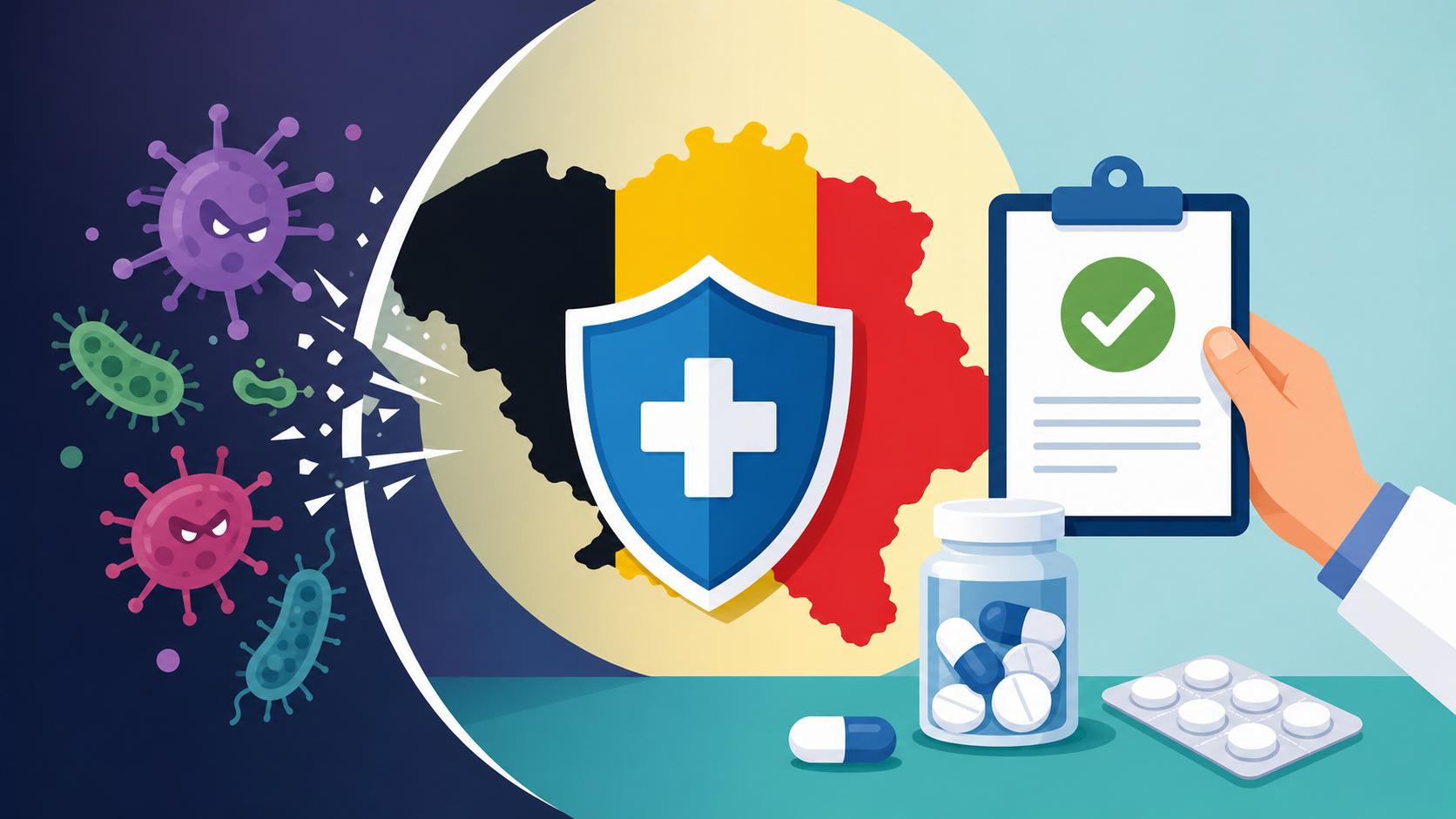
In many countries, getting a pack of amoxicillin is as simple as visiting a neighborhood chemist and asking politely. In Belgium, however, you will find that pharmacists are the gatekeepers of a very strictly controlled vault. This is not because they want to be difficult; it is a fundamental pillar of the Belgian healthcare philosophy. The government has spent decades campaigning against the overconsumption of antibiotics to prevent the rise of "superbugs" or antimicrobial resistance.
When you first arrive, this can feel like a massive administrative hurdle. You might feel that you know your own body and that a "simple" sinus infection requires a "simple" antibiotic. However, Belgian medical culture prioritizes the long-term efficacy of these drugs over immediate patient convenience. You will find that doctors here are much more likely to suggest rest, hydration, and paracetamol for the first few days of an illness before even considering a prescription.
Validation is key here: it is incredibly frustrating to pay for a doctor’s visit just to be told to "wait and see." Yet, understanding this mindset is the first step toward integrated life in Belgium. The medical community here is highly data-driven, and they view antibiotics as a precious resource that must be protected. If you are used to a "customer is always right" model of medicine, the Belgian "doctor is the expert" model can be a bit of a shock. For those who are still setting up their local coverage, having a plan with Cigna Global can provide peace of mind, as their international support often understands the nuances of navigating these rigid local systems while ensuring you have access to top-tier providers.
Navigating the Prescription Process
To get antibiotics in Belgium, you must have a valid prescription from a registered physician. There are no exceptions to this rule, and trying to "sweet-talk" a pharmacist will only result in a polite but firm rejection. The process begins with Choosing Your First GP (General Practitioner) in Belgium. This is your "huisarts" (in Dutch) or "médecin de famille" (in French). This doctor will be your primary point of contact for all health matters.
During your consultation, be prepared for a thorough examination. Unlike some systems where you might just tell the doctor what you need, a Belgian GP will check your lungs, look at your throat, and perhaps even perform a quick "CRP" blood test in the office to see if your infection is actually bacterial or viral. If it is viral, they will not give you antibiotics, as these drugs do nothing for viruses. This is often where the "I've-been-there" frustration peaks—paying the consultation fee only to leave with a prescription for nasal spray.
However, if an antibiotic is truly necessary, the doctor will issue a digital prescription. This is usually linked to your Belgian eID card through a system called Recip-e. You won't always get a physical piece of paper anymore; instead, the doctor "uploads" the prescription to the cloud, and any pharmacist can see it when they scan your identity card. For those who are still waiting for their official residency documents, Finding Medical Care in Belgium: GPs, Specialists, and Hospitals can guide you through using your passport or a temporary paper identification to access the same level of care.
Understanding the Financial Aspect
One of the benefits of the Belgian system is that once you have that prescription, the cost of the medication is often heavily subsidized. To benefit from this, you need to be registered with a mutuelle or ziekenfonds. While the doctor's visit requires an upfront payment, you are entitled to a significant refund. This is explained in detail in our guide on Understanding the 75% Reimbursement System for Medical Consultations.
For expats, managing these costs in the first few months is vital. While the public system is excellent, some prefer the added layer of Cigna Global to cover gaps, especially if they are visiting "non-conventioned" doctors who charge higher fees than the state-mandated rates. These higher-tier doctors often have more availability and may speak better English, making the path to your prescription a little smoother if you are struggling with the language barrier.
At the Pharmacy: More Than Just a Shop
When you walk into a Belgian pharmacy (indicated by a neon green cross outside), you are entering a highly regulated medical space. You won't find aisles of snacks or greeting cards here. The focus is strictly on health. To pick up your antibiotics, you will present your eID card. The pharmacist will scan it, see the digital prescription, and dispense the exact amount of medication the doctor ordered.
It is important to note that pharmacists in Belgium have a legal obligation to explain how to take the medication. They will often write the dosage (e.g., "1x/day") directly on the box with a marker. This is a great time to ask about side effects or interactions. If you are someone who prefers to bolster your immune system through preventative measures, you might also look for high-quality supplements. While Belgian pharmacies carry these, many expats prefer the variety and price points found on iHerb for their daily vitamins, probiotics, and minerals, which can be shipped directly to your Belgian address to help you avoid getting sick in the first place.
Practical Tips for Pharmacy Visits
The Belgian pharmacy system is incredibly efficient, but it has its quirks. For instance, if you need medication in the middle of the night or on a Sunday, you cannot just go to any pharmacy. You must find the "pharmacie de garde" or "apotheek van wacht." This information is usually posted on the door of every closed pharmacy or found on dedicated websites. Be aware that after-hours visits often carry a small "duty fee" on top of the medication price.
| Feature | Antibiotics (Prescription) | OTC Drugs (Non-Prescription) |
|---|---|---|
| Availability | Only at a Pharmacy | Only at a Pharmacy |
| Prescription Required | Yes, strictly | No |
| Reimbursement | Usually 50% – 90% | Rarely reimbursed |
| Purchase Location | Behind the counter | Behind or in front of counter |
| Supermarket Access | Never | Never |
The table above highlights a crucial Belgian rule: you cannot buy any medicine—not even basic painkillers—in a supermarket. Everything must go through the pharmacy. This is why Pharmacies (Apotheek/Pharmacie) in Belgium: Operating Hours and Services is a must-read for any new resident. Even for non-prescription items, you still need to understand Buying Paracetamol and Ibuprofen in Belgium: Pharmacy Only Rules because the strengths and brands (like Dafalgan or Perdolan) might be different from what you use back home.
Handling Foreign Prescriptions and Emergencies
Many expats wonder if they can simply use a prescription from their home country. The answer is: maybe, but it is complicated. A prescription from an EU/EEA country is generally valid in Belgium, provided it contains all the necessary technical information. However, a prescription from the USA, India, or the UK (post-Brexit) is technically not valid. In these cases, you will need to see a Belgian doctor to have the prescription "converted" into a local one. This process is detailed in our article on Refilling Foreign Prescriptions at a Belgian Pharmacy.
If you find yourself in a situation where your infection is worsening and it is a holiday or weekend, do not wait. You can visit a hospital emergency room, but be prepared for a long wait if your condition is not life-threatening. A better alternative is the "GP Circle" (Huisartsenwachtpost / Poste de Garde), which provides out-of-hours care for non-emergencies. They can examine you and issue an emergency prescription for antibiotics if required.
For those who rely on specific brands of health products that aren't easily found in the smaller Belgian pharmacies, iHerb remains a popular choice for expats to maintain their wellness routines with familiar products from back home. Just remember that no matter how much you stock up on vitamins, they are no substitute for the professional medical care you’ll receive through Finding Medical Care in Belgium: GPs, Specialists, and Hospitals.
Managing Common Ailments Without Antibiotics
Because doctors are so hesitant to prescribe antibiotics, you need to become well-versed in the world of Over-the-Counter (OTC) Drugs in Belgium: What You Can Buy Freely. For a standard cold or flu, the Belgian approach is "symptomatic treatment." This means you treat the fever with paracetamol, the congestion with saline spray, and the cough with syrup.
Belgian pharmacists are excellent at recommending these "softer" treatments. They might suggest herbal teas or essential oil-based rubs. While this can feel like "not enough" when you are feeling miserable, it is the standard of care here. If you are looking for a wider range of homeopathic or specialized natural remedies, iHerb offers a vast selection that can complement the local pharmacy's stock, particularly for those looking for specific organic or vegan options.
Ultimately, the strictness surrounding antibiotics in Belgium is a sign of a high-functioning healthcare system that values long-term public health. While the "briefje" (prescription) requirement is a hurdle, it ensures that when you actually do need an antibiotic for a serious infection, the drug will still be effective. If you are feeling overwhelmed by the bureaucratic side of Belgian health, consider looking into Private Health Insurance in Belgium: When Do Expats Really Need It? to see if a private plan like Cigna Global might help you bypass some of the stress and get you back on your feet faster.
Disclaimer
This guide is for informational purposes only and does not constitute professional medical advice, diagnosis, or treatment. Always seek the advice of your physician or another qualified health provider with any questions you may have regarding a medical condition. Never disregard professional medical advice or delay in seeking it because of something you have read in this article. The Belgian healthcare system is subject to frequent regulatory changes, and you should always verify the latest requirements with your local commune or insurance provider.