Bringing ADHD Medication (Stimulants) Into Belgium Legally
Moving to Belgium with ADHD can feel like an administrative nightmare before you've even packed a single suitcase. I remember the cold sweat I broke into while staring at my Ritalin bottle, wondering if the customs officers at Zaventem would treat me like a common criminal for just trying to manage my brain. This guide settles those nerves by outlining exactly how to navigate Belgian stimulant laws so your transition remains smooth, legal, and stress-free.
The Reality of Stimulants in Belgium
Belgium is a wonderful place to live, but its bureaucracy is legendary, and when it comes to "controlled substances," they don’t mess around. In Belgium, ADHD medications like Methylphenidate (Ritalin, Concerta, Medikinet) and Lisdexamfetamine (Elvanse/Vyvanse) are strictly regulated under the Belgian Federal Agency for Medicines and Health Products (FAMHP/AFMPS). They are classified as narcotics or psychotropic substances, which means you cannot simply toss them into your carry-on and hope for the best.
When I first moved here, I assumed a copy of my prescription would be enough. It isn't. The Belgian authorities require specific documentation to prove that your medication is for personal use and was legally prescribed by a licensed professional. This is especially important because Is Health Insurance Mandatory for Foreigners in Belgium? is a question you'll eventually face, but before you even get to insurance, you have to get the drugs across the border.
The Belgian government is protective of its healthcare system and its citizens, which leads to strict enforcement of the 1921 Law on Narcotic Drugs. While this might feel frustrating, it is designed to prevent illicit trafficking. As an expat, your goal is to show that you are a patient, not a dealer. Validating this status starts long before you board your flight.
Bringing Your First Supply: The 90-Day Rule
The general rule of thumb for bringing ADHD medication into Belgium is that you are allowed to carry up to a 90-day supply for personal use. However, the documentation required depends heavily on where you are coming from. If you are moving from within the Schengen Area, you have a different set of hoops to jump through than those coming from the US, UK, Canada, or beyond.
For those coming from a Schengen country, you must obtain a "Schengen Certificate" (Article 75 of the Schengen Implementation Convention). This is a specific form that your prescribing doctor fills out, which is then legalized by the health authorities in your home country. This certificate is only valid for 30 days of travel, so if you are moving permanently, you’ll need to act fast once you land.
If you are coming from a non-Schengen country, the process is slightly more flexible but requires more detail. You need a comprehensive medical letter from your psychiatrist. This letter must be on official letterhead and include your full name, your doctor’s credentials, the exact diagnosis, the generic and brand name of the medication, the dosage, and the total quantity you are carrying. This is where a global health partner like Cigna Global can be invaluable, as they often provide resources to help expats understand these international requirements.
Documentation Comparison Table
| Document Type | Schengen Area Residents | Non-Schengen Residents |
|---|---|---|
| Primary Form | Schengen Certificate (Art. 75) | Detailed Medical Letter |
| Legalization | Required by local health gov | Recommended (Notary/Apostille) |
| Max Supply | 30 days (per certificate) | 90 days |
| Language | Dutch, French, or English | Dutch, French, or English |
| Prescription | Original copy required | Original copy required |
Navigating Customs at the Belgian Border
When you land at the airport or cross the border by train, you have a choice: the Green Channel (nothing to declare) or the Red Channel (goods to declare). While many expats tempt fate by walking through the Green Channel, I always recommend the "over-prepared" approach. Having your papers in order means that even if you are randomly stopped, you have zero reason to panic.
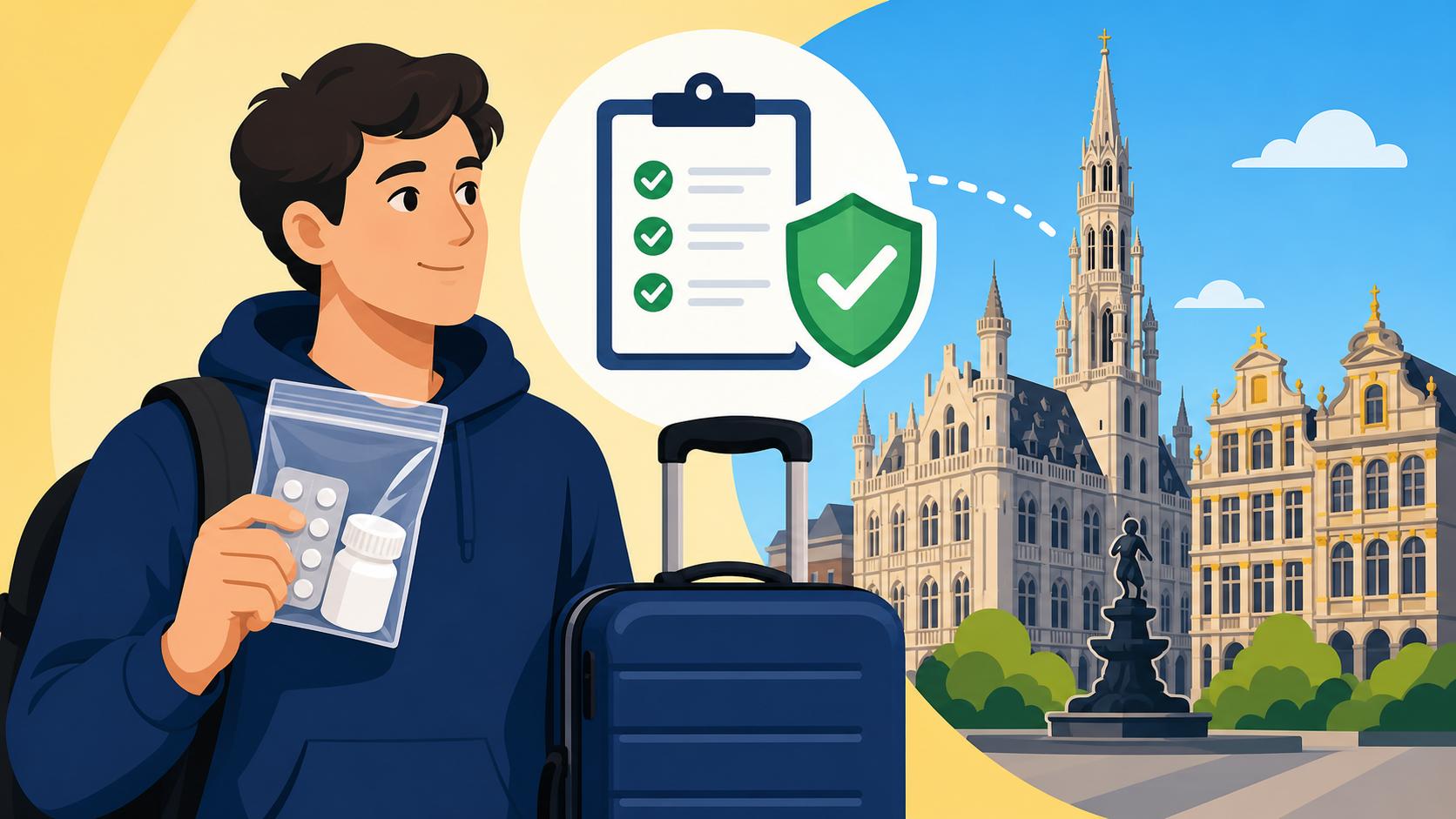
You must keep your medication in its original pharmacy packaging. Never, under any circumstances, transfer your stimulants into one of those "days of the week" plastic pill organizers for your flight. The label on the bottle must match the name on your passport and the name on your medical letter. If there is a discrepancy—perhaps you use a middle name or a maiden name—ensure you have legal proof of the name change.
It is also wise to check Importing Medication to Belgium: Customs Limits and Expat Rules to ensure you aren't accidentally bringing in other restricted items. While you might be focused on your ADHD meds, something as simple as a high-strength melatonin or a specific herbal supplement could also trigger a secondary inspection. If you do use supplements to support your ADHD treatment, brands like iHerb are widely used by expats in Belgium to source high-quality products locally once they arrive, avoiding customs issues altogether.
Finding a Belgian Doctor for Refills
Once your 90-day supply starts dwindling, the real work begins. You cannot use a foreign prescription to get a refill at a Belgian pharmacy indefinitely. You must enter the Belgian medical system. This process is often slower than people expect, so I highly recommend starting your search for a doctor in your first week.
In Belgium, a General Practitioner (GP) can technically write a prescription for stimulants, but most will refuse to do so for a new patient without a "report of expertise" from a Belgian-recognized psychiatrist. You should look for a psychiatrist who specializes in adult ADHD. When you find one, bring your full diagnostic history from your home country. If your documents are not in English, French, or Dutch, you will likely need to have them translated.
For more on how to start this search, check out Finding Medical Care in Belgium: GPs, Specialists, and Hospitals. Be prepared for wait times; specialists in major cities like Brussels or Antwerp can have waiting lists of three to six months. If you are struggling with the transition, Accessing Mental Health Services: Psychologists vs Psychiatrists can help you understand which professional you actually need to see to get your script renewed.
The Belgian Pharmacy Experience
The first time you walk into a Belgian Apotheek (Dutch) or Pharmacie (French), you’ll notice they look very different from the drugstores in the US or UK. They are clinical, quiet, and highly regulated. When you present your Belgian prescription for a stimulant, the pharmacist will ask for your eID (Belgian electronic ID card).
Stimulant prescriptions in Belgium are increasingly handled via e-prescriptions. Your doctor uploads the script to a central database linked to your national registry number. The pharmacist simply scans your card and sees what has been authorized. If you are still waiting for your eID, you can use a paper "proof of prescription," but the pharmacist will likely examine it with a magnifying glass to ensure it meets all "narcotic" formatting requirements, including the doctor’s unique INAMI/RIZIV number.
Before you go, it is helpful to read Pharmacies and Medication in Belgium: Prescriptions and OTC Rules to understand how pharmacies operate here. Also, keep in mind that Refilling Foreign Prescriptions at a Belgian Pharmacy is generally not possible for controlled stimulants; the law is very clear that these specific substances require a local authorization for long-term use.
Costs, Insurance, and Reimbursements
ADHD medication in Belgium can be expensive if you are paying out-of-pocket, but the social security system is generous if you are properly registered. To get your medication subsidized, you must be a member of a Mutuelle (French) or Ziekenfonds (Dutch). Without this, a month of Elvanse could cost you over 100 euros, whereas with it, the price drops significantly.
Belgium uses a "Category B" or "Category C" reimbursement system for most medicines. For ADHD stimulants, there is often a "flat rate" you pay at the pharmacy, and the government covers the rest. However, this reimbursement is often only triggered if your psychiatrist has submitted a specific request (a "Chapter IV" request) to your insurance provider. This request proves that you meet the medical criteria for the state to help pay for the drug.
Understanding the 75% Reimbursement System for Medical Consultations is vital for your budget, as is Mutuelle and Ziekenfonds: Public Health Insurance Registration Guide. If you have a private policy through Cigna Global, you might be able to claim back the remaining co-pay, but you’ll need to keep every single "narcotic receipt" the pharmacist gives you.
Living as a Neurodivergent Expat in Belgium
Beyond the pills, living with ADHD in a new country presents unique challenges. Belgian work culture is very structured, which can be both a blessing and a curse for an ADHD brain. Navigating the administrative hurdles of moving can lead to significant "burnout," a term the Belgian medical system actually takes very seriously.
If you find that your current medication isn't enough to help you manage the stress of the move, you might want to look into Neurodiversity in Belgium: ADHD and Autism Diagnosis for Expats. There is a growing community of English-speaking therapists in Brussels and Ghent who understand the intersection of expat life and neurodivergence. Support groups can be a lifeline when you feel like you’re drowning in "Annex 15" forms and tax documents.
For holistic support, many expats continue to use iHerb for vitamins like Magnesium, Zinc, or Omega-3s, which are often recommended alongside traditional ADHD treatment. Combining traditional medicine with a solid support network is the best way to ensure your Belgian adventure is a success. You can find more about this in our guide on Mental Health in Belgium: Therapy, Psychiatry, and Expat Support.
Traveling Out of Belgium with Your Meds
Once you are settled, you’ll likely want to explore the rest of Europe. Remember that the same rules apply when you leave Belgium. If you are traveling within the Schengen Area, you must visit your Belgian GP and have them fill out a Belgian Schengen Certificate, which then must be validated by the Belgian "Service Public Fédéral Santé publique" (SPF Santé).
This is a step many people forget. I once nearly missed a weekend trip to Berlin because I didn't realize I needed my Belgian doctor to sign off on my travel papers. Don't let the ease of European borders fool you; your medication is still a controlled substance the moment you cross the line into France, Germany, or the Netherlands. Plan at least two weeks in advance for any international travel to allow for the mail-in validation process of your certificates.
Disclaimer
This guide is for informational purposes only and does not constitute legal or medical advice. Regulations regarding controlled substances in Belgium are subject to change, and you should always verify current requirements with the Belgian Federal Agency for Medicines and Health Products (FAMHP/AFMPS) or the Belgian embassy in your home country before traveling.