STI Testing in Belgium: Anonymous Clinics and Regular GP Visits
Finding yourself in need of sexual health services in a new country can be an incredibly stressful experience, especially when you are still trying to figure out how to say "blood test" in French or Dutch. I remember the paralyzing anxiety of my first year in Brussels, staring at a clinic door and wondering if my medical records would somehow end up in the hands of my commune's residency officer. This guide solves the mystery of STI testing in Belgium, detailing the anonymous options, the role of your family doctor, and the financial side of sexual health.
Navigating the Belgian Healthcare System for STI Tests
The Belgian healthcare system is world-class, but it is decentralized, which can be confusing for a newcomer. Unlike some countries where there is a single national sexual health service, in Belgium, you have three main paths: your general practitioner (GP), a specialized clinic, or a hospital-based department. Most locals prefer the GP route because it is integrated into their long-term health history, but for many expats, the desire for total anonymity or a specialized English-speaking environment leads them elsewhere.
The General Practitioner Route
For most people, the first point of contact will be a "Médecin Généraliste" or "Huisarts." If you have already gone through the process of Choosing Your First GP (General Practitioner) in Belgium, this is often the most comfortable option. You book an appointment, discuss your concerns, and the doctor will either take samples on-site or give you a "prescription" to take to a nearby laboratory.
The benefit of seeing a GP is the personal connection. They know your history and can manage follow-up care if a result comes back positive. However, be aware that many GPs in Belgium are "conventioned," meaning they adhere to official state rates, but some are not. If you are using a premium international policy like Cigna Global, you might have more flexibility in choosing a doctor who speaks perfect English and operates outside the standard state system, though the reimbursement process will differ slightly from the public mutuelle system.
Seeing a Specialist Directly
In Belgium, you don't always need a referral to see a specialist, though it is often cheaper if you have one. You might choose to book an appointment with a gynecologist or a urologist directly for STI concerns. If you are wondering about the administrative side of this, you should read more about Seeing Specialists in Belgium: Do You Need a GP Referral First? to understand how it affects your wallet.
Specialists have more diagnostic equipment on-site than a typical neighborhood GP. For example, a gynecologist can perform a pelvic exam and take swabs during the same visit. This can be more efficient than the GP-to-lab two-step process, but the wait times for specialist appointments in major cities like Antwerp or Brussels can sometimes stretch into weeks. If you are experiencing symptoms and need immediate peace of mind, a specialist might not be the fastest route.
Hospital-Based Clinics and Large Centers
If you prefer a one-stop-shop, many major hospitals have dedicated "Dermatology" or "Infectious Disease" departments that handle STIs. In Brussels, for instance, the CHU Saint-Pierre is a major hub for infectious disease and offers comprehensive testing services. These environments are highly professional and used to dealing with the international community. When Finding Medical Care in Belgium: GPs, Specialists, and Hospitals, look for centers that mention "Infectiologie" or "Maladies Infectieuses." These departments are specifically geared toward handling complex cases and routine screenings with high levels of discretion.
Anonymous and Low-Cost Testing Options
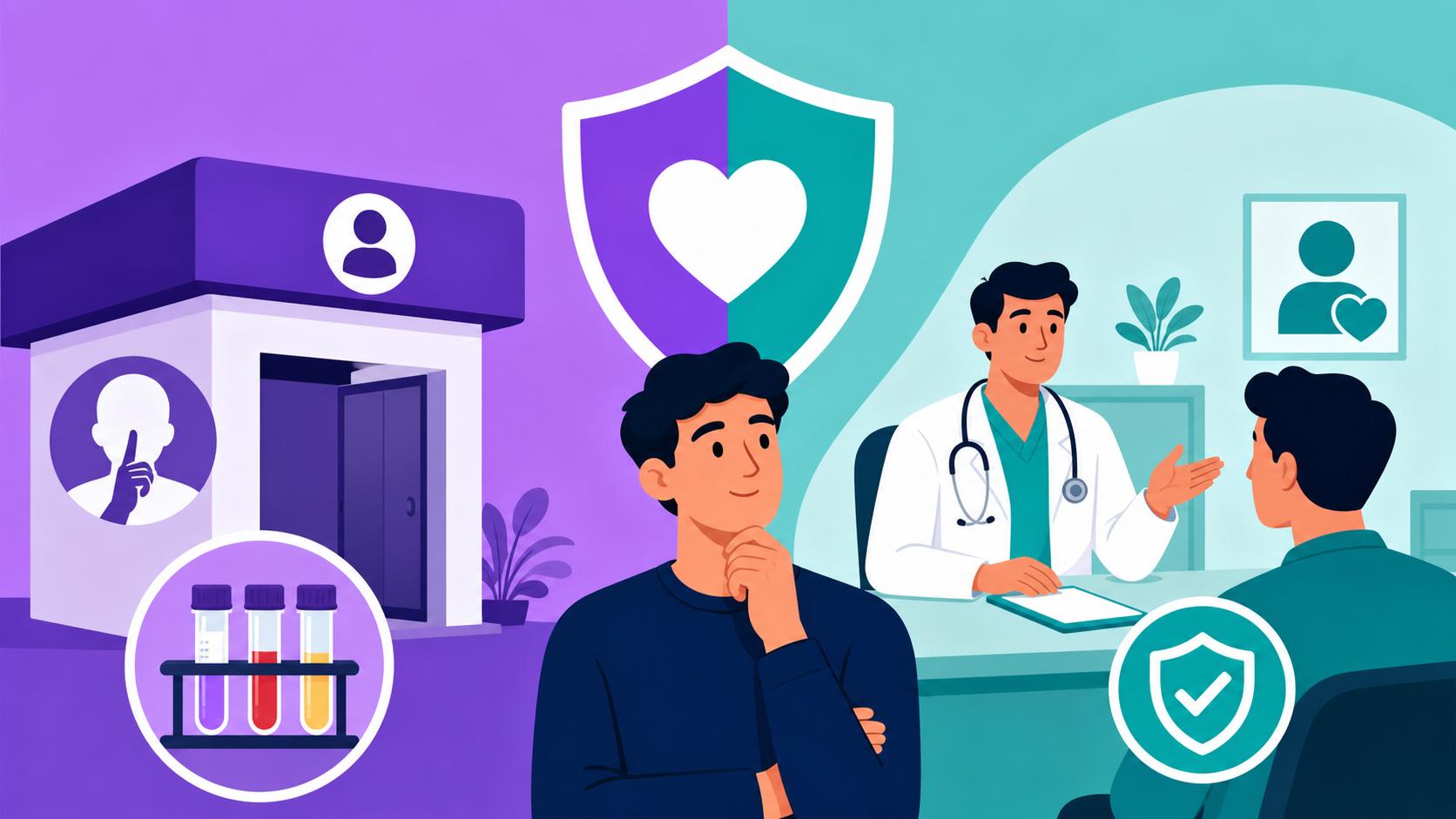
For some, the "Global Medical Record" system in Belgium feels a bit too transparent. If you are worried about your results being visible on the federal health portal, or if you simply want a quick, low-cost check-up without involving your regular doctor, anonymous clinics are the way to go. These centers are often subsidized and cater specifically to vulnerable groups, students, and expats who haven't yet navigated the mutuelle registration.
Specialized Anonymous Clinics in Major Cities
Belgium has several "Help Centers" and specialized NGOs that offer testing where you don't even have to provide your real name if you choose not to. In Brussels, the most famous is "Help-Center-Ares," located near the center. In Antwerp, "Helpcenter-Prinsstraat" provides similar services. These clinics are fantastic because they focus exclusively on sexual health. The staff is non-judgmental, usually multilingual, and deeply familiar with the latest testing protocols for everything from HIV and Syphilis to Chlamydia and Gonorrhea.
When you visit an anonymous clinic, you are often given a code. You use this code to call back or log into a secure portal for your results a few days later. This bypasses the entire "Mutuelle" paper trail, which can be a huge relief if you are currently in a transition period with your residency or if you have a shared family insurance plan and want to keep your visit private.
Planning for Privacy and Cost
While many of these clinics offer free testing for certain demographics (like youth under 25 or people without insurance), most expats will be asked to pay a small fee. This is usually significantly cheaper than a private consultation. However, these clinics are popular and often operate on a "walk-in" basis or have very specific booking windows that open early in the morning.
If you are using a service that isn't anonymous and involves your eID card, the data will eventually be logged. If you want to keep your health data organized but private, you should look into the MyHealth.belgium.be Guide: Accessing Your Medical Records Online to see what is being recorded. While the government takes privacy seriously, some expats prefer to keep sexual health separate from their main digital health profile.
The Role of NGOs and Student Services
Universities in Belgium, such as KU Leuven or ULB, often have their own student health centers that offer STI testing at reduced rates. Even if you aren't a student, organizations like "Aimer à Bruxelles" or various "Centres de Planning Familial" provide sexual health consultations. These centers are gems for the expat community because they operate on a sliding scale based on income. They are less "clinical" than a hospital and offer a supportive environment for discussing contraception and sexual wellness. After a course of treatment, many expats look to maintain their general health via supplements from sites like iHerb, but remember that for the actual infection, only a doctor-prescribed antibiotic or antiviral will work.
Understanding Costs and Reimbursements
The Belgian "reimbursement" system is one of the hurdles that catches every expat off guard. You pay upfront, get a piece of paper (or a digital "eAttest"), and eventually get some money back. But with STI testing, there is an extra layer of complexity: the lab bill.
| Service Type | Estimated Upfront Cost | Reimbursement Rate | Anonymity Level |
|---|---|---|---|
| GP Consultation | €30 – €40 | ~75% | Low (Goes on GMD) |
| Specialist (Private) | €60 – €120 | Variable | Medium |
| Anonymous Clinic | €0 – €20 | N/A | High |
| Hospital (Outpatient) | €40 – €80 | ~75% | Medium |
| Lab Analysis (Blood/Swab) | €20 – €100+ | ~60-90% | Low |
The Role of the Mutuelle
To get any money back, you must be registered with a Mutuelle or Ziekenfonds. Once you are set up, you will experience the Understanding the 75% Reimbursement System for Medical Consultations first-hand. For a standard STI screening, you will pay the doctor for the visit, but the actual testing of the samples is done by an external lab. The doctor sends the samples away, and you walk out thinking you’re done.
Then, three weeks later, a brown envelope arrives in your mailbox. This is the "facture" from the lab. It can be a shock if you aren't expecting it. If you have a policy with Cigna Global, you can often submit these lab invoices directly for reimbursement, which is a lifesaver if the lab performs a wide panel of tests that the public system only partially covers.
The Dreaded Lab Bill (Facture)
The lab bill is often separate from the doctor's bill. This is why Paying a Lab Bill (Facture) Months After Your Blood Test is such a common topic of conversation in expat groups. The lab will bill your Mutuelle directly for the "insured" portion, and then send you a bill for the "patient's share" (the ticket modérateur).
If you are getting a comprehensive "full panel" (HIV, Hep B/C, Syphilis, Chlamydia, Gonorrhea, Trichomoniasis), the total cost before insurance can be quite high. Ensure the lab has your correct address and Mutuelle details. If they don't, they will bill you the full amount, and you'll have to manually chase the reimbursement, which is a bureaucratic nightmare you want to avoid.
Copays and the DMG/GMD
To keep your costs down, it is vital to have a "Global Medical Record" (DMG in French, GMD in Dutch) opened with your GP. This reduces your out-of-pocket copay for every visit. When managing your Healthcare Budgeting: Copays, DMG/GMD, and Reimbursements, always ask your doctor if they are "Conventioned." If they are not, they can charge whatever they like, and your insurance will still only reimburse you based on the state's fixed rate, leaving you with a much larger gap to pay.
Testing Procedures and Terminology
Walking into a Belgian clinic and trying to explain that you need a "full STI screen" requires a bit of vocabulary. While most doctors in major cities speak excellent English, the forms and the lab results will likely be in French or Dutch. Knowing the right terms can help ensure you get the exact tests you need without any awkward misunderstandings.
What to Ask For: French and Dutch Terms
In French, you are looking for "Dépistage IST" (Infections Sexuellement Transmissibles). In Dutch, it is "SOA-test" (Seksueel Overdraagbare Aandoeningen). If you want a full panel, ask for a "bilan complet" or "volledig onderzoek."
Common test names include:
- HIV: VIH (French) / HIV (Dutch)
- Chlamydia: Chlamydia (Same)
- Gonorrhea: Gonorrhée (French) / Gonorroe (Dutch)
- Syphilis: Syphilis (French) / Syfilis (Dutch)
- Hepatitis: Hépatite (French) / Hepatitis (Dutch)
Most doctors will use a combination of a blood draw and a urine sample or swab. It is a good idea to mention if you have specific concerns or if you are following a "window period" (the time after potential exposure), as some tests aren't accurate if done too early.
Follow-up and Accessing Results
In the past, you had to wait for a phone call or return to the doctor's office. Today, many Belgian labs use portals like "Labo-Online" or integrate with the federal MyHealth portal. If you haven't done so yet, setting up your digital identity is essential. This usually involves the Pharmacies and Medication in Belgium: Prescriptions and OTC Rules logic where everything is linked to your eID.
If your results are positive, the doctor will issue an electronic prescription. In Belgium, you don't get a paper script much anymore; you just go to any pharmacy and hand over your eID card. They scan it, see the prescription in the system, and give you the medication. If you're feeling run down after a round of antibiotics, some people find that replenishing their system with probiotics or vitamins from iHerb helps with the recovery process, but always check with your pharmacist first.
Privacy and Notification of Partners
Belgium does not have a formal, state-mandated "contact tracing" system for most STIs in the way some other countries do, but doctors will strongly encourage you to notify your partners. There are anonymous online tools available in Belgium where you can send a text or email to a partner to inform them they should get tested without revealing your identity. This is considered best practice and is highly encouraged by the "Planning Familial" centers.
Disclaimer
The information provided in this guide is for educational and informational purposes only and does not constitute professional medical advice, diagnosis, or treatment. Always seek the advice of your physician or another qualified health provider with any questions you may have regarding a medical condition or testing requirements in Belgium. Healthcare regulations and costs are subject to change, and you should verify all administrative procedures with your local Mutuelle or insurance provider.