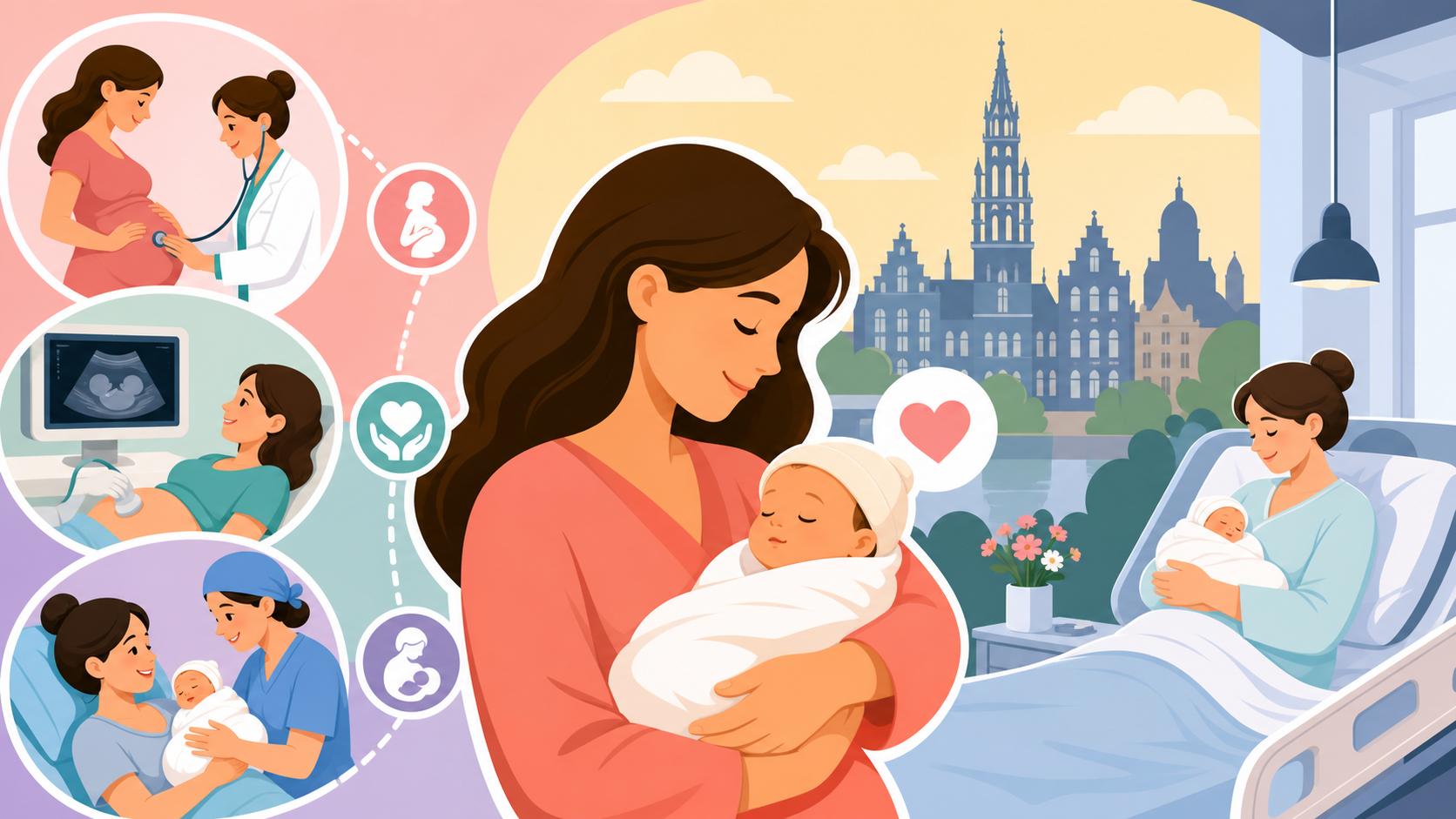
Giving Birth in Belgium: Prenatal Care, Delivery, and Hospital Stays
Navigating the Belgian medical system while expecting a child can feel like trying to solve a Rubik's Cube in the dark, especially when you are balancing morning sickness with residency paperwork. When I first saw that positive test in a tiny apartment in Ixelles, my joy was immediately followed by a frantic Google search for how to even find a doctor who spoke my language. This guide simplifies every step of the journey, from your first ultrasound to the moment you bring your baby home.
Navigating the Belgian Prenatal Care System
The Belgian approach to pregnancy is highly medicalized but incredibly efficient, leaning heavily on specialist care rather than the midwife-led models common in neighboring countries like the Netherlands or the UK. Most expats are surprised to learn that they will likely visit a hospital or a private clinic for every single appointment, rather than a local clinic or GP office. This system ensures you have access to high-tech screenings from day one, but it requires a bit of administrative savvy to manage the appointments and reimbursements.
Choosing Between a Gynecologist and a Midwife
In Belgium, the gynecologist (gynécologue/gynaecologist) is traditionally the primary caregiver during pregnancy. Most women select a doctor affiliated with the hospital where they intend to give birth. If you are just starting your journey, you might want to look into Finding Medical Care in Belgium: GPs, Specialists, and Hospitals to understand how to locate a provider who fits your needs and language preferences. While the gynecologist handles the medical checks and ultrasounds, many expats now choose to "double up" by also hiring a private midwife (sage-femme/vroedvrouw).
A midwife provides the emotional and holistic support that a busy hospital specialist might lack. They can come to your home for prenatal check-ups and are invaluable for postpartum care. If you prefer a more natural approach, you can seek out a "Maison de Naissance" (birthing house), though these are rarer and fill up months in advance. For most, the standard path is a mix of hospital-based medical visits and supplemental support. If you haven't yet secured a specialist, you may want to start by Choosing Your First GP (General Practitioner) in Belgium to get a referral and a baseline blood test to confirm the pregnancy.
Routine Screenings and Medical Monitoring
Belgium takes prenatal testing very seriously. You can expect at least three major ultrasounds—one per trimester—that are partially reimbursed by your health insurance. The first "dating" scan usually happens around week 12, followed by the detailed morphology scan at week 20. A unique aspect of the Belgian system is the widespread use and reimbursement of the NIPT (Non-Invasive Prenatal Test) for chromosomal abnormalities, which is offered to almost all expectant mothers at a very low out-of-pocket cost compared to other countries.
Beyond the scans, you will have monthly blood tests to monitor for toxoplasmosis (especially if you don't have immunity) and gestational diabetes. If you are used to a "hands-off" pregnancy, the frequency of these tests can be startling. To manage your health between these visits, many expats turn to iHerb to source specific prenatal vitamins or organic supplements that might be harder to find in the local "Apotheek." This proactive approach to monitoring is a hallmark of Healthcare in Belgium for Expats: Complete System Overview (2027), ensuring that any potential complications are caught well before the delivery date.
The Role of the Mother’s Carnet and Digital Records
From your first official prenatal visit, you will be issued a "Carnet de la Mère" or a "Moederboekje." This is a physical or digital booklet that records every weight measurement, blood pressure reading, and ultrasound result. In Belgium, you are expected to carry this with you to every medical appointment and eventually to the delivery room. It acts as a universal bridge between your gynecologist, your midwife, and the hospital staff.
In recent years, much of this data has also been integrated into the "MyHealth" portal. However, don't rely solely on the digital version. The Belgian medical system still loves its paperwork, and having your physical records—along with your Mutuelle and Ziekenfonds: Public Health Insurance Registration Guide documents—will save you immense stress if you have to visit the emergency room unexpectedly. Keeping a folder with your latest blood results and your Women’s Health in Belgium: Gynecology, Screenings, and Birth Control history is a pro-tip for any expat mom-to-be.
Financials and Insurance for Expectant Parents
One of the greatest reliefs of giving birth in Belgium is the cost—provided you have your insurance in order. The system is designed to be accessible, but there are hidden traps, particularly regarding hospital room types and "extra" fees charged by non-conventioned doctors. Understanding the difference between what the state covers and what requires private top-ups is the difference between a €200 bill and a €3,000 bill.
Mutuelle Coverage and Public Healthcare
As a resident, you must be registered with a Mutuelle (French) or Ziekenfonds (Dutch). This public insurance covers the bulk of your prenatal care, delivery, and a standard hospital stay. Generally, the mutuelle reimburses about 75% to 80% of the official "conventioned" rate for doctor visits. For example, if your gynecologist is "conventioned," they agree to charge the state-mandated price, leaving you with only a small co-pay.
However, many specialists in desirable Brussels or Antwerp neighborhoods are "non-conventioned," meaning they can charge whatever they like. This is where a private policy from Cigna Global can be a lifesaver, as it often covers the "supplements" or extra fees that the public system ignores. Before you commit to a doctor, always ask if they are "conventionné" to avoid surprises. If you are still in the process of setting up your life here, make sure you understand Compulsory Coverage Basics: Who Must Enroll in Mutuelle/Ziekenfonds to ensure you aren't left paying the full price for your delivery.
Hospitalization Insurance and Private Add-ons
In Belgium, the type of hospital room you choose dictates the final cost of your birth. If you opt for a shared or twin room, your mutuelle usually covers almost everything. If you demand a private room (chambre seule), the hospital and the doctors are legally allowed to charge "room supplements" and "honorary supplements." These supplements can double or triple the cost of every single procedure, from the epidural to the pediatrician's check-up.
Most Belgian employers provide "Assurance Hospitalisation" (Hospitalization Insurance) as a perk, which specifically covers these private room costs. If you are a freelancer or your company doesn't offer this, looking into a private plan like Cigna Global is highly recommended at least a year before you conceive, as many policies have a 6-to-10-month waiting period for maternity care. You can read more about these choices in Hospital Room Types in Belgium: Single vs Shared Room Costs to decide which budget works for your family.
Mandatory Polio Vaccination and Legal Obligations
While not directly a "cost," there are legal obligations tied to birth in Belgium that carry financial penalties if ignored. The most famous is the polio vaccine. It is the only mandatory vaccination in Belgium. After your baby is born, you will receive a form that must be signed by a doctor once the full course of polio vaccinations is completed (usually by 18 months). Failure to return this form to your local commune can result in fines or even legal action.
To help manage the costs of all the other "non-mandatory" but highly recommended vaccines and baby supplies, many parents utilize iHerb for high-quality, international-standard baby care products that are often cheaper than the local Belgian equivalents. Keeping track of these requirements is easier if you stay organized with Maternity Leave Medical Certificates: What Your Doctor Must Fill Out, ensuring all your paperwork for the state and your employer is submitted on time.
Planning Your Delivery: Hospitals vs. Birthing Centers
The actual birth in Belgium usually takes place in a hospital maternity ward. The standards of care are exceptionally high, with neonatologists and anesthesiologists on-site 24/7 in most urban facilities. However, the experience can feel quite "clinical" compared to the more "homey" maternity centers found in other countries. Preparing for what happens once you go into labor is essential for a smooth experience.
Selecting a Hospital and Room Types
You generally give birth at the hospital where your gynecologist practices. During your second trimester, it is a good idea to book a "tour" of the maternity ward. This is your chance to see the delivery rooms, ask about their policy on water births or birthing balls, and confirm the availability of private rooms. Remember, even if you want a private room, they are allocated on the day of delivery based on availability; you cannot usually "reserve" one months in advance.
When you pack your hospital bag, don't forget the essentials for the baby—Belgian hospitals provide the medical care, but you are often expected to bring your own diapers, wipes, and baby clothes. For specialized postpartum recovery items that aren't common in Belgian pharmacies, iHerb is a great resource for expat parents. Understanding the nuances of Hospitalization Insurance (Assurance Hospitalisation): Employer Benefits will help you navigate the check-in process at the admissions desk without stressing over the deposit.
Pain Management and Epidural Culture
Belgium has a very high rate of epidural use. Unlike some countries where there is a "wait and see" approach, Belgian anesthesiologists are often proactive in offering pain relief. If you know you want an epidural, you will likely have a mandatory consultation with an anesthesiologist a few weeks before your due date to discuss your medical history and sign consent forms.
The cost of an epidural is generally covered by the mutuelle, but if you have chosen a private room, be prepared for an "honorary supplement" from the anesthesiologist. You can find a deep dive into these specific costs in Epidural Costs in Belgium: Will the Mutuelle Cover It? to help with your financial planning. If you prefer a natural birth, you must be very vocal about your birth plan, as the default setting in many Belgian hospitals is medical intervention.
Postpartum Stays and Hospital Etiquette
A typical postpartum stay in a Belgian hospital lasts between 2 and 4 days for a vaginal birth, and slightly longer for a C-section. During this time, nurses and midwives will help you with breastfeeding and bathing the baby. In Belgium, it is customary for friends and family to visit you in the hospital rather than at home in the first few days. Many hospitals have specific visiting hours that are strictly enforced.
One quirk of the Belgian system is the "Geboortelijst" or "Liste de Naissance" (Birth List). Most parents-to-be set up a registry at a major baby store (like Dreambaby or Premaman). Instead of bringing random gifts to the hospital, visitors are expected to buy something from this list. For niche items or specific organic brands that aren't on the standard Belgian lists, many expats supplement with iHerb to ensure they have exactly what they need for the first few weeks at home.
Administrative Steps After the Birth
Once the baby is born, the "real" Belgian bureaucracy begins. You have a very tight window to register the child, and failing to do so can complicate your residency and your access to benefits. This phase is often the most exhausting for expat parents who are already dealing with sleep deprivation.
Registering the Birth at the Commune
You must register your baby’s birth within 15 days at the "Maison Communale" or "Stadhuis" of the place where the baby was born (not necessarily where you live). If the baby was born in a Brussels hospital but you live in Leuven, you go to the Brussels commune. Both parents usually need to attend if you aren't married, though if you are legally married, often only one parent needs to go with the hospital's birth certificate.
This registration is vital because it triggers the issuance of the baby’s national register number, which you need for insurance. At this stage, you should also look into Adding Family Members: Enrolling Spouses and Children in Your Mutuelle to ensure your newborn is covered for their first pediatrician appointments. The commune will also provide you with several copies of the birth certificate, which you will need for your embassy if you are applying for a foreign passport for your child.
Child Benefits and the Groeipakket
Every child living in Belgium is entitled to a monthly allowance, known as the "Groeipakket" in Flanders or "Allocations Familiales" in Brussels and Wallonia. This is not means-tested; it is a right for every child. You also get a one-time "Birth Grant" (Startbedrag/Prime de naissance), which is a significant sum of money (over €1,200 in some regions) intended to help with initial costs.
You usually apply for this through a dedicated fund (like Parentia or Famiwal). If you are working, your HR department can often point you in the right direction, but as an expat, it is your responsibility to ensure the application is submitted. For a full breakdown of how much you can expect to receive and how the payments work, check out Child Benefit (Groeipakket / Allocations Familiales) Payouts. This extra income is incredibly helpful for the ongoing costs of diapers, clothes, and childcare.
Postpartum Support: Kind en Gezin and ONE
Shortly after you return home, you will be contacted by Kind en Gezin Registration Process for New Expat Parents (in Flanders) or ONE (in Brussels/Wallonia). These are government-funded agencies that provide free preventative healthcare for children up to age six. They offer home visits, regular check-ups, and all the standard childhood vaccinations at no cost.
While they are not a replacement for a pediatrician, they are a fantastic resource for tracking your baby’s growth and development. They also provide support for breastfeeding and sleep training. For expat parents who might not have a local "village" of family support, these agencies offer a vital connection to the community. Supplementing this free care with a high-quality international insurance plan like Cigna Global ensures that if your child ever needs a specialist, you have the financial freedom to choose the best care possible without waiting lists.
Comparison of Birth Options in Belgium
| Feature | Public Ward / Shared Room | Private Room (Chambre Seule) | Home Birth / Birthing House |
|---|---|---|---|
| Medical Cost | Mostly covered by Mutuelle | Significant supplements likely | Covered if using conventioned midwife |
| Privacy | Low (1-2 other parents) | High (Private bathroom/space) | Maximum |
| Doctor Choice | Whoever is on duty | Your specific gynecologist | Your specific midwife |
| Insurance Need | Basic Mutuelle is sufficient | Hospitalization insurance vital | Specialist midwife insurance |
| Length of Stay | 2-4 days | 2-4 days | 0-6 hours (transfer to home) |
Disclaimer
The information provided in this guide is for informational purposes only and does not constitute medical, legal, or financial advice. Healthcare regulations and reimbursement rates in Belgium are subject to change. Always consult with your gynecologist, your Mutuelle, and the Belgian Social Security office to confirm your specific entitlements and obligations. The author is an expat blogger sharing personal experiences and research, not a licensed medical professional or immigration official.