Accessing Belgian Healthcare Without an eID: Temporary Certificates
The moment you realize you have a high fever but your Belgian residence card is still "processing" at the commune is a terrifying rite of passage for many newcomers. I remember sitting in my half-unpacked Ixelles apartment, clutching a useless Annex 15 paper and wondering if a doctor would even see me without that plastic eID. This guide solves the mystery of how to access the Belgian medical system during that awkward administrative limbo.
In Belgium, your electronic identity card (eID) is more than just a piece of plastic; it is the digital key to your medical history, your insurance status, and your electronic prescriptions. However, the gap between arriving in the country and receiving that card can span anywhere from three weeks to three months. If you fall ill during this window, you aren't legally or practically barred from healthcare, but the path to reimbursement and treatment looks significantly different than it does for a long-term resident. Understanding how to bridge this gap with temporary certificates and paper-based processes is essential for any expat navigating their first 90 days.
The Administrative Gap and the Annex 15 Certificate
When you first arrive and register at your local Maison Communale or Stadhuis, you won’t walk out with a card. Instead, you are often issued a paper document known as an Annex 15 (or Annexe 15/Bijlage 15). This document serves as your temporary proof of residence while the federal government processes your application and the local police conduct their mandatory address check. While it looks like a simple piece of office paper, it carries significant weight in the medical world if you know which numbers to highlight.
Understanding Your National Register Number (NISS)
The most important piece of information on your Annex 15 isn't your name or your address—it's the NISS (Numéro d'Identification de la Sécurité Sociale). This is an 11-digit number that starts with your birthdate in reverse (YY.MM.DD). Even without the physical eID card, this number is already active in the Belgian Crossroads Bank for Social Security. When you visit a doctor, providing this number allows them to manually enter you into their system. It acts as the "account number" for your entire Belgian medical existence.
I’ve seen many expats panic because they think they don't have a social security number yet. In reality, the moment the commune clerk types your details into the system, that NISS is generated. If you can’t find it on your paper, ask the commune specifically for your "Rijksregisternummer." Having this written down on a sticky note in your wallet is the single best way to ensure a smooth visit to a GP when you don't have a card to swipe. You can find more details on the initial registration steps in our guide on Registering for Public Health Insurance: Step-by-Step at Your Commune.
The Role of the Police Check in Healthcare Access
One of the quirks of the Belgian system is that your residency isn't "final" until a police officer physically verifies that you live where you say you live. This can take weeks. During this time, you are in a state of "provisional registration." Some private insurers or even public Mutuelles might be hesitant to fully activate your "Tiers Payant" (third-party payer) status until the police check is complete. This means you might have to pay the full price of a consultation upfront and wait for a manual reimbursement later.
If you are worried about medical emergencies during this specific waiting period, it is often wise to maintain a bridge policy. Many expats find that having a plan from Cigna Global provides that necessary safety net, covering you during those weeks when the Belgian state is still "checking" if you actually exist in your new apartment. This avoids the stress of wondering if a hospital will accept your temporary paper during an acute crisis. To understand why this check is so critical, you might want to read about The Police Address Check: What Happens if You Are Not Home?.
Registering for a Mutuelle Without a Physical Card
You do not need to wait for your plastic eID to arrive to join a public health insurance fund (Mutuelle/Ziekenfonds). In fact, waiting is a mistake. You should take your Annex 15 to an office like Partenamut, Helan, or CM as soon as you have it. They are well-versed in "paper-based" registrations for newcomers. They will use your NISS to create a profile and, most importantly, provide you with the temporary certificates needed to see a doctor.
Obtaining Your Mutuelle Stickers (Vignettes)
Since you don't have an eID to swipe at the doctor or the pharmacy, the Mutuelle will issue you a sheet of small white or yellow stickers called "vignettes." These stickers contain your name, your NISS, and a specific code (titulaire) that tells the doctor your level of insurance coverage. When you see a doctor, they will stick one of these on your "Attestation de Soins Donnés" (the green or white receipt).
Without these stickers, the reimbursement process becomes a manual nightmare. The stickers are essentially your "offline" eID. When I first arrived, I carried a small sheet of these in my passport everywhere. Even if a doctor's digital system is down or they can't find you via your NISS, that physical sticker is a legal guarantee that you are insured. For a deeper dive into choosing the right fund, check out our Mutuelle and Ziekenfonds: Public Health Insurance Registration Guide.
The ISI+ Card: The Solution for Non-eID Holders
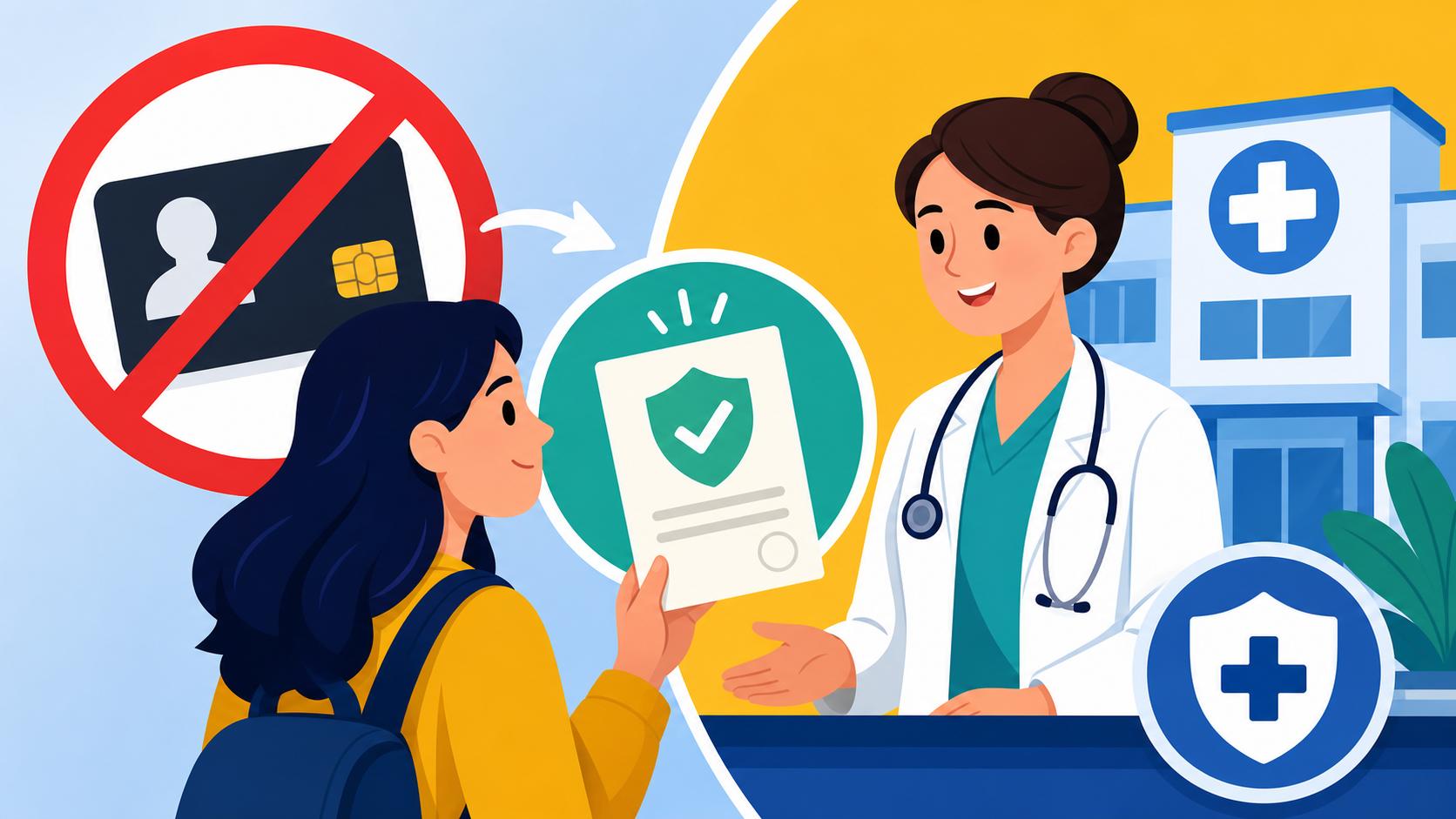
For those who are not eligible for an eID yet (such as children under 12 or expats in a very specific administrative transition), the Belgian government issues an "ISI+ card." This is a purple card that contains the same microchip and data as an eID but is used strictly for social security and healthcare. If your residency process is expected to be unusually long, you can request an ISI+ card from your Mutuelle.
This card is a lifesaver because it allows you to use the digital systems at pharmacies and hospitals just like a regular eID holder. It bypasses the need for paper stickers and manual entries. If you have moved with family, ensure you look into Using an ISI+ Card for Children’s Healthcare Access to make sure your kids are covered immediately upon arrival.
Navigating Doctors and Pharmacies with Paper Documents
The reality of "paper-based" healthcare in Belgium is that it requires more communication. You cannot simply walk in, hand over a card, and sit down. You need to be proactive with the medical staff to ensure they understand your status as a "resident-in-process."
Communicating with the GP Reception
When booking an appointment, mention that you do not have your eID yet but you do have an Annex 15 and a NISS. Some doctors use a system called "eAttest," which sends your claim directly to the insurance fund digitally. This system usually requires a swiped eID. If you don't have one, the doctor will have to revert to the "old-fashioned" way: giving you a paper receipt that you must physically mail to your Mutuelle.
Be prepared to pay the full amount (usually around €30 for a GP) at the end of the visit. The doctor will give you a paper called an "Attestation de Soins Donnés." You take this paper, put a "vignette" (sticker) on it, and drop it into the mailbox of your Mutuelle. You will then receive your 75% reimbursement in your bank account a few days later. You can find more tips on this in our article on Finding Medical Care in Belgium: GPs, Specialists, and Hospitals.
| Document Type | Access Level | Best For |
|---|---|---|
| Annex 15 | Restricted | Proving residency to Mutuelles & basic GP visits |
| NISS Number | Digital Access | Allowing doctors to find you in the central database |
| Vignette Stickers | Reimbursement | Manual claims for doctors who don't use eAttest |
| ISI+ Card | Full Medical | Children and long-term "processing" cases |
| Private Insurance | Comprehensive | Immediate private hospital access without NISS |
Prescriptions and the "Paper" Workaround
In Belgium, prescriptions are almost entirely electronic. The doctor "uploads" the prescription to your eID, and the pharmacist "pulls" it down when they swipe your card. If you don't have an eID, this system breaks. You must insist that your doctor provides a printed paper prescription with a barcode.
Pharmacies can scan this barcode manually without your eID. However, they may still need your NISS to apply the insurance discounts. Without the NISS or a valid insurance status, you will be charged the full "non-resident" price for medication, which can be hundreds of Euros for chronic conditions. For minor ailments while you wait for the system to catch up, I often suggest checking iHerb for over-the-counter supplements and basics that don't require the complex Belgian prescription dance. To learn more about how to handle the local shops, see Pharmacies and Medication in Belgium: Prescriptions and OTC Rules.
Managing Costs and High-Value Care
If you require a specialist, a surgery, or an MRI before your eID arrives, the financial stakes are much higher. Hospitals in Belgium are excellent, but their billing departments are highly automated. A patient without an eID is often flagged as "uninsured" by default, leading to massive upfront deposits.
Hospitalization Without an eID
If you are admitted to a hospital with only an Annex 15, the billing office will likely ask for a guarantee of payment. If your Mutuelle is already active (even without the card), they can issue a "Certificate of Coverage" (Attestation d'Assurabilité). You can usually download this from your Mutuelle’s online portal or app using the login credentials they gave you when you registered with your paper Annex 15.
Having this digital PDF on your phone can save you from having to pay a €1,000 deposit at the ER. If your public insurance isn't fully active yet because of the police check, this is where Cigna Global becomes invaluable. They can provide a "Guarantee of Payment" directly to the hospital, allowing you to focus on your health rather than the bureaucratic nightmare of the billing desk. For more info on private options, read Private Health Insurance in Belgium: When Do Expats Really Need It?.
Emergency Situations and the 112 Protocol
In a true emergency, call 112. Belgian hospitals are legally required to stabilize you regardless of your ID status. However, once you are stable, the "administrative person" will come to your bedside with a clipboard. Do not just tell them you are "new." Give them your NISS from your Annex 15 and tell them which Mutuelle you have joined.
If you haven't joined a Mutuelle yet, tell them you are an expat and show them your private insurance card. The goal is to prevent them from billing you as a "tourist," which is the most expensive rate. Even if you have to pay upfront, keep every single piece of paper. Belgian bureaucracy lives and breathes on paper trails. While waiting for your papers, you might find comfort in stocking up on basic wellness supplies from iHerb to avoid unnecessary trips to the doctor for small things.
Helpful Tips for the Transition Period
Navigating this "grey zone" is about being prepared and persistent. Most Belgians have had an eID since they were children, so they might not realize how difficult it is for you. You have to be your own advocate.
- Scan Everything: The moment you get your Annex 15, take a high-quality photo of it and save it to a "Belgium Admin" folder on your phone.
- The Power of the App: Most Mutuelles (like Partena or Helan) have apps. Even if you don't have your eID, you can often log in with the credentials they mailed to you. The app usually contains a "digital member card" with your NISS and your coverage codes.
- Don't Settle for "No": If a receptionist says they can't see you without an eID, politely remind them that you have a NISS and a Mutuelle membership. Offer to pay the full amount and take a paper receipt for manual reimbursement.
- Carry Cash/Card: Since "Tiers Payant" might not work, always have at least €50-100 available when visiting a doctor to cover the upfront cost.
The "Annex 15 era" of your expat life is frustrating, but it is temporary. By treating your paper certificates with the same respect as a plastic ID and keeping your NISS number handy, you can access one of the world's best healthcare systems without a hitch. Just remember to breathe—the plastic card will eventually arrive in your mailbox, and this paperwork dance will become a distant memory.
Medical Administration Disclaimer
This guide is for informational purposes only and is based on personal expat experiences and publicly available administrative procedures in Belgium. Healthcare laws and commune practices can change without notice. Always consult with your local Maison Communale/Stadhuis, your health insurance provider (Mutuelle), or a qualified legal advisor regarding your specific residency and insurance status. In a medical emergency, always dial 112 immediately.