Expat Health Trauma: Support Groups for Isolation and Culture Shock
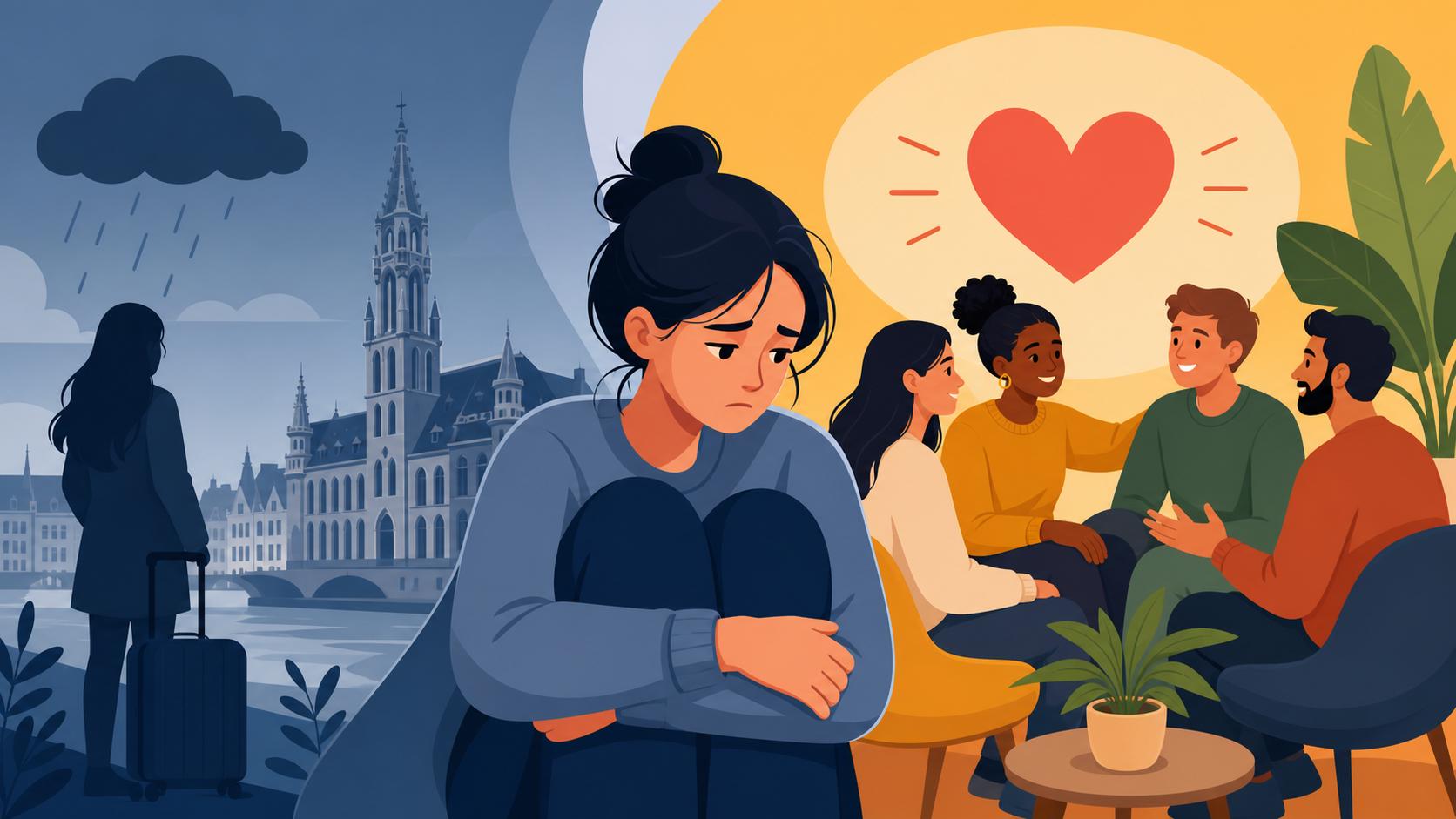
The crushing weight of isolation usually hits during your first Belgian winter, when the sun disappears at 4:00 PM and the administrative wall feels insurmountable. I remember sitting in a dimly lit cafe in Ixelles, surrounded by people but feeling completely invisible and unable to explain my mounting anxiety to a doctor in broken French. This guide provides the emotional and practical roadmap you need to navigate expat health trauma and find the right support groups to heal.
The Psychological Toll of Moving to Belgium
Living in Belgium offers incredible chocolate and medieval charm, but it also presents a unique cocktail of stressors that can lead to genuine health trauma. The phenomenon often starts with the honeymoon phase, where every cobblestone street feels like a movie set. However, once the reality of Registering at the Commune: The 8-Day Rule After Arrival sets in, many expats find themselves spiraling into a sense of "administrative burnout." This isn't just being tired; it is a physiological response to constant uncertainty, language barriers, and the perceived coldness of Northern European social structures.
The term "Expat Health Trauma" refers to the chronic stress that manifests physically—insomnia, digestive issues, or localized pain—often rooted in the feeling of being an outsider. In cities like Brussels or Antwerp, the international community is transient. You make a friend, and six months later, they move to Geneva or Singapore. This constant cycle of "hello and goodbye" prevents the formation of deep-rooted safety nets. When you combine this with the lack of sunlight, it is no surprise that many expats suffer from Seasonal Affective Disorder (SAD). I found that ordering high-quality Vitamin D and magnesium supplements from iHerb became a non-negotiable part of my morning routine just to keep the "grey fog" at bay during the long months between November and March.
Furthermore, the Belgian culture of "discretion" can feel like active exclusion to those from more extroverted cultures. You might live in the same apartment building for three years and never progress past a formal "Bonjour" with your neighbors. This lack of casual social validation can erode your self-esteem, making you feel as though you are failing at integration, even when you are doing everything right. Validating this frustration is the first step toward recovery. You are not "weak" for feeling lonely; you are reacting to a very specific set of environmental and social challenges.
Navigating Mental Health Resources in the Belgian System
The Belgian healthcare system is world-class, but it is notoriously fragmented, especially when it comes to mental health. The first hurdle is often understanding the difference between a psychologist and a psychiatrist. If you are struggling with culture shock or isolation, you might first look into Accessing Mental Health Services: Psychologists vs Psychiatrists to determine which professional fits your needs. Generally, psychiatrists are medical doctors who can prescribe medication, while psychologists focus on talk therapy.
One of the most important things for an expat to do is to secure a Global Medical Record (DMG/GMD) through a local doctor. This ensures your medical history is centralized and, crucially, helps you manage the Understanding the 75% Reimbursement System for Medical Consultations that the public mutuelle offers. However, many public mental health services have long waiting lists. This is where having private coverage like Cigna Global can be a lifesaver. Their plans often provide much faster access to specialized English-speaking therapists who understand the specific nuances of expat life, bypassing the month-long waits often found in the public sector.
When looking for a therapist, don't settle for the first name you find on a list. You need someone who understands "interculturality." A therapist who has never lived abroad may struggle to empathize with the specific grief of losing your professional identity or the trauma of Dealing with Belgian Bureaucracy Burnout: Mental Health for Expats. Look for professionals who are members of the Commission Belge des Psychologues and explicitly list "expat support" or "relocation stress" as a specialty. Many expats also find relief in using online platforms to connect with therapists from their home country, though you should always check if your insurance, such as Cigna Global, covers tele-health sessions across borders.
Formal and Informal Support Groups in Belgium
Isolation thrives in silence. Breaking that silence requires stepping into a room—physical or virtual—with people who are nodding along to your stories. Belgium has a robust network of formal support groups, particularly in Brussels, Ghent, and Antwerp. Organizations like the Community Help Service (CHS) provide a 24/7 English-speaking helpline and a dedicated mental health center. They are a cornerstone for the international community, offering a safe space for those dealing with anything from mild culture shock to severe crisis.
Beyond the clinical setting, informal support groups often provide the most consistent emotional "anchor." For instance, there are numerous "Parenting in Belgium" groups that meet in local parks or community centers. These are essential because raising children in a foreign country adds an entirely new layer of health trauma, from navigating Finding Medical Care in Belgium: GPs, Specialists, and Hospitals for a sick toddler to the stress of school integration. I remember the relief of joining a local walking group in the Sonian Forest; the simple act of moving through nature while venting about the latest commune drama did more for my mental health than any solo gym session ever could.
If you are struggling with the physical manifestations of stress, such as chronic fatigue or skin flare-ups, you might also look into holistic support. Many expats turn to yoga studios that offer "mindfulness for migrants" or "meditation for international professionals." During these stressful transitions, I often supplemented my diet with adaptogens and herbal teas sourced from iHerb to help regulate my cortisol levels. Finding a community that focuses on the body-mind connection can be particularly helpful for those who find traditional talk therapy intimidating.
Comparison of Support Types for Expats
| Support Type | Best For | Typical Cost | Access Speed |
|---|---|---|---|
| Public Psychologists | Long-term, budget-conscious care | €50 – €70 (partial refund) | Slow (3-6 months wait) |
| Private Insurance (e.g., Cigna Global) | Specialized, fast, English-speaking care | Covered by premium | Fast (1-2 weeks) |
| Community Help Service (CHS) | Crisis, immediate English support | Variable/Donation based | Immediate (Helpline) |
| Expat Meetup Groups | Social isolation, casual networking | Free / Low cost | Immediate |
| Specialized Facebook Groups | Niche advice (e.g., ADHD, Single Parents) | Free | Immediate |
Practical Strategies for Overcoming Culture Shock
While support groups are vital, you also need a daily "survival kit" to manage the symptoms of expat health trauma. One of the biggest mistakes we make is trying to become "100% Belgian" too quickly. This leads to an identity crisis. It is perfectly okay—and actually healthy—to maintain strong links to your home culture. Whether that is watching your favorite sports team at an expat pub or cooking a traditional meal with ingredients you can't find in a standard Delhaize (another reason I often relied on iHerb for specific international health foods and snacks), these small comforts act as "emotional stabilizers."
You should also be proactive about your physical health. Schedule an appointment for Choosing Your First GP (General Practitioner) in Belgium before you actually get sick. Having a relationship with a doctor when you are healthy makes it much easier to reach out when your mental health begins to dip. A good GP can act as the gatekeeper to more specialized services and can provide the necessary medical certificates if you need to take a "burnout leave" from work.
Lastly, leverage the power of technology. Apps like Meetup and Internations are active in Belgium, but don't ignore the hyper-local "Buy Nothing" or "Neighborhood" groups on social media. Often, the best way to combat isolation is to offer help to someone else. Helping a newcomer navigate their first Mental Health in Belgium: Therapy, Psychiatry, and Expat Support query can give you a sense of purpose and remind you how far you have actually come in your own journey.
Breaking the Cycle of "Expat Guilt"
One of the most insidious parts of expat health trauma is the "guilt" of not being happy. You might tell yourself, "I'm living in the heart of Europe, I have a good job, I should be grateful." This internal dialogue silences your pain and prevents you from seeking help. The truth is that relocation is one of the most stressful events a human can experience. It ranks right up there with divorce or the loss of a loved one on the stress scale.
By acknowledging that your struggle is valid, you open the door to healing. Whether you find that healing through a session with a specialist found via Finding English-Speaking Therapy and Counseling in Belgium or through a late-night chat in a Facebook support group, the key is to stop trying to "white-knuckle" it alone. Many expat-focused insurance providers like Cigna Global recognize this and offer comprehensive wellness programs that include stress management and mental health coaching. Utilizing these benefits is not a sign of failure; it is a smart strategy for long-term success in your new home.
If the "grey" of Belgium feels like it’s seeping into your soul, remember that thousands of us have felt that exact same way. We have all stood in the rain, confused by a bus schedule, feeling like we didn't belong. But by reaching out to the right Expat Health Trauma: Support Groups for Isolation and Culture Shock resources, you can transform that isolation into a shared experience of resilience. Belgium eventually starts to feel like home, but only once you’ve built the community you need to survive the rain.
Disclaimer
The information provided in this guide is for educational and informational purposes only and does not constitute professional medical or psychological advice. Always seek the advice of a qualified healthcare provider or mental health professional with any questions you may have regarding a medical condition or mental health concerns. Neither the author nor the publication assumes any liability for actions taken based on the content of this article. For emergencies in Belgium, please dial 112 immediately.