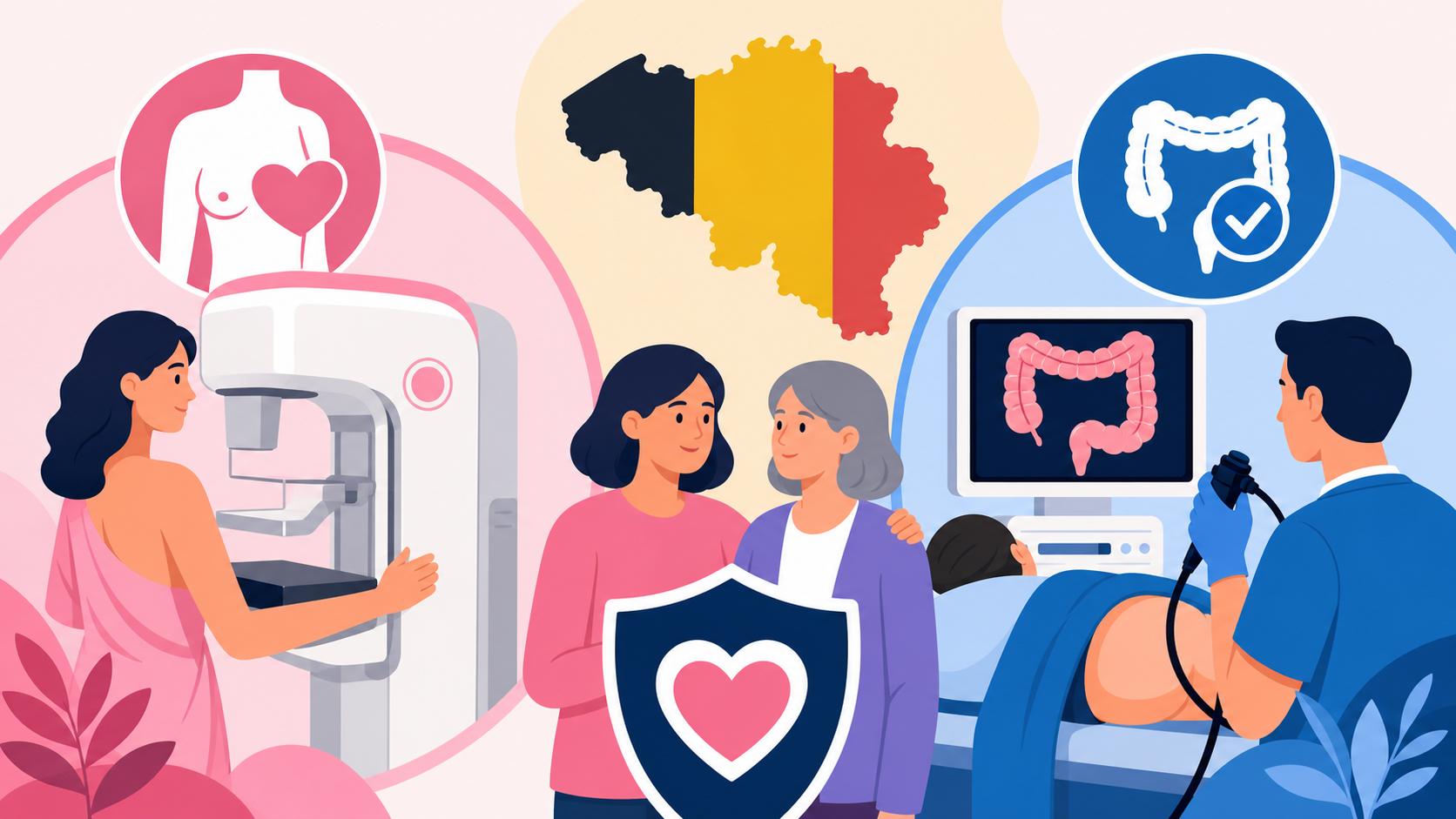
Cancer Screening Programs: Mammograms and Colonoscopies for Residents
Moving to Belgium means gaining access to one of the most comprehensive healthcare systems in Europe, but navigating its preventive care programs can feel daunting. Receiving an official invitation letter in Dutch or French for a cancer screening often leaves foreign residents feeling confused about what to do next. This practical guide breaks down how organised mammogram and colonoscopy screening programs work in Belgium, who qualifies, how costs are covered, and how to navigate the administrative steps with confidence.
Navigating Public Cancer Screening Programs in Belgium
Belgium places a heavy emphasis on early detection, running organized, population-level screening programs for breast, colorectal, and cervical cancers. These programs are managed at the regional level—Flanders, Wallonia, and the Brussels-Capital Region each run their own administrative bodies, though the clinical guidelines remain largely aligned. If you are registered at your local commune and fall within specific age brackets, you will automatically receive invitations in your mailbox. Understanding these notices is the first step toward taking control of your long-term wellness.
Mammogram Screening Programs (Mammotest / Dépistage du Cancer du Sein)
For breast cancer, the public health framework targets women between the ages of 50 and 69. Every two years, eligible residents receive an official invitation letter offering a free screening mammogram, commonly referred to as a “Mammotest” in Flanders or organized screening via Bruprev in Brussels and the Centre de Dépistage du Cancer in Wallonia.
This organized program differs significantly from a routine diagnostic mammogram prescribed by a specialist. The screening involves two independent radiologists reviewing your X-rays to ensure high diagnostic accuracy. If you fall outside the 50–69 age bracket or have a family history of breast cancer, your doctor may instead recommend individual screening, which follows a slightly different administrative path. For broader context on gender-specific preventive care, explore our guide on Women’s Health in Belgium: Gynecology, Screenings, and Birth Control.
Colorectal Cancer Screening: The At-Home Stool Test (FIT)
Colorectal cancer screening in Belgium is designed to be as low-barrier as possible. Target populations—typically men and women aged 50 to 74—are invited every two years to perform a simple, non-invasive immunochemical fecal occult blood test (FIT) at home.
Depending on your region, the test kit may arrive directly in your mailbox, or you may receive an invitation letter instructing you to pick up the test kit from your local pharmacy or GP. The sample is placed in a pre-paid envelope and mailed to a specialized laboratory. The test detects microscopic traces of blood in the stool, which can be an early sign of polyps or early-stage cancer long before symptoms appear.
Cervical Cancer Screenings and Broader Preventive Care
While breast and colorectal screenings operate via centralized mailing invitations, cervical cancer screening relies heavily on proactive primary care. Women aged 25 to 64 are encouraged to have a Pap smear every three years. In many cases, your general practitioner or gynecologist will track this schedule and remind you during routine annual check-ups. To understand how these routine checks fit into Belgium’s overall health strategy, read about Preventive Screenings and Long-Term Care Options in Belgium.
DO NOT USE ASCII ART – USE PIPES FOR TABLES
| Screening Type | Target Age Group | Frequency | Primary Access Method | Typical Out-of-Pocket Cost (Organized) |
|---|---|---|---|---|
| Breast (Mammotest) | Women 50–69 | Every 2 Years | Invitation letter by mail | Free (100% covered) |
| Colorectal (FIT Test) | Adults 50–74 | Every 2 Years | Home kit via mail or pharmacy | Free (100% covered) |
| Cervical (Pap Smear) | Women 25–64 | Every 3 Years | Arranged via GP or Gynecologist | Standard consultation copay |
| Diagnostic Follow-ups | Any age (Symptomatic) | As needed | GP or Specialist referral | Copay dependent on mutuelle |
Financial Coverage, Mutuelle, and Private Insurance
Understanding who pays for what in the Belgian healthcare system requires distinguishing between organized screening programs and individual diagnostic testing. When you participate in a state-sponsored screening program using an official invitation, the core procedure is fully subsidized by the government and public health funds.
Public Health Insurance (Mutuelle) vs. Diagnostic Procedures
To benefit fully from Belgian healthcare coverage, you must be properly registered with a public health insurance fund (mutuelle in French or ziekenfonds in Dutch). For step-by-step onboarding details, see our Mutuelle and Ziekenfonds: Public Health Insurance Registration Guide.
Under the organized screening programs, the radiological or laboratory analysis fee is billed directly to your health fund—meaning you pay nothing out of pocket at the clinic. However, if you bypass the organized program—for instance, if you visit a private clinic for an annual mammogram without an official invitation letter—the service is classified as diagnostic or individual screening.
In these cases, you will pay the provider upfront and claim a partial reimbursement later. To maximize your refunds for consultations related to preventative health, ensure you have established a official relationship with your primary doctor; read more about The Global Medical Record (DMG/GMD): Why You Need It for Better Refunds.
Supplementary Private Insurance and Expat Policies
While the public system handles population-level checks efficiently, many expatriates prefer additional peace of mind, shorter waiting times, or coverage for screenings before reaching the official age thresholds. Private international coverage, such as policies provided by Cigna Global, often includes comprehensive wellness and preventative modules.
Having supplementary private coverage from providers like Cigna Global allows you to undergo screening mammograms, advanced imaging, or routine blood panels at private facilities without worrying about public age caps or strict regional invitation timelines. Furthermore, private policies can bridge the financial gap if a routine screening uncovers an abnormality that requires immediate, complex secondary care or hospital admission.
Practical Steps: From Invitation Envelope to Results
When an official screening notice lands on your doormat, taking prompt action ensures you stay on top of your health without facing administrative delays.
Step 1: Deciphering Your Invitation Letter
The invitation envelope usually contains a formal letter, an information pamphlet, and, in the case of mammograms, a list of recognized mammography centers (Mammografisch Centrum / Centre de Mammographie). Because administrative letters are drafted in the official language of your region (Dutch in Flanders, French in Wallonia, and either French or Dutch in Brussels), non-native speakers often find them intimidating.
The letter contains a unique reference code. Keep this document safe, as you must present it to the clinic or pharmacy to claim your fully reimbursed test.
Step 2: Booking Your Appointment and Finding English-Speaking Providers
If you are scheduling a mammogram, you can choose any certified radiology center listed in your invitation dossier. You do not strictly have to visit a facility in your immediate commune. When calling to book, ask if the staff can accommodate consultations in English if you are not yet comfortable in French or Dutch.
For advice on locating international-friendly clinics across major Belgian cities, refer to our guide on Finding English-Speaking Doctors in Brussels, Antwerp, and Ghent. If you are completing an at-home FIT test for colorectal screening, simply follow the enclosed instruction leaflet carefully, collect the sample, and drop it in a standard Bpost mailbox on the same day.
Step 3: Interpreting Results and Doctor Follow-Ups
Screening results are generally available within two to three weeks:
- For Breast Screenings: A written report is sent to your home address, and a duplicate copy is transmitted to the doctor you designated during your appointment. If the result is normal, you will simply receive another invitation in two years. If an abnormality is detected, the letter will advise you to consult your doctor immediately for secondary diagnostic imaging (such as an ultrasound or biopsy).
- For Colorectal Screenings: The laboratory sends the result directly to you and your doctor. A negative result means no blood was found. A positive result does not automatically mean cancer is present—polyps, hemorrhoids, or minor inflammation can also cause bleeding—but it does mean a follow-up colonoscopy is necessary to investigate the source.
When scheduling follow-ups or preparing for procedures like a colonoscopy, maintaining good general gut health and staying hydrated is essential. Many expats turn to dietary supplements and wellness products on platforms like iHerb to support digestive recovery following clinical bowel preparations.
Overcoming Administrative and Language Barriers
The Belgian system relies heavily on national registration numbers (Rijksregisternummer / Numéro National). If your paperwork at the commune is delayed, you may miss out on automatic invitation mailings.
Missing Letters and Registration Gaps
If you have reached the eligible age for a screening but have not received an invitation letter, the most common culprit is a recent change of address or a delay in your commune registration. You do not have to wait passively. You can schedule an appointment with your GP and ask them to issue a referral or request an invitation on your behalf through the regional screening platform.
For detailed information on choosing a primary healthcare provider who can advocate for you, see our guide on Choosing Your First GP (General Practitioner) in Belgium. If you are temporarily uninsured while transitioning between residency statuses, carrying comprehensive coverage through Cigna Global ensures you can still access necessary clinical screenings without paying full out-of-pocket market rates.
Managing Laboratory Invoices and Unexpected Bills
One aspect of Belgian medical care that catches expats off guard is the delayed billing cycle. If your screening leads to additional laboratory work—such as tissue biopsies or secondary blood analyses—you will not pay at the clinic counter. Instead, an invoice (facture) will arrive in your physical mailbox weeks or even months later.
Understanding how to read these bills and submit them to your mutuelle is crucial to avoiding administrative penalties or collection notices. For a full breakdown of how to handle these delayed charges, consult our article on Paying a Lab Bill (Facture) Months After Your Blood Test.
To complement your clinical care, taking proactive personal steps—such as maintaining balanced nutrition, staying active, and ordering quality daily health supplements via iHerb—helps build a robust foundation for long-term health while living abroad.
Proactive Health Management Checklist for Expats
- Verify Your Commune Registration: Ensure your official address is updated so invitation letters reach your mailbox.
- Assign a Primary GP: Establish your Global Medical Record (GMD/DMG) to streamline records and increase reimbursement rates.
- Keep Invitation Documents Safe: Do not discard official notices in French or Dutch; use translation tools or consult your doctor if unsure.
- Track Your Personal Timelines: Mark your calendar for two-year intervals for mammograms and FIT tests, and three-year intervals for Pap smears.
- Review Supplemental Insurance: Verify whether employer plans or private insurance cover early screenings outside standard public age brackets.
By taking advantage of Belgium’s structured screening framework and pairing it with proper insurance coverage, you can manage your health proactively and enjoy peace of mind throughout your time living abroad. If you ever feel uncertain about a letter or medical bill, your local pharmacist or GP is always the best first point of contact to clarify your options.
Disclaimer
This article is for general informational purposes only and does not constitute professional advice. Laws, prices and regulations vary by location and change over time. Consult a qualified professional for guidance on your specific situation.