Intra-Corporate Transferee (ICT) Visas for Belgium Explained
Moving to Belgium for a big corporate promotion sounds like a dream until you face the mountain of paperwork required to actually sit at your new desk. I remember spending my first three weeks in Brussels carrying a folder of "Annexes" just to prove I was legally allowed to buy a loaf of bread. This guide explains the Intra-Corporate Transferee (ICT) visa so you can navigate the bureaucracy with your sanity intact.
What Exactly is the Intra-Corporate Transferee ICT Visa
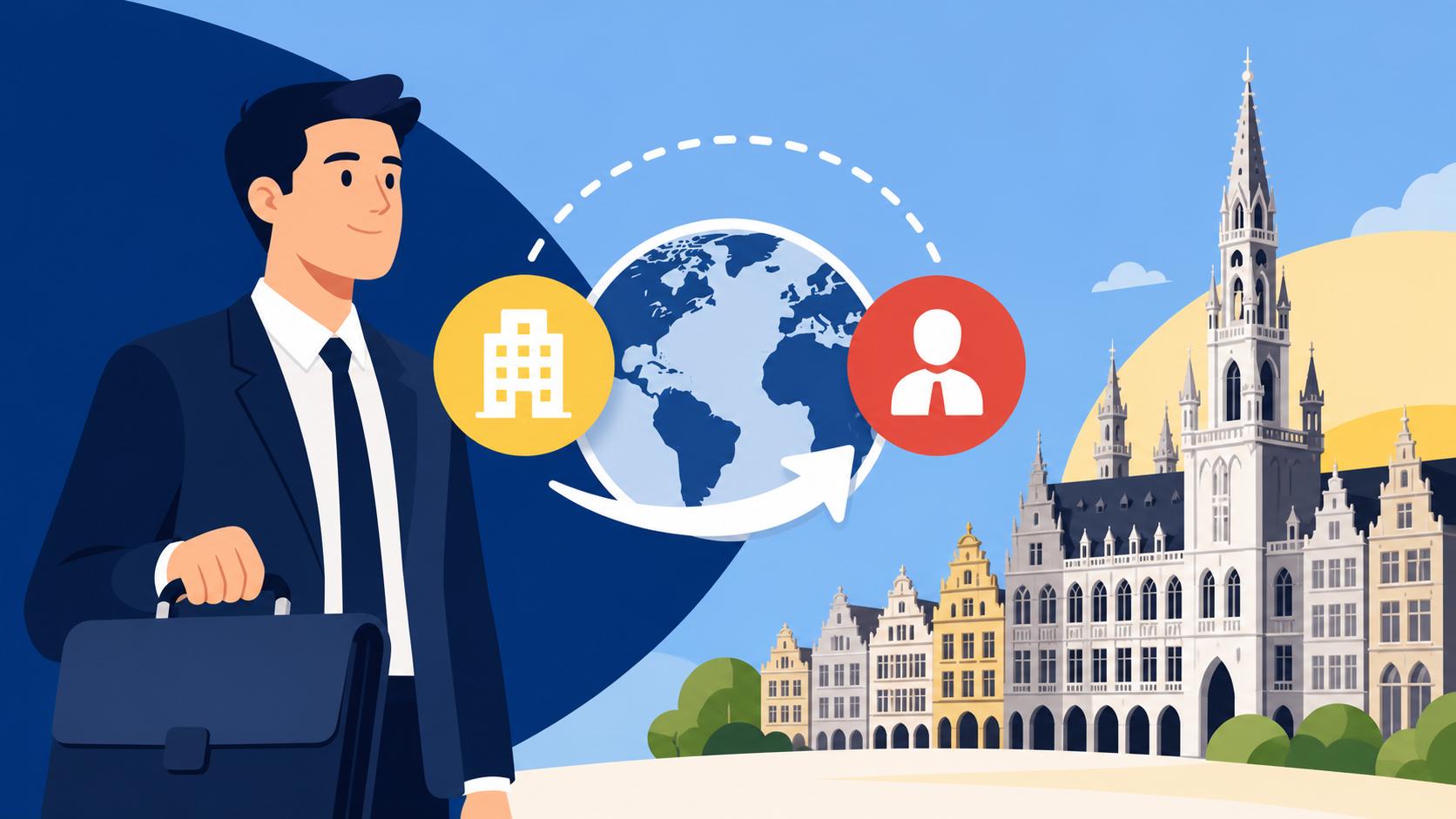
The ICT visa is a specific type of residence and work permit designed for managers, specialists, and trainee employees who are being transferred from a company based outside the European Union to a branch or subsidiary located within Belgium. Unlike a standard local hire, the ICT permit is governed by an EU-wide directive, which means it carries certain perks—like easier mobility to other EU countries—that you won't find with a basic Single Permit (Gecombineerde Vergunning) Overview for 2027.
When you are sent here on an ICT permit, you aren't technically being "hired" by the Belgian entity in the traditional sense; you remain tethered to your home contract while being "posted" to Belgium. This distinction is vital because it affects your social security, your tax status, and how long you can actually stay. Typically, managers and specialists can stay for a maximum of three years, while "trainee employees" are limited to one year. I’ve seen many expats get caught off guard by these hard caps, assuming they could simply renew forever. If your plan is to stay in the land of chocolate and beer for a decade, you’ll eventually need to look into transitioning to a different status.
The "Mobile ICT" feature is perhaps the biggest selling point. If you hold a valid ICT permit from another EU member state, you can often work at a Belgian branch of your company for up to 90 days without a separate Belgian permit, or apply for a "long-term mobility" permit if the stay is longer. It sounds seamless, but as someone who has tried to coordinate between two different European bureaucracies, I can tell you it requires meticulous record-keeping.
Eligibility Criteria and Salary Thresholds for 2026
Belgium doesn't just let anyone in under the ICT banner; they want to ensure that those being transferred are high-level assets who won't be undercutting the local labor market. The most significant barrier for most is the annual salary threshold. These numbers are indexed every year. For 2026, the thresholds have climbed again to account for inflation and the rising cost of living.
To qualify as a manager or a specialist, your gross annual salary must meet a specific minimum that varies slightly depending on which region your office is located in—Brussels, Flanders, or Wallonia. Generally, you can expect the requirement for managers to hover around €55,000 to €60,000, while specialists might be slightly lower. However, you must be careful about how these numbers are calculated. Your employer might try to include "benefits in kind" like a housing allowance or a company car, but the Belgian authorities are very strict about what counts as "base pay" for visa eligibility.
| Category | Typical Max Duration | 2026 Estimated Salary Min (Gross) | Key Requirement |
|---|---|---|---|
| Manager | 3 Years | €58,000+ | Senior position leading a department |
| Specialist | 3 Years | €46,000+ | Possesses unconventional, vital knowledge |
| Trainee | 1 Year | €30,000+ | Holds a university degree; in development |
Beyond the money, you must prove you have been working for the sending company for a minimum period—usually three to six months for managers and specialists. This prevents companies from "hiring" someone specifically to ship them to Europe immediately on an ICT permit. If you've just joined your firm, you might need to wait a few months before the HR department can legally hit "submit" on your application.
The Application Journey From Portal to Passport
The process is "single," meaning you apply for the work and residence permit simultaneously, but the burden of the initial application falls squarely on your employer. They must use the "Working in Belgium" digital portal. In my experience, the digital transition has made things faster, but it also means that a single typo in your birthdate can stall the entire process for weeks.
Once your employer submits the documents—including your clean criminal record, a medical certificate from an embassy-approved doctor, and your high-level work contract—the regional employment ministry and the federal Immigration Office both have to sign off. This "double approval" is why it feels like your application has disappeared into a black hole for two months. You can often track the progress, but "pending" will become your least favorite word.
While you wait, it is a fantastic time to brush up on your professional skills or language. Many ICT transferees use platforms like Coursera or Udemy to ensure their "specialist" status remains cutting-edge, as the Belgian authorities may occasionally ask for proof of your specific expertise during the renewal phase. If you are moving to a Dutch-speaking office in Antwerp or a French-speaking hub in Brussels, starting a course on DutchPod101 or FrenchPod101 can save you from a lot of initial social isolation.
After approval, you’ll receive a "Visa D" in your passport. This is your golden ticket to enter the country, but it is not your final ID card. Upon landing, you have a very narrow window to start the next phase of your administrative life.
Landing in Belgium: The 8-Day Rule and the Commune
The moment you clear customs at Zaventem airport, the clock starts ticking. You are legally required to go through the Registering at the Commune: The 8-Day Rule After Arrival process. This is where most expats face their first "Welcome to Belgium" hurdle. You need to visit the town hall (the Maison Communale or Stadhuis) of the neighborhood where you are living.
Do not expect to walk in and be finished in ten minutes. You often need an appointment, and in popular expat communes like Ixelles or Etterbeek, these appointments can be booked out weeks in advance. Once you register, the commune will trigger The Police Check (Contrôle de Quartier) for Address Verification. A local police officer will literally come to your door to make sure you actually live where you say you do. My officer was lovely and mostly wanted to know if I liked the local bakery, but it can be a bit jarring if you aren't prepared for a random knock at 7:00 PM.
Once the police verify your address, you return to the commune to order your electronic residence card (the A-Card). While you wait for the plastic to arrive, you’ll be given a paper document known as an Annex 15. This is a legal substitute, but be warned: it is notoriously difficult to open a bank account or sign an internet contract with just a piece of paper. You will eventually need Itsme Authentication: How to Set Up Belgium's Vital Digital ID to access your taxes and medical records, but you can't set that up until the physical chip in your ID card is in your hand.
Managing Your Finances and Healthcare on an ICT Status
Because you are an intra-corporate transferee, your salary structure might look a bit different than a local hire. It is crucial to sit down with your HR department and have them explain the Understanding Gross vs Net Salary in Belgium: Why the Difference is So Big. Belgium has some of the highest personal income tax rates in the world, often hitting 50% for high earners. If your home company says they are paying you "the same," make sure you calculate what that looks like after the Belgian taxman takes his cut.
You will also be responsible for Filing Your Income Tax via Tax-on-web (MyMinfin) every year. Even if your company handles the filing for you, you are legally the one responsible for the accuracy of the data. On the plus side, as an ICT specialist, you may be eligible for specific tax-free allowances for expenses like housing or school fees, but these rules changed significantly in 2024 and 2025, so double-check your contract.
Healthcare is the next priority. You will need to join a "Mutuelle" or "Ziekenfonds." As soon as you have your ID number, you should look into Choosing Your First GP (General Practitioner) in Belgium. Having a dedicated doctor is essential because they manage your "Global Medical Record," which nets you higher reimbursements. If you are struggling to find someone who speaks your language, you can search specifically for Finding English-Speaking Doctors in Brussels, Antwerp, and Ghent. Most specialists in the major cities speak excellent English, but the peace of mind of a clear conversation is worth the extra search time.
Settling In: Housing, Transport, and Integration
While your company might provide a relocation agent, the ultimate choice of where to live is yours. Renting in Belgium: Apartments, Contracts, and Tenant Rights (2027) is a complex beast. Most leases are "3-6-9" contracts, meaning they last for nine years. As an ICT transferee on a three-year max visa, you need to be very careful about "diplomatic clauses" in your lease. If you don't have one, and your company decides to send you back home after two years, you could be liable for several months of rent as a penalty.
Getting around the country is relatively easy, especially if you live in a hub like Brussels or Antwerp. You’ll want to get a MoBIB card and learn the Public Transport: SNCB/NMBS (National Trains) Fares and Passes. The train system is fantastic for weekend trips to Bruges or the Ardennes, but it can be prone to the occasional strike—another quirky Belgian tradition you’ll soon learn to navigate.
Finally, don't let the "temporary" nature of the ICT visa stop you from integrating. Three years is a long time to live in a "patriot bubble." I’ve found that even a few weeks of intensive language training can change your entire experience. Lingoda offers great flexible schedules for busy professionals, allowing you to learn from home after a long day at the office. If you want to dive deeper into the culture, understanding the subtle differences between the regions will make your work meetings much smoother.
Strategic Tips for a Smooth Transfer
- Document Preparation: Get your birth certificate and any marriage certificates "Apostilled" or legalized in your home country before you leave. Doing this from inside Belgium is a bureaucratic nightmare involving expensive sworn translators and long wait times.
- The "Annex 15" Trap: Remember that while an Annex 15 allows you to work, it often doesn't allow you to travel outside the Schengen zone easily. If you have a business trip to London or New York scheduled shortly after your arrival, you might need a "Return Visa" if your plastic ID hasn't arrived yet.
- Schooling: If you are bringing children, the ICT status usually makes them eligible for international schools, but these fill up fast. Some communes also have excellent local "immersion" schools where half the day is in English or your home language, but these are highly sought after.
- Professional Growth: Just because you are on a "transfer" doesn't mean your career stops. Use the time to network within the "EU Bubble" or the Antwerp port circles. Platforms like Udemy are great for picking up niche European certifications that might not be as common in your home country.
Important Disclaimer
The information provided in this guide is for educational and informational purposes only and does not constitute legal, financial, or professional advice. Immigration laws and salary thresholds in Belgium are subject to frequent changes and regional variations. While every effort has been made to ensure the accuracy of this content, you should always consult with an official Belgian immigration attorney or your company’s legal department before making significant life decisions. The author is a lifestyle blogger and expat veteran, not a licensed legal professional.